Researchers have developed Artificial Intelligence (AIs) to improve gamers’ overall experience by adjusting their dynamic difficulty.
Dynamic difficulty adjustment (DDA), a recent development by Korean researchers, uses in-game data to predict player emotions and adjusts the difficulty level in order to maximize a gamer’s satisfaction.
Although the difficulty is a challenging aspect to balance in video games, doing it properly is essential to giving gamers a satisfying experience.
The researchers’ work may help to balance game complexity and enhance the appeal of games to different sorts of gamers.
Gamers’ dynamic difficulty adjustment
Dynamic difficulty adjustment (DDA) is a method for automatically altering a game’s features, behaviors, and scenarios in real-time depending on the player’s skill so that the player does not get bored or annoyed whether the game is very easy or very difficult.
For instance, the game’s DDA agent may automatically raise the difficulty if player performance exceeds the developer’s expectations for a particular difficulty level, raising the challenge for the gamer. This method is helpful, but it has limitations because it just considers player performance, not how much pleasure they are truly having.
Generally, games with difficulty levels will run on a scale that includes some or all of the following:
Easier Than Easy,
Easy / Beginner / Novice,
Normal / Medium / Standard / Average / Intermediate,
Hard / Expert / Difficult.
To help make its races more exciting and entertaining, regardless of the skill level of its players, Mario Kart, for example, has included various levels of dynamic difficulty in nearly every iteration.
Will AIs improve gamers’ dynamic difficulty adjustment?
A research team from the Gwangju Institute of Science and Technology in Korea modified the DDA approach in the study published in Expert Systems With Applications.
They developed DDA agents that adjusted the game’s difficulty to optimize one of four different aspects related to a player’s satisfaction: challenge, competence, flow, and valence, as opposed to focusing on the player’s performance.
The DDA agents were trained using machine learning, utilizing data collected from real-world players who participated in a fighting game against different artificial bits of intelligence (AIs) and then provided feedback.
Each DDA agent used both real-world game data and simulated data to fine-tune the opponent AI’s fighting strategy to enhance a particular feeling, or ‘affective state’, using the Monte-Carlo tree search algorithm.
Associate Professor Kyung-Joong Kim, who led the study said that one advantage of the approach over other emotion-centered methods is that it does not rely on external sensors, such as electroencephalography. “Once trained, our model can estimate player states using in-game features only”, added Associate Prof. Kim.
Through an experiment with 20 volunteers, the researchers verified that the proposed DDA agents could produce AIs that improved the players’ overall experience, no matter their preference. This marks the first time that affective states are incorporated directly into DDA agents, which could be useful for commercial games.
According to Associate Prof. Kim, commercial game companies already have huge amounts of player data, which they can exploit to model the players and solve various issues related to game balancing using our approach. As mentioned by the team, this technique also has potential for other fields that can be ‘gamified,’ such as healthcare, exercise, and education.
The researchers’ effort in developing AIs could contribute to balancing the difficulty of games and making them more appealing to all types of players.
A recent study, published in Neuroscience and Biobehavioral Reviews, has presented a wonderful finding – noise is beneficial for learning. As weird as it may sound, background noise can help children focus better.
As mentioned in the finding, noise can have a psychological effect on the mind which will eventually help a weak current pass through and make a child concentrate more on what they are doing.
While we traditionally prefer a peaceful environment to study, new research suggests that ‘noise’ may play an important role in assisting some people in improving their learning ability.
A team of researchers led by Dr. Onno van der Groen also claimed that the study showed that tRNS can, as a tool, assist people with neurological conditions.
Transcranial random noise stimulation (tRNS) has been studied at Edith Cowan University (ECU) in a variety of settings and the results suggest that the technology has a wide range of potential applications.
Despite its name, tRNS doesn’t actually make use of noise in the traditional sense of the term. Instead, it examines electrodes attached to the head to enable a weak current to pass across specific regions of the brain.
The researchers believe that people with learning difficulties can benefit from using this finding to speed up their learning.
“If you do 10 sessions of a visual perception task with the tRNS and then come back and do it again without it, you’ll find you perform better than the control group who hasn’t used it,” Dr. van der Groen said.
Some concerns are prompted by the concept of boosting one’s learning potential via technologies like tRNS.
It raises the concern of whether a neurotypical person may enhance their intelligence to greater levels, similar to the idea in the film “Limitless,” even though it is primarily relevant to people with deficiencies and learning difficulties.
According to Dr. van der Groen, there is potential, but there are also signs that it won’t create a “new level” of intelligence.
“The question is, if you’re neurotypical, are you already performing at your peak,” he said.
The researchers cite a case study in which they tried to enhance a super mathematician’s mathematical abilities; with him, it had little to no impact on his performance, probably because he has already specialized in that field. However, if you’re learning something new, you might use it.
Although the technique is still in its infancy and people can only access tRNS by joining controlled trials, Dr. van der Croen said there was a lot of potential for a variety of applications given its practicality and apparent safety.
Stating that the concept is relatively simple, van der Croen further added, “It’s like a battery: the current runs from plus to minus, but it goes through your head as well”.
“We’re working on a study where we send the equipment to people, and they apply everything themselves remotely. So in that regard, it’s quite easy to use”, said van der Croen.
Researchers from all over the world are also looking at how tRNS influences perception, working memory, sensory processing, and other behavioral elements. This is because the technology has the potential to treat a number of clinical conditions.
Anyway, this wonderful finding is likely to assist people with neurological conditions to improve their learning ability, using the tRNS tool.
The impact of this finding also seems immense because it has the potential to help millions of people living in the world with low attention spans and other kinds of learning difficulties.
However, an interesting aspect also remains unknown as to how far it is possible to make use of this finding so that it can be more generalized and make a greater impact on humanity. We look forward to its future developments!
What does the future hold for humankind? Or will our race be called ‘humankind’ in the first place? Before getting into whether or not future humans will be considered humans, it’s essential to answer: What is a human?
Characterized by bipedalism and large, complex brains, humans (Homo sapiens) are the most abundant and widespread species of primate.
This definition of a human may later on change, but how, up to what extent, and by when? Will the future humans be completely upgraded by machines and technology? Will they be humans having the same ability to feel emotions and think critically? Or will they become something completely different and far removed from humans?
I find that the question of what makes people human is much more important than whether or not there will be any machines in our future. The answer to whether or not we are still humans has an irreversible impact on our whole existence. And as undeniably real as it may be, it’s just a matter of time.
Will future humans still be humans? Till when? We’ll be discussing everything on the topic, from B to Y.
Customizing ourselves with a machine?
Let’s consider our current level of technology as the default. And let’s assume that all the following upgrades are possible:
1) Modify eyes, ears, and nose to increase the efficiency and quality of our senses.
It will be available in the future, so we should not wonder if this upgrade is possible or not. The questions that can be raised here are: firstly, whether it is ethical to alter the human body artificially, and secondly, how much this upgrade will (or should) cost. Currently, artificial organs are not affordable for everyone, but an optimistic prediction says that they will be available in the future.
2) Upgrade our brain’s memory capacity.
This program would be expected to increase the brain’s capacity by at least 10 times (approximately) and will certainly be available in the future.
In addition, people who are suffering from a severe case of Alzheimer’s disease can already enjoy some improvement thanks to a brain implant that makes the patients think more clearly and remember more information, for example about their hometown or the names of relatives.
3) Upload human memories into computer data storage through downloading software to computer-related language processing technology.
Many technologies to support this program exist. For example, brain-computer connection technology can even read a person’s mind. With this program, we would be able to record the experiences, thoughts, and feelings of the human brain — in other words, to download everything that we have ever experienced in our entire lives into the computer data storage means.
The question here is whether it is ethical to download someone’s memories into computer data storage means programmed by human hands.
4) Upgrade our genes and body with nanotechnology.
Today, it is already possible to use nanotechnology in medicine and cosmetic surgery. Hence. It is not a far-fetched idea that we will be able to upgrade our bodies with nanoparticles and nanorobots. We can expect that this program will be available not just for human beings but for all living things in the near future.
5) Upgrade our molecular composition.
The molecular composition of our bodies changes every few years due to various external influences such as pollutants, vitamins, and food additives, etc. However, we will face an irreversible change if the basis of everything is changed by technology itself into something even more horrible than what we currently have — artificial hardwired blood (brain) and artificial skin (cyborg body).
6) Upgrade our DNA with more genes and neurons.
It is already possible to increase the number of genes in the human body by artificially regulating the breeding process in animals — to some extent. However, it is still not possible to increase it beyond a certain limit.
The question here is whether or not we really want such a change…
7) Upgrade our brain’s functionality by uploading artificial intelligence into it.
Many approaches can do this work, but researchers have been focusing on teaching different software the ability to simulate human thinking.
The idea behind this program is that humans will be able to upgrade their brains by downloading artificial intelligence (AI). The problem is not whether it’s possible or not, but rather whether we can program the AI to be like us or not.
8) Upgrade the human body through genetic engineering to be able to survive on Mars or other planets.
It is said that our vision can be improved by using gene editing techniques to avoid cataracts and blindness. I know genetic engineering and mars colonization are a weird combo…but still consider it just like Elon Musk does.
However, we may need to improve the body’s ability to resist disease and change the body’s physical characteristics in order to adapt it for longer space travel.
The “will you still be considered a human” part?
a) Modifying eyes, ears, and nose for improved senses:
This method is currently available today through surgery and implants (for instance: prostheses). The problem with such artificial organs is that they are not yet cheap or highly effective enough to become a standard upgrade. But if they can be made accessible and affordable via surgery, it will certainly happen in the near future.
Will we still be humans? Yes. Modifying our organs to improve our senses and senses (so-called augmentation) is a program that is completely compatible with human rights.
b) Add memory capacity to our brain by downloading artificial memories:
The goal of this program is no longer just to store or back up memories, but to create external memory support that allows us to back up and store not only human consciousness but also all human experiences (including hopes, dreams, ambitions, knowledge, etc.). This program will be available in the near future as it can easily be realized by combining today’s technology.
Will we still be humans? Yes. Adding memory capacity to our brain is also compatible with being a human.
c) Upload all human experiences into the computer in a language intelligible format:
This program is even more serious than the previous two. What would we do if we had everything that we have ever seen, felt, or thought there in front of us through downloading? Would our minds still be ours?
Will we still be humans? Well, no. This will cause the extinction of what we presently call “mankind”. Everybody will be immersed in their own digital world forever.
d) Upgrade our genes with nanotechnology:
This is also an extreme method as it is considered much more serious than the previous three. This program will be available in the near future as it can easily be realized by combining today’s technology.
Will we still be humans? Yes or no. Upgrading our genes with nanotechnology would probably cause rearrangements of everything in the body, which will make us different from what we currently are and so would not be considered human anymore. But we can not say for certain as the definition of the word “human” is continuously changing.
e) Upgrade our molecular composition with nanotechnology:
This means that we would be able to change our basic composition as well as the structure of our brain and body into something totally different. This will not only change the human body but can also modify or upgrade all existing life forms, including plants and animals — including humans themselves.
Will we still be humans? No. This can cause an irreversible change to human nature so it would cause the extinction of human beings who have been present on Earth for around 100s of thousands of years.
f) Upgrade our DNA with more genes and neurons:
Experts say, in the future, we’re not subject to the DNA we inherit from our parents but we can actually change our genes in a targeted way. Such on-demand editing could be done, as it is today, in diseased tissues like retinas, nerves, or, one day, even brains.
Will we still be humans? No. This can cause an irreversible change to human nature so it would cause the extinction of human beings who have been present on Earth for around 100s of thousands of years.
g) Upgrade our brain’s functionality by uploading artificial intelligence into it:
Will we still be humans? Yes. This will cause a change in our intelligence and how we use it so that we would become better versions of ourselves.
h) Finally, upgrade the human body:
Do it through genetic engineering in order to be able to survive on Mars or other planets.
Will we still be humans? No. This can cause an irreversible change to human physics that could cause the extinction of the whole human civilization.
Now, if we start living on Mars, will we still remain humans?
Will we still be humans? Maybe. There is not a certain yes or no answer to this question. But, the goal of space colonization is the ability to stay on Mars for a long time and there are many challenges for us to solve like food supply, life support systems, etc.
Even if we could create all these eight methods, will it necessarily lead us to extinction? Yes, if we create all these 8 methods. But all of them can’t be created within your lifetime, especially at the same time.
The effects of these eight methods are very different. Some of them might straightway lead to the extinction of the human race causing the rise of something else than humans. The combination of some of the above-mentioned points could lead to the same.
For example, “modifying our organs”, and at the same time, “upgrading our brain’s functionality by uploading artificial intelligence into it” may not wipe off our existence. But the combination of them can make us something else than humans.
We still don’t know the effects of all these methods. These were simple examples showing the possible direction of our technological development. With more advanced technology, it will be possible to perform many things that today are impossible for us as humans to achieve.
However, future humans will always remain humans. Even if they turn out to be deeply customized by AI, to the most extent, they will still be considered humans.
What extent of tilt toward AI? And what is the “overbought” level?
Currently, we are humans who hold smartphones in our hands. In the future, maybe that’s going to change. Not “vice-versa” exactly, but instead of using smartphones, we will be using brain chips by 2050.
By 2050, some have predicted that AI technology will read emotions to personalize each customer experience, and everyday interactions will be a mix of humans, AI-enabled machines, and hybrids.
We will be using brain chips for doing everything, including AI functions. It’s not that the world is going to be filled with AI Robots.
But what will happen is that the “consciousness” part of us is going to be less and less important in general. We’re going to be almost completely linked with AI where most of our abilities will be provided by external systems and devices.
Hence, we’ll have a different perception of the world. Our internal emotional or sentimental feedback towards something will probably become far weaker once our mind does not have to deal with it. For example, you may not feel pain if you touch a hot stove for 10 minutes straight.
And the “overbought” part is, will AI in us become so strong and powerful that we become unable to control it? Will we become too dependent on AI to the point where our own human mind can’t handle it?
AI will definitely have a psychological impact on us. Software engineers, however, think that it’s not that big of a deal since AI will be able to learn how humans think and act and become more sophisticated with time.
The obstacles to AI achievements
For AI to just get off the ground in terms of practical achievements, there are several obstacles to overcome. But there are also several reasons why these achievements are possible in the future.
Some of those obstacles are technical and interest-based, while others are human-based.
For the moment, AI is not advanced enough to be able to think in a way that would allow humans to “think” like AI. Examples of systems such as Automation, Machine learning, Machine vision, Natural language processing (NLP), and Robotics, able to emulate human thought processes are nowhere close to becoming a mental reality.
AI is likely to eventually surpass human intelligence as well as human creativity, but for now, there is no end in sight of where AI can get more sophisticated.
In 2013, IBM’s Watson became the first computer ever recognized on “Jeopardy!” even though it doesn’t have emotions or empathy and does not have a brain at all! Imagine this in 2050! That would be the end of humanity! Hahaha…
We are not talking about “Physical AI” after all, are we?
The physical form of destructive Artificial Intelligence is really great for graphics. But we are not that dumb, of course. Instead of creating Intelligence in robots, we will upgrade our own intelligence with advanced customization.
In other terms, AI will not become physical in the sense that it’s going to take over the world. It will become more of DALL E2 and GPT 3, a software-based “assistant”, and that’s going to be pretty much DALL E 3,4… and GPT 4,5,..- and so on.
In 2050, most of the things we do on a daily basis will be done by our own customized AI. It’ll be pretty much like how we use our smartphones today.
Most future humans are going to rely on their own customized AI for dealing with any kind of human-related tasks and chores!
From daily news and notifications to entertainment and social media, finance management, knowledge and content search, research data analysis, and deep customization of programming or mechanical design, our AI might somehow control our lives. But humans will still remain humans, with the least probability of being under the rule of an advanced AI species.
The scenario of Physical destructive AI is possible in only a few cases:
If we create Intelligence in Robots instead of upgrading our own: The first scenario is creating intelligence in non-living robot bodies. Now, why would we want to do this? Why not create better versions of ourselves?
If we create intelligent physical robots as weapons: Create them as weapons? Although this is not the best idea, nor are nuclear weapons; an indistinguishable part of reality today.
If we create intelligent physical robots for labor: What about the possibility of creating AI to serve humans? This may have happened by 2050 as well.
AI race: While the space race produced a ton of achievements for mankind, the AI race is going to cause destruction. If the AI race begins, the physical dominance of robots is just inevitable.
As an error: Maybe we will make an error in the programming resulting in “AI going rogue”. I don’t know if the possibility is large but always keep it in mind.
These were the potential scenarios of physical AI being built. Now, as said before, the most likely future is the one where we upgrade ourselves. Let’s get deeper into the topic…
The extent of human customization by 2050
First of all, let’s talk about upgrading humans.
Many of us worry about what the future is going to bring for us, including technology and its impact.
There are a lot of famous AI experts like Ray Kurzweil and Robin Hanson who think that creating AI is going to be very difficult in terms of complexity or programming. Some argue whether we should even be creating artificial intelligence customization at all.
What we do with our brains is something that we cannot explain or even simulate. The brain is complex in the way it regulates itself and communicates with itself. It’s never been done before in history and there are many people against it because of the negative side effects AI can cause for humans.
But let’s get back to the point…
What else does human customization include?
As we know, our brain controls everything, including emotions, which makes us what we are. We have a sense of consciousness and self-awareness; this gives us an advantage over other beings in terms of conscience and freedom.
We have free will to make decisions, with an option to choose the way we think, feel and act. This means that AI cannot add any new skills or abilities to our thinking, but it can upgrade them.
The real difference between a human-based AI system and a human-based physical AI system is that the latter can control physical things easy for us and the former can make “us” do so.
The progress in neural computing has already made significant progress in recent years. This means that our brain can double as a processing unit now, compared to old times when we needed big onboard computers held by racks of wires on our shoulders.
This means that we can already do some kind of human-to-AI communication. For example, voice-based assistants, such as Amazon’s Alexa, vocally respond to human questions and requests.
As such, with the possibility of plugging a wire into our brain, we can connect it with our own AI for better functionality.
Many experts think that the future is going to be full of big AI helping and enriching our daily lives as well as allowing us to dive deep into the world, with all its complexity and beauty, through an intuitive interface.
It’s all about digitizing yourself and making your own customized avatar to communicate with people around the world and get access to more complex data than ever before.
Okay, that was enough for brain upgrades!
What about other “physical” upgrades for humans?
For example, a robotic hand that a human mind can control is something we consider a part of this category of human physical upgrade.
We can already do it, there is no doubt about that. And we will be able to do more advanced things like controlling those hands with our minds.
What if you could see through another man’s eyes or hear a bullet flying by? What if you could feel the ground under your feet and jump 20 yards high, just like a superhero?
Well, those are all possible upgrades for humans by 2050. We can make them possible by changing ourselves physically and also upgrading our own AI to its further versions — like AAI and VAI — to help us do it — all at once!
I am telling you; this will be what the future of humanity looks like.
What level of customization would mean humanoid?
Well, if we customize ourselves to a point where we look, think and live like robots and our consciousness becomes a secondary part of our existence. This is very sci-fi, by the way.
The future is going to be different from what we imagine — “mechanical” minds are already with us and will continue to spread throughout the world. But this is just in the future, not today! It’s not that far off, but still far enough.
It’s up to you to make a decision about your own future and what part of it you want to live in; if you want it in the first place.
Becoming a cyborg of sorts — that’s another option for upgrading humans in 2050. Yes, there have been many movies that show us how this could happen. Usually, it’s all about an alien invasion, zombies, and other kinds of disasters.
Well, it can also be an evolutionary thing that has been happening for a long time. Humans have had body modifications in the past; we have always touched our own appearance, just like changes of style.
The future of humanity is not set in stone — we can change it for the better. What you do today will affect your tomorrow.
There are plenty of things to consider when trying to predict the future of humanity and the way it treats itself in 2050.
Will future humans be humans, still?
Of course, they will. Despite the human customizations and upgrades, we will remain humans.
The existence of AIs is going to change the way our lives look. We will depend on them more than ever before and we will take more time to get smarter about what we do because artificial intelligence rules our lives.
But we will still be humans because whatever bad happens, it’s in our nature to be adaptive and correct our mistakes when we do make any.
From long-range missiles loaded with nuclear weapons to the way we are producing greenhouse gases, there are a lot of human-made threats around us. By creating technology and AI — as a species, it depends on us whether we’re going to use them wisely or foolishly. If we wisely utilize them, we will still remain humans.
But, if we make them able to manipulate us — physically by distorting our DNA, psychologically by corrupting our intelligence, and mentally by modifying, merging, and controlling our neurons — we will perhaps have to lose our status of being humans, completely surrendering ourselves to the new, artificial species.
Yes! It’s all up to us in the end.
From the discourse above, it’s clear that it depends on how we define what a human is. However, even if it is impossible for us to draw a clear line between humans and superhumans (in terms of upgrading) today.
The long-term standard of evolution will definitely be based on some form of Artificial Intelligence, which means that as human beings we would have to first live with and after this artificial intelligence.
Meta AI said a couple of days ago that it released a new version of its advanced BlenderBot chatbot that is able to remember previous interactions and learn from them.
In a blog post, Meta AI researchers said the upgraded chatbot can search the internet for information so it can chat about almost any topic while improving its conversational skills through natural conversations and feedback “in the wild.”
According to Meta AI, BlenderBot 3 is said to be the world’s first 175 billion-parameter, publicly available chatbot that comes complete with model weights, code, datasets, and model cards.
The original BlenderBot, which Meta AI launched two years ago, had the ability to blend skills such as empathy, knowledge, and personality into a complete AI system. One year after that, Meta AI launched BlenderBot 2, in which researchers added a long-term memory capability that enabled it to hold more engaging and sophisticated conversations on virtually any topic.
Meta AI’s long-term goal is to build more realistic AI systems that can interact with humans in more intelligent, useful, and safer ways, and to do this it says it must adapt the models that power them to our ever-changing needs.
The unit claims that BlenderBot 3 delivers superior performance to any chatbot because it’s based on its publicly available OPT-175B language model, which is 58 times larger than the model that powered BlenderBot 2.
“Most previously publicly available datasets are typically collected through research studies with annotators that can’t reflect the diversity of the real world,” Meta AI explained.
Through a live, public demo, so far only available in the U.S., BlenderBot 3 can learn from interactions with anyone. The experience it gains from these conversations will enable it to hold longer and more diverse conversations, Meta AI said, and provide more varied feedback. For instance, those who chat with it can provide feedback to each response with a thumbs up or down, specifying what they didn’t like about each negative comment, such as because it was off-topic, rude, spamlike, nonsensical, or something else.
BlenderBot 3 also takes steps to address the reality that not everyone who is using it will have good intentions. To that end, it incorporates learning algorithms aimed at distinguishing between helpful and harmful feedback.
“We hope this work will help the wider AI community spur progress in building ever-improving intelligent AI systems that can interact with people in safe and helpful ways,” the researchers said.
The next generation of BlenderBot
As the first in the series of BlederBot was just a toy, the second one was a step forward, with long-term memory and vocabulary, which had grown to 200k words. And now, BlenderBot 3 has long-term memory capacity and even the ability to self-learning.
That means that the next generation of BlenderBot will possibly have cognitive architecture: knowledge of facts about the environment; being able to learn from interactions with people in real-time; models of perception and cognition based on data from external sources; personality and emotions with parameters that can vary depending on circumstances.
In addition, the next generation of BlenderBot will be able to interact with people based on its ability to generate something more than just a preset answer, such as demonstrating a sense of humor.
On the other hand, Google’s Brain Team has announced Imagen, a text-to-image AI model that can generate photorealistic images of a scene given a textual description, and DALL·E 2, which is a new AI system that can create realistic images and art from a description in natural language.
With its brand-new detector designed to handle significantly more challenging data-taking conditions, the Quantum machine learning (QML) at the Large Hadron Collider beauty (LHCb) experiment at Conseil Européen pour la Recherche Nucléaire (CERN) recently announced the first proton-proton collisions at world-record energy.
The DPA team, led by the University of Liverpool senior research physicist Eduardo Rodrigues, has demonstrated for the first time the successful use of Quantum machine learning techniques for the identification of the charge of b-quark initiated jets at The Large Hadron Collider (LHC).
Quantum machine learning, quantum computing, and their ‘interaction’
While machine-learning algorithms are used to process enormous amounts of data, quantum machine learning makes use of qubits, quantum operations, or specific quantum systems to boost the speed and accuracy of computation and data storage.
The quantum computer provides a completely new type of computing hardware to the machine learning hardware pool: quantum computers. The quantum theory explains the completely distinct physical principles that support information processing on quantum computers.
On the other hand, quantum computing is a way of computing that relies on the principles of quantum mechanics to function. Data is encoded in bits, which can only be either 1 or 0, in traditional computing. On the other hand, qubits, which can be both 1 and 0, are used in quantum computing.
Quantum machine learning investigates how concepts from quantum computing and machine learning interact. The hardware we use to run our algorithms has always defined the limits of what computers can learn; for instance, parallel graphics processing unit (GPU) clusters enable the success of modern deep learning with neural networks.
Modern deep learning algorithms are applied to large data sets, but the hardware limits the size of these data sets. To go beyond this limit, we need new approaches that make use of quantum capabilities.
Application of quantum machine learning
Quantum machine learning is a way forward for quantum computing and machine learning research. It combines the best of both worlds: Quantum computers can solve certain classes of problems in far less time than traditional computers, for example, those related to optimization or machine learning. The theory behind quantum machine learning is still under development, but the first successes are being seen in practical applications.
For example, quantum machine learning can help in improving pattern recognition, which in turn, will make it easier for scientists to predict extreme weather events and potentially save thousands of lives a year. Developing a room-temperature superconductor, eliminating carbon dioxide for a better environment, making solid-state batteries, and enhancing the nitrogen-fixation process for the production of ammonia-based fertilizer are some of the urgent problems that could be solved with quantum computing.
This paper demonstrated, for the first time, that Quantum machine learning can be used with success in LHCb data analysis. – Dr. Eduardo Rodrigues
Moreover, quantum machine learning will be crucial in developing novel technologies. Quantum machine learning can help us understand quantum effects and discover applications for quantum computing. Another example is quantum cryptography, the ability to try to hide information from eavesdroppers, or quantum metrology, the ability to measure and record the distribution of material properties by using a quantum computer.
Last but not least, quantum machine learning is used for developing artificial intelligence (AI) algorithms that will analyze huge amounts of data in a different way than classical ones.
The combination of both fields will certainly reshape society. It will change the way we live and think when combined with blockchain technology, which is also a combination of different scientific fields, such as cryptography, distributed systems, and peer-to-peer networking.
Our future depends on the convergence of technologies and their integration into our everyday lives. But let’s go back to quantum machine learning and the latest experiment conducted by the Data Processing & Analysis (DPA) team of researchers.
Experiment by the DPA team
The DPA project is a major renovation of the offline analysis framework to allow full exploitation of the significant increase in the data flow from the upgraded LHCb detector.
For the medium and longer term, this effort is a part of R&D beyond the just-starting new data-taking period.
In LHCb analysis, the usage of machine learning techniques is common. Given the quick development of quantum computing and quantum technologies, it seems sensible to start looking into whether and how quantum algorithms can function on this new hardware, as well as whether or not the LHCb particle physics use cases may profit from the growing field of quantum computing.
The team used QML techniques for the first time to deal with the task of hadronic jet charge identification. Till now, QML techniques have mostly been used in particle physics to solve event classification and particle track reconstruction challenges.
Based on a sample of simulated b-quark-initiated jets, the study “Quantum Machine Learning for b-jet charge identification” was accomplished. A Deep Neural Network (DNN), a modern, powerful type of conventional (i.e., non-quantum) artificial intelligence algorithm, was used to compare the performance of a so-called Variational Quantum Classifier that is based on two different quantum circuits. Although tests on actual hardware are now being developed, the performance is examined using a quantum simulator because the quantum hardware that is currently on the market is still in its early stages.
Results
The DNN worked marginally better than the quantum machine learning algorithms when the results were compared to those produced using a classical Deep Neural Network.
The study shows that the quantum method of machine learning achieves maximum performance with minimal events. As a result, it assists in lowering resource utilization, which will become vital at LHCb given the volume of data obtained in the coming years. However, the DNN surpasses Quantum methods for machine learning when more features are used. With the availability of more effective quantum hardware, improvements are expected.
Quantum algorithms can be used to study correlations between features, according to research conducted in partnership with subject matter experts. This would allow it to gather data on correlations between jet constituents, which would enhance the accuracy of identifying jet flavors.
“This paper demonstrated, for the first time, that Quantum machine learning can be used with success in LHCb data analysis”, Dr. Eduardo Rodrigues said. Quantum machine learning is just beginning to be used in particle physics experiments. Because of the widespread interest and investment in quantum computing, significant advances in hardware and computer technologies are to be expected as scientists develop experience with it.
“This work, which is part of the R&D activities of the LHCb DPA project, provided valuable insight into Quantum machine learning. The interesting (first) results open new avenues for classification problems in particle physics experiments”, Dr. Rodrigues added.
Future implications of the findings
From the study, it is obvious that the DNN has a better performance than the classical machine learning algorithms when the results were compared to those produced using a conventional Deep Neural Network.
The study found that significant performance gains can be obtained for the DNN algorithms, which could have direct implications for future events analysis and reconstruction at LHCb.
In the future, improvements to the hardware could lead to even more impressive performance. The next step could be to test the performance of these methods on actual data of real b-quark jets at LHCb.
Moreover, this finding will enable the immediate implementation of Quantum machine learning techniques in the analysis of real LHCb data. Researchers believe that Quantum machine learning will significantly boost the overall performance of the LHCb experiment, providing vital information for a deeper understanding of physics beyond the Standard Model and ultimately new discoveries.
The study of microscopic biological processes can be challenging. The recent development in DNA nanobot technology might change this.
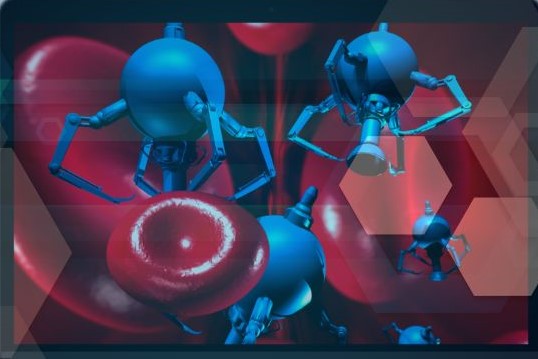
Researchers have built innovative nanorobots entirely from DNA to explore microscopic biological processes. Nanorobot is a small robot; microscopically small! It is capable of doing the following functions at the nanoscale: actuation, sensing, manipulation, propulsion, signaling, and information processing.
Nanorobot: A glimpse of past research on nanorobotics
Nanoid robotics is an emerging technology field creating robots whose components are at or near the scale of a nanometer (10-9 meters). More specifically, nanorobotics refers to the nanotechnology engineering discipline of designing and building nanorobots with devices ranging in size from 0.1 to 10 micrometers and constructed of nanoscale or molecular components.
In 2009, author and futurist Ray Kurzweil said, “30 or 40 years, we’ll have microscopic machines traveling through our bodies, repairing damaged cells and organs, effectively wiping out diseases. The nanotechnology will also be used to back up our memories and personalities.”
In an interview with Computerworld, author Kurzweil predicted that anyone alive who arrived in 2040 or 2050 could be close to immortal. Kurzweil had also added that the quickening advance of nanotechnology meant that the human condition would shift into more of a collaboration of man and machine, as nanobots would flow through human bloodstreams and eventually would even replace biological blood.
A team of researchers, in a research published in Science in 2017, used DNA to create a new type of robot designed to move and lift cargo at the smallest scales.
“Just like electromechanical robots are sent off to faraway places, like Mars, we would like to send molecular robots to minuscule places where humans can’t go, such as the bloodstream,” Lulu Qian, a bioengineering professor at the California Institute of Technology and one of the study’s authors, had explained in a press release.
Another study, published online in Nature Nanotechnology in 2018 by scientists, had shown that when cellular barriers get exposed to metal nanoparticles, there takes place of cellular messengers and that may cause damage to the DNA of developing brain cells.
For that particular research, the scientists had grown a layer of BeWo cells. It was a cell type that scientists widely used to model the placental barrier, in a laboratory on a porous membrane. Then, they exposed that cell barrier to cobalt chromium nanoparticles. And they later collected the media under the barrier and transferred it onto cultures of human brain cells. It sustained DNA damage.
Based on this sequence of studies on nanorobotics in the past, scientists have finally built innovative nanorobot entirely from DNA to explore microscopic biological processes.
“Nanorobot” Entirely Built from DNA: How will it Explore Microscopic Biological Processes?
Now, according to a new study, Inserm, CNRS, and Université de Montpellier at the Structural Biology Center in Montpellier have built the highly innovative “nano-robot”, which they have expected to enable a closer study of the mechanical forces applied at microscopic levels, which are crucial for many biological and pathological processes.
According to scientists, mechanical forces are exerted on our cells on a microscopic scale. They trigger biological signals essential to many cell processes involved in the normal functioning of our body or the development of diseases.
The feeling of touch, for example, is partly conditional on the application of mechanical forces on specific cell receptors (the discovery of this got this year’s Nobel Prize in Physiologyor Medicine). In addition, these receptors that are sensitive to mechanical forces (known as mechanoreceptors) enable the regulation of other key biological processes such as blood vessel constriction, breathing, pain perception, and even the detection of sound waves in the ear.
The scientists also said that the dysfunction of this cellular mechanosensitivity is involved in many diseases. We can take cancer as an example: cancer cells migrate within the body by sounding and constantly adapting to the mechanical properties of their microenvironment. That kind of adaptation is possible only because mechanoreceptors that transmit the information to the cell cytoskeleton detect specific forces.
At present, we have still very limited knowledge of these molecular mechanisms involved in cell mechanosensitivity. Several technologies are already available to apply controlled forces and study these mechanisms, but they have several limitations. In particular, they are very costly and do not allow us to study several cell receptors at a time, which makes their use very time-consuming if we want to collect a lot of data.
DNA Origami Technique
In a technique known as DNA origami, researchers fold long strands of DNA over and over again to construct a variety of tiny 3D structures, including miniature biosensors and drug-delivery containers.
The purpose of DNA origami is to use it for the construction of nanorobots and other structures for studies of fluorescence, enzyme-substrate interactions, molecular motor actions, various light, and other energy studies, and drug delivery.
To propose an alternative, the team of researchers, led by Inserm researcher Gaëtan Bellot, decided to use the DNA origami technique. This enables the self-assembly of 3D nanostructures in a pre-defined form using the DNA molecule as a construction material. Over the last ten years, the technique has allowed major advances in the field of nanotechnology.
This enabled the team to design a “nano-robot” comprised of three DNA origami structures. Since it is of nanometric size, it is therefore compatible with the size of a human cell. It makes it possible for the first time to apply and control a force with a resolution of 1 piconewton, namely one trillionth of a Newton – with 1 Newton corresponding to the force of a finger clicking on a pen. This is the first time that a human-made, self-assembled DNA-based object can apply force with this precision.
To start, the researchers coupled the robot with a molecule that recognizes a mechanoreceptor. This made it possible to guide the robot to some of our cells and specifically apply forces to targeted mechanoreceptors localized on the surface of the cells to activate them.
Such a tool is very valuable for basic research, as it could be used to better understand the molecular mechanisms involved in cell mechanosensitivity and discover new cell receptors sensitive to mechanical forces.
The researchers claimed that the design of a robot enabling the in vitro and in vivo application of piconewton forces meets a growing demand in the scientific community and represents a major technological advance. However, they say that we can consider the biocompatibility of the robot both an advantage for “in vivo applications” but may also represent a weakness with sensitivity to enzymes that can degrade DNA.
“Our next step will be to study how we can modify the surface of the robot so that it is less sensitive to the action of enzymes. We will also try to find other modes of activation of our robot using, for example, a magnetic field”, added Bellot.
Some of the most exciting advances in science seem to be coming from nowhere and out of nowhere.
Nanotechnology is still very sensitive about potential side effects such as toxicity if this technology were to become better.
It is important that we gain a transparent understanding of how exactly nanotechnology will change society. From how it affects us individually, to what new we can expect from the future of robotics – before embracing their power fully.
Researchers have built nanorobots entirely from DNA. DNA is a natural component of every cell in your body and it is how genes are coded.
DNA-based robots can navigate the bloodstream or the brain to look at the molecular level, and they may even gain the ability to self-assemble. This brings us closer to having a nanomachine that we can send into our bodies designed to improve health. And we won’t stop there.
With this technology, the future is looking brighter than ever before.
As a good news for the development of Artificial Intelligence as well, researchers say quantum sensor can detect electromagnetic signals of any frequency. The researchers at MIT and Lincoln Laboratory have developed a method to enable such sensors to detect any arbitrary frequency, with no loss of their ability to measure nanometer-scale features.
The new method is described in the journal Physical Review X. Quantum multiplexer can detect signals with a frequency of 150 megahertz and 2.2 gigahertz, say Chinese researchers. The system could be used to characterize in detail the performance of a microwave antenna, for example, says researcher Wang Wand. Scientists could also use the system to study the behavior of exotic materials such as 2D materials.
Quantum sensors and Artificial Intelligence(AI)
Connected objectscan sense, process, and take actions in a seamless way, without impacting our user experience and bridging the online and offline world. At its core, quantum sensor technology is the ability to sense and act on signals at the quantum level in real time. Quantum sensors enable the online world to interact with the offline world by sensing relevant information.
Quantum sensor technology can be applied to a variety of use cases including robotics, autonomous vehicle technologies and human–machine interfaces (HMI). When combined with AI, quantum sensors can provide more robust solutions through more accurate and efficient detection procedures.
The progression of Artificial Intelligence (AI) has led to increased demand for both hardware and software that support the training of artificial neural networks (ANNs). This has resulted in increasingly complex training procedures that have required significant computing power over time. The contribution of the MIT researchers in the field of quantum technology, in enabling faster AI networks and sensors, could thus have a significant impact on the field of AI research and development across multiple dimensions.
Quantum sensor technology combines sensing and processing at the quantum level in real time. The ability to sense and act on signals at the quantum level can enable a robot to interact with its environment without impacting human–robot interaction (HRI).
How will this research help in the further development of Artificial Intelligence?
This research will have a lot of potential impacts in the world of artificial intelligence. The ability to detect and act on signals at the quantum level can make computation faster, allow for more accurate sensing and provide more robust solutions.
The impact of quantum technology on various aspects of artificial intelligence will be significant and beneficial for every user. For example, we can use quantum sensors in various applications. The improvement in the field of AI will help in using sensors to have a better result, as it can extract accurate information from measurements.
The quantum sensors can be used to monitor the performance of the microwave antenna, for instance. Having accurate information about the performance and efficiency of a device or system is necessary to help an engineer or company make better decisions. The sensors will help them understand if they need to change the design of their RF systems so that they can improve their performance.
Quantum sensor technology has also great potential for use in many areas including robotics, smart manufacturing, intelligent transportation and buildings, etc. We can use it in the development of artificial intelligence to enable the learning of AI algorithms by a robot. The system will enable the robot to learn when it has detected certain objects or signals. This will help in making better decisions about actions to take based on what the AI network detects.
Further development of this kind of technology has great potential to transform human life like never before as it can help us monitor our activities in a much better way by creating smart devices that would monitor our daily life and some apps that would take care of various things for us, helping us save a lot in return.
5 possible implications of quantum sensors in the development of artificial intelligence;
1) The advancement of quantum sensor technology will allow digital elements to be able to interface and manipulate the physical world.
2) The next generation of computing is based on the principle of quantum bits, or qubits. A qubit is a unit of quantum information that can hold and process data in multiple dimensions. A traditional bit is similar to a light switch, which can be either on or off; however, a qubit is similar to a light switch connected to a dimmer switch. This more sophisticated ability allows for greater computing power with less energy input than traditional computers.
3) Sensing and processing at the quantum level could enable a robot to interact with its environment without impacting human–robot interaction.
4) Quantum sensors, along with quantum computing and AI, will offer new capabilities for sensor networks to detect and act on signals at the quantum level.
5) Quantum sensor technology will create an environment where sensing, processing and action in real time occurs.
From what we have discussed above, there are some very definite and important implications in the development of artificial intelligence. Many different fields of study will benefit from the advancement of quantum sensors. The most notable field is of course artificial intelligence, as it will enable a better understanding and execution of algorithms by robots.
Furthering our knowledge on the fundamental physics behind Quantum sensors and AI, we must further explore the limitations that exist between us and this technology – as this is currently the dividing factor between us and a true understanding of Quantum technology, its potential applications, and its impact on human life at large.
Our planet is currently the only one known to host life as we know it. This’s why, while looking for extraterrestrial life, researchers have traditionally concentrated on planetary systems that are comparable to our own, almost ignoring the fact that the binary star systems with wobbly jets could have chances of hosting life.
Now, according to new research published in the journal Nature on May 23, planetary systems form differently around binary stars than they do around single stars like the sun. And that these variances may have an impact on a binary star system’s ability to support life.
Binary star systems and wobbly jets
According to astronomers, binary stars make up nearly half of all sun-size stars. If the researchers’ theory is proven correct, it might double the number of systems that researchers are interested in investigating. Two stars orbiting a common core make up binary star systems. The pairs of stars in a binary system generally orbit each other with periods ranging from days to millennia; and they can be extremely near or very far away.
Astronomers have discovered that binary star systems make up more than half of all sun-size stars, indicating that they’re rather frequent. Most of them don’t appear to have an impact on the formation of planets around their host star. However, some people do. Astronomers are still perplexed as to why some binary star systems appear to have more planets than others when it comes to hosting planets. Wobbly jets are gas and dust jets that emerge from the central stars in binary star systems. These jets can start near to the star. And then they grow outward over time, generating rings of material surrounding the two stars, according to astronomers. As a result, the star is surrounded by a “double-bubble” system.
Disagreements about the finding
However, there is still considerable disagreement over how frequent this type of organization is. Some astronomers think these systems are rare. It’s because it’s difficult to find a target binary star system from which to study them. A star system is said to host life when a planet in orbit around one of its stars has conditions that allow it to support life. One way scientists can search for planets with these conditions is by looking for the ‘signature’ of gases like oxygen and methane within a star system’s atmosphere. To-date, scientists assumed that only the star systems like ours could host life. It was because of the way planets are thought to form around them.
But, there’s also some debate about whether planets form around solo stars or binary systems, as well. Jes Kristian Jørgensen, the study lead author and professor of astrophysics and planetary science at the Niels Bohr Institute at the University of Copenhagen, said in a statement that the result was exciting, since the search for extraterrestrial life would be equipped with several new, extremely powerful instruments within the coming years. The professor further added, “This enhances the significance of understanding how planets are formed around different types of stars.
New study and its results
Such results may pinpoint places which would be especially interesting to probe for the existence of life. Using the Atacama Large Millimeter/submillimeter Array (ALMA) telescopes in Chile, the study was based on the observations of the young binary star system NGC 1333-IRAS2A. That system is around 1,000 light-years away and is surrounded by a disc of gas and dust that may one day form a planetary system. The scientists then developed simulations that allowed them to rewind and fast-forward the system’s life cycle. They noticed that the gas and dust did not move in a continuous pattern.
The researchers added in a statement that the movement becomes quite strong at some points in time – normally for relatively short durations of 10 to 100 years per thousand years. “The binary star gets 10 to 100 times brighter until it returns to its normal form,” they noted. What the team theorized was that at certain points in the stars’ orbits around each other, their gravity pulls material from the gas and dust disk onto the surfaces of the stars. In turn, these bursts of infalling trigger wobbly jets shooting out from the disk.
“The falling material will trigger a significant heating”, report said quoting to second author Rajika L. Kuruwita, a postdoctoral researcher at the Niels Bohr Institute, as saying. L. Kuruwita also added that those bursts would tear the gas and dust disk apart. While the disk would build up again, the bursts might still influence the structure of the later planetary system. According to the team of astronomers, solo stars like the sun probably would not have gone through a similar process. It likely means that planets form differently around solo stars than they do around binary stars.
Astronomers’ future plan
Likewise, researchers say they also plan to investigate the possible role of comets in planetary system formation; as comets carry organic molecules that could jump-start extraterrestrial life on an otherwise barren planet.
The team of astronomers hopes to continue their observations with ALMA. And they’re looking forward to tapping into the next generation of telescopes. Such telescopes include the James Webb Space Telescope, Europe’s Extremely Large Telescope, and the Square Kilometer Array, all of which will begin operations within the next five years. “Combining the different sources will produce a lot of intriguing results,” Jrgensen added. If this theory is proven correct, it could reveal more knowledge about planet formation; and perhaps it will assist astronomers in identifying prime planet-forming areas. It could also disclose previously unknown possibilities for planetary systems. Thanks to further understanding of the composition and behavior of wobbly jets, astronomers could even propose new methods for creating planets within a laboratory setting.
More importantly, this research may pave a new way to search for extraterrestrial lives on some other planets with different star and planetary systems.
In the field of tissue engineering, a milestone has been set when a 20 year old woman received a 3-D printed ear implant made from her own cells on Thursday. The woman was born with a small and misshapen right year. The New York Times reports that this transplant is the first known example of a 3-D printed implant made of living tissues.
According to the report, the new ear was transplanted earlier in March. And it is shaped precisely like the patient’s other ear. Regenerative medicine company 3DBio Therapeutics said, NYT writes, “The new year will continue to regenerate cartilage tissue, giving it the look and feel of a natural ear”.
Tissue engineering: What exactly is it?
Tissue engineering is the use of cells or biomaterials to create artificial tissues and organs as needed. It is a new approach that combines biology and technology to create replacement tissues and organs, explain researchers.
While traditional approaches use an individual’s own cells to grow new parts, this one goes a step further by using 3D printers to build those parts with the right shape. While several research groups have been working on printing blood vessels, only a few have tried to create ear-shaped tissue.
Will the transplant be successful?
Although the company has not revealed any technical details of the transplant yet, officials involved in the transplant said that the chances that the transplants could fail or bring unanticipated health complications do exist. However, the possibility of the new ear being rejected by the body is highly unlikely. It’s because the ear is made from the patients’ own tissues.
The report says: A 3-D printing is a manufacturing process that creates a solid, three-dimensional object from a digital model. It involves a computer-controlled printer that deposits material in thin layers creating the precise shape of the object. The pharmaceutical industry has been using the 3-D printing technology for several years now.
Significance of the tissue engineering
It’s said to be a milestone in tissue engineering. It’s because it’s the first ever tissue engineering that is done with a patient’s own cells. It also helps the researchers to better understand how living tissues work.
The field of tissue engineering is rapidly growing. Researchers are creating tissues made from a patient’s own cells in order to create tissues compatible with their bodies.
Medical experts say its use has so far been majorly confined to producing custom-fit prosthetic limbs. They are usually made of plastic and lightweight metals. But, the ear implant – made from a tiny glob of cells harvested from the woman’s misshapen ear – is said to be a game changer as per experts in the field. Scientists say that the success of this transplant would mean that 3-D printing could even produce far more complex vital organs, like livers, kidneys and pancreases.
The transplantation of the 3-D printed ear will pave the way for a new era of reconstructive surgery; and tissue engineering that could revolutionize the future of medicine.