Tag: online privacy

  • Read This Before Using Chrome VPN Extensions

    Read This Before Using Chrome VPN Extensions

    More than 80% of Chrome VPN extensions have a free version available. You have to understand why they are free. It is not because the developers are generous. Most of them simply want to sell your data. That is right! Nearly 50 percent of personal VPN users have free VPNs. And that’s a lot of data to sell.

    If you use a free VPN extension for Google Chrome, your data is not yours anymore. It belongs to the developers who can sell it to the highest bidder. There are many other risks that come with using a free Chrome VPN extension. Many of these extensions are developed by companies based in countries with weak data protection laws. This means that your data is not safe from government surveillance and other 3rd parties. While some reputable VPN services, too, are based on those countries, they at least have their reputation as stakes. But not these free Chrome VPN extensions.

    In addition, these companies can force you to install malware and other unwanted software. You install these VPN extensions primarily because you need them. But what pushes you to install them is their number of installations.

    Most installed Chrome VPN extensions

    You may think that if millions of users are using it, why not! But do millions of users actually install chrome VPN extensions? Well, when it comes to browser extensions, one single user installs an average of 3.3 extensions. In the same browser? Yes, as they create different profiles for work, personal and entertainment use. So, the number of people using a particular extension is not necessarily relevant.

    What is relevant, though, is that the most installed Chrome VPN extensions are not necessarily good. This is not just our opinion. It is the opinion of many experts in the field, who have tested and reviewed them, including Google themselves. Also, the “most installed chrome VPN extensions” were not installed as many times as the google webstore shows. If there are 3 Million + downloads, maybe it’s something like 200,000+ installations, 50,000+ total users, and 30,000+ ratings. The active users at one time (unit day), is below 500. Leave alone bot downloads.

    Yes, the actual number of active users is very less, as people use these extensions for one-time-usage. They may use it for purposes like generating YouTube views. So, these people are not active users.

    Related Post: Avoid Taking Online Typing Speed Tests

    To What Extent Can These Extensions Steal Your Data?

    Sky is the limit. From your browsing history to your login credentials (if the site has no SSL), there is a lot that these chrome extensions can access. The best way to protect your data is to not use these extensions at all. And not only that, they can also insert ads into the sites that you visit, and even inject malicious JavaScript code. These extensions also cause frequent browser crashes, and can make your browser unusable. So, if you absolutely need to use a VPN extension for Chrome, be sure to do your research about chrome users, online privacy, and data breaches from the past.

    In fact, three popular VPN services disclosed data of 21 Million VPN users. This data included the email addresses and hashed passwords of numerous VPN users. The news was released on on May 7th, 2022. However, no one knows each day how many people’s data are being disclosed without them knowing. And that scares. Specially, when people are using these services to protect their data.

    And that is the reason why we have to be careful of what we put on the internet, because once it’s out there, it’s hard to control.

    Which is the Best VPN Extension for Chrome?

    So, if you are looking for a good VPN extension for Chrome, our advice is to go with a well-known and reputable VPN provider. And make sure that the browser extension is of that provider, not some clone. Yes, it may cost you a few dollars more. But it will be worth it, as you will get a good product that actually works. We recommend NordVPN. And that’s after testing 30+ quality VPN providers. It is a fast and affordable VPN service with a strict no-logs policy.

    As there is a saying, “If the product is free, you are the product”. Therefore, use your free Chrome VPN extension with a caution. Because in most of the cases, these free VPN providers sell the data you wanted to protect.


  • Things That Can and Can’t be Tracked

    Things That Can and Can’t be Tracked

    What does tracking mean?

    When we talk about “tracking”, in general, we mean monitoring and recording something (or someone) over time. You can track things in a number of ways. Usually, it involves some sort of software or app.

    Reasons for tracking

    People track things for different reasons. Some people want to improve their productivity, or figure out how they spend their time. Others want to keep track of their fitness, or monitor their sleep patterns. And still others use tracking as a way to manage their anxiety, or keep tabs on their moods. It’s the age of big data. Tracking can be good to find out the hidden patterns from the past to improve our future. But it can also be bad for our privacy and mental health.

    Monitoring vs tracking

    The average speed of a vehicle can be monitored by GPS. However, this is different from tracking. Monitoring means that the data is available in real-time but isn’t necessarily being saved. On the other hand, tracking is about recording this data for future use. Anything, object or event, if recorded can be tracked.

    Apart from location, we can monitor and quantify things from our steps to our sleep. But there definitely are some limits.

    What does being tracked/monitored by someone mean?

    If someone is tracking your phone, it means they are monitoring it in real-time and also have a record of its movements. For this occasion, the definition of tracking and monitoring are essentially the same. In general, the victim is unaware the fact that passive observers are tracking/monitoring them.

    Can Someone Track You by Monitoring Your Mobile Phone?

    passive observers using codes to track mobile phones

    Yes, someone can monitor your mobile phone without you knowing. There are a few ways this can be done. One way is through a mobile spy app. Another way is if someone has physical access to your phone and installs a tracking app without your knowledge. They can then track your activity from their own device. If you are concerned that someone may be monitoring your phone:

    Sign 1- Check for any suspicious apps that have been installed on your phone. If you didn’t install them, chances are they are monitoring your activity.

    Sign 2- Check your phone’s call logs and text messages for any strange or unknown numbers. If you see any, this may be a sign that someone is trying to monitor your phone.

    Sign 3- Be aware of your phone’s location at all times. If it moving when you’re not using it, someone may have installed a tracking app on your phone.

    Sign 4- If you notice unnatural sounds during a call, your device may have been compromised.

    If someone is tracking you/monitoring your phone without your consent, this could be a violation of your privacy. However, tracking can also be used for good. For example, it can help people find their lost phones.

    Things you can track:

    A woman checking her mobile phone

    Newer technology is making it possible to track things that were once unquantifiable.

    • Steps – Using a fitness tracker or your phone’s built-in pedometer, you can see how many steps you’ve taken in a day, week, or month. Examples of fitness trackers are Fitbit, Apple Watch, and Garmin.
    • Heart rate – Heart rate monitors track your beats per minute (BPM). These can be standalone devices or built into fitness trackers and smartwatches.
    • Location – Your phone constantly tracks your location, which you can see in the form of a map in Google Maps. You can also use apps like Life360 to track the location of family members or friends.
    • Online activity – Your internet service provider (ISP) tracks your online activity, which includes the websites you visit and the files you download.
    • Calorie intake – There are many apps and devices that track your calorie intake, such as MyFitnessPal and Fitbit.
    • Online orders – Whenever you make an online purchase, the website/ app and you can track your order.
    • Flights – Airline companies track your flight, which includes the date, time, and destination. Any normal person has the ability to track flights using FlightRadar24.
    • Sleep – Sleep trackers measure how long and how well you sleep. They can be in the form of a wearable device, like a Fitbit, or an app, like Sleep Cycle.

    Things you can’t track:

    Intangible thoughts that can not be tracked

    Given the ubiquity of tracking, there are still some things that can’t be tracked.

    • Thoughts – Nobody can see or track your thoughts. In fact, thoughts are some of the most personal things we have. They exist only in our minds.
    • Dreams – Dreams are also personal and occur only in our minds. We may be able to track our dreams if we write them down, but they’re still our own.
    • Emotions – Emotions are complex and vary from person to person. While we can track our own emotions, it’s difficult to track someone else’s.
    • Subconscious – The subconscious is even more difficult to track than thoughts or emotions. It’s the part of our mind that we’re not aware of.
    • Time – Time is an abstract concept that we can only measure in relation to other things. We can track how long it takes to do something, but we can’t track time itself.
    • Intangible assets – Intangible assets are things that have value but can’t be physically measured. Examples include love, knowledge, and opinions, or intelligence. For example, we can track how much time we spend on social media, but we can’t track how much of that time is wasted.

    Website Tracking

    Websites track your online activity to create a personalized experience. They do this by collecting data about your browsing habits. Most of the websites use trackers except select few like Wikipedia. But due to that factor, they have to ask for donations from users instead of showing Ads. So, it’s necessary for the websites, themselves, to collect data to show related Ads to you. But not all data-collecting websites’ intention are good. Some websites sell your data to advertisers. Website tracking is the practice of following a user’s online activity across multiple websites. They collect data about a user’s online activity and use it to create a profile of their interests.

    But that does not stop there. They sell your data including personal information for surveys, marketing, and other purposes. This is a huge issue because it not only violates your privacy but you may be subject to manipulation. Political campaigns use website tracking data to target voters with ads and messages that are tailored to their interests.

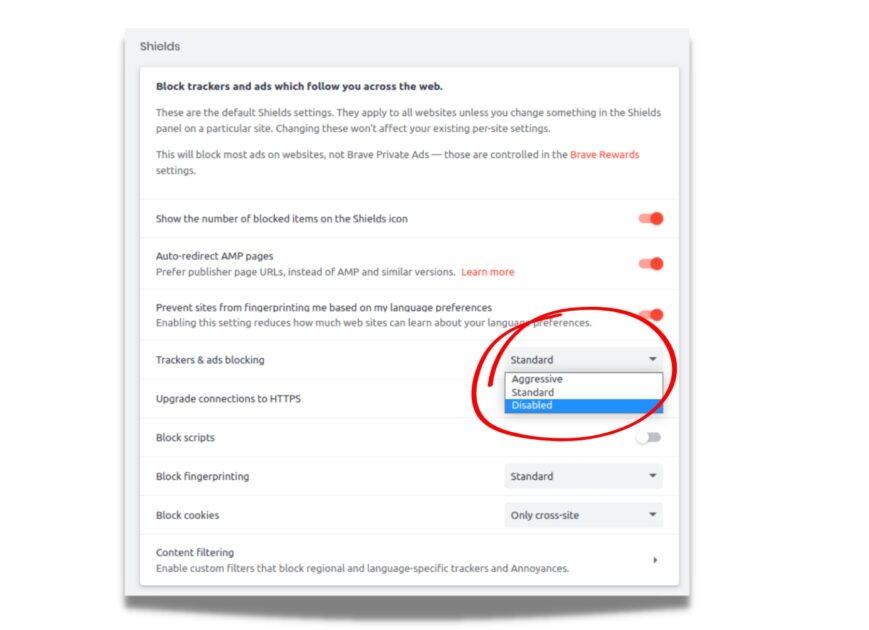
    So, what can you do to protect yourself from website tracking? The best thing you can do is to use a web browser that has built-in privacy protection. For example, the Brave web browser blocks website trackers by default. For even more privacy, you can turn on Brave’s strict privacy protection by following the image below:

    tutorial to turn on brave browser's strict online privacy protection

    The future of Tracking

    brain wave tracking

    In the future, there will be many untraceable things we could track. Here are some of them:

    1. Body movements

    Unlike present-day fitness trackers that only track steps and heart rate, future fitness trackers will be able to track every movement of the body, including the number of times you blink, how much you move in your sleep, and more. Digital clothes, digital glasses, digital shoes, digital gloves, digital underpants, digital belts, digital hats, and digital jewelry will all be able to track your movements and send the data to your fitness tracker.

    2. Environment

    Future devices will be able to track the environment around you by measuring changes in temperature, humidity, air quality, light, and more. These devices will be able to track the environment in real-time, as well as track the changes in the environment over time. The current extent of environmental tracking is limited to devices that track only one or two environmental factors like air quality or temperature.

    3. Brain waves

    Future devices will be able to track and record your brain waves. This information will be used to track what you are going to speak, before you do. This is not as far-fetched as it sounds. Meta’s new AI is already capable of doing so up to an extent.

    Related Post: Would you still be yourself after rejuvenating your whole body with advanced technology?

    Conclusion

    There are many things that can be tracked. There are also things that can’t be tracked. Some things we can’t track now could be tracked in the future. One way or another, we will continue to track things. But the very act of tracking things changes them. Privacy is the ultimate casualty of our obsession with data. Therefore, we must be thoughtful about what we track and why. In a nutshell, that is the message of this article.