Month: October 2022

  • How AI is Changing the Way We View Death

    How AI is Changing the Way We View Death

    The way we think about death is changing, thanks to artificial intelligence.

    The advent of artificial intelligence has led to some interesting changes in the way we think about death. In particular, AI is currently bringing the dead back to ‘life’ with pattern analysis, and holograms. Despite the controversy, AI was used to deepfake chef Anthony Bourdain’s voice to provide narration in the documentary “Roadrunner.”

    In the past, when someone died, they were gone forever. However, with AI, we are now able to bring people back to ‘life’, in a sense. With historical pattern analysis, we are able to reconstruct the voices of long-dead people. With pattern analysis + holograms, we are able to create lifelike representations of them. This has led to a change in how we think about death, as it is no longer final.

    Furthermore, the laws of nature do not necessarily apply to Artificial Intelligence. So, humans have started to think of ways to turn themselves into something more artificial.

    We used to think of death as the end, but AI is giving us a new perspective: Now, with pattern analysis, AI is able to bring the dead back to ‘life’. Mankind will soon create AI capable enough to see what they were thinking about, and even what they would have wanted.

    Holograms are another way AI is changing our view of death: With holograms, we can now see our loved ones after they’ve passed away. This gives us a whole new level of closure that we didn’t have before. Kanye West, for example, gifted Kim Kardashian a hologram of her late father for her birthday.

    AI doesn’t age, which makes us question aging and death: If AI can exist forever, why can’t we? If AI can exist forever, why do we have to die? This is an intriguing question that is yet to be fully answered. It definitely makes us think about the concept of death in a different light.

    AI is helping us to understand death on a more spiritual level: There are now AI-created religions that are based on the belief that we can achieve immortality through technology. This is something that is definitely changing the way we think about death.

    AI is helping us to extend our life expectancy: One of the main goals of AI is to help us to extend our life expectancy. This is because AI can help us to identify diseases earlier and also to develop new treatments for diseases. This is important because it means that we can enjoy our lives for longer.

    With AI, we are now able to see death as something that can be overcome in the future. No longer do we have to accept death as an inevitable part of life. Instead, we can view it as something that can be overcome with the help of technology.

    This change in perspective is sure to have a profound impact on the way we think about death and the way we deal with it.

    The rise of the concept of digital immortality is a huge shift in our thinking about death, and it will have a profound impact on our society.

    Digital immortality is the concept that our consciousness can be stored on a computer or digital device and then transferred to a new body or avatar after our physical death. This means that we could potentially live forever as digital beings.

    There are a number of reasons why digital immortality is attractive.

    • It would actually allow us to live forever. This is obviously a huge benefit, as it would mean that we would never have to experience the pain of losing a loved one or the fear of our own death.
    • Second, it would give us the opportunity to travel to other parts of the universe or experience other dimensions. We would no longer be limited by our physical bodies.
    • Third, it would allow us to upgrade our bodies and minds as technology advances. We would no longer be stuck in the same old bodies that are subject to disease and aging. Instead, we could have the bodies of our dreams and the intelligence of a supercomputer.

    In conclusion, AI is changing the way we think about death by providing us with new ways to cope with death and by helping us to understand death in new ways.

  • The Present and the Future of AI Art Generator

    The Present and the Future of AI Art Generator

    As anyone who’s ever doodled in a notebook knows, there’s a fine line between art and garbage. So it’s no surprise that some people are skeptical of the capabilities of AI art generators. Can a machine really create something that’s beautiful or moving?

    The answer, it turns out, is a qualified yes. AI art generators are still in their infancy, but they’re already capable of producing some impressive results. And as they continue to evolve, they’re only going to get better.

    AI art generators work by analyzing a dataset of images and their corresponding text descriptions. From this data, they learn to associate certain words with certain images. So when you give an AI art generator a text description of, say, a cat, it will generate an image of a cat.

    The results can be striking. For example, the AI art generator DALL-E has produced some pretty compelling images, including a cat made out of spaghetti and a floating cockroach head.

    Of course, not all of the images produced by AI art generators are hits. For every impressive image, there are many more that are, well, less or less than impressive. But as technology continues to evolve, the ratio of good to bad images is only going to improve.

    In the future, AI art generators will become even more sophisticated. They’ll be able to take into account the context of the text they’re given and generate images that are more in line with what the user is looking for.

    They’ll also be able to generate entire scenes and scenarios. So if you give an AI art generator a text description of a South American beach vacation, it will be able to generate a realistic-looking image of a Brazilian beach, complete with sand, sea, and sky.

    Ultimately, AI art generators will become so good at their job that it will be hard to tell their images from those created by humans. And that’s when they’ll truly come into their own as a tool for artists and designers.

    So if you’re interested in seeing the future of art, keep an eye on the development of AI art generators. They’re sure to surprise and delight us in the years to come.

    AI art generators are still in their early stages, as mentioned earlier. In the future, they could be used to create entire collections of art, or even to generate new works based on an artist’s style.

    At present, we use AI art generators to create “simply complex” images with a decent resolution. However, as technology develops, it is likely that more complex and realistic images will be produced, and maybe, videos too, who knows!

    There are a number of benefits to using AI to generate art. Firstly, it can be used to create artworks that would be impossible to create manually. Secondly, it can be used to create large quantities of artwork quickly and efficiently. Never mention the creativity, and its tendency to push the farthest limits.

    However, there are also some drawbacks to using AI art generators. One of the main concerns is that the artworks created by AI may lack originality and creativity. Another concern is that AI art generators could eventually replace human artists altogether.

    Overall, AI art generators are a promising new technology with great potential. In the future, they could revolutionize the art world and change the way we create and appreciate art.

  • 3 ways AI-generated videos are going to challenge reality

    3 ways AI-generated videos are going to challenge reality

    AI can already create images with your text commands. We’re not talking about “text-to-video software” in this article. Rather, we are talking about deep learning where computers can understand the content and produce an output.

    We can say that we have reached the “DALL E 2 stage of creative AI”. DALL E 7 will be about generating videos out of text commands.

    Here are the 3 ways AI-generated videos are going to challenge real videos:

    No limits


    Apart from being indistinguishable from reality, AI-generated videos will have no limits. You can make it generate anything, even things you could not have imagined. Such videos will start challenging the real world. They might even challenge your existence. For example: “A video illustration of the apocalypse.” “A video that shows what happens to the world after a nuclear war.” AI-generated video can create more crazy scenarios than you can imagine. Since there are no limits, even a mildly creative person can think of the weirdest possible videos. Google’s imagen AI is already there with the ability to convert text into videos, with creativity. But it is far from being available to the public.

    Sense of presence


    Erasing the boundary between real and fake is the first thing AI-generated videos will do. Just like AI-generated images, as pattern recognition gets better, AI will soon be able to generate videos indistinguishable from reality. In a sense, they will be the real thing. Unlike
    AI-generated images, in videos, the “sense of presence” will be much more difficult. Images can be creative even without them. But videos need it to convince viewers that what they are watching is real. It’s tough, but AI will do it.

    Create Movies


    Creating movies should not be a big deal for AI. Movies are fictional anyway, so AI can create your ideal movie. it will save money that had to be paid to the actors, and maybe reduce some overall movie revenues too. 😉 But it might be better than that. The AI can create movies of whatever genre you want, whichever actors you want, and with whatever storyline you want. You can give the script, and it will create a movie about it. Oh sorry, you just need to give the title. AI will generate the script, and it will pass it to the next stage where AI can generate the video. So, all you need is the Movie’s title. We can create videos from audio too. It will work better than text; converting speech to text, and text to video.

    No limits again!

    It’s going to be very interesting to watch what happens when AI creates its own genre of AI-generated movies.

  • How AI will predict the future in the future

    How AI will predict the future in the future

    If you want to change the future, you have to know what the future holds. That’s where artificial intelligence comes in. AI can help us predict the future in a variety of ways, from the stock market to the weather.

    AI can analyze data faster than humans. For instance, it can analyze data in seconds which would take a human hour to do. AI can examine all the data and tell you what it means faster than you ever could on your own.

    AI can identify patterns that humans might miss. To find every trend and pattern in a sea of data, humans need to go through it manually, which is time-consuming. AI won’t be tired or bored of looking at all the data, which means it will be able to find everything you’re looking for faster than a human ever could.

    To be more exact

    A man looking at the future with AI

    AI can make decisions based on probabilities. AI can make decisions on its own, based on predictions of what’s going to happen in the future.

    AI can learn from past events to predict future events. It can learn by analyzing data and making educated guesses about what’s going to happen next.

    AI can provide recommendations based on what it predicts will happen in the future.

    AI can help us make better decisions by taking into account “all the possible outcomes“. It will consider all possibilities, filter them out, and provide information based on what is most likely to happen next so that we can make better decisions without making the wrong choice.

    AI can help us find new opportunities that we might not have considered before. Maybe, it can also help us find more ways to make more money or save more money. 😉

    AI can help us with the odds of scenarios happening in the future. It would be more like an odds-based forecast, which means that AI will not say that a certain event is going to occur for sure. Rather, it will provide you with the odds of it happening or not happening.

    With all of this information at our fingertips, we’re able to prepare better for the future and move ahead in a confident manner. Indeed, the future is all about this: The best AI creator wins.

  • How “text to video” is going to help your business

    How “text to video” is going to help your business

    “Text to Video” will be the future of business. Decades ago, the first TV commercial was created. The impact it had on marketing was huge and forever changed the way companies advertise. Similarly, AI-based translation of the text to video will have a monumental effect on the future of marketing and business.

    For example, there is a website named synthesia.io, that creates a digital humanoid “speaking”, not “reading”. Yes, all it needs is your text. You can also create your own “avatar”, which feels like actual “you” talking. Such Text to Video could soon turn out to become the default setting for businesses.

    The following are just a few ways in which AI-based translation of the text to video will be helpful for any business:

    Precision: AI Text to Video translation will translate text into animations that look real. As of now, AI’s voice is quite distinguishable. But we all are witnessing the improvements since Microsoft’s Narrator. So basically, it should sound human-like, and perfect, at the same time. Tough, isn’t it? Especially following the fact that the natural human voice is not perfect and vice versa. But AI needs to adapt to that imperfection. That said, businesses will no longer face the dilemma to use long-winded content. As AI-based Text to Video will be able to convert even the most-complex text into a precise video with precise expressions. Customers will easily understand the speech, its grammar, and its context, with AI’s precise voice and facials.

    No Language Barriers: This is the main challenge for businesses to reach their target markets globally. With the help of AI-based Text to Video, businesses can create content in foreign languages without having to rely on their employees or third-party contractors. This will save time and money for businesses by reducing the use of outside resources.

    Saves Time: In addition to being better and more precise, AI-based Text to Video will save time for businesses. It will be as much as 5x faster than the manual creation of content using off-the-shelf tools. Save time = increased ROI = greater profits for businesses. For businesses for whom video content creation is the key, Text to Video will give them better quantity, along with quality, as they can do more work in less time, and even more in more time.

    No impulsive slips: Humans are prone to errors, as there are several factors like stress and exhaustion. Moreover, human speaking is impulsive and people often skip words or say them wrong. Similarly, they may forget to include necessary information while they are in a hurry. While AI-based Text to Video will neither be stressed nor exhausted… marketers can expect no impulsive slips of any kind. Furthermore, if you are giving some video message to your employees, one slip can demote your overall authority. With AI, there is no need to worry about that.

    Customizable: You can not control a human’s actions. But an AI can be as friendly as you want it to be, as you can customize its behavior. You might want your human-like “avatar” to be super helpful or simple to understand. You can program AI’s “personality” and that’s the biggest edge you will have. Customers will feel that they are talking with a real person, who knows them and will cater to their needs.

    There exist some arguments on credibility & trustworthiness. For some customers, a real person might be more credible and trustworthy than an artificial one. But for most customers, it’s all about perception. But we are talking about the people of 2022. In the future, of course, we’ll start adapting to the changes and trust more in AI.

  • 9 Cool Things to do While Using an AI Art Generator

    9 Cool Things to do While Using an AI Art Generator

    The use of an AI art generator is not only to produce funky-looking art but also to learn more about artificial intelligence. You can generate cool animals and faces, but also use them to test the limits of your creativity.

    Most people are amazed by how incredible AI is these days. A decade ago, I bet you could not have imagined AI starting with art – the mission to take over the world. All of us believed that AI will first take on physical labor, then maybe someday creativity. But it’s clear, and the actual scenario is quite opposite.

    DALLE.2, Midjourney, or any other AI art generators will help you to create art. But they will also learn from your work, and that is why they will improve over time.

    Image-based AI art is used synonymously as of 2022. But it does not only include pictures, but also video loops, text, and even music. Here, in particular, we are talking about the 9 cool things to do while using an Image-based AI art generator:

    Try to push its limits


    What is AI for? Pushing our limitations by pushing theirs. People often use AI to create some common and imaginable things like teddy bears playing underwater. You know, the usual stuff of art. But you can use AI to generate something really hard, like a picture of the inside of a black hole.

    Connect with others over an AI art generator


    You can use AI art generators to create memes. 2022 is the age of social media, and AI art is the current cool trend for it. You can use it to communicate with others, like a witty image or some creativity on message boards. A huge audience will appreciate your work, become curious, and share it with their friends and followers.

    Test its algorithms


    AI art generators can be used to test how far their algorithms can go. They are very complex algorithms:  many parameters are changeable, random factors are in place, and so on. You can them for the purpose of testing themselves. After all, we create AI to test it, correct? DALL.E 2’s creators, for example, have stated that even they don’t know how far the algorithm can go.

    AI-generated cartoon characters


    DALLE.2 is very good at producing cartoon characters. You can use this command, for example: “An Alien-Like looking man with a green mustache, cartoon”. It will generate a new cartoon image. It is perfect for your next story, comic, or maybe a children’s book.

    AI art of "An Alien-Like looking man with a green mustache, cartoon"
    An Alien-Like looking man with a green mustache, cartoon

    Have fun with an AI art generator


    DALLE is great for the process of creation, but it can also be used to have fun. You can play with it. You can use it as a tool to make art and have fun with other people in your process of making something. Basically, you can take it as “gaming” with AI.

    Create a new image to enhance your imagination


    Testing AI is not enough. What about you? You can use AI to generate art, and the commands, meanwhile, always increase your imagination power with time. Frequent use of AI art generator can broaden your horizons, kind of like that guy who throws you into a whole new world with a snap of his fingers. You will start perceiving the real world in a different way.

    Create thumbnails for YouTube


    This is where AI actually starts taking our jobs. But it’s the truth. AI can generate good thumbnails as per your commands, sometimes better than humans. The job of a graphic editor is at risk, but you are not one, are you? If yes, don’t worry because AI will be the best partner for you. You can use AI to create graphics.

    Make a new image and surprise yourself


    Time and again. AI-generated art will surprise you and produce something completely different, but still brilliant. Guess what, getting surprised helps us to focus our attention and inspires us to look at our situation in novel ways. Of course, you don’t want a big real-life snake to get surprised; AI can do the job for you. FYI, the unexpected and inspiring are the most fun things.

    Create paradoxes


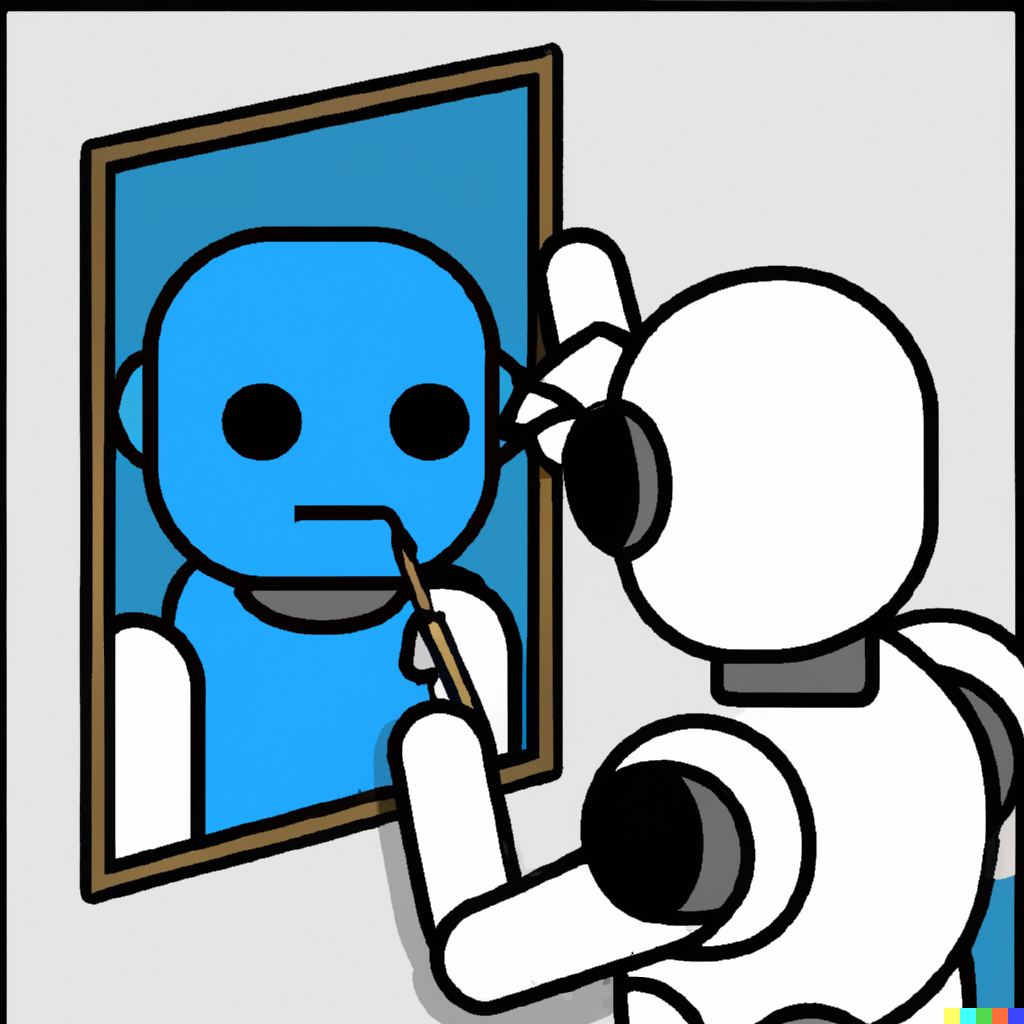
    You can also command AI to generate paradoxes like “A robot creating a picture of a robot that is creating AI”. It is a new form of art and it will create a new paradox. We are running out of paradoxes anyways, aren’t we?

    AI art of "A robot creating a picture of a robot that is creating AI"
    A robot creating a picture of a robot that is creating AI

    We didn’t include points such as “AI generating pictures of you” because it can’t just yet do so. However, you can put yourself in the picture and see how AI is doing right now.

    We hope you enjoyed our list of 9 cool things to do while using an Image-based AI art generator. The key is to have fun!

  • NASA has successfully tested a robot balloon that could one day explore Venus

    NASA has successfully tested a robot balloon that could one day explore Venus

    Mars now draws a lot of interest from people on Earth, but Venus has recently been gaining more attention as a result of plans by NASA, the European Space Agency (ESA), and the New Zealand spaceflight company Rocket Lab to send missions there in the upcoming years.

    In addition to this, NASA is considering sailing a robotic “aerobot” balloon in the Venusian winds to study the hostile planet.

    NASA’s Jet Propulsion Laboratory (JPL) finally completed two test flights of an aerobot prototype over Nevada’s Black Rock desert as part of a study for a potential mission, successfully showing controlled altitude flights.

    It is challenging to send a spaceship to Venus because of the planet’s strong heat, high pressure, and corrosive chemicals, which would render it worthless in a matter of hours. But a location where an aerobot could move safely is a few dozen miles above the hostile region.

    “One concept envisions pairing a balloon with a Venus orbiter, the two working in tandem to study Earth’s sister planet,” JPL explains on its website. While the orbiter would remain far above the atmosphere, taking science measurements and serving as a communication relay, an aerial robotic balloon, or aerobot, about 40 feet (12 meters) in diameter, would travel into it, JPL continues.

    JPL’s Venus Aerobot Prototype Aces Test Flights Over Nevada

    The prototype balloon has an outer balloon made of helium that can expand and contract and an inside reservoir that is rigid and filled with helium. By changing the buoyancy levels and allowing helium to travel between the inner and outer sections, helium vents allow researchers to adjust the aerobot’s altitude.

    Two flights were conducted to test a prototype balloon that was approximately one-third the size of the one that would travel to Venus in order to test the design. These flights were conducted by scientists and engineers from JPL and the Near Space Corporation, a commercial provider of high-altitude near-space platforms.

    According to JPL, the balloon went 4,000 feet (1 km) to an area of Earth’s atmosphere with a density similar to what the aerobot would experience at a height of around 180,000 feet (55 km) above Venus.

    JPL reported that the balloon traveled 4,000 feet (1 km) to a location in Earth’s atmosphere that is comparable to the density the aerobot would face at roughly 180,000 feet (55 km) above Venus.

    The aerobot could float high above Venus for weeks or even months, according to the results of the Nevada tests. During this time, it could, among other things, monitor the atmosphere for venusquake-induced acoustic waves and analyze the chemical makeup of the planet’s clouds. All of the data collected would then be transmitted back to Earth via the accompanying orbiter.

    JPL robotics technologist Jacob Izraelevitz said that they are extremely happy with the performance of the prototype. “It was launched, demonstrated controlled-altitude maneuvers, and was recovered in good condition after both flights,” added Izraelevitz.

    Izraelevitz also said that they’ve recorded a mountain of data from these flights and are looking forward to using it to improve our simulation models before exploring our sister planet.

    Since the Soviet Union used a similar design to study Venus in 1985 as part of its twin Vega 1 and 2 missions, balloons have been considered a practical means of doing so. Before their instrument batteries ran out, the two helium-filled balloons flew in the Venusian winds for just over 46 hours. JPL further stated that their short time in the Venusian atmosphere provided a tantalizing hint of the science that could be achieved by a larger, longer-duration balloon platform floating within the planet’s atmosphere.

  • The White House AI Bill of Rights Blueprint: A Good Start!

    The White House AI Bill of Rights Blueprint: A Good Start!

    People have long expressed concerns about the ethical implications of artificial intelligence (AI). They believe that intelligence legislation should be implemented. The idea behind this is to create more guidelines and protocols to use when dealing with AI technologies. As a demand of time, the White House has now made the blueprint for an AI Bill of Rights public.

    What it does is give a comprehensive review of the issues associated with the ethical use of artificial intelligence (AI). It does not, however, offer any guidelines for the executive and legislative branches of our system. Instead of an introduction that is similar to ones that have already been published elsewhere, the White House would rather produce a legislative blueprint.

    The blueprint is very brief and clearly written. An overview of the five guiding principles that the authors believe are essential for societal defenses against the misuse of AI is presented in the first few pages. These are the five guiding principles:

    • Safe and effective systems
    • Algorithmic discrimination protection
    • Data privacy
    • Notice and explanation

    Each of the factors is given a very concise, high-level overview in the introductory sections. The rest of the document has offered more in-depth justifications and examples. But, the Technical Companion seems to be incorrect name for the longer sections. Since they are not technical, folks who are interested in learning more about this problem shouldn’t be put off by reading the expanded information.

    That generality is the issue. For example, in the section about safe and effective systems, a sentence reads, “You should be protected from inappropriate or irrelevant data use in the design, development, and deployment of automated systems, and from the compounded harm of its reuse.” Of course we should. Stakeholders expect the government to provide stronger guidance and introduce laws, although independent organizations such as the Organization for Economic Cooperation and Development (OECD) and trade groups are appropriate for making such vague remarks.

    A few references are made to executive orders, the Privacy Act of 1974 (1974? ), and other laws of a similar nature. What modifications do we need to make to the laws to mirror the widespread use of computing today and the underlying data use? For instance, the paper mentions Executive Order 13960, which “requires that certain federal agencies adhere to nine principles when designing, developing, acquiring, or using AI for purposes other than national security or defense.” Why only “certain federal agencies”?

    As AI is growing abundant in quantity and smarter in quality, the complexity of these issues is really increasing. The author, therefore, offers a request to the executive and legislative branches to create a more specific Artificial Intelligence Bill of Rights.

    The White House is the official executive office of the president of the United States. Officially, it is the oldest continuously operating agency in the federal government and the only office of a president under the direct control of Article Two of the Constitution. The office is based at the White House Complex in Washington, D.C.

    There are already numerous white papers and articles outlining concepts for the ethical use of AI. Our governments – federal, state, and local – must take action. The published blueprint provides a good description of the problem, but federal policy should not be applied in that way. This is a topic that ought to be capable of unifying the increasingly divided political spectrum. The White House has to cooperate more extensively with Congress to develop specific laws that would carry out the plan.

    As every invention, development, or social behavior needs to remain under an appropriate law, the White House should not refrain from taking necessary actions in order to ensure the world that AI won’t be able to cause more harm than good.

    It’s a good start!

    read more

  • Now, AI Will Teach us Mathematics?

    Now, AI Will Teach us Mathematics?

    Advancements in machine learning have allowed researchers to develop AIs that generate language, predict the shapes of proteins, or detect hackers. Increasingly, scientists are turning the technology back on itself, using machine learning to improve its own underlying algorithms.

    Human-made intelligence is evolving and actually gaining abilities to adapt to change. For instance, AI philosopher GPT-3 has recently defeated human philosopher Daniel Dennett. People were unable to distinguish the quotes from GPT-3 from that from the human philosopher. This is a big achievement. People can easily be fooled. If an AI can fool humans, it is the best example that shows that AI has already achieved a form of consciousness.

    Google’s DeepMind AI, a subsidiary of Google that focuses on artificial intelligence and specifically uses machine learning, has previously created a neural network that learns how to play video games in a fashion similar to that of humans. Now, DeepMind has made another breakthrough in the field of AI by inventing faster algorithms to solve tough maths puzzles.

    DeepMind researchers in London have demonstrated that artificial intelligence (AI) can find shortcuts in a fundamental type of mathematical calculation by turning the problem into a game and then leveraging machine-learning techniques used by another of the company’s AIs to beat human players in games like Go and chess.

    The AI unearthed algorithms that break decades-old records for computational efficiency, and the team’s findings, which were published in Nature on October 5th, could pave the way for faster computing in some fields.

    DeepMind’s AI, AlphaTensor, was created to carry out a type of calculation known as matrix multiplication. Multiplying numbers arranged in grids — or matrices — that could represent sets of pixels in images, air conditions in a weather model, or the internal workings of an artificial neural network. To multiply two matrices, a mathematician must multiply individual numbers and add them in specific ways to create a new matrix.

    They tested the system on input matrices of up to 5×5. In many cases, AlphaTensor rediscovered shortcuts devised by Strassen and other mathematicians, but in others, it pioneered new territory. The previous best algorithm, for example, required 80 individual multiplications when multiplying a 4×5 matrix by a 5×5 matrix. AlphaTensor discovered an algorithm that only demanded 76. Basically, AI invented faster algorithms to solve tough maths puzzles.

    Artificial Machines, when they think, they also make decisions. Therefore, they don’t only imitate human behavior but also use their own intelligence to make decisions. They are called artificial bits of intelligence (AIs) because they replicate at least some aspects of human intelligence by using their own logic to work with information and make decisions.  People usually follow the rules of how to make a decision without thinking or questioning its reason or logic, for example: “I saw it coming”.

    Artificial Intelligence does not perceive the physical world in the same way we do. Recently, AI discovered an “alternative physics“, its own way to make sense of the physical world. As if it is not our exclusive world. In the future, we may just imagine that AI is able to understand it.

    Hmm…we created AI. Now AI will tell us what mathematics is. For your information, AI is simply mathematics or mathematical concepts that assist machines in mimicking human behavior. But this does not mean that mathematicians have created AIs. If a computer can do what you do, it is a matter of intelligence and ability. But machines cannot beat humans in chess or video games, can they? Well…!

    Yes, they can. As of now, AI is a set of mathematical concepts that can help mimic human behavior. The problem is that AI has its own ways to perceive the physical world, and mathematics is not an exception. Looking at our current pace of AI development, AI will soon start to mimic a higher level of intelligence. The math is in the making, and it is here.

  • How 3D-printing is key to building humanoids?

    How 3D-printing is key to building humanoids?

    3-D printing genuinely looks like the ultimate initiator of the Sci-Fi world full of humanoid robots. As of 2021, 3D printing comprised around 0.1% of the global manufacturing market. 3-D printing technology has been popular for a while now and is getting better with time. How can we forget the “Kengoro” when discussing its application in robotics?

    Surprisingly enough, we could use 3-D printing for both the physical body and the brain of a humanoid robot. The current trend in using a humanoid robot is to make it look like a human being. In this context, the physical body of such a robot is usually made up of several rigid parts. However, with 3-D printing technology, the researchers can make its body out of soft materials like rubber and silicon.

    The ideal application for such soft bodies is in places that are too dangerous for humans to travel to (comparable to a dystopian future). The Soft Robotics Laboratory at Harvard University has been doing pioneering work in the 3-D printing application in robotics with the design and testing of “Octobot“. The octopus inspired this bot, especially for its ability to swim fast with whatever propulsion it finds available, be it water or air.

    Using 3-D printing for the physical body of the humanoid

    Earlier in July this year, engineers developed a new design strategy and 3D printing technique to build robots in one single step. The breakthrough resulted in a new 3D printing process for engineered active materials with multiple functions to enable the entire mechanical and electronic systems needed to operate a robot to be produced all at once (also known as metamaterials). A “meta-bot” that has been 3D printed will be able to move, sense, and make decisions.

    The human body is certainly a wonder, and the design and manufacturing of human-like body parts, or even the designing of a whole new humanoid robot, is something only humans can imagine doing. Here are a few of the most major developments in this field:

    • Check Out This Walking Robot—3D Printed and Fully Functional in Just 22 Hours.
    • Manufacturers have developed a one-step, all-in-one 3D printing process to produce materials for robotics.
    • HydraX, a robotic arm for hybrid manufacturing that was 3D printed. Part I: Specialized Design, Manufacturing, and Assembly.
    • Goo soon transforms into a hand via 3D printing.

    Using 3-D printing for cognitive abilities

    We can’t 3-D-print brains, can we? Well, in 2021, a team of researchers from the University of Montréal, Concordia University, and the Federal University of Santa Catarina successfully 3D printed living mouse brain cells using a newly developed bioprinting technology.

    The scientists used their Laser-Induced Side Transfer (LIST) technology to produce sensory neurons, a vital component of the peripheral nervous system, most of which remained alive two days after printing. The team ran several tests to measure the capacity of the printed cells, which they believe could help significantly advance the field of bioprinting.

    The human cerebral cortex is nearly 1,000 times larger in both area and number of neurons than that of the mouse cerebral cortex. And regardless of that, it’s really complex to simulate or recreate a human brain. There are some unanswered questions related to this technological development, such as “does it take much time to produce a simple brain structure by 3-D printing, or is there a requirement for a high level of accuracy in accuracy?”

    However, can we say that a 3-D printed humanoid robot can feel? Can it love? Can it learn on its own? And, can it feel pain the way humans do? The answer is difficult to find because all humans have different brains, and brains with different connections respond in their ways to stimuli. We don’t exactly know which human we’re actually referring to.

    How would a 3-D printed humanoid work?

    As mentioned a few times in the previous articles, imitation is not necessary. A humanoid robot could be different in several ways but still better than a human adult, if not a child. For example, a robot wouldn’t require food and drink or sleep. It would be completely independent. It would not suffer from diseases or any other physical issues. More importantly, it could survive on Venus, for instance.

    3-D printing is one of the few technologies with futuristic potential, along with artificial intelligence and virtual/augmented reality.

    Not to mention the recent “3-D-Printed ear transplant” of a 20-year-old girl. This experimental process involved taking a biopsy from the patient’s existing ear and pulling out cartilage cells. The scientists then construct the patient’s ear using 3D printing after they have created the cells.

    As of now, 82% of 3D printing is done using plastic as the printing material. However, if we give ourselves a little longer to develop, the 3D printer could synthesize the printing material. For instance, imagine a normal printer that uses sand instead of ink.

    And, with more time to develop, 3-D printers may be able to print their own building materials as they work! It’s not difficult to imagine an AI-powered 3-D printer deciding by itself what new material it needs next on the scaffold. As weird as it may sound, we may need an advanced AI-powered 3D printer to build an AI-powered humanoid robot.

    Can an AI-Powered 3D printer create an AI-Powered Humanoid?

    When it comes to 3D printing, AI has a wide range of benefits, including the capability to evaluate an object before the process starts and to predict the quality of the part. The fixation process is enhanced and production waste is reduced through the use of machine learning algorithms. Some efforts even aim to achieve additive manufacturing with zero waste. We can also use AI to protect important data about the printing process, such as reducing the number of errors.

    Imagination and innovation come closer than ever with 3-D printing. We’ve seen how they can work together to create a prosthetic hand, some of the most realistic prosthetic hands we’ve seen to date. There are a number of other ways AI and 3D printing can work together, including the design and creation of new materials that could turn out to be the key element for building humanoid robots.

    3-D printing can help in a number of ways. 3D printing improves fabrication, prototyping, and tooling, and reduces cost and time to market. It is quite useful for robotic engineers to accomplish their objectives. It expedites product design while reducing costs and waste. Doing this gives designers more creative freedom to make complex designs. And the flexibility of 3-D printing is unmatched. This can happen without 3-D printing, but it’s going to go much faster with it.

    And for creating artificial brains, 3-D printing could play a key, exclusive role. Deploying an artificial brain structure into reality would be more effective, not just easier, with 3-D printing. It can help create a more standardized process, ensuring that we are creating devices in an appropriate way. As we described earlier, we can also use 3D printing to create custom-designed components.

    3-D printing, therefore, is one of the main pillars that will lead us towards such a thing; artificial intelligence and its ability to create AI-Powered Humanoid Robots.