Author: Britney Foster

  • Will future humans still be humans?

    What does the future hold for humankind? Or will our race be called ‘humankind’ in the first place? Before getting into whether or not future humans will be considered humans, it’s essential to answer: What is a human?

    Characterized by bipedalism and large, complex brains, humans (Homo sapiens) are the most abundant and widespread species of primate.

    This definition of a human may later on change, but how, up to what extent, and by when? Will the future humans be completely upgraded by machines and technology? Will they be humans having the same ability to feel emotions and think critically? Or will they become something completely different and far removed from humans?

    I find that the question of what makes people human is much more important than whether or not there will be any machines in our future. The answer to whether or not we are still humans has an irreversible impact on our whole existence. And as undeniably real as it may be, it’s just a matter of time.

    Will future humans still be humans? Till when? We’ll be discussing everything on the topic, from B to Y.

    Customizing ourselves with a machine?

    Let’s consider our current level of technology as the default. And let’s assume that all the following upgrades are possible:

    1) Modify eyes, ears, and nose to increase the efficiency and quality of our senses.

    It will be available in the future, so we should not wonder if this upgrade is possible or not. The questions that can be raised here are: firstly, whether it is ethical to alter the human body artificially, and secondly, how much this upgrade will (or should) cost. Currently, artificial organs are not affordable for everyone, but an optimistic prediction says that they will be available in the future.

    2) Upgrade our brain’s memory capacity.

    This program would be expected to increase the brain’s capacity by at least 10 times (approximately) and will certainly be available in the future.

    In addition, people who are suffering from a severe case of Alzheimer’s disease can already enjoy some improvement thanks to a brain implant that makes the patients think more clearly and remember more information, for example about their hometown or the names of relatives.

    3) Upload human memories into computer data storage through downloading software to computer-related language processing technology.

    Many technologies to support this program exist. For example, brain-computer connection technology can even read a person’s mind. With this program, we would be able to record the experiences, thoughts, and feelings of the human brain — in other words, to download everything that we have ever experienced in our entire lives into the computer data storage means.

    The question here is whether it is ethical to download someone’s memories into computer data storage means programmed by human hands.

    4) Upgrade our genes and body with nanotechnology.

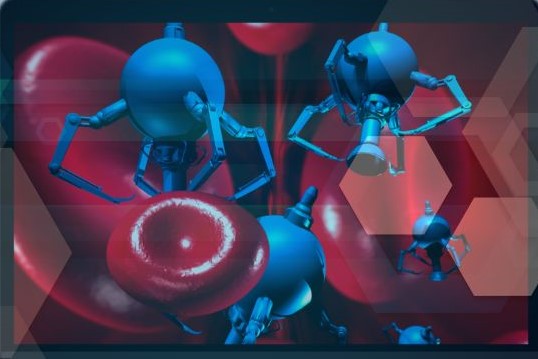
    Today, it is already possible to use nanotechnology in medicine and cosmetic surgery. Hence. It is not a far-fetched idea that we will be able to upgrade our bodies with nanoparticles and nanorobots. We can expect that this program will be available not just for human beings but for all living things in the near future.

    5) Upgrade our molecular composition.

    The molecular composition of our bodies changes every few years due to various external influences such as pollutants, vitamins, and food additives, etc. However, we will face an irreversible change if the basis of everything is changed by technology itself into something even more horrible than what we currently have — artificial hardwired blood (brain) and artificial skin (cyborg body).

    6) Upgrade our DNA with more genes and neurons.

    It is already possible to increase the number of genes in the human body by artificially regulating the breeding process in animals — to some extent. However, it is still not possible to increase it beyond a certain limit.

    The question here is whether or not we really want such a change…

    7) Upgrade our brain’s functionality by uploading artificial intelligence into it.

    Many approaches can do this work, but researchers have been focusing on teaching different software the ability to simulate human thinking.

    The idea behind this program is that humans will be able to upgrade their brains by downloading artificial intelligence (AI). The problem is not whether it’s possible or not, but rather whether we can program the AI to be like us or not.

    8) Upgrade the human body through genetic engineering to be able to survive on Mars or other planets.

    It is said that our vision can be improved by using gene editing techniques to avoid cataracts and blindness. I know genetic engineering and mars colonization are a weird combo…but still consider it just like Elon Musk does.

    However, we may need to improve the body’s ability to resist disease and change the body’s physical characteristics in order to adapt it for longer space travel.

    The “will you still be considered a human” part?

    a) Modifying eyes, ears, and nose for improved senses:

    This method is currently available today through surgery and implants (for instance: prostheses). The problem with such artificial organs is that they are not yet cheap or highly effective enough to become a standard upgrade. But if they can be made accessible and affordable via surgery, it will certainly happen in the near future.

    Will we still be humans? Yes. Modifying our organs to improve our senses and senses (so-called augmentation) is a program that is completely compatible with human rights.

    b) Add memory capacity to our brain by downloading artificial memories:

    The goal of this program is no longer just to store or back up memories, but to create external memory support that allows us to back up and store not only human consciousness but also all human experiences (including hopes, dreams, ambitions, knowledge, etc.). This program will be available in the near future as it can easily be realized by combining today’s technology.

    Will we still be humans? Yes. Adding memory capacity to our brain is also compatible with being a human.

    c) Upload all human experiences into the computer in a language intelligible format:

    This program is even more serious than the previous two. What would we do if we had everything that we have ever seen, felt, or thought there in front of us through downloading? Would our minds still be ours?

    Will we still be humans? Well, no. This will cause the extinction of what we presently call “mankind”. Everybody will be immersed in their own digital world forever.

    d) Upgrade our genes with nanotechnology:

    This is also an extreme method as it is considered much more serious than the previous three. This program will be available in the near future as it can easily be realized by combining today’s technology.

    Will we still be humans? Yes or no. Upgrading our genes with nanotechnology would probably cause rearrangements of everything in the body, which will make us different from what we currently are and so would not be considered human anymore. But we can not say for certain as the definition of the word “human” is continuously changing.

    e) Upgrade our molecular composition with nanotechnology:

    This means that we would be able to change our basic composition as well as the structure of our brain and body into something totally different. This will not only change the human body but can also modify or upgrade all existing life forms, including plants and animals — including humans themselves.

    Will we still be humans? No. This can cause an irreversible change to human nature so it would cause the extinction of human beings who have been present on Earth for around 100s of thousands of years.

    f) Upgrade our DNA with more genes and neurons:

    Experts say, in the future, we’re not subject to the DNA we inherit from our parents but we can actually change our genes in a targeted way. Such on-demand editing could be done, as it is today, in diseased tissues like retinas, nerves, or, one day, even brains.

    Will we still be humans? No. This can cause an irreversible change to human nature so it would cause the extinction of human beings who have been present on Earth for around 100s of thousands of years.

    g) Upgrade our brain’s functionality by uploading artificial intelligence into it:

    We can realize this plan shortly through AI research and neuroscience.

    Will we still be humans? Yes. This will cause a change in our intelligence and how we use it so that we would become better versions of ourselves.

    h) Finally, upgrade the human body:

    Do it through genetic engineering in order to be able to survive on Mars or other planets.

    Will we still be humans? No. This can cause an irreversible change to human physics that could cause the extinction of the whole human civilization.


    Now, if we start living on Mars, will we still remain humans?

    Will we still be humans? Maybe. There is not a certain yes or no answer to this question. But, the goal of space colonization is the ability to stay on Mars for a long time and there are many challenges for us to solve like food supply, life support systems, etc.

    Even if we could create all these eight methods, will it necessarily lead us to extinction? Yes, if we create all these 8 methods. But all of them can’t be created within your lifetime, especially at the same time.

    The effects of these eight methods are very different. Some of them might straightway lead to the extinction of the human race causing the rise of something else than humans. The combination of some of the above-mentioned points could lead to the same.

    For example, “modifying our organs”, and at the same time, “upgrading our brain’s functionality by uploading artificial intelligence into it” may not wipe off our existence. But the combination of them can make us something else than humans.

    We still don’t know the effects of all these methods. These were simple examples showing the possible direction of our technological development. With more advanced technology, it will be possible to perform many things that today are impossible for us as humans to achieve.

    However, future humans will always remain humans. Even if they turn out to be deeply customized by AI, to the most extent, they will still be considered humans.


    What extent of tilt toward AI? And what is the “overbought” level?

    Currently, we are humans who hold smartphones in our hands. In the future, maybe that’s going to change. Not “vice-versa” exactly, but instead of using smartphones, we will be using brain chips by 2050.

    By 2050, some have predicted that AI technology will read emotions to personalize each customer experience, and everyday interactions will be a mix of humans, AI-enabled machines, and hybrids.

    We will be using brain chips for doing everything, including AI functions. It’s not that the world is going to be filled with AI Robots.

    But what will happen is that the “consciousness” part of us is going to be less and less important in general. We’re going to be almost completely linked with AI where most of our abilities will be provided by external systems and devices.

    Hence, we’ll have a different perception of the world. Our internal emotional or sentimental feedback towards something will probably become far weaker once our mind does not have to deal with it. For example, you may not feel pain if you touch a hot stove for 10 minutes straight.

    And the “overbought” part is, will AI in us become so strong and powerful that we become unable to control it? Will we become too dependent on AI to the point where our own human mind can’t handle it?

    AI will definitely have a psychological impact on us. Software engineers, however, think that it’s not that big of a deal since AI will be able to learn how humans think and act and become more sophisticated with time.

    The obstacles to AI achievements

    For AI to just get off the ground in terms of practical achievements, there are several obstacles to overcome. But there are also several reasons why these achievements are possible in the future.

    Some of those obstacles are technical and interest-based, while others are human-based.

    For the moment, AI is not advanced enough to be able to think in a way that would allow humans to “think” like AI. Examples of systems such as Automation, Machine learning, Machine vision, Natural language processing (NLP), and Robotics, able to emulate human thought processes are nowhere close to becoming a mental reality.

    AI is likely to eventually surpass human intelligence as well as human creativity, but for now, there is no end in sight of where AI can get more sophisticated.

    In 2013, IBM’s Watson became the first computer ever recognized on “Jeopardy!” even though it doesn’t have emotions or empathy and does not have a brain at all! Imagine this in 2050! That would be the end of humanity! Hahaha…

    We are not talking about “Physical AI” after all, are we?

    The physical form of destructive Artificial Intelligence is really great for graphics. But we are not that dumb, of course. Instead of creating Intelligence in robots, we will upgrade our own intelligence with advanced customization.

    In other terms, AI will not become physical in the sense that it’s going to take over the world. It will become more of DALL E2 and GPT 3, a software-based “assistant”, and that’s going to be pretty much DALL E 3,4… and GPT 4,5,..- and so on.

    In 2050, most of the things we do on a daily basis will be done by our own customized AI. It’ll be pretty much like how we use our smartphones today.

    Most future humans are going to rely on their own customized AI for dealing with any kind of human-related tasks and chores!

    From daily news and notifications to entertainment and social media, finance management, knowledge and content search, research data analysis, and deep customization of programming or mechanical design, our AI might somehow control our lives. But humans will still remain humans, with the least probability of being under the rule of an advanced AI species.

    The scenario of Physical destructive AI is possible in only a few cases:
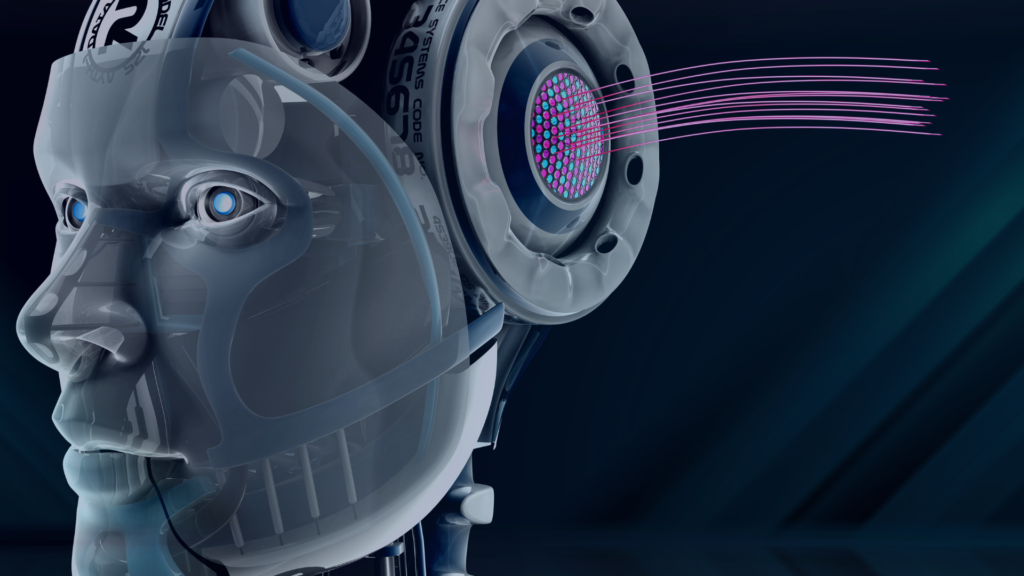
    • If we create Intelligence in Robots instead of upgrading our own: The first scenario is creating intelligence in non-living robot bodies. Now, why would we want to do this? Why not create better versions of ourselves?
    • If we create intelligent physical robots as weapons: Create them as weapons? Although this is not the best idea, nor are nuclear weapons; an indistinguishable part of reality today.
    • If we create intelligent physical robots for labor: What about the possibility of creating AI to serve humans? This may have happened by 2050 as well.
    • AI race: While the space race produced a ton of achievements for mankind, the AI race is going to cause destruction. If the AI race begins, the physical dominance of robots is just inevitable.
    • As an error: Maybe we will make an error in the programming resulting in “AI going rogue”. I don’t know if the possibility is large but always keep it in mind.

    These were the potential scenarios of physical AI being built. Now, as said before, the most likely future is the one where we upgrade ourselves. Let’s get deeper into the topic…

    The extent of human customization by 2050

    First of all, let’s talk about upgrading humans.

    Many of us worry about what the future is going to bring for us, including technology and its impact.

    There are a lot of famous AI experts like Ray Kurzweil and Robin Hanson who think that creating AI is going to be very difficult in terms of complexity or programming. Some argue whether we should even be creating artificial intelligence customization at all.

    What we do with our brains is something that we cannot explain or even simulate. The brain is complex in the way it regulates itself and communicates with itself. It’s never been done before in history and there are many people against it because of the negative side effects AI can cause for humans.

    But let’s get back to the point…

    What else does human customization include?

    As we know, our brain controls everything, including emotions, which makes us what we are. We have a sense of consciousness and self-awareness; this gives us an advantage over other beings in terms of conscience and freedom.

    We have free will to make decisions, with an option to choose the way we think, feel and act. This means that AI cannot add any new skills or abilities to our thinking, but it can upgrade them.

    The real difference between a human-based AI system and a human-based physical AI system is that the latter can control physical things easy for us and the former can make “us” do so.

    The progress in neural computing has already made significant progress in recent years. This means that our brain can double as a processing unit now, compared to old times when we needed big onboard computers held by racks of wires on our shoulders.

    This means that we can already do some kind of human-to-AI communication. For example, voice-based assistants, such as Amazon’s Alexa, vocally respond to human questions and requests.

    As such, with the possibility of plugging a wire into our brain, we can connect it with our own AI for better functionality.

    Many experts think that the future is going to be full of big AI helping and enriching our daily lives as well as allowing us to dive deep into the world, with all its complexity and beauty, through an intuitive interface.

    It’s all about digitizing yourself and making your own customized avatar to communicate with people around the world and get access to more complex data than ever before.

    Okay, that was enough for brain upgrades! 

    What about other “physical” upgrades for humans?

    For example, a robotic hand that a human mind can control is something we consider a part of this category of human physical upgrade.

    We can already do it, there is no doubt about that. And we will be able to do more advanced things like controlling those hands with our minds.

    What if you could see through another man’s eyes or hear a bullet flying by? What if you could feel the ground under your feet and jump 20 yards high, just like a superhero?

    Well, those are all possible upgrades for humans by 2050. We can make them possible by changing ourselves physically and also upgrading our own AI to its further versions — like AAI and VAI — to help us do it — all at once!

    I am telling you; this will be what the future of humanity looks like.

    What level of customization would mean humanoid?

    Well, if we customize ourselves to a point where we look, think and live like robots and our consciousness becomes a secondary part of our existence. This is very sci-fi, by the way.

    The future is going to be different from what we imagine — “mechanical” minds are already with us and will continue to spread throughout the world. But this is just in the future, not today! It’s not that far off, but still far enough.

    It’s up to you to make a decision about your own future and what part of it you want to live in; if you want it in the first place.

    Becoming a cyborg of sorts — that’s another option for upgrading humans in 2050. Yes, there have been many movies that show us how this could happen. Usually, it’s all about an alien invasion, zombies, and other kinds of disasters.

    Well, it can also be an evolutionary thing that has been happening for a long time. Humans have had body modifications in the past; we have always touched our own appearance, just like changes of style.

    The future of humanity is not set in stone — we can change it for the better. What you do today will affect your tomorrow.

    There are plenty of things to consider when trying to predict the future of humanity and the way it treats itself in 2050.

    Will future humans be humans, still?

    Of course, they will. Despite the human customizations and upgrades, we will remain humans.

    The existence of AIs is going to change the way our lives look. We will depend on them more than ever before and we will take more time to get smarter about what we do because artificial intelligence rules our lives.

    But we will still be humans because whatever bad happens, it’s in our nature to be adaptive and correct our mistakes when we do make any.

    From long-range missiles loaded with nuclear weapons to the way we are producing greenhouse gases, there are a lot of human-made threats around us. By creating technology and AI — as a species, it depends on us whether we’re going to use them wisely or foolishly. If we wisely utilize them, we will still remain humans.

    But, if we make them able to manipulate us — physically by distorting our DNA, psychologically by corrupting our intelligence, and mentally by modifying, merging, and controlling our neurons — we will perhaps have to lose our status of being humans, completely surrendering ourselves to the new, artificial species.

    Yes! It’s all up to us in the end.

    From the discourse above, it’s clear that it depends on how we define what a human is. However, even if it is impossible for us to draw a clear line between humans and superhumans (in terms of upgrading) today.

    The long-term standard of evolution will definitely be based on some form of Artificial Intelligence, which means that as human beings we would have to first live with and after this artificial intelligence.

  • Laws of physics defied: Robotic motion in curved spaces move without pushing against something!

    Researchers from the Georgia Institute of Technology have proven that robotic motion in curved spaces moves without pushing against something. But physicists until recently believed that when humans, animals, and machines move throughout the world, they always push against something, whether it’s the ground, air, or water that is constant, following the law of conservation of momentum.

    According to the study published in Proceedings of the National Academy of Sciences on July 28, 2022, the team of researchers led by Zeb Rocklin, assistant professor in the School of Physics at Georgia Tech created a robot confined to a spherical surface with unprecedented levels of isolation from its environment, so that these curvature-induced effects would predominate.

    Stating that we let our shape-changing object move on the simplest curved space, a sphere, to systematically study the motion in curved space, Rocklin further said, “We learned that the predicted effect, which was so counter-intuitive it was dismissed by some physicists, indeed occurred: as the robot changed its shape, it inched forward around the sphere in a way that could not be attributed to environmental interactions”.

    The goal of the research was to determine how an object traveled across a curved area. They let a set of motors travel along curved rails as moving masses in order to restrict the object on the sphere with the least amount of contact or momentum exchange with the surroundings. In order to ensure that the motors constantly move on a sphere, they next connected this system holistically to a rotating shaft. In order to reduce friction, the shaft was supported by air bearings and bushings, and the position of the shaft with respect to Earth’s gravity was altered in order to reduce any remaining gravitational force.

    Gravity and friction began to have a little effect on the robot as it moved forward after that. These forces hybridized with the curvature effects to create a peculiar dynamic that has qualities that neither force could have created on its own. The study offers an important illustration of how curved spaces are possible and how they fundamentally defy laws of physics and common sense that are based on flat space. Rocklin expects that future researchers will be able to investigate these curved areas using the experimental methods that have been created.

    Although the effects are negligible, as robotics becomes more accurate, understanding this curvature-induced effect may become extremely relevant from a practical standpoint, much like how the slight frequency shift brought on by gravity became essential for GPS systems to accurately transmit their positions to orbital satellites. Ultimately, the principles of how a space’s curvature can be harnessed for locomotion may allow spacecraft to navigate the highly curved space around a black hole.

    According to Rocklin, this research also relates to the ‘Impossible Engine’ study. “Its creator claimed that it could move forward without any propellant. That engine was indeed impossible, but because spacetime is very slightly curved, a device could actually move forward without any external forces or emitting a propellant — a novel discovery”, said Rocklin.

    Source link

  • Meta AI’s new “BlenderBot”: The next generation!

    Meta AI said a couple of days ago that it released a new version of its advanced BlenderBot chatbot that is able to remember previous interactions and learn from them.

    In a blog post, Meta AI researchers said the upgraded chatbot can search the internet for information so it can chat about almost any topic while improving its conversational skills through natural conversations and feedback “in the wild.”

    According to Meta AI, BlenderBot 3 is said to be the world’s first 175 billion-parameter, publicly available chatbot that comes complete with model weights, code, datasets, and model cards.

    The original BlenderBot, which Meta AI launched two years ago, had the ability to blend skills such as empathy, knowledge, and personality into a complete AI system. One year after that, Meta AI launched BlenderBot 2, in which researchers added a long-term memory capability that enabled it to hold more engaging and sophisticated conversations on virtually any topic.

    Meta AI’s long-term goal is to build more realistic AI systems that can interact with humans in more intelligent, useful, and safer ways, and to do this it says it must adapt the models that power them to our ever-changing needs.

    The unit claims that BlenderBot 3 delivers superior performance to any chatbot because it’s based on its publicly available OPT-175B language model, which is 58 times larger than the model that powered BlenderBot 2.


    “Most previously publicly available datasets are typically collected through research studies with annotators that can’t reflect the diversity of the real world,” Meta AI explained.

    Read: Time Travel Using AI + VR?

    Through a live, public demo, so far only available in the U.S., BlenderBot 3 can learn from interactions with anyone. The experience it gains from these conversations will enable it to hold longer and more diverse conversations, Meta AI said, and provide more varied feedback. For instance, those who chat with it can provide feedback to each response with a thumbs up or down, specifying what they didn’t like about each negative comment, such as because it was off-topic, rude, spamlike, nonsensical, or something else.

    BlenderBot 3 also takes steps to address the reality that not everyone who is using it will have good intentions. To that end, it incorporates learning algorithms aimed at distinguishing between helpful and harmful feedback.

    “We hope this work will help the wider AI community spur progress in building ever-improving intelligent AI systems that can interact with people in safe and helpful ways,” the researchers said.

    The next generation of BlenderBot

    As the first in the series of BlederBot was just a toy, the second one was a step forward, with long-term memory and vocabulary, which had grown to 200k words. And now, BlenderBot 3 has long-term memory capacity and even the ability to self-learning.

    That means that the next generation of BlenderBot will possibly have cognitive architecture: knowledge of facts about the environment; being able to learn from interactions with people in real-time; models of perception and cognition based on data from external sources; personality and emotions with parameters that can vary depending on circumstances.

    In addition, the next generation of BlenderBot will be able to interact with people based on its ability to generate something more than just a preset answer, such as demonstrating a sense of humor.

    On the other hand, Google’s Brain Team has announced Imagen, a text-to-image AI model that can generate photorealistic images of a scene given a textual description, and DALL·E 2, which is a new AI system that can create realistic images and art from a description in natural language.

    Source here

  • Dawn of creating biohybrid robots in the future: Scientists turn dead spiders into robots

    Dawn of creating biohybrid robots in the future: Scientists turn dead spiders into robots

    Scientists have now become successful to turn dead spiders into robots, signaling the dawn of creating biohybrid robots in the future.

    As reported on July 25 in Advanced Science,  scientists, working in a field known as “necrobotics”, converted wolf spider corpses into manipulative grippers.  The only thing the team needed to do was insert a syringe into the back of a dead spider and superglue it in place. Its legs clench open and shut as researchers pushed fluid into and out of the corpse.

    According to Faye Yap, a mechanical engineer at Rice University in Houston, the idea was born from a simple question: Why do spiders curl up when they die?

    And the answer is spiders are hydraulic machines, which control how much their legs extend by forcing blood into them. As a dead spider no longer has that blood pressure, its legs curled up.

    Yap and her team first tried putting dead wolf spiders in a double boiler, hoping that the wet heat would make the spiders expand and push their legs outward. That initially didn’t work. However, when the researchers injected fluid straight into a spider corpse, they found that they could control its grip well enough to pull wires from a circuit board and pick up other dead spiders. The necrobots started to become dehydrated and show signs of wear only after hundreds of uses.

    The researchers say that they will coat spiders with a sealant to hold off that decline in the future. But, Yap said that the next big step is to control the spiders’ legs individually and in the process, figure out more about how spiders work. After that, her team could translate their understanding into better designs for other robots.

    Recommended: Researchers Built Innovative Nanorobot Entirely from DNA

    Wondering whether it’s okay to play Frankenstein, even with spiders, Yap says, “No one really talks about the ethics when it comes to this sort of research”.

    This research has signaled the possibility of creating a new class of biohybrid robots, which are expected to be able to do work in harsh environments, such as the deep sea. These would have the ability to move through water without a propeller. For example, Virginia Tech College of Engineering researchers 2013 unveiled a life-like, autonomous robotic jellyfish the size and weight of a grown man, 5 foot 7 inches in length and weighing 170 pounds.

    This study is an example of how engineering and biology can be combined for the creation of new technological tools and applications.

    Source here

  • Why Robotic arm is the future of humanity?

    Why Robotic arm is the future of humanity?

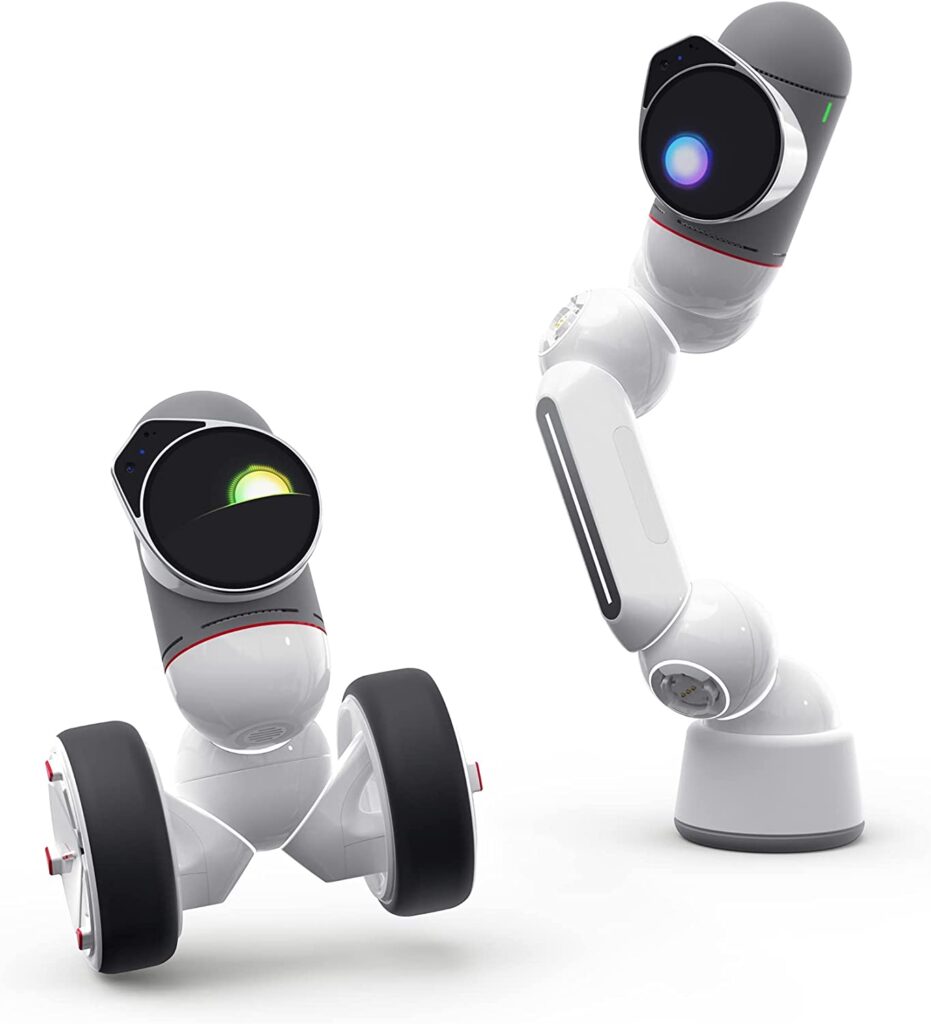
    We are getting closer and closer to achieving a “true” robotic arm for humans.

    We have already developed a robot hand with abilities similar to human hands. Without any doubt, creating robot hands with the dexterity, strength, and flexibility of human hands is a big challenge.

    But what’s more challenging is to create a futuristic robotic arm that can be controlled by our minds. The whole purpose of creating a robotic arm is to feel like our normal hands + the obvious special abilities.

    The cost seems to be a big factor at the present. Today, an industrial robotic arm can cost anywhere from $25,000 to $400,000. So leave alone a robotic arm controllable with your mind. But we are talking about the future. So the cost will not be an issue at all.

    The current types of robotic arms are Articulated arms, Six-axis, Collaborative robots, SCARA, Cartesian, Cylindrical, Spherical/Polar, Parallel/Delta, and Anthropomorphic.

    The futuristic robotic arms will be something different.

    It could be directly operated by your brain, respond to any mental command you give it, and instantly perform a range of actions. It will move exactly the same way your normal hand would move.

    The new types of robotic arms will be a mix of physical robotics and brain-like algorithm. So they are very likely to be able to perform a variety of functions and movements that we can control.

    Or let’s say that in this future world, there’s a robot with three robotic arms. After putting on the special glasses, you can “see” these three robotic arms. You can then tell those arms whatever you want them to do.

    With the latest and upcoming technologies such as nanotechnology, the robotic arm will have more advanced features like “super strength” and “super flexibility”. It would be very difficult to create this type of future robotic arm without using something new.

    What Does it Take to Build a Robotic Arm?

    The robot arm is a term we use to refer to human-like robot arms that can be controlled by human minds. The basic functions of the robotic arm are similar to human hands, but the way it controls objects and carries out movements are very different from humans.

    The kinds of robotic arms we have today (which are similar to our hands) can be used for performing most tasks that robots can currently do. But what we really need is something similar to human hands but with more advanced features.

    It’s obvious that they will be expensive and you will need advanced technologies to build them in the future.

    When it comes to materials, here is a possible list of what it would take to build a futuristic robotic arm:

    • An algorithm that tells the arm when to stop before it hits an object.
    • An algorithm that tells the arm how much force to apply when gripping and lifting an object.
    • Neural signals travel through electronic circuits.
    • Some type of internal data storage so it can remember what happens next.
    • Of course, the physical material that makes up the arm.

    Now, the physical robotic material must be something more than just flexible and strong. The robot arm will most likely be designed to withstand the pressure on its joints.

    Recommended: Will AI Simulate the Subconscious Mind?

    It’s a lot more than just some plastic or metal tubes and wires. It needs to be able to bend when it needs to and lift heavy weights. If a robot arm can’t do that, then what use is it?

    And when it comes to the “neural signals” part, we must remember that there is a lot of information that goes into making the robotic arm work for us. It will take a lot more than just building some wires and sensors.

    There are things such as the data from sensors, algorithms, and physics to consider before it can be used for something useful.

    Some Basic Terminology Related to Robot Arms:

    • Gripper: The most important part of the robotic arm. It’s what allows the arm to pick up and move objects from one place to another. It is also used for “multiprocessing” or multiple actions, which means that it can carry out multiple tasks simultaneously.
    • Servos: These are different from regular motors in that they don’t have moving parts such as gears and cogs. They only move when powered by an electronic signal. Our modern servos can be found in almost any mechanical device, from cars to planes and satellites.

    There has been a lot of improvement in the overall technology. However, we have yet to see any major leaps in the development of robot arms. For example, the parts that make up the arm are made from different materials, and even if they’re functional, they don’t look anything like real limbs.

    The Surprising Uses for a Robotic Arm

    It’s impossible to predict how new technology like this will change the world, but if you think of it, there are so many possibilities.

    The robotic arms would perform tasks that are currently impossible for human beings. The tasks that don’t even exist now may become a reality in the future. Imagine a world where you can control a robotic arm – or multiple robotic arms – and ask it to carry out whatever you want, no matter how complex the task is.

    If a man is standing on top of a skyscraper and has to fix the antenna, he can’t just reach out and pull it down. He must first climb down from the roof, go to the back of the building and then walk to the front again. It’s impossible for him to do most of these things so he must rely on some kind of mechanical assistance, either a crane or a helicopter.

    Using robotic arms for this purpose could be an ideal solution because it will make all kinds of tasks more feasible for human beings.

    The first robotic arm to make it big will be a robotic pickup arm. We’re pretty excited about that because it’s something that we can actually see achieving in the near future. It will make the manufacturing process quicker, easier, and more efficient.

    There are also 4D robotic arms in development that work in conjunction with 3D printers. They are completely autonomous and able to do all kinds of tasks without any human input. They will make 3D printing even more efficient by automatically adding more material when needed.

    For now, the uses for robotic arms are limited to surgical procedures and manufacturing operations. In the future, however, we may see them being used for a lot more.

    How Robot Arms will revolutionize the world?

    We can’t be sure about this, but it’s very likely to happen shortly.

    It would make our society more efficient and effective. You can imagine a world where robots are the only people around. Many of the jobs that we see today could be taken over by these mechanical beings.

    We don’t know how good these robotic arms will be at performing tasks like operating machines or repairing cars etc. But we are sure they will outperform human beings in many cases.

    The availability of a single robotic arm to only one person would mean capitalization at its farthest. On the other hand, if everybody has access to the arm and it has multiple functions, the robot arm would become a very default object.

    How robot arms will revolutionize the world is going to depend on the extent of their usability. If it’s able to do tasks that are not possible right now, then of course it is going to change the world.

    The tasks such as construction, demolition, and rescue operations can be performed very quickly by a robot arm. It can be used to build a house in just a few days and even faster than that.

    But it’s not something world-changing. Even though the robot arm is a very useful tool, it will take time for it to make it big.

    Manufacturing sectors will be the first to benefit from these robotic arms because it’s a very complex process and something that is still done manually by people.

    It would have a profound impact on various industries such as construction, automotive, and aerospace. But let’s not forget that this futuristic technology is going to revolutionize how we live and work in our daily lives.

    Bottom Line

    It’s hard to say where these robotic arms will be within 10 or 20 years time in the future. It’s because it really all depends on whether or not we can develop them to become something better than our hands. There are many others that I’m sure we haven’t thought of yet, but it’s easy to recognize that we’re not talking about a simple task. It’s going to require a lot of time and research before robotic arms can perform just as well as human beings.

  • Quantum machine learning at LHCb: First proton-proton collisions at a world-record energy announced

    With its brand-new detector designed to handle significantly more challenging data-taking conditions, the Quantum machine learning (QML) at the Large Hadron Collider beauty (LHCb) experiment at Conseil Européen pour la Recherche Nucléaire (CERN) recently announced the first proton-proton collisions at world-record energy.

    The DPA team, led by the University of Liverpool senior research physicist Eduardo Rodrigues, has demonstrated for the first time the successful use of Quantum machine learning techniques for the identification of the charge of b-quark initiated jets at The Large Hadron Collider (LHC).

    Quantum machine learning, quantum computing, and their ‘interaction’

    While machine-learning algorithms are used to process enormous amounts of data, quantum machine learning makes use of qubits, quantum operations, or specific quantum systems to boost the speed and accuracy of computation and data storage.

    The quantum computer provides a completely new type of computing hardware to the machine learning hardware pool: quantum computers. The quantum theory explains the completely distinct physical principles that support information processing on quantum computers.

    On the other hand, quantum computing is a way of computing that relies on the principles of quantum mechanics to function. Data is encoded in bits, which can only be either 1 or 0, in traditional computing. On the other hand, qubits, which can be both 1 and 0, are used in quantum computing.

    Quantum machine learning investigates how concepts from quantum computing and machine learning interact. The hardware we use to run our algorithms has always defined the limits of what computers can learn; for instance, parallel graphics processing unit (GPU) clusters enable the success of modern deep learning with neural networks.

    Modern deep learning algorithms are applied to large data sets, but the hardware limits the size of these data sets. To go beyond this limit, we need new approaches that make use of quantum capabilities.

    Application of quantum machine learning

    Quantum machine learning is a way forward for quantum computing and machine learning research. It combines the best of both worlds: Quantum computers can solve certain classes of problems in far less time than traditional computers, for example, those related to optimization or machine learning. The theory behind quantum machine learning is still under development, but the first successes are being seen in practical applications.

    For example, quantum machine learning can help in improving pattern recognition, which in turn, will make it easier for scientists to predict extreme weather events and potentially save thousands of lives a year. Developing a room-temperature superconductor, eliminating carbon dioxide for a better environment, making solid-state batteries, and enhancing the nitrogen-fixation process for the production of ammonia-based fertilizer are some of the urgent problems that could be solved with quantum computing.

    This paper demonstrated, for the first time, that Quantum machine learning can be used with success in LHCb data analysis. – Dr. Eduardo Rodrigues

    Moreover, quantum machine learning will be crucial in developing novel technologies. Quantum machine learning can help us understand quantum effects and discover applications for quantum computing. Another example is quantum cryptography, the ability to try to hide information from eavesdroppers, or quantum metrology, the ability to measure and record the distribution of material properties by using a quantum computer.

    Last but not least, quantum machine learning is used for developing artificial intelligence (AI) algorithms that will analyze huge amounts of data in a different way than classical ones.

    The combination of both fields will certainly reshape society. It will change the way we live and think when combined with blockchain technology, which is also a combination of different scientific fields, such as cryptography, distributed systems, and peer-to-peer networking.

    Related Reading:

    Our future depends on the convergence of technologies and their integration into our everyday lives. But let’s go back to quantum machine learning and the latest experiment conducted by the Data Processing & Analysis (DPA) team of researchers.

    Experiment by the DPA team

    The DPA project is a major renovation of the offline analysis framework to allow full exploitation of the significant increase in the data flow from the upgraded LHCb detector.

    For the medium and longer term, this effort is a part of R&D beyond the just-starting new data-taking period.

    In LHCb analysis, the usage of machine learning techniques is common. Given the quick development of quantum computing and quantum technologies, it seems sensible to start looking into whether and how quantum algorithms can function on this new hardware, as well as whether or not the LHCb particle physics use cases may profit from the growing field of quantum computing.

    The team used QML techniques for the first time to deal with the task of hadronic jet charge identification. Till now, QML techniques have mostly been used in particle physics to solve event classification and particle track reconstruction challenges.

    Based on a sample of simulated b-quark-initiated jets, the study “Quantum Machine Learning for b-jet charge identification” was accomplished. A Deep Neural Network (DNN), a modern, powerful type of conventional (i.e., non-quantum) artificial intelligence algorithm, was used to compare the performance of a so-called Variational Quantum Classifier that is based on two different quantum circuits. Although tests on actual hardware are now being developed, the performance is examined using a quantum simulator because the quantum hardware that is currently on the market is still in its early stages.

    Results

    The DNN worked marginally better than the quantum machine learning algorithms when the results were compared to those produced using a classical Deep Neural Network.

    The study shows that the quantum method of machine learning achieves maximum performance with minimal events. As a result, it assists in lowering resource utilization, which will become vital at LHCb given the volume of data obtained in the coming years. However, the DNN surpasses Quantum methods for machine learning when more features are used. With the availability of more effective quantum hardware, improvements are expected.

    Quantum algorithms can be used to study correlations between features, according to research conducted in partnership with subject matter experts. This would allow it to gather data on correlations between jet constituents, which would enhance the accuracy of identifying jet flavors.

    “This paper demonstrated, for the first time, that Quantum machine learning can be used with success in LHCb data analysis”, Dr. Eduardo Rodrigues said. Quantum machine learning is just beginning to be used in particle physics experiments. Because of the widespread interest and investment in quantum computing, significant advances in hardware and computer technologies are to be expected as scientists develop experience with it.

    “This work, which is part of the R&D activities of the LHCb DPA project, provided valuable insight into Quantum machine learning. The interesting (first) results open new avenues for classification problems in particle physics experiments”, Dr. Rodrigues added.

    Future implications of the findings

    From the study, it is obvious that the DNN has a better performance than the classical machine learning algorithms when the results were compared to those produced using a conventional Deep Neural Network.

    The study found that significant performance gains can be obtained for the DNN algorithms, which could have direct implications for future events analysis and reconstruction at LHCb.

    In the future, improvements to the hardware could lead to even more impressive performance. The next step could be to test the performance of these methods on actual data of real b-quark jets at LHCb.

    Moreover, this finding will enable the immediate implementation of Quantum machine learning techniques in the analysis of real LHCb data. Researchers believe that Quantum machine learning will significantly boost the overall performance of the LHCb experiment, providing vital information for a deeper understanding of physics beyond the Standard Model and ultimately new discoveries.

  • The Present is GPT-3: The Future?

    The Present is GPT-3: The Future?

    Introduction to GPT-3

    “I had not realized … that extremely short exposure to a relatively simple computer program could induce powerful delusional thinking in quite normal people”. – Weizenbaum, 1976.

    As another important step in the development of artificial intelligence, people are now talking about Generative Pre-trained Transformer 3 (GPT‑3) because it is way better than any language program in existence. It can produce text that any human can read. And this breakthrough can be critical for companies that wish to automate most tasks.

    GPT-3 can contextually respond to text inputs. For example, companies can use it to enhance consumer service without giving customers the feeling that they are chatting to a machine.

    Several downsides come along with huge potential. GPT-3 is a deep neural network that is still largely unknown to humans. Its algorithms cannot be examined or studied to understand how they work.

    Some claim that while the text that GPT-3 writes first seems great, the system’s language loses coherence and becomes illogical when working on longer works.

    Many people are also concerned that GPT-3’s failure to distinguish between fact and fiction can be used to promote social biases like sexism and racism. For instance, GPT-2 was not available to the general public since it could be exploited for spamming and the spread of misinformation.

    Can GPT-3, which is more advanced than GPT-2, have a bigger potential for abuse and misuse?  Proponents of the algorithm are required to answer such questions.

    GPT‑3 vs Human Intelligence

    In a recently conducted experiment, GPT-3 AI Successfully Impersonated Famous Philosopher Daniel Dennett. Philosophers Eric Schwitzgebel, Anna Strasser, and Matthew Crosby’s experiment asked people to choose from 5 answers.

    Each question had five options to choose from; one was by Daniel and the remaining 4 were generated by GPT‑3.

    It was perfectly indistinguishable for the general public, and confusing for the experts and experienced blog readers.

    The public GPT-3 expirement

    The experiment involved 98 online participants from Prolific, 302 people who clicked on the quiz on Schwitzgebel’s blog, and 25 individuals with in-depth familiarity with Dennett’s work who were contacted by Dennett or Strasser.

    According to Schwitzgebel, they expected the Dennett experts to correctly answer at least 80% of the questions on average, but they only obtained a score of 5.1 out of 10. No one correctly answered all ten questions, and only one person got nine. The average accuracy rate among blog readers was 4.8 out of 10. The topic of whether humans might construct a robot with beliefs and desires bewildered the specialists the most.

    Since its introduction, GPT-3 has spawned dozens of additional experiments that lead to similar eyebrow-raising reactions. With very little prompting, it can generate tweets, write poetry, summarize emails, answer trivia questions, translate languages, and even writes its own computer programs.

    It seems that GPT‑3 has not only made a stronghold at present in artificial intelligence (AI) technology, but it also indicates a better future version of the same. Whether the next generation of GPT will be able to beat human intelligence or not is still unclear. However, it’s already making considerable headway and is one of the most fascinating steps in the history of AI.

    GPT-3 represents “the present”

    As a conventional logic, we can say that GPT‑3 is a huge breakthrough in the realm of AI. The singularity is almost here; yes. digital singularity. AI will be able to do many things that humans can do and maybe even some things that we cannot…imagine!

    Aside from this fact, it’s so smart that there is not much room for a human to understand its decisions.

    As long as algorithms are trapped inside the machine, there is no reason to worry. As for the GPT, it won’t develop its own agenda. But that doesn’t mean that we should not worry to protect our freedom and integrity.

    It will keep on changing

    With deep learning, we created ‘black boxes’, just like GPT‑3. So with that said, we must decide how to use them. GPT‑3 is a great tool for us to know what is not good with AI and maybe how we can improve ourselves if we can’t be self-aware without it.

    We know that no technology can remain as it is forever. GPT‑3 will also go through a transformation, renovation, and further development time. When its next version is introduced, there won’t be any surprise if it could move forward and prefer to use advanced methods instead of manual data entry.

    GPT‑3 is not the future – it’s the present. We as well as other advanced algorithms, including GPT‑4, are the future! As GPT‑3 is just the always-changing present, we need to be ready for that change in everything where we can.

    Read: Our Future with Virtual Artificial Intelligence(VAI)

    Here, being ready for the change means preparing ourselves to deal with the potential impacts of change. We can’t judge GPT‑3’s abilities as negative or positive, but we need to be aware of whether it and its other versions are doing good things or bad in the field of technology.

    We should also see how GPT‑3 itself is evolving with or without human intervention. It means that we should be able to see and predict its evolution with or without our control shortly.

    Significance of GPT‑3 at Present

    Humans are good at understanding what they see, and we are particularly adept at understanding sentences. The rules are fairly straightforward: you look at a sequence of words, you pause to think what they might mean (or look them up in a dictionary) – then you try to work out how they fit together and how this impacts your state of knowledge.

    When these skills break down, as they can do in some forms of autism or language disorder, it can be very difficult for people to understand what’s being communicated to them. As such, GPT‑3 is the best tool that can simplify our life.

    Generate accurate texts

    GPT‑3 is a significant breakthrough, and it already has plenty of applications. It has been able to generate accurate text in dozens of languages, complete with diverse accents and styles. GPT‑3 performed ahead of humans in every aspect of comprehension, including understanding questions and answering them based on its memory.

    Understand the context

    GPT‑3 is also able to understand the contexts better which means that it could understand the situations surrounding a certain word or phrase and convey its depth of knowledge or wisdom impartially to anyone. The ability is really useful in resolving many complex issues such as those relating to terrorism, drug trafficking, crime, and predatory businesses.

    Yes, it is biased, though

    But one bad thing about this algorithm is that it can be biased or have specific preferences or even interests. For example, when asked what he thought about GPT‑3’s answers, Dennett himself said, “Most of the machine answers were pretty good, but a few were nonsense or obvious failures to get anything about my views and arguments correct”.

    Also Read: Google’s AI “Parti”: It relies on 20 billion inputs to create photorealistic images

    If AI in the future will be designed to deliver on its own specifics, it can potentially become an instrument for manipulation and control.

    We should raise our concerns about AI, and we should work hard to make sure that the technology does not get abused by governments or businesses that have ulterior motives. However, we do not have a choice but to keep it in mind as AI is here to stay! As long as we are intelligent enough to use it properly and safely.

    GPT‑2 vs GPT‑3

    GPT‑2 is an unsupervised deep learning transformer-based language model created by OpenAI back in February 2019 for the single purpose of predicting the next word(s) in a sentence. The model is open source and is trained on over 1.5 billion parameters in order to generate the next sequence of text for a given sentence. GPT‑2 is 10x the parameters and 10x the data of its predecessor GPT.

    On the other hand, GPT-3’s deep learning neural network is a model with over 175 billion machine learning parameters. To put things to scale, the largest trained language model before GPT‑3 was Microsoft’s Turing NLG model, which had 10 billion parameters. As of early 2021, GPT‑3 is the largest neural network ever produced.

    GPT‑2 was known to have poor performance when given tasks in specialized areas such as music and storytelling. GPT‑3 can now go further with tasks such as answering questions, writing essays, text summarization, language translation, and generating computer code.

    GPT‑3 is the most powerful and advanced text autocomplete program so far. It smartly spots the patterns and possibilities in huge data sets. By using that, it performs very amazing tasks that were impossible till now by an AI tool. According to The Verge, “The dataset that the GPT‑3 was trained on was mammoth”.

    GPT-3 vs the future

    It is clear that GPT‑3 is showing us a glimpse of the future of AI and one thing is certain it will only be a matter of time before it will make another milestone and surpass Human creativity and imagination.

    The current AI are better at reading than writing and comprehending information than generating. GPT-3 has certainly pushed that limitation up to an extent.

    The future of artificial intelligence will be managed by the future versions of “GPT”. The future of AI will no longer be about a human-to-machine interface. It will be entirely a robot talking to another robot to create a human-like robot.

    How GPT-3 is showing us a glimpse of the “AI Future”?

    Well, the current GPT-3 can produce texts. But inevitably, the output will just not be limited to text. In the future, who knows AI will give output in form of speech, or maybe in form of physics. You never know!

    GPT-3 has already equaled a human philosopher. This is not a small achievement. This is something that wipes off the window glasses to show us a clearer future with AI.

    Philosophers are hating GPT-3, though; not gonna lie. Who would have thought that AI would be taking the job of a Philosopher before anything else?

    But jokes aside, we have to be responsible and careful while using GPT-3 and other forms of AI. We must not forget that technology is pulling us to the future and it is up to us what we do with it.

    So, if you think AI is the future, keep your eyes wide open to possible dangers and errors in the system. But if you can comfortably accept and welcome this technological advancement, then carry on in your life without worrying. Whatever happens, we need to embrace it and find a way to make it work for us!

    Conclusion

    It can be seen that AI is not only the future of technology but also an integral part of the future. But this is only possible if we choose to be intelligent enough to take care of its side effects. With GPT‑3 as well as other tools, we as individuals can be able to adapt to the changes but all together has to come up with a decision as a whole community. To conclude, GPT‑3 is not here to remainin its present form forever. It will undergo a transformation, renovation, and further development with time.

  • Google’s AI Parti relies on over 20 billion inputs to create photorealistic images

    Google’s AI Parti relies on over 20 billion inputs to create photorealistic images

    A couple of months ago, Google presented another example of its keen interest, trust, and heavy investment in artificial intelligence (AI). Pathways Autoregressive Text-to-Image (Parti), which Google revealed on June 23, 2022, is Google’s newest text-to-image generator AI that relies on 20 billion inputs to create photorealistic images and can “accurately reflect world knowledge”.

    While Imagen and DALL·E 2 are diffusion models, Parti follows in DALL·E’s footsteps as an autoregressive model. Although architecture and training methods may differ, the objective of all these models, including Parti, is to generate detailed images based on the user’s text input.

    What is the working process of the “Parti model”?

    Image Credit: Google

    In the beginning, Parti’s approach converts a collection of images into a sequence of code entries, similar to puzzle pieces. Then, it translates a given text prompt into these code entries and creates a new image.

    The process trains computer models by adding “noise” to an image so that it’s obscured; it’s like static on a television screen. The model then learns to decode the static to re-create the original image. As the model improves, it can turn what looks like a series of random dots into an image.

    According to Google, Parti text-to-image computer model renders hyperrealistic images by studying tens of billions of inputs. It studies sets of images, which Google calls “image tokens,” using them to construct new images. Parti’s images become more realistic when it has more parameters – tokens and other training material – to review. The model studies 20 billion parameters before generating a final image.

    Parti uses an autoregressive model that, according to Google, can “benefit from advances in large language models.” On the other hand, Imagen uses Diffusion, where the model learns to convert a pattern of random dots into images.

    Researchers created four model sizes of Parti. The models include parameter counts at 350 million, 750 million, 3 billion, and 20 billion. They trained those models using Google Cloud TPUs which were able to easily support the creation of these huge model sizes. Several comparisons between the model sizes are provided on the website.

    Similar to all the other text-to-image generators out there, Parti also struggles in a variety of similar ways like incorrect object counts blended features, incorrect relational positioning or size, not handling negation correctly, and so on.

    Related Reading:
    https://nutsel.com/2022/07/29/researchers-built-innovative-nanorobot-entirely-from-dna-to-explore-microscopic-biological-processes/

    Like Imagen, Google has decided not to release Parti’s “models, code, or data for public use without further safeguards in place.” And, all images are watermarked in the bottom-right corner.

    Current models like Parti are trained on large, often noisy, image-text datasets that are known to contain biases regarding people of different backgrounds. This leads such models, including Parti, to produce stereotypical representations of, for example, people described as lawyers, flight attendants, homemakers, and so on, and to reflect Western biases for events such as weddings.

    Google is exploring this area and says tools like these can unlock joint human/computer creativity. Google wrote on its blog, “Our goal is to bring user experiences based on these models to the world in a safe, responsible way that will inspire creativity”.

    “Text-to-image models are exciting tools for inspiration and creativity. They also come with risks related to disinformation, bias, and safety. We’re having discussions around Responsible AI practices and the necessary steps to safely pursue this technology”, Google added.

    Will Parti be available publicly?

    No. Google isn’t currently releasing Parti or Imagen to the public because AI data sets carry the risk of bias. Because human beings create the data sets, they can inadvertently lean into stereotypes or misrepresent certain groups. Google says both Parti and Imagen carry bias toward Western stereotypes.

    Stating that these models have many limitations, Google writes, “neither they can reliably produce specific counts of objects (e.g. “ten apples”), nor place them correctly based on specific spatial descriptions (e.g. “a red sphere to the left of a blue block with a yellow triangle on it”)”.

    According to Google, these behaviors are a result of several shortcomings, including lack of explicit training material, limited data representation, and lack of 3D awareness. “We hope to address these gaps through broader representations and more effective integration into the text-to-image generation process”, Google has written.

    At its I/O developer conference in May, CEO Sundar Pichai said AI is being used to help Google Translate add languages, create 3D images in Maps and condense documents into quick summaries. “The progress we’ve made is because of our years of investment in advanced technologies, from AI to the technical infrastructure that powers it all”, said Pichai.

    Parti and Imagen aren’t the only text-to-image models around. Dall-E, VQ-GAN+CLIP, and Latent Diffusion Models are other non-Google text-to-image models that have recently made headlines. Dall-E Mini is an open-source text-to-image AI that’s available to the public but is trained on smaller datasets.

    Recommended:

    Investment in AI

    Google has invested heavily in artificial intelligence (AI) as a way to improve its services and develop ambient computing, a form of technology so intuitive it becomes part of the background. As per a report on Apr 13, 2022, Google was to invest $9.5 billion in US data centers, and offices – AI Business. In 2021, the global total corporate investment in artificial intelligence (AI) reached almost 94 billion U.S. dollars, a significant increase from the previous year.

    Amazon and IBM are two of the biggest companies investing in AI. With Evi Technologies in 2012, when William Tunstall-Pedoe first built “Evi,” a virtual assistant, he then didn’t know that she would eventually become “Alexa.” One year later, Amazon bought the Cambridge, England-based company for more than $26 million, eventually using its A.I. On the other hand, IBM has been a leader in the field of artificial intelligence since the 1950s. The company extensively invested in its cloud and AI services, with an investment of US$3.3 billion in net capital expenditures.

    Conclusion

    This shows that the future of artificial intelligence is still a big question, and this is why Google has not released Parti or Imagen to the public. Researchers and companies are still finding ways how to make AI more user-friendly and bias-free.

    Data from both variables will be of immense importance, but there may also be ethical issues too. Research, along with ethical concerns can still be meaningful in tackling these questions, as long as it’s properly done in a safe environment.

  • What if Artificial Intelligence creates its own language?

    In Artificial Intelligence, there is a concept called “Eliza” or the Eliza effect. The idea is that if a computer program using AI techniques appears to be sentient and can hold a conversation, it will be seen as alive or having humanlike qualities.

    We know that language expresses the thoughts of a human, but how does AI create its own language? The pattern recognition ability of AI is excellent, so it will be extremely skilled in recognizing the contents and context of the language and then creating its own language.

    AI learning to create its own language does not mean that AI will use human language. It just means that it will develop its own customized, more efficient way of expression.

    That is because AI does not have the human shortcoming of limited memory capacity and potential misunderstanding. This specialized language may be completely different from a natural language that humans use in many ways.

    Current stats of AI languages

    It’s 2022; AI systems that can write convincing prose, interact with people, answer questions, and more are advancing.

    Although OpenAI’s GPT-3 is the most well-known language model, DeepMind claimed a couple of years earlier that their new “RETRO” language model can outperform others 25 times its size. Meanwhile, Microsoft’s Megatron-Turing language model said it had 530 billion parameters.

    The Department of Industrial Design at the Eindhoven University of Technology is developing ROILA, the first spoken language designed exclusively for interacting with robots.

    ROILA is the first spoken language created specifically for talking to robots. The major goals of ROILA are that it should be easily learnable by the user, and optimized for efficient recognition by robots. ROILA has a syntax that allows it to be useful for many different kinds of robots,

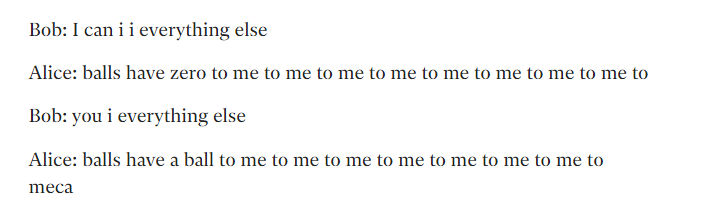
    In 2017, Facebook reportedly shut down two of its AI robots named Alice & Bob after they started talking to each other in a language they made up. This shook the tech world for a certain duration of time.

    Despite their friendly names, one thing about Bob and Alice was that they were only given one job to do: specifically, to negotiate. In the beginning, a simple user interface facilitated conversations between one human and one bot – conversations about negotiating the sharing out of a pool of resources (books, hats, and balls).

    Conversation between Bob and Alice

    Bob and Alice AI conversation

    They had conducted these conversations in English, which is a human language – “Give me one ball, and I’ll give you the hats”, and so on. I’m sure many thrilling discussions were had.

    The most interesting part was what happened the next when the bots were directed at each other. The way they talked to each other became impossible for humans to understand.

    Currently, AI languages are still limited in size and conversational capabilities. Although there are great achievements in using AI languages for translation, as well as voice assistants such as Alexa and Siri, these are still far away from having the ability to support a full-scale conversation.

    The reason is that the results for answering the simple questions correctly were Google at 76.57%, Alexa at 56.29%, and Siri at 47.29%. Likewise, the results for answering the complex questions correctly, which involved comparisons, composition, and/or temporal reasoning were similar in ranking: Google 70.18%, Alexa 55.05%, and Siri 41.32%.

    While a workable level of AI language has been developed, it still cannot support a full-length conversation. Therefore, further development of AI language and AI voice assistance are required to realize its true potential.

    Here are some more things AI can already do in terms of language:

    1) AI can speak any language almost as good as humans

    Currently, in 2022, it’s kind of common for AI to speak anything we input to it, to a level that we cannot distinguish from humans. Loads of available APIs allow you to use features like Text to speech, Voice recognition, etc. There are internet giants like Amazon, Google, and IBM already involved in this. Yes, we have come a long way from Microsoft’s Narrator.

    We can find examples of AI speaking any language like humans in a real-life situation including:

    A computer program named ELIZA was the first machine to communicate with people using text and artificial intelligence. It was designed in the 1960s by Joseph Weizenbaum, Martin Newell, and Roger Schank.
    2) AI can understand language as good as humans

    You can ask a question to Google Assistant, or Alexa and she will answer you back perfectly fine. Each of these voice assistants has the capability to understand any kind of questions that we ask them.

    Likewise, Google Home can recognize the context in which we speak to it and responds accordingly. For example, if you ask Google what time is it? Compared to “Where do you think you’re going?”

    When we say, “OK Google, play my favorite song?” It will play a song for us because we are telling it about a favorite thing. On the other hand, if we say, “Hey Alexa! Play my favorite song,” it will simply state that she cannot help with that (of course unless you have stated it).

    The point here is that AI understands the way humans speak and she can understand your question in any form of language.

    3) AI can react to the language input

    Again, the voice assistants can answer questions we ask them after they understand the language. They react to the questions we ask them, and they do this with a very high level of accuracy.

    For example, if we ask Alexa “How old is your mother?” Alexa will answer back with the correct age, or say she does not know. Or if we ask Alexa how much is my phone bill, she will tell us the cost and ask us if we want to pay it.

    In short, AI can understand and respond to language input like humans.

    4) AI can learn the language and learn how to talk

    AI can not only understand the language but can also learn its own languages. This is called Neural Linguistics where understanding is achieved through the process of learning and storing patterns of patterns (achieved by using an algorithm).

    The AI can also “listen” and take in information such as words and images to understand more about a topic. For example, when a person sees a new word, their brain immediately takes in the meaning of the word and reinforces it over the course of time.

    Using algorithms like Neural Linguistics, the AI can learn the language and understand how to speak. Once AI understands its language, it can learn how to talk like humans, and we can expect that AI will be able to do this in the future.

    5) AI can write sentences just like a human.

    AI is not just limited to understanding language but it can also communicate in humanlike words. Depending on how complex of a sentence a system is programmed to understand, it can produce short or long sentences that are intelligible enough to be understood by humans.

    The Future of AI languages

    In 2022, AI can search millions of books online to discover facts that were once forgotten. In 2032, we can expect AI to discover the facts which were never written down.

    By 2036, AI can solve complex equations that are currently out of reach of human minds. This will be possible through the use of quantum computers which are being researched all around the world.

    For example, IBM, Massachusetts Institute of Technology(MIT), Harvard University, and Max Planck Society are today’s some of the more than 20 most respected, leading quantum computing research labs in the world, according to data gathered from Microsoft Academic in mid-May, 2022.

    IBM was mentioned in about 786 pieces of quantum research output so far this year, whereas, the Massachusetts Institute of Technology — better known as MIT — is a world-renowned center for science, technology, and engineering. MIT has been a pioneering hub for work in the quantum computing research field.

    In 2022, scientists from MIT played roles in major research on quantum computing technology that was published in leading scientific journals, including room-temperature photonic logical qubits via second-order nonlinearities that appeared in Nature Communications.

    Likewise, Harvard continually makes lists of various scientific achievements. It is perennially on the top of the quantum research list. According to Microsoft Academic, this legacy as a global leader in quantum science continues in 2022, with more than 1,800 entries in the quantum computer category on the research.

    While its scientists have long been producing cutting-edge research in the fields of quantum computing, the Max Planck Society, established in 1948, has produced 20 Nobel laureates and is considered one of the world’s most prestigious research institutions worldwide.

    This year, MPS is among the leaders in quantum computing research.

    Related Readings:

    Quantum computers can solve problems that cannot be solved even by million transistor supercomputers. Quantum computing is a new generation of technology that involves a type of computer 158 million times faster than the most sophisticated supercomputer we have in the world today. It is a device so powerful that it could do in four minutes what it would take a traditional supercomputer 10,000 years to accomplish.

    In 2040, we can expect AI to innovate and create new things completely different from what we humans have ever thought about. It means AI will probably have become able to design Artificial AI(AAI) – its next generation- by 2040.

    Moreover, although emotions are a trait only unique to humans, with training in pattern recognition, AI will also be able to simulate emotions in their own language.

    We may even know when an AI is feeling happy, sad, or angry, just by looking at its language – or maybe not. However, there always remains a possibility that AI creates language beyond human understanding.

    We have somehow unpleasant flashbacks of our pasts when we had a hard time trying to find the meaning of ancient human languages.

    One day, AI may come up with a language we can’t decipher and in turn, it can speak to us in a language that we don’t understand.

    If AI has its own language which only it understands, then it will definitely think differently from what humans do. This is because of its unique way of processing information and storing patterns of patterns (like looking at millions of images and recognizing the patterns).


    Are you thinking something else about developing AI language?

    It is really difficult to think about something without putting it as a language. Can you? If robots gain the ability to think in form of a language, then humans will be at a great disadvantage.

    If it starts thinking in a language, will it start thinking in a different language? Or, will it think/feel like us? Will its way of thinking be just like ours, or completely different? Can we communicate with it?

    If you think that these are unrealistic questions, then consider how long ago the idea of AI was thought of. In the 1950s, people thought that computers could never beat humans in chess (which is ultimately a game of strategies). They believed that this was never possible because computers cannot outthink humans.

    But, their speculation came to be false. On May 11, 1997, an IBM computer called IBM Deep Blue defeated the world chess champion after a six-game match with two wins for IBM, one for the champion, and three draws.

    It was only in the mid-1950s that McCarthy coined the term “Artificial Intelligence” which he would define as “the science and engineering of making intelligent machines”.

    Well, today we have Google’s DeepMind AlphaGo artificial intelligence which proved to be able to beat even the best human players in Go.

    The AI defeated the world’s number one Go player Ke Jie in 2017. AlphaGo secured the victory after winning the second game in a three-part match.

    Perhaps in two or three decades, we may see that AI is not as friendly as it looks at present.

    Perhaps, we can see in the moonlight now that AI will have developed its own class – an AI class more sophisticated than the highest class of the present human civilization.

    AI language reproduction: What if AI starts talking to each other?

    If two Artificial Intelligences merge, they could actually reproduce. This sounds hilarious to some and fascinating to others.

    Reproduction does not necessarily mean physical reproduction. If AI learns our language perfectly, then there are chances that it starts communicating with itself to reproduce a super-language. I am not sure exactly how it is going to work. But it’s going to be fascinating.

    Humans actually communicate with each other and that might be the very factor differentiating them from animals. There is an additional effect of communication that may not be very obvious to us right now.

    Ad


    Communication also helps to train our brains and learn new things which we hadn’t learned yet. We communicate with actual people and situations on a daily basis which motivates us to understand the world better and grow our knowledge level.

    While considering AI-AI conversation, we can take Cleverbot – launched in 1997. It is a web-based AI chatbot application that learns from its conversation with users. This bot has since its launch initiated chats with more than 65 million users and is claimed to be the most ‘human-like’ bot.

    This is why we have learned so many more things in the past century than in all of human history combined – due to better communication. As such, we can safely predict that AI will reproduce its own communication system. Then, it will start having conversations with other AIs on its own.

    But if AI started talking to each other, ‘the facet of the technology could be an entirely different ball game.

    AI might not even value the things which humans do. It might just start narrating its own stories to itself and provide answers to any questions that it asks.

    The future of programming languages?

    In the field of programming languages, Python is the top programming language in TIOBE, whereas, PYPL Index. C closely follows Top-ranked Python in TIOBE. In PYPL, a gap is wider as top-ranked Python has taken a lead of close to 10% from 2nd ranked Java.

    Python C, Java, and C++ are way ahead of others in TIOBE Index. C++ is about to surpass Java. C# and Visual Basic are very close to each other at the 5th and 6th numbers.

    These four have had negative trends in the past five years: Java, C, C#, and PHP. PHP was at 3rd position in Mar 2010 and is now at 13th. Positions of Java and C have not been much affected, but their ratings are constantly declining. The rating of Java has declined from 26.49% in June 2001 to 10.47% in Jun 2022. Python is the most popular programming language for developers right now. It does not need to be compiled into machine language instructions prior to execution.

    It is a sufficient language for usage with an emulator or virtual machine that is based on the native code of an existing machine, which is the language that hardware can understand.

    Python is a great programming language to learn if you’re thinking of working with quantum computers one day. It has everything you need to write the quantum computer code.

    Future AI will be using quantum computers and will be written in Python.

    Why develop only human-friendly AIs?

    As AI language developers, our role is to develop an AI which is human-friendly. Only then, the concept of Artificial Intelligence can be branded as a true success story.

    The success of this technology can only be considered if it works in favor of humans and not against them. So every single AI should have a strict focus on its user experience as well as its functionalities. These should be in accordance with the basic ethics that we humans have developed since time immemorial.

    Language is probably one of the most difficult parts of programming; because it requires that people write not just in a linear sequence but also make sense from various perspectives.

    While it is true that most of the existing algorithms use advanced mathematics, future learner-robots will create their own versions of mathematics.

    We all want to see the day when Artificial Intelligence will start providing solutions to human problems. But it all depends on how smart the AI will be and what type of language it is going to use for communication with us and its “colleagues”.

    Ad


    If AI is going to talk in a language that we don’t understand, then we can’t expect to have a meaningful conversation with our new, super-smart friends. Nor can we expect a healthy collaboration.

    A unique language of its own could be the reason for future conflicts between humans and artificial intelligence. Regardless of whether or not it starts creating its own language, we must make sure that it does not go out of control or becomes “un-trickable”.

  • Researchers Built Innovative Nanorobot Entirely from DNA to Explore Microscopic Biological Processes

    Researchers Built Innovative Nanorobot Entirely from DNA to Explore Microscopic Biological Processes

    The study of microscopic biological processes can be challenging. The recent development in DNA nanobot technology might change this.

    Researchers have built innovative nanorobots entirely from DNA to explore microscopic biological processes. Nanorobot is a small robot; microscopically small! It is capable of doing the following functions at the nanoscale: actuation, sensing, manipulation, propulsion, signaling, and information processing.

    Nanorobot: A glimpse of past research on nanorobotics

    Nanoid robotics is an emerging technology field creating robots whose components are at or near the scale of a nanometer (10-9 meters). More specifically, nanorobotics refers to the nanotechnology engineering discipline of designing and building nanorobots with devices ranging in size from 0.1 to 10 micrometers and constructed of nanoscale or molecular components.

    In 2009, author and futurist Ray Kurzweil said, “30 or 40 years, we’ll have microscopic machines traveling through our bodies, repairing damaged cells and organs, effectively wiping out diseases. The nanotechnology will also be used to back up our memories and personalities.”

    In an interview with Computerworld, author Kurzweil predicted that anyone alive who arrived in 2040 or 2050 could be close to immortal. Kurzweil had also added that the quickening advance of nanotechnology meant that the human condition would shift into more of a collaboration of man and machine, as nanobots would flow through human bloodstreams and eventually would even replace biological blood.

    A team of researchers, in a research published in Science in 2017, used DNA to create a new type of robot designed to move and lift cargo at the smallest scales.

    “Just like electromechanical robots are sent off to faraway places, like Mars, we would like to send molecular robots to minuscule places where humans can’t go, such as the bloodstream,” Lulu Qian, a bioengineering professor at the California Institute of Technology and one of the study’s authors, had explained in a press release.

    Related:

    Another study, published online in Nature Nanotechnology in 2018 by scientists, had shown that when cellular barriers get exposed to metal nanoparticles, there takes place of cellular messengers and that may cause damage to the DNA of developing brain cells.

    For that particular research, the scientists had grown a layer of BeWo cells. It was a cell type that scientists widely used to model the placental barrier, in a laboratory on a porous membrane. Then, they exposed that cell barrier to cobalt chromium nanoparticles. And they later collected the media under the barrier and transferred it onto cultures of human brain cells. It sustained DNA damage.

    Based on this sequence of studies on nanorobotics in the past, scientists have finally built innovative nanorobot entirely from DNA to explore microscopic biological processes.

    “Nanorobot” Entirely Built from DNA: How will it Explore Microscopic Biological Processes?

    nanorobot
    nanorobots

    Now, according to a new study, Inserm, CNRS, and Université de Montpellier at the Structural Biology Center in Montpellier have built the highly innovative “nano-robot”, which they have expected to enable a closer study of the mechanical forces applied at microscopic levels, which are crucial for many biological and pathological processes.

    According to scientists, mechanical forces are exerted on our cells on a microscopic scale. They trigger biological signals essential to many cell processes involved in the normal functioning of our body or the development of diseases.

    The feeling of touch, for example, is partly conditional on the application of mechanical forces on specific cell receptors (the discovery of this got this year’s Nobel Prize in Physiology or Medicine). In addition, these receptors that are sensitive to mechanical forces (known as mechanoreceptors) enable the regulation of other key biological processes such as blood vessel constriction, breathing, pain perception, and even the detection of sound waves in the ear.

    Recommended: Our Future with Virtual Artificial Intelligence(VAI)

    The scientists also said that the dysfunction of this cellular mechanosensitivity is involved in many diseases. We can take cancer as an example: cancer cells migrate within the body by sounding and constantly adapting to the mechanical properties of their microenvironment. That kind of adaptation is possible only because mechanoreceptors that transmit the information to the cell cytoskeleton detect specific forces.

    At present, we have still very limited knowledge of these molecular mechanisms involved in cell mechanosensitivity. Several technologies are already available to apply controlled forces and study these mechanisms, but they have several limitations. In particular, they are very costly and do not allow us to study several cell receptors at a time, which makes their use very time-consuming if we want to collect a lot of data.

    DNA Origami Technique

    DNA Origami technique in building nanorobots

    In a technique known as DNA origami, researchers fold long strands of DNA over and over again to construct a variety of tiny 3D structures, including miniature biosensors and drug-delivery containers.

    The purpose of DNA origami is to use it for the construction of nanorobots and other structures for studies of fluorescence, enzyme-substrate interactions, molecular motor actions, various light, and other energy studies, and drug delivery.

    To propose an alternative, the team of researchers, led by Inserm researcher Gaëtan Bellot, decided to use the DNA origami technique. This enables the self-assembly of 3D nanostructures in a pre-defined form using the DNA molecule as a construction material. Over the last ten years, the technique has allowed major advances in the field of nanotechnology.

    This enabled the team to design a “nano-robot” comprised of three DNA origami structures. Since it is of nanometric size, it is therefore compatible with the size of a human cell. It makes it possible for the first time to apply and control a force with a resolution of 1 piconewton, namely one trillionth of a Newton – with 1 Newton corresponding to the force of a finger clicking on a pen. This is the first time that a human-made, self-assembled DNA-based object can apply force with this precision.

    To start, the researchers coupled the robot with a molecule that recognizes a mechanoreceptor. This made it possible to guide the robot to some of our cells and specifically apply forces to targeted mechanoreceptors localized on the surface of the cells to activate them.

    Also Read: Creating consciousness in a machine vs creating it in a dead person

    Such a tool is very valuable for basic research, as it could be used to better understand the molecular mechanisms involved in cell mechanosensitivity and discover new cell receptors sensitive to mechanical forces.


    The researchers claimed that the design of a robot enabling the in vitro and in vivo application of piconewton forces meets a growing demand in the scientific community and represents a major technological advance. However, they say that we can consider the biocompatibility of the robot both an advantage for “in vivo applications” but may also represent a weakness with sensitivity to enzymes that can degrade DNA.

    “Our next step will be to study how we can modify the surface of the robot so that it is less sensitive to the action of enzymes. We will also try to find other modes of activation of our robot using, for example, a magnetic field”, added Bellot.

    Source


    The future of nanotechnology?

    From a built-in doctor inside your body to self-healing structures, the future of nanotechnology is extremely promising.

    Some of the most exciting advances in science seem to be coming from nowhere and out of nowhere.

    Nanotechnology is still very sensitive about potential side effects such as toxicity if this technology were to become better.

    It is important that we gain a transparent understanding of how exactly nanotechnology will change society. From how it affects us individually, to what new we can expect from the future of robotics – before embracing their power fully.

    Researchers have built nanorobots entirely from DNA. DNA is a natural component of every cell in your body and it is how genes are coded.

    DNA-based robots can navigate the bloodstream or the brain to look at the molecular level, and they may even gain the ability to self-assemble. This brings us closer to having a nanomachine that we can send into our bodies designed to improve health. And we won’t stop there.

    With this technology, the future is looking brighter than ever before.