Year: 2023

  • Robot Toys from the 70s

    Robot Toys from the 70s

    Toy robots are still a classic staple of any kid’s toy collection. The first robotic toy was created in 1954. However, we can say that the decade of 70s was when robot toys truly began to take shape. During that time, both the number and complexity of robot toys were increasing. The toys had a realistic design and sophisticated movements, making them more entertaining and also more educational. Furthermore, the materials used to create these toys were of higher quality, making them sturdier and longer-lasting. That was with the help of advancements in materials and technology. In the 70s, the electronic components had also become more reliable and affordable. In fact, the first programmable microprocessor, the Intel 4004, was created in 1971. Robot toys surely benefited from this heat of innovation in the 1970s.

    Big Trak Robot Toy – 1979

    In 1979, Milton Bradley Company released the Big Trak. And the robot toy was real big of a hit with its six-wheeled, two-wheel drive tank, keypad, and “photon beam” headlamp. It was the most advanced toy of its time, allowing users to program a sequence of up to 16 commands. Big Trak was a great teaching tool for young children to understand basic computer programming. With the 24-key keypad, users could make the tank move up to 99 feet at a time. Even big movies featured it, like E.T. The Extra Terrestrial. Big Trak was so popular that over two million units were sold. The toy robot cost $40, which is more or less equivalent to today’s $150.

    Shogun Warriors – 1977

    Shogun Warriors were popular 70s toy line featuring giant robots based on anime and tokusatsu shows. The main reason for the toy’s success was its spring-loaded weapons. It not only launched missiles but could also transform. For example, Raydeen could become a birdlike spaceship. Furthermore, features of the toy line reappeared in Jim Terry’s Force Five series. People of all ages loved it but due to some safety concerns, the toy line was eventually discontinued in 1980.

    Baby Thunder (Based on IDOL’s 60s toy)
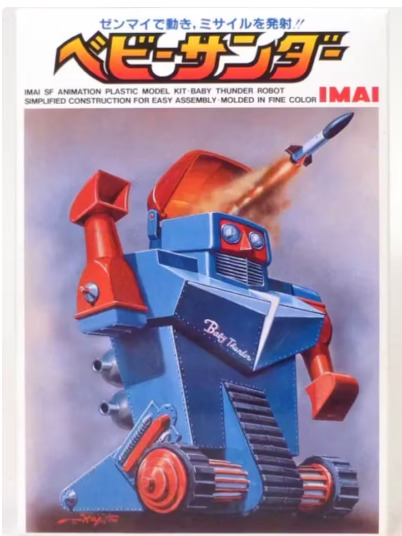
    Baby Thunder 70s robot toy
    Image Credit: VintagGiftsAndMore, etsy

    Robot Commando or Baby Thunder whatever you say; was a great robot toy in the 70s. It was not as popular as the previous two, but possessed a lot of entertainment. IMAI (the creators) had crafted this plastic model kit with a friction-powered motor and spring-loaded missile. The best thing about the Baby Thunder was its ability to move forward even after it had been powered off. The toy was also able to shoot its missiles in all directions, which made it a great hit with kids. The missiles were also capable of bouncing off walls, adding to the fun.

    Robotron RT-2 Robot Toy

    Robotron RT-2, the popular 70s battery-operated robot toy. Standing at 15in tall, it captivated children of the era. Battery-operated mechanism brought it to life. In the 70s, battery-operated robot toys were a sensation.In fact, my grannie had a Robotron RT-2, and it still works today! So long lasting, I have to say.

    Cosmic Fighter Tin Toy Robot – Mid 1970s
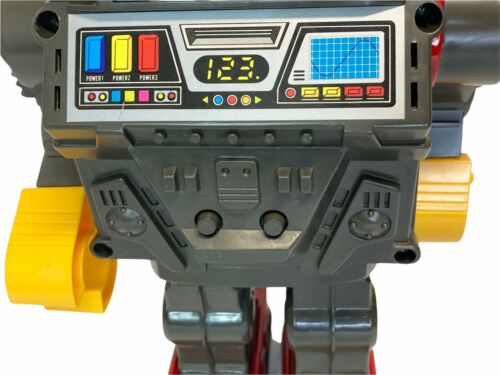
    Cosmic Fighter Tin Toy Robot
    Image Credits: mirimarketplace, eBay

    The Cosmic Fighter Tin Toy Robot was a classic by Japan’s renowned Horikawa Company. Asia, still in 2023, accounts for 50% of all the robots in existence. So, it is only normal to include this sensational Japanese robot toy of the 70s in this list. The 12-inch tall robot toy features a rotatomatic action with its spinning body. This not only entertains, but also reveals a gunner inside with flashing lights and shooting sounds. Its large claw-style hands and well-crafted design make it a unique collectible.

    Alphie Toy Robots – 1978
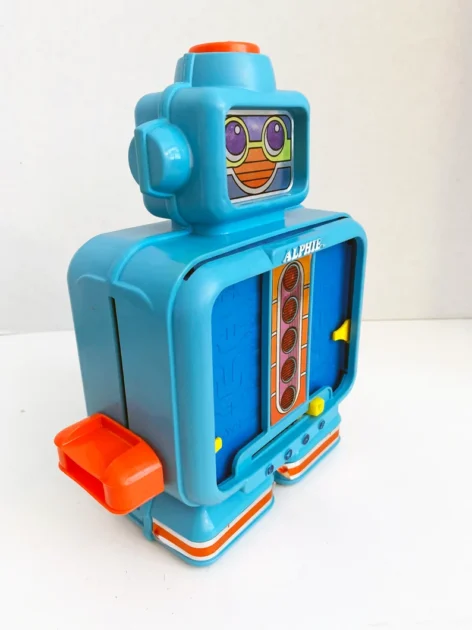
    Alphie
    Image Credits: smilehood, etsy

    The 1978 robot toy Alphie continued its popularity well throughout the 80s. It featured an input slot for interchangeable cards, and accompanying buttons on the front. This means children could play with it, learning math, spelling, and matching skills. It also played music – yes! At that time, music was more than a bonus; a phenominal way to keep kids engaged.

    AHI Lost in Space Robot Toys – 1977
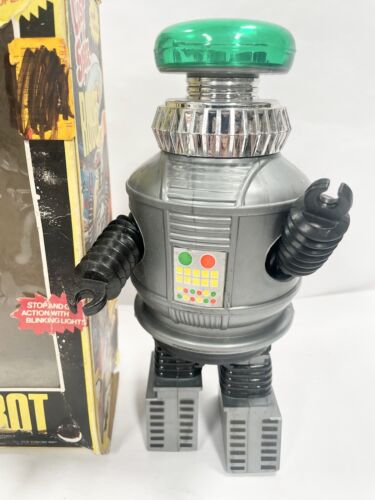
    AHI Lost in Space Robot Toy
    Image Credits: tripleskipler, ebay

    Lost in space robot toys have had a long story; from Remco’s 12″ manually controlled robot in 1966 to Aquapolis’s 6″ Friday in the 1970s. AHI’s Lost in Space robot toy was introduced in 1977. It stood 10″ tall, with bump and go action, a blinking chest light and stop and go function. It featured stop-and-go action, a blinking chest light and three sound effects. Stop-and-go action means it could walk, turning the robot’s head and arms as it moved. The blinking chest light and sound effects gave the robot a realistic and exciting feel. This made the AHI Lost in Space Robot a great addition to any child’s toy collection.

    Micronauts – 1976
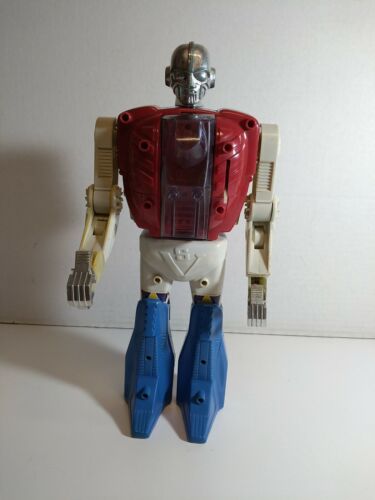
    Micronauts Biotron Robot
    Image Credits: popculturecomicspgh, ebay

    The Micronauts were an innovative product, unique in their time. Their design was complex, featuring interchangeable parts and the ability to build creative, customized figures. Kids could mix and match parts to create unique figures and vehicles. The motorized vehicles and robots could move with the help of a wind-up key. From 1976 to 1980, Micronauts were a huge success, with millions of kids having fun playing with them. The figures also inspired a comic book series and a toy line.

    Tomy Wind Up Robots – 1977
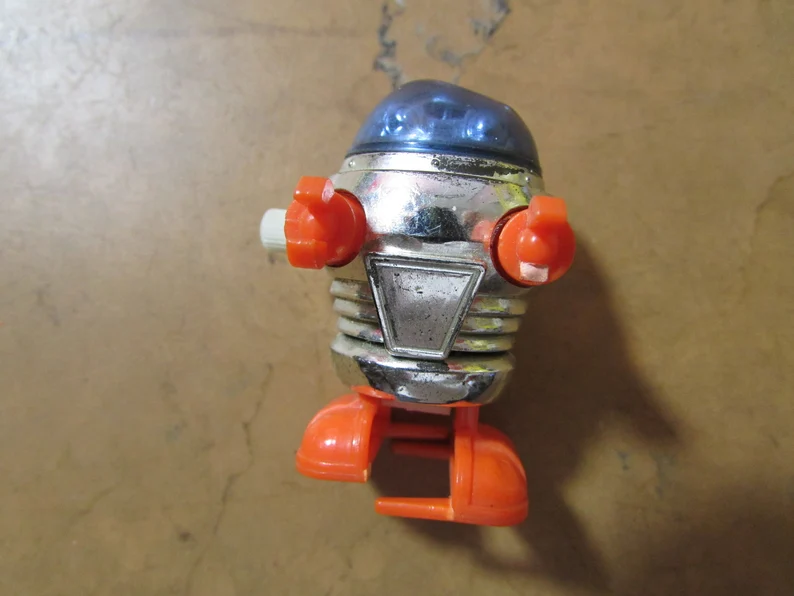
    Tomy Wind Up Robot
    Image Credit: LOLARICHTER, etsy

    Tomy Wind Up Robots were very popular in the late 70s, and still remain a timeless classic to many. There were different versions of this robot toy; the boxing ones, golf ones, and who can forget Strollin Bowling? Kids used to collect multiple kinds of these, and loved to show off their unique collection.

    Star Fighter Robot Toy
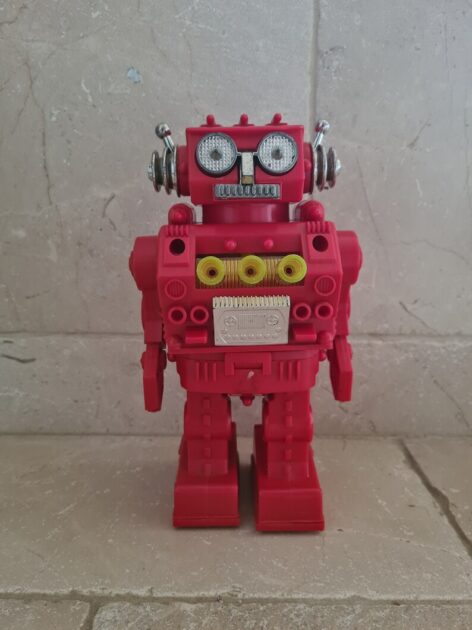
    Star Fighter Robot Toy
    Image Credit: FabiansAntiquesShop, etsy

    During the 1970s; star fights, wars, and stuff were all the rage. The Star Fighter Robot was more like a niche robot toy, mostly among action-minded kids. It had a unique design with a sleek body and flashing lights. Its movements and sound effects were so realistic for a 70s robot. The easy-to-use controller allowed kids to navigate the robot in any direction. In 1978, after the release of the Star Wars movie, the robot’s popularity even further skyrocketed.

    Bonus Article: Best DIY Programmable Robot Kits for Adults (For the 70s kids, who are now adults)

    Bottom Line

    I had to take help from my grannie to write this article, and it was definitely worth it. Hope you enjoyed learning about the robot toys from the 70s! Of course, we’re reading this article in 2023, and things have changed. Autonomous robot toys, for example, are growing rapidly, and with expected CAGR of 18.80%, their industry could reach $22.9 billion by 2030. Today’s kids are growing up with these amazing autonomous toys, and their future looks brighter. However, 70s kids will always be nostalgic about all these amazing robot toys from the good old days.
  • Best of 3D Printing (2023)

    3D printing is a surprisingly old technology, existing since the 1980s. That was when Chuck Hull invented the stereolithography apparatus. The technology is not only being more accessible with time, but also advancing quickly. In 2023, you can 3D print a lot of things. From prosthetics to furniture, and space exploration tools to toys. Grandviewresearch’s stats show that the 3D printing industry is growing with a CAGR of 20% till 2030. The best of 3D printing technology in 2023 was like a fantasy a few years ago. Courtesy improving materials (i.e. metals, polymers, ceramics, composites, etc.) and increasing accessibility (i.e. cost, ease of use, and availability of 3D printing services). And it has also become a necessity now, giving a real edge in production and design to many industries. We’re just starting the year 2023, and this article is all about the very best of 3D printing.

    A 3D-Printed Space Habitat

    https://www.youtube.com/watch?v=C3JBu_kXmsw

    3D printed space habitat – yes, you read that right! This ambitious project to create a 23-feet high 3D-printed polymer took two years. Institut auf dem Rosenberg students, aged 6-18, and SAGA Space Architects were behind this amazing prototype. The coolest part? Well, its application of simulating mission control and “systems thinking” in preparation for space exploration. The 3D printing material has a UV stabilizer to make it more durable. In fact, it is also possible to break the habitat and reuse the polymer. In the name of 3D printing, it’s good to see projects like this. Not only is it trying to make a difference in space exploration journeys, but it’s also inspiring future generations. Kudos!

    An Ear

    I don’t know about you, but my ears got exhilarated when they heard about 3D printed ears! Amazingly, technology now creates realistic, custom-made ears. 3DBio Therapeutics’ 3D printing procedure, which took seven years to develop, is a stunning medical advancement. By integrating proprietary technologies, it uses patient cells to make living tissues for a misshapen ear. In fact, a 20-year-old woman has already had a successful transplant. Here’s the complete process of 3D-printing ears in a nutshell:

    • Step 1- Harvesting cells from the patient
    • Step 2- Growing billions of cells
    • Step 3- 3D printing the ear shape with a collagen-based bio-ink
    • Step 4- Implanting the ear.

    Truly, this 3D printing application is a revolutionary step in the field of tissue engineering.

    A Home

    A few years ago, we were like “Who on Earth 3-D prints home!”. And now, in 2023, a 100% bio-based, 3D-printed home has came to exist. BioHome3D – a 600-square-foot prototype with 3D-printed walls, floors and roof. Highly insulated and 100% recyclable, BioHome3D can tackle the current housing crisis and labor shortage. Moreover, its advanced manufacturing process reduces construction waste and dependence on constrained supply chains. This innovative 3D-printed item is a great step forward in the affordable housing sector. Kudos to the University of Maine Advanced Structures and Composites Center!

    An All-in-one 3D-Printed Robot

    Robots parts are difficult to manufacture, especially with the necessary electronic and mechanical systems needed to operate them. For example, assembling and connecting the limbs, electronic and active components, which can be bulky and heavy, is difficult. But a team of UCLA engineers and their colleagues have created a new design strategy. A 3D printing technique that can build robots in one single step. Yes, one single step! The 3D-printed “meta-bot” is comprised of an internal network of sensory, moving and structural elements and can move by itself, propelled by a small battery. It can sense, move, jump, and make decisions. The most interesting thing about 3D-printed robots is that they can be much more lightweight and flexible than conventional robots.

    A Programmable 3D-Printed Material

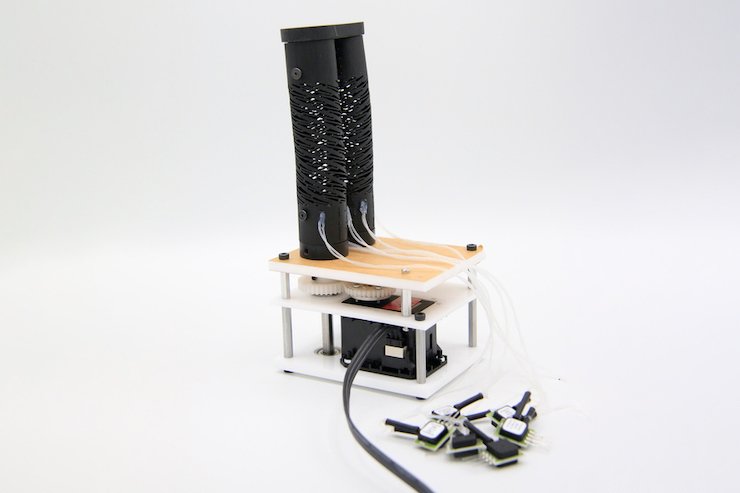
    MIT Fluidic Sensor
    Image: MIT Fluidic Sensor, Courtesy – MIT

    Yes, programmable! A programmable 3d-printed material means a lot. Like, the materials can actually sense how they are moving and interacting with the environment. MIT researchers have developed a method for 3D printing materials with tunable mechanical properties. These materials are in fact created using a single material and a single run on a 3D printer. Digital light processing 3D printing was the method engineers used to create the materials. The most interesting part of 3D-printing programmable material is the fact that engineers can route channels throughout it. So, they can get sensorisation with structure. The team 3D printed an HSA (handed shearing auxetics) soft robot capable of several movements, including bending, twisting and elongating. The robot was ran through a series of movements for more than 18 hours.

    A 3D-Printed Bridge

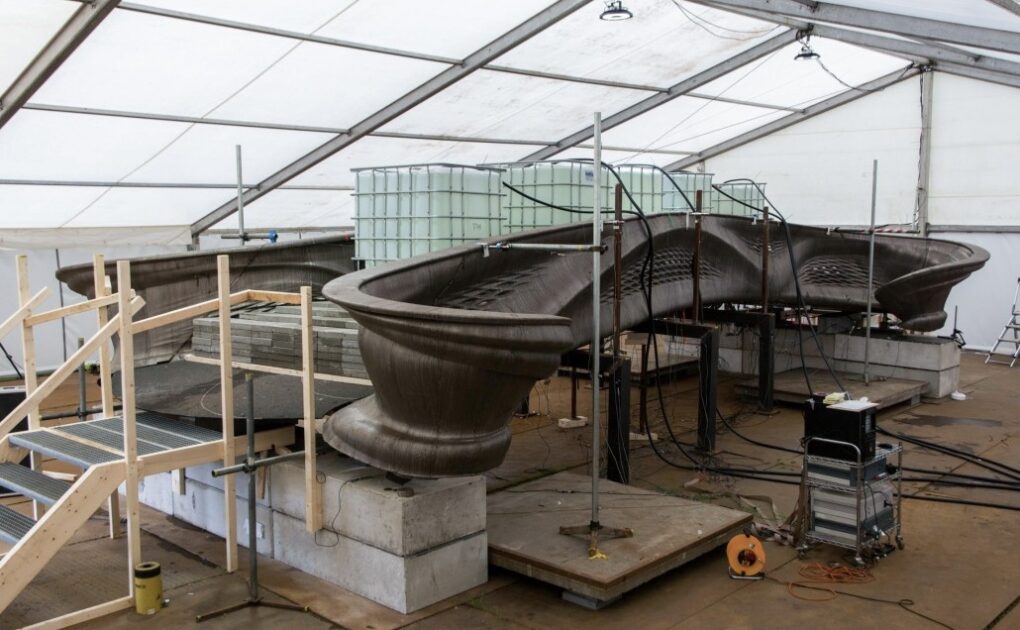
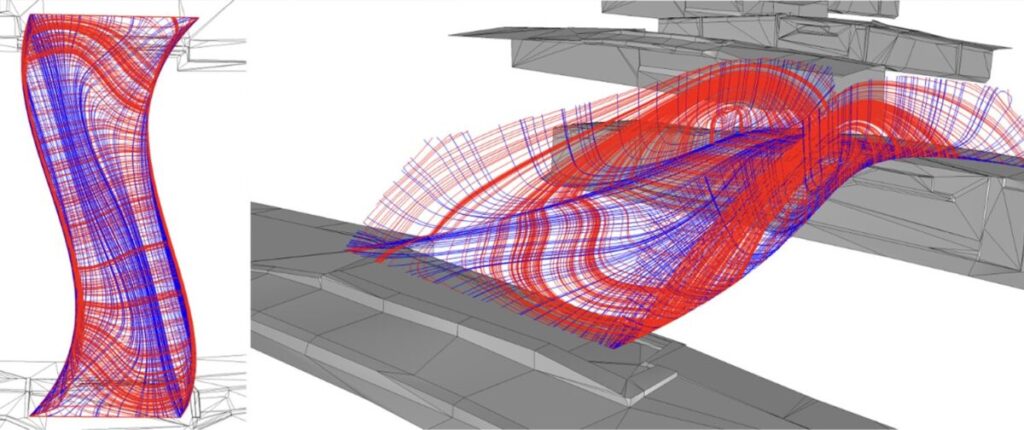
    MX3D used 4,500 kilograms of stainless steel to create a 3D printed bridge. The bridge is 12 meters long and 6.3 meters wide. If you had a very little doubt about the strength of 3D printing, this bridge will change your mind. It’s neither a toy, nor a prototype. It’s a real big whole bridge that can carry the weight of people. The bridge is located in Amsterdam, Netherlands, and was unveiled in 2021. This bridge makes it look like 3D printing is all about materials – like if you can print anything given a material. But, that’s not the sole factor. A significant portion of 3D printing is design too, something this bridge is spot on in. We need to attribute that to the engineers and designers behind this project.

    Bottom Line

    You know what, the best thing about 3D printing is that there is a lot relying on it. And even heavier sectors too, from space exploration, to medical advancements. Although a good number of people are now aware of 3D printing, there is still a lot to do. Drastic changes are yet to come. We have already 3D-printed a complete robot, and a programmable material. The next probably is a mixture of both.

  • A Robot that Draws vs AI-Generated Art

    A Robot that Draws vs AI-Generated Art

    Today, I was surfing Amazon and got to buy Angie, a drawing robot. The way Angie draws a picture using its robotic arm was incredible. My drawings are always awful, and so are the ones created by a robot with my command! Sandaisy’s video below should show the better of Angie:

    There are more than 12 million robots among us, and drawing is definitely not among their top jobs. But the end goal of robotics is to combine Artificial Intelligence and physical robots. The combination’s weight, let’s say, is heavier than the sum of the two parts. And with the latest trend of using AI to generate art, I considered comparing Angie’s work with AI-generated art.

    A Drawing Robot

    A Drawing Robot

    Drawing robots come with a kinematic structure. It not only allows them to draw with precision but also with a sense of style. For example, Angie can draw using various techniques like pointillism, shading, and outlining. Manufacturers program robots with algorithms to identify and interpret their environment. For a drawing robot, it would be to identify the shapes it needs to draw. Say, a robot can draw a perfect circle or a triangle. All in all, these robots are physical. Being physical means that they can have an impact on the environment.

    Here are a few examples of robots that draw:

    Angie

    Angie

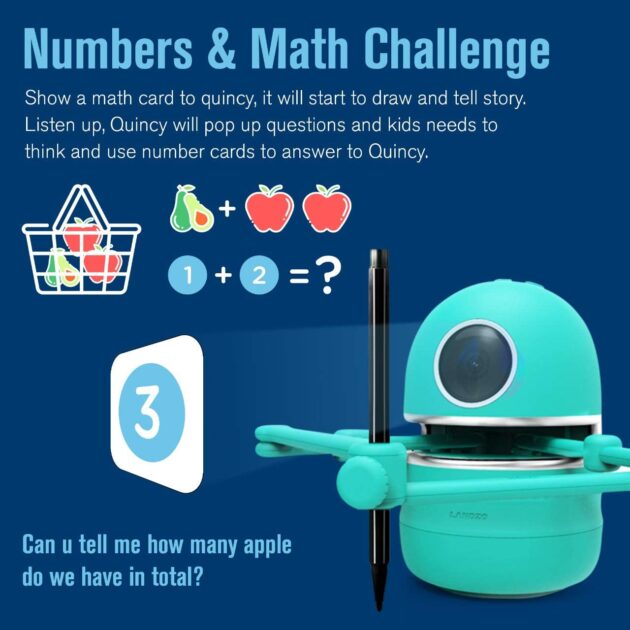
    Angie is a great learning buddy for children aged 4 and up. I got easy, step-by-step instructions to solve puzzles and more. With three buttons–Scan, Next, and Repeat–I was able to become an “artist”. The package also comes with two pens, a charger, and over sixty drawing cards. What’s funny is that I didn’t read the description that Angie is for kids (it’s also for testing spelling and math skills). But believe me, despite being 26, I had as much fun as a kid. The drawing robot is a great gift to surprise your child.

    4M Doodling Robot

    4M Doodling Robot

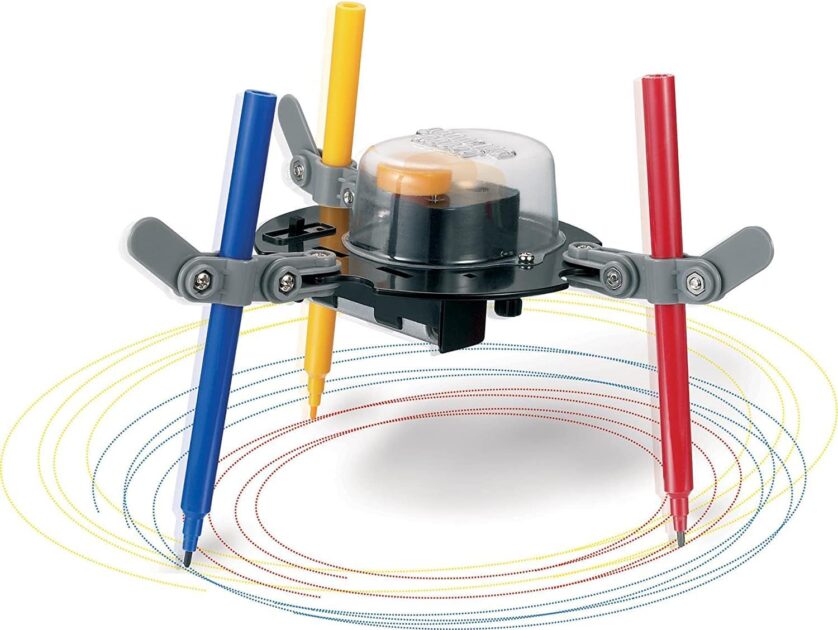
    The 4M Doodling Robot is a great drawing tool for any child looking to explore their creativity. With adjustable height and angle, you can create art without any special tools or knowledge required. This educational toy runs on one AA battery (not included) and is suitable for ages 8 and up. The kit includes parts, pens, and instructions to help get the robot up and running. Also, the vibration and spin of the robot’s motor help it doodle pictures, which makes it fun to watch.

    iDrawHome A3 Pen Plotter

    iDrawHome A3 Pen Plotter

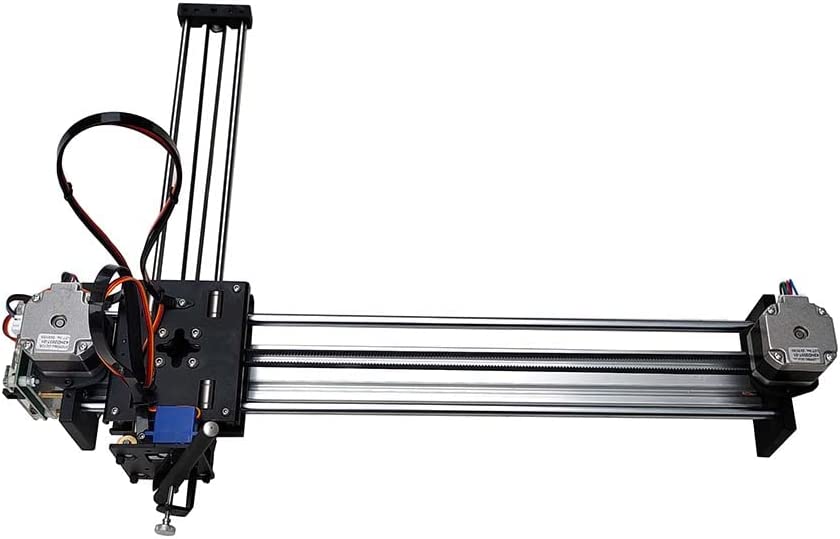
    A robot that draws 3D images is something that will take your creativity to the next level. The iDrawHome A3 Pen Plotter offers an amazing experience that requires some hands-on ability. It has an A3 working area, a high-precision 42 stepper motor, and 16 subdivision A4988 drive. This provides a 0.2mm positioning accuracy and 0.2mm XY movement accuracy, making it ideal for intricate drawings. It’s like almost assembled, with a guide to finish the whole assembly. In fact, this drawing robot can print direct input, drawing, or SVG JPG BMP PNG DXF files. It means that you can quickly print almost any graphics or text.

    Comparing a Drawing Robot with AI-Generated Art

    From the way MyHeritage AI Time Machine generates your ancestors, to DALL E 2 picturing your imagination. And from MidJourney-generated art winning an art competition to GPT-3 disrupting the art of content creation. Just leave alone Google’s Parti, a text-to-video generator Google is scared to release. AI-generated art has turned out to be the biggest trend of the decade. It’s more than just a robot drawing based on your simple commands! Here is how it’s different from a robot that draws:

    a. Programming/Intelligence

    AI-generated art possesses significantly more complex programming than that of a drawing robot. AI art generators can detect, analyze and interpret patterns. Programmers feed them with a set of data for that. The data is often in form of images and alt text i.e. descriptions. Furthermore, it uses that data to create unplanned art. The limits here are not the availability of data or the number of possibilities, but the practicality. For example, if you automate it, an AI art generator may keep on generating art pieces forever. Only the practicality is limited here. It is possible to create a lot of art pieces, but difficult to decide which one’s the best. It’s clear that AI-generated art relies on algorithms and data sets. Yes, drawing robots, too, have algorithms. But the difference is in the level/intensity of programming. For example, a drawing robot is programmed with coordinates and commands to draw. It will keep drawing until it receives a stop command, like forever!

    b. Interaction with the Physical Environment

    A drawing robot has the ability to interact with a physical environment. On the other hand, an AI art generator can draw only within the parameters of its code. The AI art generator can not come out of the device; it’s only the output that you may print. And that too, as 2D art on paper, is barely physical. Drawing robots have become advanced, and are already printing 3D things, like the iDrawHome’s A3 robot does to an extent. On top of that, 3D printers, themselves, are considered to be a form of robots (and they draw objects). One way to compare AI-generated art with drawing robots is by comparing sports with gaming. However, this method asks for controversy, due to its subjective nature. Let’s say, playing a game and playing a physical sport share some similarities. They each have rules, and goals, and require a certain degree of skill. Yet, the physical nature of playing a sport gives it an edge. But it’s all about the primary form of something. Physical sports have existed for centuries, while gaming is relatively new, making physical sports superior. However, when it comes to AI and Robotics, things change. Because programming language, which didn’t have any physical forms, has been around for longer than robots. As such, the primary/default form of AI is not physical, but digital.

    A Mixture of a Drawing Robot and AI-Generated Art

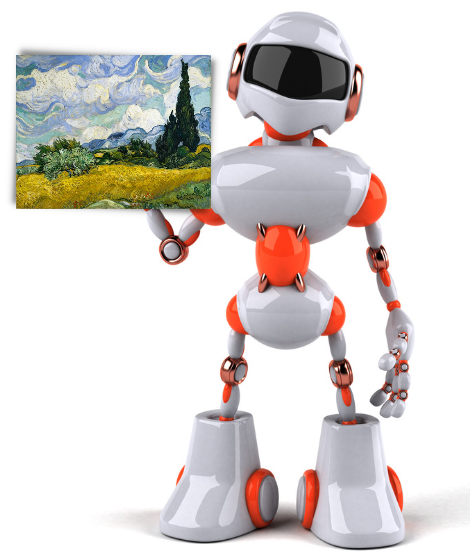
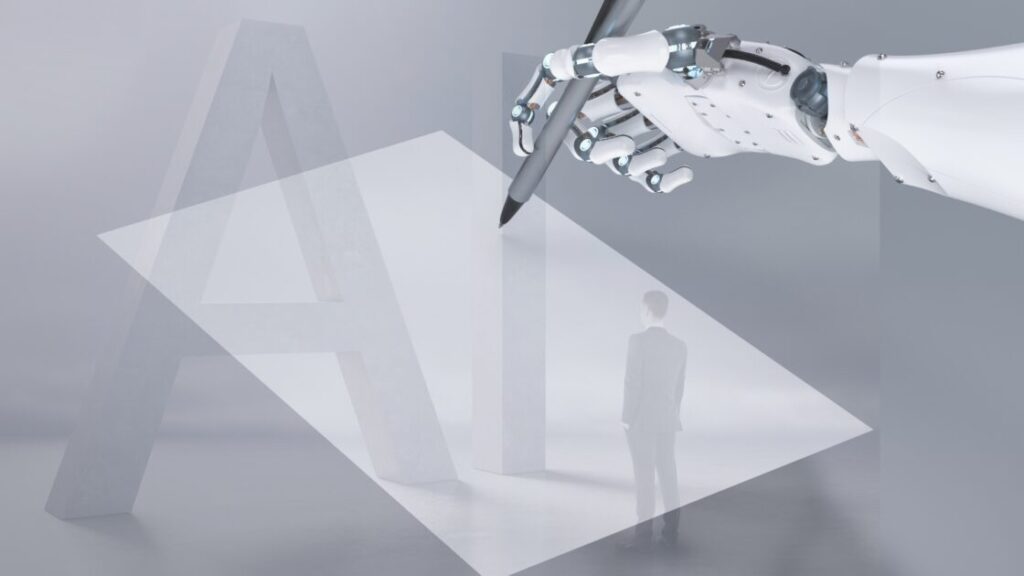
    A drawing robot drawing physical object with AI-generated art

    The combination of the AI art generators’ limitlessness, and the physical nature of robots make an interesting hybrid. As of now, AI is already capable of generating everything. Courtesy of OpenAI, the public got to know that a superhuman AI content generator, the level of GPT-3 can exist. And it doesn’t just stop there. We are all familiar with how human these AI-generated contents are; let it be images, text, or audio. Humanity has already deployed a human-like AI in digital form, and it’s only 2023. Humans are challenging Terminator’s prediction in every possible way, and 2045 now seems to be too far.

    Now comes the interesting part, the mixture, which involves two main steps, and then, 3-D printing.

    a. Automation

    Automating AI-generated content is not an enormously difficult task. In fact, if nothing works, just create a robot that automatically presses buttons and creates art. Yes, that’s not the smartest way to go about it. A much better and smarter approach is by using robots that can read an AI’s output and draw it in real time. One way or the other, automation is not tough, and we can definitely manage it.

    b. Deploying the power of AI generators to a physical machine

    This step is now the only obstacle that is coming between us and our robot-generated art. We need to figure out how to take the AI’s output and transfer it to a physical machine. This is where the difficult part comes in. We need to figure out how to combine the output of an AI with a robot and make it draw the art autonomously. There are many reasons why it’s tough. For example, the AI’s output might be too complex for a robot to interpret, or the robot might not have the precision needed to draw the art accurately. Furthermore, it might take a long time to transfer the AI’s output to the robot.

    c. 3-D printing of the art

    Again, this step is not as difficult as the step 2. Once the robot is able to draw the art correctly, it can be 3-D printed. We all know 3-D printing is already advanced, and it is becoming more accessible to everyone.

    Bottom Line

    Art indeed is lovable, but AI-generated art is here to stay. A robot that draws, such as Angie, offers an interesting comparison; it does create cute drawings. But such robots may lack the diversity and complexity of AI-generated art. The best way around this is to combine the two; an AI algorithm and a flexible physical robot. In this case, combining the creativity of the robot artist with the precision of AI-generated art. Feeding the drawing robot with complex generative models, it can draw something unique, beautiful, and physical in nature.

  • Why VR is the Best Way to Learn New Skills

    Why VR is the Best Way to Learn New Skills

    Learning new skills in Virtual Reality disrupts traditional learning. Every sort of learning, from formal education system, to everyday skills. When people (of any age) put on a VR headset, they are likely to learn new skills faster. In fact, users learn up to 4x faster in VR, and retain up to 65% more knowledge than “reading”, and 70% more than “lectures”. Not only that, VR is cost-effective, interactive, and engaging. And on top of that, those who learned new skills through VR are 275% more likely to implement those skills. And I probably don’t need to mention the importance of applying your knowledge!


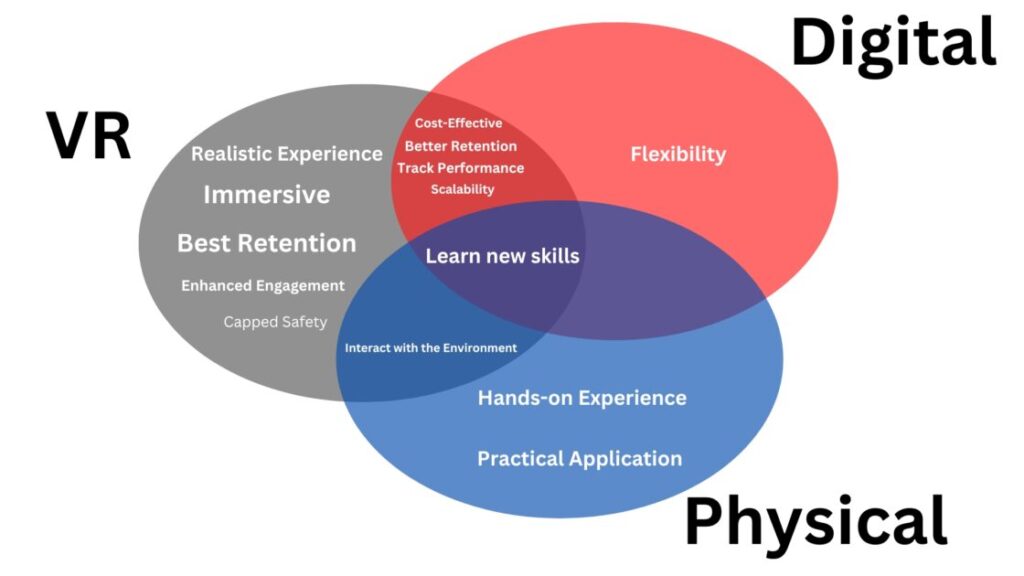
    Here’s a Venn diagram comparing learning new skills in VR, Physical, and digital world:

    Learning new skills in physical vs digital vs virtual reality

    Learn a New Skill with VR: Easy Steps

    1. Choose Skill: Decide which skill to learn. Your goal should be to find something that interests you. If a person finds a subject attractive, they are 35% more likely to learn it. In VR, you can learn almost anything from fixing a car engine to cooking a meal. Yes, I understand that everything is interesting in VR. Just choose the skill that interests your learning gut the most!

    2. Find VR App: Look for a VR app to practice the skill. For example, to practice running on a treadmill, you can use a VR fitness app like FitXR. One thing to remember is that the app should be compatible with your VR hardware. Like, if you have a PSVR, make sure you choose a VR app designed for it. Apps for PSVR have a logo icon of it. Smartphone users can always use Google Cardboard or Samsung Gear VR.

    3. Practice: Now, put on the headset and start practicing. You can practice at your own pace and repeat the steps until you master the skill. You can also pause and resume the session if you want to take a break.

    4. Identify Weaknesses: Identify weaknesses and areas of improvement.

    5. Refine: Refine the skill and practice until mastery.

    6. Repeat: Repeat the process until the skill is mastered.

    7. Monitor Progress: Monitor your progress to see how well you are learning the skill. Some VR apps have in-built analytics that shows your progress. Also, you can use other tracking tools to have a better overview of your performance.

    Comparing VR with Free Skill-Learning Options

    Any skill, to any extent, unless it is a formal education system, can be learned for free, in theory. But, in practice, learning is not always that easy. Without a structured and engaging environment, it can be difficult to stay motivated and learn effectively. Virtual Reality changes that. The way it makes practicing a skill more engaging, motivating and immersive, makes it a better option than traditional ways:

    Vs YouTube

    Yes, you can use YouTube to learn new skills, just like most internet users. Youtube indeed is free; however, it is static and passive too. According to a study we conducted, 83% preferred VR over YouTube, as a supplement to learning new skills. Yes, it’s a fact that 86% of viewers do find YouTube videos to be effective for learning. But they just don’t know what they’re missing by not using VR for learning a new skill! Okay, just take a YouTube video that lasts for an hour, and compare it with a VR session of the same duration. Unlike YouTube, VR enables learners to interact with 3D objects and environments. Time simply moves differently in virtual reality. And yeah, we can not include YouTube’s “play in VR” option in what we are calling “VR” here. That’s because YouTube videos are not VR-optimized in the first place.

    Vs Web

    A Search Engine can be a lot of text, images, and videos. Though it is better than textbooks, it can still be boring and ineffective. For one thing, the internet consists of too much misinformation; so much that 80% of US adults have consumed fake news. Furthermore, the web is often unhelpful to learn and employ new skills. For example, a help article from WikiHow may show you some diagrams of a guitar, but it can’t offer you what it feels like to actually play the guitar. Current VR tech including haptic feedback, touch, and spatial sound, allows learners not only to visualize the process but also to “feel” it. Now, this really means a lot. For example, a learner can practice the skill of playing guitar in VR, and “feel” the strings with a VR controller. This kind of immersive and interactive learning is simply not possible in web-based learning.

    Vs Textbooks

    Textbooks are boring. Especially for kids aged 8-13, can be dull and lifeless. It’s a norm that kids (17 or under) don’t find textbooks interesting. For instance, as many as 33% of high school students plan to never read books again after they graduate. The numbers are actually concerning. A science textbook explaining kinematics may ask you to visualize the motion of a car in your brain. But VR, instead of just asking you to imagine, actually puts you in the driver’s seat. You experience the same motion, which makes learning new skills more effective and fun. Textbooks are not only uninteresting but also ineffective if we compare them with VR. In fact, a study conducted by BMC Medical Education found that students learning anatomy with VR scored 23% higher than those who used textbooks.

    VR vs Traditional Courses to Learn New Skills

    There is one school of thought that says that VR replaces the necessity of courses as a whole. In VR, you can learn while playing, and it does mean a lot. For example, virtual reality can help you learn a new language by playing a game or learn a new skill by interacting with a virtual environment. Such skills may include playing cooking games, electronics repairing challenges, and so on.

    But for now, it is clear that VR alone is not enough to master a skill or knowledge. Courses are still essential for achieving the desired goal. And VR courses, which are “a thing” by now, are the way to go. Here are comparisons of VR vs online and offline skill-learning courses:

    Online

    Online courses are convenient but lack interactivity. Like with Skillshare, you can learn a wide range of skills, such as programming, music production, and design. In fact, 73% of students find online courses to be effective for learning – so much so that they would take fully online courses. Now, if online courses come above physical lessons, VR courses definitely come above online courses. In the priority list of people seeking to learn new skills, VR courses are simply at the topmost. Clearly more interactive, easy to access, and engaging; good for a beginner. As earlier mentioned, learning new skills in VR can be 4 times faster than online courses (like skillshare, coursera, etc). And with speed comes “more effectiveness”, when it is to comparing VR with online courses to learn new skills.

    Offline

    Below are the average hourly costs of learning skills for a beginner. The costs are of hiring a private teacher (something closer to what you would get with VR):

    Music: $40 to $100 per hour.

    Language: $30 to $50 per hour.

    Drive: $40 to $60 per hour.

    Code: $20 to $200 per hour.

    Cook: $25 to $100

    VR courses are a lot cheaper than that because they do not require a physical space or instructor. On average, a VR course is about 2-3 times cheaper than a traditional course overall. Of course, VR courses are not to be taken as a complete replacement when it comes to driving or music lessons, etc. After all, you are living in the “real” world, aren’t you? What VR does provide is a great supplemental tool, helping speed up the process to learn new skills.

    Bottom Line

    Learning, as we all know, is all about exploration and experimentation. VR’s way of creating virtual environments makes it a great tool for acquiring new skills, not only because it’s fun but also because you get paid for it in form of effectiveness and time. But still, your tendency to replicate the skill you’ve learned in VR into the real world, is the key.