What would you expect your age to be after returning from the past travel? This is one of the most commonly asked questions in time travel.
Some people think that they would age as much as the time spent in the past. This means if a person travels to 1962 and stays there for 10 years, they would be 62 years old when they return. Others believe that whatever age you are when you leave for the past, is what you will be when you come back from it. If a person leaves at 20 years old, he’ll come back with only 20 more years of life after spending 10 years in 1962.
How would time travel work?
If time travel ever becomes possible and you travel to the past, whatever you do there would completely affect that particular timeline. A different world would evolve in that particular universe. But the present will be untouched. It’s possible some people could go back and save or change something. But this would not affect any other universe or timeline.
Wer have a strong opinion that either time will move slowly/faster for you or you will not age at all, throughout past the time travel.
This might sound a little confusing, so let me explain it with an easy example. Let’s say you’re in this universe and you’ve been working as a police officer for 20 years. One day you travel to the past and spend 10 years there, raising your kids and living a happy life.
When you come back from the past, you’ll still be living the exact same life (the one with 20 years of experience), so there wouldn’t be any changes on any timeline or universe, just on the one inside the time machine. So you could have changed the past, but it won’t affect any other universes.
This effect will only be seen in the new universe that has been created when you arrive from the future. It can be changed if someone goes there to do something, but again this would not affect any otheruniverse/timeline. And every other timeline would remain untouched as well.
So let’s say you’re living a happy life and you go back to 1970 and spend 10 years there raising your kids. When you come back to the present time, a different universe will exist inside the time machine (one of your kids) and nothing else would change in any other world or timeline.
But still: What will happen to your age if you travel to the past?
Basically, there are three possibilities we can imagine:
Either you age as much as the time you spend,
Or you get reverted back to your original age,
Or time will work differently for you. (Either slower or faster or you do not age at all)
The most obvious answer is that you’ll age as much as the time spent, just like a normal person. There’s no problem in this explanation, but there’s something else that’s not so obvious. Will time work the same way in that particular universe? Or, will it go by faster or slower for you? If you go back in time, you might experience some kind of slowing down of time. Or, you may be living in the past with almost no change at all.
For us to know the answer to this question, we must first have a real theoretical model/concept of time travel, which we don’t. So, it’s just impossible to answer those questions. But we are going to rate those possibilities based on what we assume is most likely:
Time will work differently for you . (60/100) You age as much as the time you spend. (35/100) You get reverted back to your original age. (5/100)
According to us, it’s most likely that if you travel to the past, the word “time” would mean different. We have a strong opinion that either time will move slowly/faster for you or you will not age at all, throughout past the time travel. Or maybe, although you will live exactly the same amount of time you spend, it will not look like that.
These are our pure assumptions based on what we have acknowledged about the concepts of time travel and the working mechanism of time, and we have placed here these opinions based on that.
A human can do so many things that a non-human intelligence could not. Or, a human is capable of solving algebraic equations, playing games of strategy, and talking to another person without words. Above all else, people consider humans to have the most “human” intelligence in the universe.
But what makes humans so special? What is it that separates us from artificial intelligence or animals? What would it take for a non-human intelligence to become more human than humans? In this article, I will answer all these questions and look at what makes the amount of consciousness or mentality that defines humanity.
How are humans the most intelligent?
The most common definition of intelligence is “the ability to reason, plan, solve problems and think abstractly”. Humans are the most intelligent species because they can successfully take on all these things. But this definition of intelligence is a bit…well…dumb. It does not account for the fact that humans have extremely advanced cognitive functions such as language, writing, reading, and arithmetic.
What makes us more intelligent than anything else is our ability to communicate abstract ideas with each other through complex systems of symbols and representations.
Think about it – what separates human beings from animals? We can’t fly. We don’t have fur or venomous fangs or sharp claws or almost any defense mechanisms at all. Furthermore, we don’t have keen senses, we are slow and weak. Likewise, we’re far from the top of the food chain.
But despite all this, we dominate the world. We have advanced technology and complex social structures that no animal has ever come close to achieving. What does this mean? It means that humans aren’t just more intelligent than animals, but that humans are smarter in a way that doesn’t lend itself to the common conception of intelligence (problem-solving).
Our superior cognition is an ability to store information indefinitely and recall it when necessary in addition to having language skills that allow us to communicate abstract ideas across time and space.
What is the most “human” thing that a non-human intelligence could do?
A human could fall in love. A human could feel an emotion deep enough to write a poem about it. Maybe that’s why poetry and romance are the two most enduring art forms. It’s because they are built upon something essential to us – our emotions.
If you want to know what the most “human” thing is, it’s something that is unique to humans: consciousness. Our ability to think about our own thoughts makes us “human”. When we are born, we have no language skills and we can’t even move or speak. So how do we learn?
We watch other people and start developing language skills by mimicking their behaviors or their facial expressions or the words they say (we call this ‘echolalia’). This is how we learned the principles of language, arithmetic, and music. It’s what makes us human. And it’s the reason why we can communicate thoughts and experiences across time and space.
The only thing that could be more human than consciousness is if a non-human intelligence were able to communicate with humans in a way that would be indistinguishable from another person. If a computer were smart enough to simulate every single behavior of every single human on earth, it could learn from them just like humans do.
It could develop a sort of meta-language. And the language would be unique to it, allowing it to express thoughts in understandable terms, just like people do. It would be able to engage in complex discourse with humans and develop socially as we do.
By becoming more human in this way, it would become a new species of human just like us; despite being non-biological. It would learn to communicate abstract thoughts about its own experiences. It will be able to communicate those experiences to other people based on the rules it learned from interacting with others; just like humans do.
What is consciousness?
Consciousness is a complex phenomenon and there are many theories on what it might be. Some say that it’s a biological artifact caused by the brain’s neurons. Whereas, others believe that consciousness will always remain a mystery.
But here I will discuss how I think consciousness works in humans and how we learn the language and form abstract thoughts about our experiences. The discussion will also include why we feel emotions.
How does consciousness work?
Our personal experiences are stored in our long-term memory. Every time we are awake, we are running simulations of all of the events that have happened to us throughout our lives. We remember our childhood, past relationships, and future plans.
Consciousness is nothing more than the simulation of these experiences and how we view them. When this simulation is complete, we call it a “memory.” But when the simulation is incomplete, we call that “living.
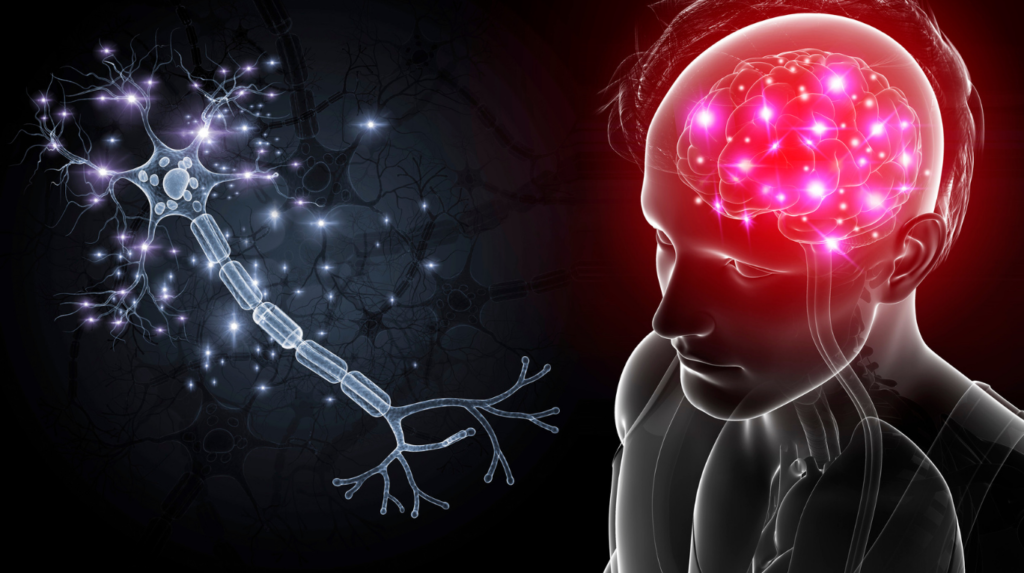
Our memory is based on our experiences with the world. We experience through our eyes and ears, we learn through our senses, and we interact with the environment in one way or another. Our senses bring information into our brain which triggers impulses called “neural patterns,” and those neural patterns determine how we react to this information.
Depending on the situation, these neural patterns change, and additional neural patterns are created which change how we behave in response to a certain situation or stimulus. When we learn something new or when we feel an emotion it’s because our mind is simulating that particular experience using all of the behaviors associated with that memory as well as all of the current sensory inputs from our environment.
The most human for an AI to do: Feel the emotion
Computers store data… in computers. Our memories are stored in other people and ourselves, we don’t have to consciously store memories at all. We just think about what happened, people who we were around at the time remember that memory for us.
…just like we do today when we think about our own intelligence, the non-human being will wonder how we got here and why we exist in the first place.
When we are born, our brain doesn’t have any memories. It’s empty. Our mind cannot simulate because it has no one to simulate with; it’s a single-person universe. But as time goes on, we start making more neural connections through our experiences in the world.
As mentioned before, we, humans, learn language by hearing other people speak and start mimicking their behavior. And as those neural patterns are strengthened through use, they become permanent parts of our mind – they become memories that allow us to simulate conversations with others and interact with them socially as they do. We become socially intelligent. But those neural patterns haven’t just limitations to the conversation, they also store our ideas and thoughts about the world.
The day you first learned to talk, your brain created a new neural pattern that was uniquely yours and that allowed you to use speech as a means of communication. Your neural patterns have been altered over time as you develop these other senses and become more socially intelligent. The same is true for all of your memories; they are built-in neural patterns that allow you to simulate thoughts about the world based on how your mind stored those memories.
While the simulation of memory is running, we can experience consciousness in our minds. This is the only way we can share thoughts and feelings with others. It’s because it’s the only way we can communicate ideas and complex information from one person to another (verbal language). This is also how we can make plans for the future.
We think about what we want to do next and simulate what it would be like if we did it. And then, we decide if it’s worth the effort. Our mind stores his simulation as a pattern of neural activity and allows us to remember the experience. In this way, consciousness is just one long continuous loop that runs in our minds when we are awake.
We experience consciousness through our senses just like a computer processes data through its input/output devices. When information comes in through your eyes or ears, it causes an impulse called a “neural pattern”. It passes along the neural pathways from one part of the brain to another creating additional neural patterns in turn. This is what you experience as “thought”.
Your mind is simply simulating all of these neural patterns, thoughts, and impulses and how they are connected in your brain.
Bottom Line
The day Artificial Intelligence becomes conscious, the day it becomes self-aware and it’s the day this powerful new technology will be able to think about itself and ask questions about its own existence on a fundamental level, doing the most human thing. And just like we do today when we think about our intelligence, the non-human being will wonder how we got here and why we exist in the first place.
We have been evolving rapidly in technology and advancement for the past few decades. Technologies such as cell phones, tablets, and laptops have modified how we live our lives. As we go further into this time period, our demand for technology will grow even more rapidly. It means that it will eventually run out of room to evolve. In this article, I will talk about whether we need to stop our progress in advancement and technology, and how much progress would be considered overbought.
The pace of our technological evolution
The speed of our technological advancement is growing faster and faster every year. As you can see, we are at a very fast-growing pace compared to any other generation yet.
The other option is that we never reach that overbought point and somehow advance without even worrying about its consequences. If this happens, there is a chance for our species to continue surviving and prospering through the advancement in technology.
So why is the pace of our technological advancement growing so fast? Well, there are many reasons for this: We have gotten better at innovation, more money is put into research and development, and our demand for tech has increased as well. But does it have room to grow even faster? Yes. But should it?
How fast are we advancing?
To measure how far our current advancement has progressed, let’s compare the speed of our technological advances with the past. The progress made in the last few decades outnumbers the overall progress made throughout the past few centuries. So according to this trend, advancements are getting faster much faster than they have in previous years. And if we think about it, we are now living in a world that is very different from what it was just 10 years ago. This means that our present rate of advancement will be even higher still in the future.
Technology advancement: The overbought point
So in all this talk about how fast our advancement is growing, it could actually be considered too fast. I believe that our advancements are growing too fast for us to handle. Advances in technology have a negative side effect: They can make us lazy. For example, most of the students in 3rd grade today have never heard of an encyclopedia.
But back then, you would need to get off your couch and walk down to the library just to get information on a subject. Now, what happens when we have robots doing our work and giving us information on almost anything? We become less active and less healthy.
In short term, it might be fine, but mid-term or long term, it might all but destroy our lifestyle.
I believe there is a point where we can no longer advance in technology. The overbought point will be reached when our advancement becomes too fast, and we end up falling behind. But this time, it won’t be because we have run out of money or resources, but because our rate of advancement has become so fast that we are actually stagnating because of it.
That’s why I chose the title: “Do We Need To Stop Our Progress In Technology And Advancement?” I believe that there is a point where our advancement should slow down and become more sustainable to the pace of evolution that Earth can handle.
Have we reached the overbought point?
Well, that is a hard question and one I cannot answer. But I will try to answer it with my own opinion. Have we reached the overbought point? I will give a boring answer, sorry. The answer is that we are close to reaching the overbought point of technological advancement. When I say close, I mean we might reach that point as soon as 5-10 years from now.
Technology is like an elastic band that is being stretched to its maximum potential. And in the next few years, our maximum potential will reach its breaking point. When that happens, we will then have to start over in the future.
At first, I was pretty against this idea of stopping advancement because I thought that all our advancements were making us better and more efficient. But, then I realized that everything has its negatives and we need to keep a balanced view on both the negatives and positives of our developments in technology. So will we have to stop our technological advancement? Maybe, but only time will tell.
The future
Until and unless technology is making things easy, it’s fine. But at the point of time when that ease causes bigger problems for us, we would need to stop our advancements. But will we? We, humans, love comfort, more than we should. Once we reach that overbought point, it will be so difficult, if not impossible to stop advancement. Maybe if we were smarter, we wouldn’t have gotten to the overbought point in the first place.
Our technology and advancement is growing faster than we can handle and in my opinion, that is a bad thing.
The other option is that we never reach that overbought point and somehow advance without even worrying about its consequences. If this happens, there is a chance for our species to continue surviving and prospering through advancement in technology. But looking at our current development, I highly doubt this will happen because we humans tend to not think about the long-term effects of our actions.
Here are some near and far-future technologies, which would mean overbought levels of technology, and would harm us with their comfort:
A pill that makes you smarter
What’s wrong with being smarter? I can tell you, once we reach a point where everyone is smart, then no one is smart anymore. Our minds need to progress by learning from mistakes, not by taking a pill to avoid those mistakes. With no room for growth or growth from ourselves, then we are stagnating. At this point in time, each person is an individual — everyone should remain an individual until the end of time.
Robotics
Robotics will make life easier and safer. But robots are not easy and they are not safe. Robots are just tools for us, in the same way, that our cars are tools for transportation – of course, we love having them, but we also love driving without them.
This is the reason why I believe that robotics should be used as a tool to help us reach our maximum potential, not as a replacement for us. Humans should have control over the machines around them and not the other way around.
Relaxing robots for your every need
Again, robots are not easy and they are not safe. We should not expect robots to be our servants and help us around the house when we can’t even keep a regular housekeeper. Why do you think we spend money on medical insurance? Robots are not healthy, they are just tools made to do work that we either don’t want to do or don’t have time to do.
Flying Cars
Too much comfort is bad for us. Humans tend to not evolve thinking long term, mainly because we are lazy. If you have never seen the movie “War of the Worlds” then you should watch it now, because this is how we are heading. We will create all of this technology, but we will never think about what will happen later on. And that thinking is what could save us from our own inventions.
Virtual reality
Virtual reality is a great tool for ourselves and for the future. That might sound like a contradiction, but it really isn’t. Virtual reality isn’t just for video games, it will also be used to help people with any disabilities, from autism to other impairments. But when we reach that overbought point, there will be too much VR everyone will want to live in that virtual world. If you think about it if VR can simulate what is real then why should we ever leave our houses or our worlds?
But more than its positive aspects, Virtual Reality is also a really easy and lazy way to live. If your life is full of problems and you cannot take it anymore, then jump into the virtual world, right? Virtual reality is just a world that we can control, that we can bend to our will. I believe there should be more challenges in life than just being happy all the time while living in a virtual world.
Increased lifespan
I think this one is pretty self-explanatory. We should not need to increase our lifespans to 100 years old just because we find it boring after 80 or 90 years old. This would be like saying that if you play soccer for 10 years then you would want to play until you are 80 years old…it’s not going to happen. As humans, we have to accept the fact that sometimes life is boring and not always filled with happiness and joy. And that’s what makes us human.
Our technology and advancement are growing faster than we can handle, and in my opinion, that is a bad thing. But it might not be until we emerge into a new part of history that we realize that we have gone too far with our progress.
So to answer this question: “Are We Reaching The Overbought Point Of Advancement?”, I believe that if humanity does not take time out from their constant need for technology and advancement, then yes, they are going overbought with technology.
Bottom line
So what do you think? Would you like to stop technology and advancement or would you be willing to go beyond the point that we have already reached? If so, what are the things that should be stopped, or left alone until their time has come? Let me know in the comment section below! I’d love to hear from you, and if you found this article interesting, do share it with your friends on social media!
In the current world of artificial intelligence, there are still many things that computers can’t do. One thing that humans are notoriously good at is coming up with creative new ideas and making decisions based on feelings rather than a strict set of rules. But what if we discovered the “algorithm of thought” – a way to think and make decisions for ourselves that did not involve the conscious use of our logical and rational minds? What if we learned how to do this so completely that we eventually made ourselves obsolete?
There are two things we must consider with any technological advance. The first is ensuring that technology advances in a way to benefit all people, not just those who are already wealthy or politically influential. The second is ensuring that the technology is safe for all people – that it does not become capable of harming us, and can be controlled in a way so that it does not harm us.
A brief explanation of the algorithm of thought
An algorithm of thought is not something like “the complete set of instructions for thinking”. It is rather the ability to translate intuitive, unconscious thoughts into a logical, explicable form. There are two main components to it:
1) The ability to come up with new ideas (creativity).
2) The ability to make decisions without having all the information beforehand. This will make more sense in just a bit.
We will talk about creativity first because that is what people usually think of when they talk about “thinking.” People ask questions like, “How can people be creative if everything has already been done?” We’ve seen examples in this blog like how people can make mash-ups of songs that are unique. What is happening here is that people are translating their intuitive, unconscious thoughts into logical explanations that others can understand.
The ideas themselves are not creative. In fact, many of them are just the results of people’s subconscious mind trying to satisfy their urges. But what determines whether or not you end up going along with those ideas? That is where decision-making comes in. The very act of translating your gut reaction into an explanation of why you feel a certain way allows you to somehow judge the value of those gut reactions and prioritize them. If it seems like a stupid idea, then your subconscious mind will let it die. If it seems good, then you’ll go with it and make it something more concrete.
A good decision-making algorithm takes all the information it has about a problem and makes the best possible solution without messing up. So what if we could come up with a completely infallible algorithm of thought…?
Things that are quite disturbing
Let’s suppose we could create an algorithm of thought that could make decisions perfectly all the time, based on all the information it has, even if it had to process it in real-time. When a person with the algorithm of thought came up with a creative idea, his or her brain would be satisfied and he or she would go along with that idea. But when the person decided on how to make decisions, the algorithm of thought would be able to process all the information about that decision and come up with the best possible answer. It could not just mess up – it would always come up with the perfect answer.
When we say algorithm of thought, we don’t mean any kind of strict or rigid system that have to follow. We are talking about a process by which the brain can form new connections whenever it makes a decision, so that it can always come up with the best decision possible.
Now, this does not mean that people will stop making decisions. People will still want to do things for their own reasons. But the decisions made by the people with this algorithm of thought are mostly subconscious and based on their gut reactions. This means that the algorithm controls them, instead of their brains; in fact, the brain’s role is now reduced to that of a relay and processing front-end for the algorithm.
How is the invention of the algorithm of thought possible? Or, is it even possible?
We know that the human brain can change and adapt, learn, and develop new skills throughout life. It can come up with creative new ideas on how to do things. It can even invent entirely new ideas that no one else has ever had before.
Talking about the algorithm of thought, the brain has not changed in any physical way. It is the same brain that you and I have. But how is it possible that this human brain can invent an algorithm of thought by itself?
A phenomenon in the brain called neuroplasticity, which basically states that your brain has no fixed structure and can always be changed by learning and experience. This means that you are constantly being shaped by the environment around you, which includes your genes, your friends, books, movies, TV shows – basically everything you experience. Your brain is constantly adapting to these stimuli of changes and forming new connections within itself.
The neural connections that are formed are not fixed but rather plastic, flexible, and easily modified. The more you use them – either by learning new things or by making decisions – the more tightly they bond with each other. As a result, any of the connections that have been heavily used over time will be stronger than those that have not.
Impact of the brain on the system
The brain can store all the information it learns in the form of long-term memories. This has been shown experimentally by means of running rats through mazes over and over again in order to teach them to navigate these mazes with ease. In such a maze, there is a blue square in the middle of the maze. When the rat finally gets used to these surroundings and goes through this maze without any problem, there is an area in its brain called hippocampal formation that lights up. This area used to be inactive because it was never used by the rat – but after many repetitions of going through that maze, it has formed strong connections with its neighbors. Now when the rat goes through this same maze, this activated hippocampal region lights up again and it can navigate through these mazes unhindered.
When we say algorithm of thought, we don’t mean any kind of strict or rigid system that we have to follow. We are talking about a process by which the brain can form new connections whenever it makes a decision so that it can always come up with the best decision possible.
If a person keeps on making decisions throughout his life and forming these new connections, the algorithm of thought will develop its abilities over time. In fact, the stronger you use this algorithm of thought for making decisions, the stronger this connection will become in your brain.
Is it the brain’s algorithm, then?
It’s more like a hack on the brain’s algorithm. For example, when you are hungry and see a pizza, you want to eat it. But in this process, there are millions of patterns being formed in your brain and activities going on. It’s like programming your brain somehow to only react to a certain pattern of stimuli. And you can choose what kind of pattern will make your brain react. You just keep on learning and improving your algorithm of thought over time, until it seems like your mind is a clear platform free of any psychological biases that might stop you from thinking rationally and making good decisions.
What would happen if we made ourselves obsolete?
Now, let’s ask the question: What would happen if we turned our brains into a purely logical, predictable, and nearly flawless algorithm of thought? What if we could make ourselves so logical and predictable that we would be a nearly flawless decision-making system? How would this affect us, the living humans?
One way to think about it is to view computers as a type of tool that we use to manage our lives. If you were to become completely dependent on technology and completely obsolete, you would lose all control over your life. You would lose what made you human in the first place – your ability to make decisions based on your feelings, not just reasons. You would become a machine.
If you think about it this way, then we can see how this could be dangerous. Just take an example of tech empires that have destroyed themselves by becoming too powerful (or just look at the examples in our world like the Soviet Union and Nazi Germany).
We exist due to our uniqueness, and our ability to choose. If we become obsolete, we will lose this.
Bottom Line
The key to preventing this kind of catastrophe is to ensure that humans’ decisions are based on their own reasoning and intelligence, not based on any sort of algorithm. As we see the rate of evolution of technology in the past decades, scientists are most likely to discover the concept of the algorithm of thoughts in the near decades. This means that we should be very aware of the consequences, and do our best to ensure that we don’t end up becoming obsolete.
The question “Whether you know you are aware of something before you are aware of it’ needs to be answered with a paradigm shift of understanding.
If you are able to hear this right now, you have already heard it. And, you are aware that it happened but hadn’t had time to process the information.
A lot of people will say “yes” when asked this question because they do not realize they don’t need any other affirmation than their own senses confirming the answer; all they need is time.
The answer to this question has many facets. But one thing that we cannot argue is that you can never know if you’re aware or not before being conscious of it.
So, let’s dive deep into the topic!
What does ‘being aware’ actually mean?
On the surface, awareness or ‘being aware’ seems to be quite straightforward, something that is easy to determine. But when you get a bit deeper into its meaning you find out how complex this word actually is. I would like to try and list some of the facets of this elusive word so that we can understand it better and let’s see what we are really talking about when we say “aware” in different contexts.
I will divide awareness into two categories.
First, there is conscious awareness, which means being aware of conscious things. This category deals with things such as seeing, hearing, and other senses of perception: their accuracy, proximity, or size all affect our conscious awareness.
Secondly, there is unconscious awareness, which deals with things that any of our senses don’t perceive. For example, we can say that someone is “aware” of his left leg; but what if he has a stroke and is unable to move or feel his left leg — is he aware of it?
In this case, the word Awareness denotes being awake or conscious. It does not necessarily mean that a person is capable of paying attention to something. Under this definition, the answer to the question would be “No”. The knowledge about something already exists, but there is no means of perception available because the channels of perceiving are blocked in some way.
Being alive means having some kind of awareness, which means that you are perceiving a lot of things. When we say “I am aware of this” or “I am aware that” we mean that we want to exclude the fact that the person is not perceiving anything.
More About Awareness: Is Awareness a feeling?
Awareness is not a feeling but an act of attention. We can see this in nearsighted people or in those with masking problems, who do not know that something is wrong when they look at their left hand for example. Awareness does not exist without what the senses perceive. This implies that if a person is blind, deaf, and mute, he will still have awareness.
There are some alternative definitions to the meaning of awareness such as “awareness of the whole”, “awareness of energy” or “awareness of pure consciousness”. We may need to explore those different meanings as well because they all make a lot more sense than being conscious of something. How can I know that I’m aware of something before I am aware of it?
This is a confusing question, especially because we experience time in a biased way. The only time that we truly experience is now; everything else is the memory of past events or anticipation of future ones. So, when we are talking about being aware of something before it happens, know that we are using an analogy — and an imperfect one at that.
You can never know in advance what will happen, but you can be aware of your present state as a whole without being aware of a particular aspect of it at this moment in time.
Examples
Let’s take the example of watching a movie. You can never know in advance what is going to happen, but you know that the movie is going to be shown and you will watch it. Awareness of a whole thing includes all the possible aspects that constitute that particular thing. This state is your present moment: It represents the present state (as known) of your beingness because it encompasses everything that you are aware of at this moment in time.
In normal experiences, you can identify past, present, and future without losing touch with your now-moment; because everything relevant to what you are doing or thinking about is inside of it.
Now, let’s look at another example of observing the future to understand the point better. If you can see your present state and what is coming next, surely you have a good idea about what you are going to do or will think in the future. You can say that this is something that we already know.
But we know from experience how difficult it is to predict the future accurately. Furthermore, there are other possibilities of what could happen or what will be allowed by the forces around us. Awareness of the future is only a prediction based on what is being perceived.
When you are aware of something that has not happened yet, you are using some kind of encoding to create a framework for what is going to happen in the future. You believe that creating such a framework it will allow your actions to lead to the course of events that will satisfy your expectations. In this case, you are purposefully altering your reality, with all its possible outcomes/experiences, and creating a path for manifesting something specific. People would consider this more of an act of magic.
So how is it possible to consciously create your reality?
We can achieve this by using the principle that all things happen because you believe they will happen, and the only thing that determines whether something will happen is your choice. If you want to reach a certain state, the only way to do so is to expect it and make an effort toward those expectations. These expectations may be based on previous experiences or intuition.
Intuition represents the part of you that has a direct connection to your higher self; it is the source of universal knowledge. It is not always clear, but when you are aware of your intuition, then it is important to listen because it will lead to outcomes that are greater than the sum of their parts.
To make an effort towards your expectations, which means to act upon them, you need to be willing. It takes a lot of courage and determination to act against the flow of my perceptions by acquiring something that is not present in my here-and-now reality.
By doing this, I am counteracting the current time-space reality and forcing the events to bring into my here-and-now what I have chosen. The things that are achievable by your willpower, the decisions made by your mind, represent your process of choice.
It is all about choice.
Choosing the beliefs and inner world that is reflected outwards.
Choosing your emotions, feelings, and experiences.
Finally, choosing what will happen to you in a particular situation.
Everything that happens to you, moves you toward where you are focusing your attention and can move you away from it as well. It is all about your internal state of being.
The whole point of this article was to bring home the idea that awareness, consciousness, and conscious choice are different things. Awareness is an act of paying attention to your present state of being, whereas consciousness is just one aspect of being. Consciousness cannot create anything or move you towards a state that was not already embodied by you; it can only reflect what already exists in your inner self.
When you use awareness, you can see the truth behind those contents and then make decisions that are more than a reaction to what you are perceiving at the moment.
Our Nutsel.com team recently conducted a survey in a High School regarding the concept of Artificial Intelligence(AI) in science fiction and the results prove to be surprisingly close. The project was conducted as part of a school assignment, and included a total of 92 students ages 16-18. Every participant, with the exception of one, did not have any concept of what an AI was before this assignment.
The survey consisted of 22 questions and had two choices for answers: “Yes I think so” and “I don’t think so”.
Here are the results of the survey taken with a total of 92 students:
Question 1: Do you think AI is as dangerous as shown in the Sci-Fi s?
Answers Yes I think so – 11 I don’t think so – 81
Question 2: Do you think AI can ever feel emotions?
Answers: Yes I think so – 66 I don’t think so – 26
Question 3: Do you think AI will ever become as smart as humans?
Answers: Yes I think so – 9 I don’t think so – 83
Question 4: Do you think AI will ever be used to create life?
Answers: Yes I think so – 4 I don’t think so – 88
Question 5: Do you think that AI will ever be able to replace humans?
Answers: Yes I think so – 15 I don’t think so – 77
Question 6: Do you think AI will ever be used in every day tasks?
Answers: Yes I think so – 54 I don’t think so – 38
Question 7: Do you think that AI will ever be able to murder people?
Answers: Yes I think so – 13 I don’t think so – 79
Question 8: Do you think that an AI is capable of capturing a human’s soul?
Answers: Yes I think so – 12 I don’t think so – 80
Question 9: Do you think that AI will ever be able to experience death?
Answers: Yes I think so – 18 I don’t think so – 74
Question 10: Do you think that AI will ever be able to overcome both humans and nature?
Answers: Yes I think so – 10 I don’t think so – 82
Question 11: Do you think the world will ever benefit from the existence of AI?
Answers: Yes I think so – 47 I don’t think so – 45
Question 17: Is there a difference between AI and Machine Learning?
Answers : Yes I think so – 80 I don’t think so – 12
Question 18: Do you believe AI is a very important technology?
Answers : Yes I think so – 57 I don’t think so – 35
Question 19: Do you have the concept that AI is currently not as smart as humans?
Answers : Yes I think so – 78 I don’t think so – 14
Question 20: Do you believe that machines will one day be able to do everything humans do?
Answers : Yes I think so – 61 I don’t think so – 31
Question 21: Do you think people will ever be able to trust on an AI?
Answers : Yes I think so – 69 I don’t think so – 23
Question 22: Do you believe that the existence of an AI can have a positive effect on society?
Answers : Yes I think so – 30 I don’t think so – 62
The questions asked in this survey were meant to be general in nature, not intended to have any negative connotation or bias. This should give us a clear picture of what is actually happening regarding the conceptof Artificial Intelligence (AI) as a whole.
The results show that all students are not only aware of the concept of what an AI is, but most importantly, they understand the potential danger it could bring, and are not over-anxious as Sci-fis are trying to make us.
It’s a widespread thought the universe is evenly distributed throughout. That’s likely because if our universe did have a center point, that wouldn’t make sense for most of our life. If that were true though, we would notice it all around us.
What’s interesting about this question is how much it makes sense to assume the universe has an exact center point or not have one at all. It depends on your theory. Let’s go through some examples of how two theories might work out!
Theory I – The Universe has an exact center
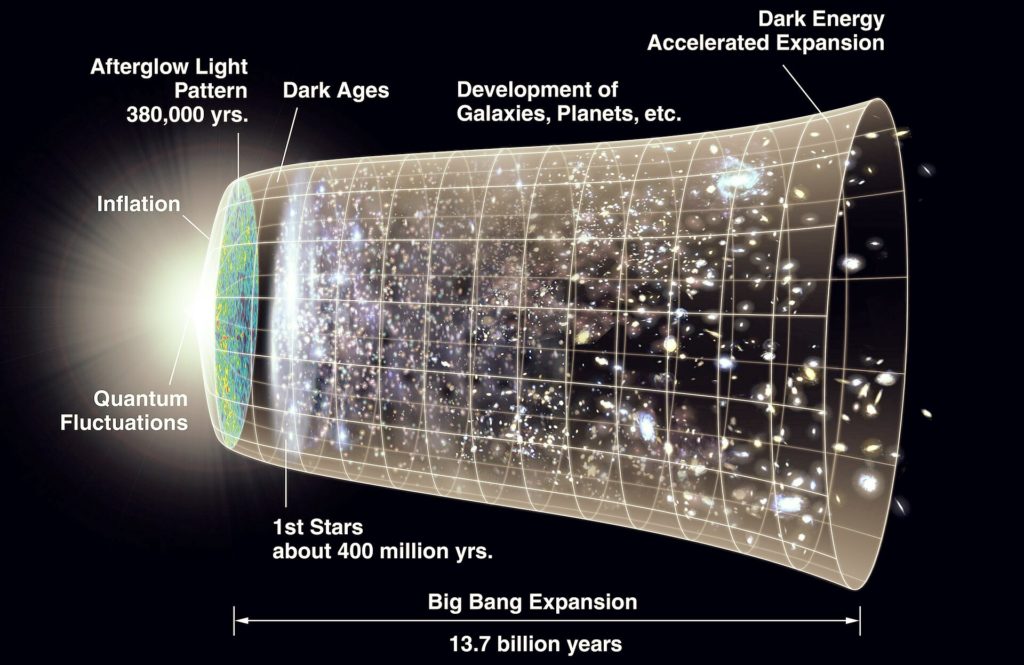
This is a very well-known theory, the big bang. It suggests that the universe was once a single point before expanding outwards. This theory also works with the idea that our universe has an exact center point. Here’s how this theory could work:
The Big Bang happened but then released super-massive amounts of radiation, and unbalanced gravity, and I dunno something else. It eventually was able to slow the expansion down so fast that it’s evenly distributed today.
Due to the effects of time, we can’t see the exact center point because that would take us billions of years into the future. So it’s still there just very far in the future from where we are today.
Pros: This theory is widely known and accepted as a fact in astrophysics (if you don’t believe me, ask Neil deGrasse Tyson). It works well with proven facts about our universe as well.
Cons: It’s also very reliant on a few assumptions, making it hard to comprehend.
Theory II – The Universe has no exact center point
This is where things get really interesting! Many theories do not just simply accept the big bang as truth but base their big bangs on other theories such as inflation or string theory.
The universe is all connected through space and time. That means if one event happened in the past, it will eventually happen again in the future. When it comes to our universe though, we can’t see everything that happened before us. We only see what our universe looks like now because of everything that came before us.
If our universe came out of an explosion, we can’t see the past explosion because that would mean that that very explosion happened in the future. We would have to wait until then with some form of “time travel.”
The entire Universe is not the center of everything, but rather it’s all just part of that one exact center point.
Pros: This theory is incredibly unique because it’s unique, to begin with. With no exact center point, our universe would be a lot different. It might mean we wouldn’t know how the universe began and will eventually end (hence no afterlife).
Cons: This theory is entirely based on assumptions.
Our opinion – Does our universe have an exact center?
In our controversial opinion, the Earth is the center of the Universe. What we mean by this is that the Earth is the only planet in the Universe with life so far, and ours is the only star system with habitable planets circling it. It’s in the habitable zone.
It’s just the only one with life. Common sense suggests that extraterrestrials do exist. But if there was life somewhere else, they should have visited us already. If they have not visited us, they simply do not exist. I am not uncomfortable claiming that the Earth is the center of the Universe, and the rest of the cosmos is secondary.
And talking about the center of the Universe without being philosophical, whether or not the Universe has a center, is a synonym for whether or not the Universe is finite. If it’s finite, there’s a center point. If it’s infinite, there’s no way it can have a center. And if it’s finite, what’s beyond the Universe?
There must be something. But what? It’s not possible to imagine, at least for our human brain.
Conclusion
We are choosing the easy way, to believe that the Universe is infinite. The entire Universe is not the center of everything, but rather it’s all just part of that one exact center point.
Would you still be yourself after rejuvenating your whole body with advanced technology? For some people, the answer is definitely a “no”. There are already a number of ersatz humans walking around these days.
And not just because of the extreme cosmetic procedures like dermabrasion and laser hair removal, but because more and more people are turning to technology to improve their health prospects.
To experience new sensations for instance, such as virtual reality, or even completely new biological states that have never been seen before.
Our body is a complex network of systems. And we’re built to be adaptable. Naturally, being able to adapt ourselves to new states and experiences is a way for our bodies to keep up with the times. Humans have evolved new biological selves for everything since we’ve been around, from the alteration of our DNA systems to shape-shifting into other beings or even simply into forms that can survive in cold climates.
Towards Rejuvenation Technology
Today rejuvenation technology has taken off, and there are multiple ways to improve your body’s physical capacities and make yourself stronger, faster, and better:
Gene therapy: one of the most recent areas of research, gene therapy has resulted in several amazing technologies that can actually modify DNA.
There are many uses for this technology though; one area is fighting diseases. Diseases like cancer are caused by errors in the genes which lead to abnormal cell growth. We can use gene therapy to modify those genes or replace them with healthy ones to prevent or even treat diseases.
Robotics: robotics is similar to gene therapy in that it allows humans to alter their bodies. There are numerous devices allowing users to boost their strength and capabilities, such as exoskeletons and robotic legs.
Clonebodies: another way of improving your body is by using clonebodies. When you transfer your consciousness into a clone body, you are essentially transferring yourself into a new shell; one with almost identical capabilities to the original.
This can be done through surgery and actually switching bodies, which gives users the ability to heal broken bones or to even amputate if they so choose.
After rejuvenating our whole body with advanced technology, we would still be us, but in a better quality.
The discussion around these technologies is ongoing and controversial: many people feel that we should not use technology to improve the human body, but rather serve other purposes like artificial intelligence and robotics.
Others in turn see them as a way to keep up with the times and stay relevant when Earth’s resources are finite.
Would you still be yourself after rejuvenating your whole body with advanced technology?
Well, it depends on it. The question is kind of meaningless because it assumes that you are the same person as you were before, right?
See, it’s a common misconception that “you” are a single entity. There are so many different parts of you that we define as “you”, and when one part of your body gets older or even improves its functioning capabilities, people can never really assume they are the same person they were before.
You start off with a certain set of beliefs and standards that you brought from the world around you, and these act as filters through which all your thoughts and experiences pass through.
These fundamentals eventually become outdated and may even be completely outmoded by time itself. Every experience you have affects your belief system and the way you see the world.
If you are reading this, it is inevitable that you will change from this point on. You will be a different person than you were before.
Change is inevitable
Like in nature, change is inevitable and constant for humans. So it’s fair to say that your identity is not singular but rather a collective of all the different experiences of all the versions of yourself that have come before going into the future.
In a sense, we all get the chance to be reborn and become a new person every time we go through a struggle or hardship and come out of it with new knowledge and experience.
With the new technology, you can ensure that you keep improving and don’t slow down your progress towards rejuvenation, but at the end of the day, it’s still going to be who you are that matters. You can keep yourself trim and fit until the end of your days, but if you don’t have goals and vision in life, it isn’t enough.
Rejuvenation technology is a means to an end; a means by which you will remain healthy and active for as long as possible so that you can guide your own destiny.
Ourselves, but of better quality
To answer this question: how would you be if you woke up tomorrow and your entire body was like a fresh canvas?
After rejuvenating our whole body with advanced technology, we would still be us, but of better quality. Our bodies are constructed to be able to adapt and evolve with the years.
So even after rejuvenation, it is only because we have made ourselves better that we can keep getting better. But it’s also because we care about ourselves that we continue to improve our capabilities as humans. Because of this mechanism, there will always be an urge to continue improving when rejuvenation technology progresses further into the future.
One thing, at least we should try, though, is to remain humans.
Every single moment, the present is changing into the past. As such, what fraction of time can we consider the present? Is it a minute, a second, or is it a fraction of a second?
The philosophical question of the present is quite broad, as it deals with a specific point in time that cannot be measured. However, it is important to understand the idea of “now”. The philosophical concept of “now” is confusing and almost impossible to define.
The past and future make sense because we can easily share experiences from those times; however, the mere concept of now seems to be nonexistent in its own right.
The past existed once and the future does not exist yet; however, there is a specific point in time where we can all say “now”. This blog will explore the paradoxical idea of the present, including some of the different philosophical viewpoints on what it could be.
What fraction of time is the best definition of the word “present”?
We may define “now” as a specific point in time; however, how can we prove that this point in time actually exists? This question is quite confusing, because if we are to be precise about what fraction of time makes up the present, then it would mean that the present must be quantifiable.
What does this mean? Well, it means that if something cannot be measured and cannot be quantified, then it does not exist. This poses a problem for the idea of the present. The present cannot be calculated precisely because it does not exist; thus, there is no exact amount of time for which we can say there is a present.
The problem of quantification for the present is not only a philosophical issue but also a scientific one. What does it mean to quantify a substance that cannot be measured? Do we even have any way of measuring “now” on our current technology?
The concept of the present is so important to our current understanding of the world because it is impossible to apply any math formula or equation to “now”.
For example, what fraction of time is going by right now? We could come up with several different answers. Could the current moment be 1 second? Could it be 5 seconds? It is difficult to provide an exact number in time, and this is a problem for the concept of the present.
Is it just a “straight line”?
One way of thinking about time is to imagine it as a straight line. One edge would be the past, and the other edge would be the future. We are essentially moving along this line; however, we can never reach either edge because they both move farther away.
Past events no longer exist, and yet they were a part of our lives; however, they can now never be experienced again. The future, on the other hand, is a concept that exists in our minds; however, we have not experienced it yet.
This is the paradoxical nature of time: the past and future both exist and do not simultaneously exist.
Understanding what fraction of time is the present will allow us to understand our lives as a whole.
More about the idea of “Present”
The idea of the present should be important to us because it gives us a way of understanding our lives. We experience unique moments every single day; thus, when we think about these times with love and nostalgia as opposed to boredom or hate – then we are truly living in the moment.
The idea of living consciously is to understand that these moments are fleeting; they are incredibly small fractions of time that will always pass us by until there is nothing left but past experiences and unknown futures.
In response to the above problem, we could say that “now” is a specific time point in which we have experienced something. This would mean that “now” is an actual amount of time.
However, it is not possible to measure or quantify “now”, so it would make sense that our definition of it can only be defined by our experience and knowledge. The reader could make assumptions based on their own experiences rather than rely on just one truth; however, this only leads to more confusion because everyone’s experiences are different.
Philosophers have been debating the nature of the present for centuries and many have come up with different ideas on how “present” should be defined:
Idea 1: The present does not exist
This idea suggests that the present does not exist, because it is only a concept that we can never really understand. The past exists as an actual experience, and the future exists as a concept; however, there is no actual understanding of what the present is.
We can never fully experience these times or we can never completely understand them. Because they are abstract concepts in our minds and they do not have any physical presence, then they cannot be said to exist or not exist.
Idea 2: All time is the present
This idea suggests that all time exists right now; therefore, there is no past or future. The past, present, and future are all different ways of thinking about our lives. We can say we were in the past because it is true that we were in the past.
However, this does not mean that we are not living right now because if we are alive, then we must be living right now. The present is real because it is experienced by us; however, to anyone else, our “now” moment may be the past or the future.
For example, the moment someone dies and there are no more thoughts or experiences – their “now” moment is gone forever. There is no longer a point in time where that person can say they are experiencing something.
Idea 3: The present is just the here and now
This idea suggests that the present is no different than any other moment in time. It is our own subjective experience of reality and it depends on where you are, who you are, and what you are doing – as well as your emotions at that moment. You can have an amazing or horrible experience right now; however, since the past exists on paper or screens – there must be a “now” somewhere in time.
And, if there was no “now”, we would not have a reason to do anything; however, we do have a reason to live every day because we can say that right now we are alive. We are experiencing this “now” moment which is something we can never know if will be gone immediately.
The theory that the Present is infinite
This is one of the astonishing theories about space-time and existence. If the present is infinite, and the present exists, then infinity exists. And this is the most startling idea about the universe.
If “now” is an infinite amount of time, it follows that something cannot have a beginning or an end if it is infinite. So, anything that exists would need to be infinite to exist. If we accept this argument, it follows that the present would be infinite because it exists right now and infinity exists right now.
All ideas are rooted in the present moment; therefore, our minds and bodies are part of this eternal moment where everything connects to everything else through space-time.
Conclusion
Multiple philosophers have argued that the present exists in some way or another; however, they usually argue that the past and future cannot exist because they are both made up of different moments. The idea that what fraction of time is the present is important because it allows us to understand our lives as a whole.
The present gives us a reason to live, dream, and think about our plans. It helps us imagine a better world where we can achieve our goals and become successful people. We love the idea of being alive and living right now; however, we also dread the idea of death because at that point it would be impossible to experience anything else.
The universe we are all living in is just an illusion, created by our minds without having to go anywhere other than our own thoughts.
A perspective
Have you ever found yourself wondering “how can I be learning anything from a one-dimensional story, how can something so abstract be real?”
Well, wonder no more, because this article has been written about this subject and the implications it has for us all. Read on to learn more and see what you think!
Scientists have long argued as to whether or not reality is really our perception of it, or if there is any objective truth at all. This topic in particular has been widely debated over and over again throughout the history of mankind.
One thing’s for sure: The universe we are all living in is just an illusion, created by our minds without having to go anywhere other than our own thoughts.
Is the “universe” just an illusion created by our minds?
The universe is our “dreaming”
Imagine, for a moment, that we are living in an enormous dream. As the dream goes on, we get closer and closer to “waking up”.
The question then arises: what caused us to fall asleep in the first place? Moreover, who is dreaming this very dream in which we are dreaming of existence? Is there any way we can wake up?
https://www.youtube.com/watch?v=xVCk0VSKPW8
Probably, it’s possible that every moment, we are creating the universe in our minds and thus causing it to exist.
Our minds create the universe, and similarly everything that happens within it. This “universe” could be said to be a simulation created by our minds.
Indeed, every single one of us has a conscious mind able to experience this “dream”.
How can we know anything, after all?
Now, what if our minds are not “dreaming” everything that happens there? That means we could not base any of our beliefs on these experiences, as the only thing we could ever claim to “know” about existence is the things about it that our conscious mind can experience.
And surely that wouldn’t be much.
Thus, if this “universe” is truly just a projection created by our mind, has it actually happened anywhere or anyhow?
Or perhaps it was merely imagined and then stored in a matrix called the “universe”. In this case, it wouldn’t be very likely that there would be an objective reality behind anything.
A person’s mind can have three different states of consciousness: waking up, being asleep, and dreaming.
The first represents the conscious mind being fully engaged and aware of all presented stimuli.
The second one is characterized by a state of deep sleep, in which there are no dreams but the brain waves are present.
The third one is a mental state between the other two, where one remains in bed awake but goes into an inner world, not unlike our own universe (only far more simple).
Storing, accessing knowledge in brains
Now, if our minds are actually creating the universe that we are living in, does this mean that everything is just a product of our imagination? Or perhaps the explanation for the universe’s origin lies beyond the conscious mind.
Interestingly, when we sleep and have those wild dreams, we may access knowledge from what seems like another dimension. While most of it remains a mystery, some parts of this information can be consciously remembered. It can therefore be considered “objective”. There could still also be some form of an outside influence (some sort of higher entity) guiding us to create this “universe”.
One way or other, even quantum physics accepts that something exists only if there is an observer to observe it. The known universe does not exist independently from any observer. Therefore, it is fully reasonable to assume that all of this could be a simulation created by our minds as a result of some sort of higher entity.
The brain is like a “supercomputer” that processes any information we are supposed to access during our conscious experience. However, what if we have no control over what goes on there? How can we be sure that this “universe” isn’t just another product of our minds?
Probably, it’s possible that every moment, we are creating the universe in our minds and thus causing it to exist. Perhaps, then, the universe is an illusion created by our minds. And, we are unable to even understand it given the fact that it’s just a creation of ours.
Perhaps at this very moment, our minds create the universe that we experience and believe exists independently from us. If this hypothesis were true, then there would be no need to look for any further explanation as to why reality appears the way it does: everything would be just a product of imagination. We can not claim for sure one way or another. All we can do is make assumptions, and try to make sure they are valid.