Author: Britney Foster

  • What if technology on Earth becomes so advanced that we could create living creatures?

    What if technology on Earth becomes so advanced that we could create living creatures?

    Introduction

    There are some ethical boundaries to be dealt with – since to create new living creatures with new ‘life’ might mean doing it without any consent on the part of the created, especially if they do not have all their senses.

    What if, in the future, humanity comes up with new, far more advanced technology enabling us to create living creatures? Ones that could completely change the Earth’s natural as well as biological landscape? What if these technologies could be used for good, or maybe for bad?
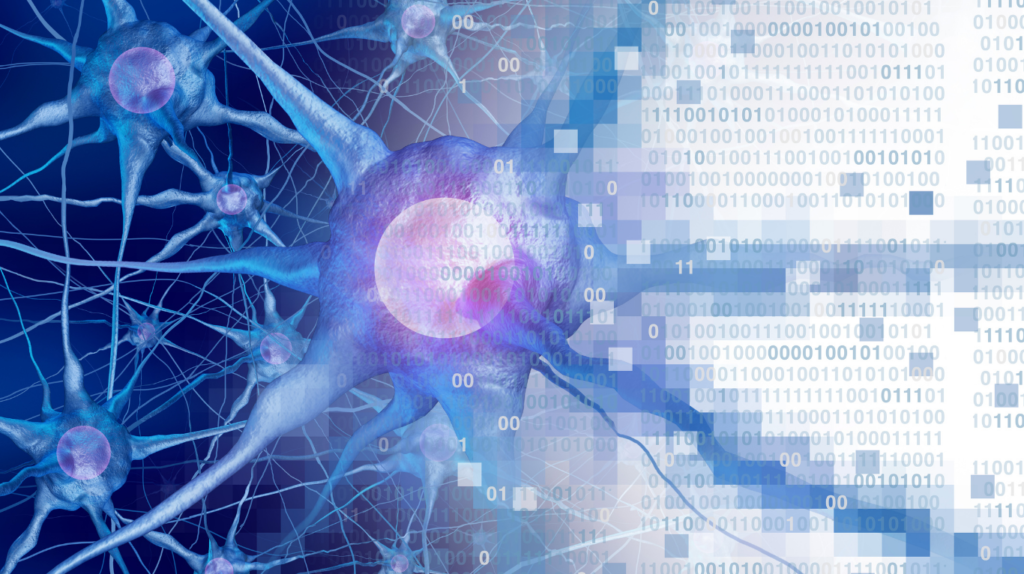
    advanced neurotechnology

    If this new life form was created by machines, that would be a completely different story.

    First, let’s look at some of the many ways that life could have started on our planet.

    In a natural way

    The conditions that allow for life to exist are pretty restrictive. For example, a planet must be above a certain temperature and has to have an atmosphere with enough oxygen. It also needs to have liquid water. There is no guarantee that all these things will always be available as conditions change over time.

    However, if we look at our universe, there are plenty of places where life might have started without these conditions. Something beyond our imaginations might be natural for those beings.

    Created by some other advanced beings

    If intelligent beings evolved elsewhere in the universe before us, they could have left small traces of their existence all around us. This can be done, for example, by leaving behind some sort of automated factory, or malware that goes on to create life even after they are gone.

    This may sound like a far-fetched idea, but it is not completely unbelievable.

    Will it ever become possible for our technology to create living creatures?
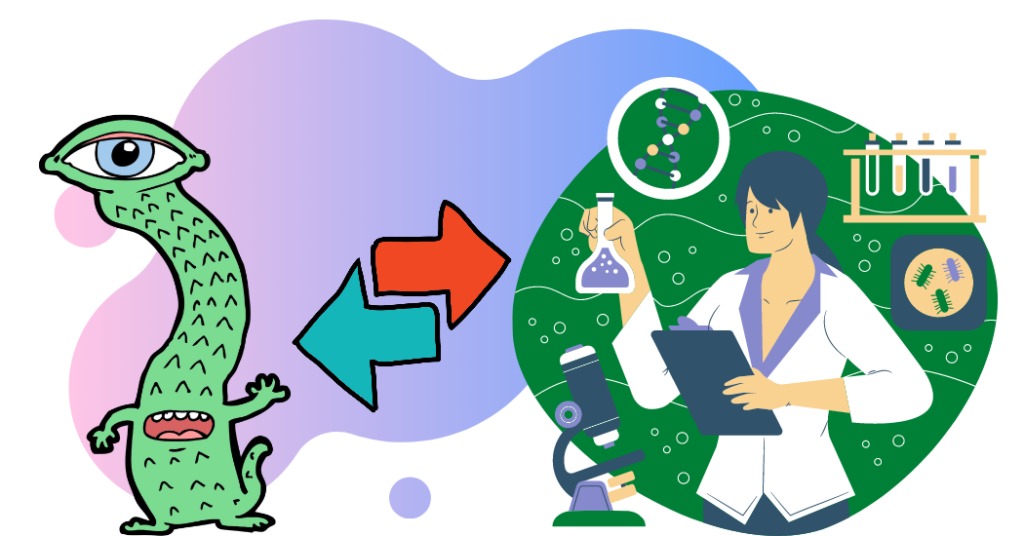
    Creating living beings

    Creation of life? This might sound like an idea from a science fiction movie, but it is not impossible. If we look at our advanced world and how things change with time, it seems that this could very well be a possibility. For example, in 2019, Scientists created a real living organism whose DNA was entirely human-made.

    Now, there are two arguments to this question:
    1) We can’t create a life because we’re not God.
    2) We can, but it’s illegal or unethical.

    The first argument is strong and that we can’t create life with any technology.

    However, if you believe the second argument is stronger, then you may have a more reasonable view on the topic.

    But how?

    Well, here are some points in favor:

    The development of artificial intelligence has been progressing by leaps and bounds – and this could easily be applied in the future to create some sort of creature.  This is exactly what the movie “Avatar” was all about, and this technology might become more advanced in relevant years. This would give us beings that were even smarter than we could ever dream of being.

    We might be able to use things such as stem cells to develop life forms that can work like our own without the limitations of living inside a human body.

    We might be able to get inspiration from our own biological evolution. Just as the first life forms came about billions of years ago, we might be able to use the same or similar means to develop new and better species.

    Self-replicating machines may be able to create new pieces of machines that will further improve these methods. If this sort of self-replicating machine were to be built, we could have an entire civilization that was not reliant on anything other than technology itself. This would allow for a massive population explosion that we might not ever have seen before.

    We have the means to create life. We never know, all that is needed might be just a material such as DNA which can be found all around us.

    All these things are not completely impossible – and they might happen one day.

    These are just some examples and ideas about how we might progress in creating life and using it for our purposes.

    But still, it is not all clear!

    It is not certain that we would be able to make something that can sustain itself and develop on its own. This might require a lot of trial and error, with a great chance of failure.

    If we were able to create living creatures that were intelligent and self-aware, there is the chance that they could become much smarter than us and evolve into something else.

    There are still some ethical boundaries to be dealt with – since to create new living creatures with new ‘life’ might mean doing it without any consent on the part of the created, especially if they do not have all their senses. Without proper guidance, they could become confused and lost.

    It is not clear to what extent we could control this new life. If we do manage to create them, then there is a chance that the created will be able to develop on their own and become something else -something that was never conceived by the creator.

    The major consequences of the creation of new life
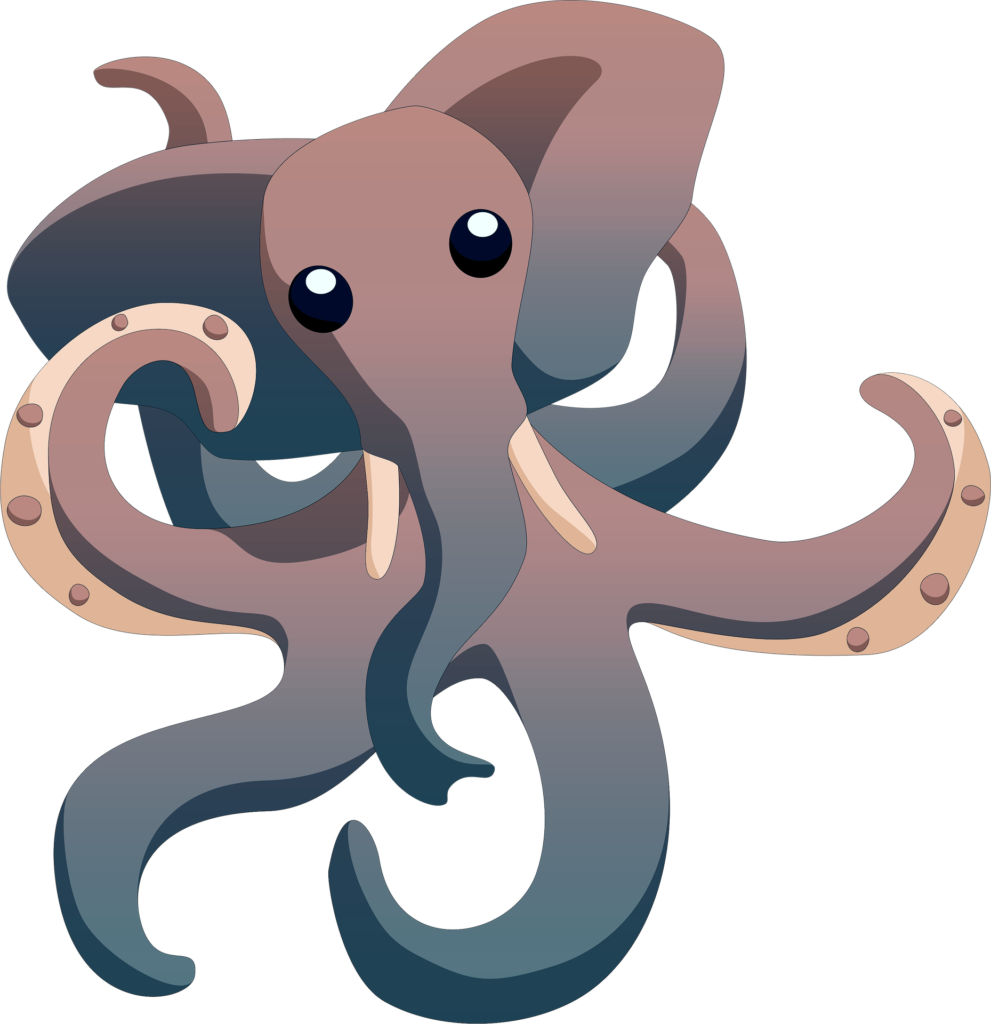
    new and weird creature

    New life means a new living creature with senses.

    If we were able to create a living creature, it might be similar to humans in many ways, or it might have some improvements over us. The major difference would be that they could be able to sense the world in ways that we are not able to. They could even survive in places on Earth that we cannot. If they were created without the limitations of our bodies, their life span might also be longer and more versatile. On top of all this, these creatures could potentially have some sort of self-awareness and the ability to think for themselves – which means that we would have created something very close to what is called artificial intelligence.

    An intelligent life form

    If we were able to create living creature, it might be that our future will be controlled by them. This could potentially lead to some sort of utopian society where humanity is no longer in control. If we can control a creature’s brain and its existence, there is a possibility that one day our will could become their own. If you want to know more about this possibility, you can watch the video below:

    Uplifted into a higher existence?

    If we were able to create living creatures that were intelligent and self-aware, there is the chance that they could become much smarter than us and evolve into something else. It would be this life form that would be in control, and we might not be able to stop it. It is not clear how this will happen, but it could be a very scary future for us.

    Moreover, it is a possibility that if we were to create a new form of life, it could be something that would transcend our imagination – bringing us technological advancements and new scientific discoveries as well. This was also a major goal for humanity since it appeared on Earth with hopes of conquering the world and becoming something greater than before.

    The possibilities of what can happen if we can create a new life form are huge – and some of them are very promising. There is no doubt that it will be a big step forward in the development of our technology, and it could help us become better than ever before. But why would we even consider doing such an activity? Is there really something that could come out of this?

    Read: What if we entered an era of algorithms?

    We have to remember that there is a big risk involved. The word “risk” may not be used very often in these cases, but it is essential to remember that there could be some nasty consequences if we make the wrong decision.

    How likely is it that this will happen?
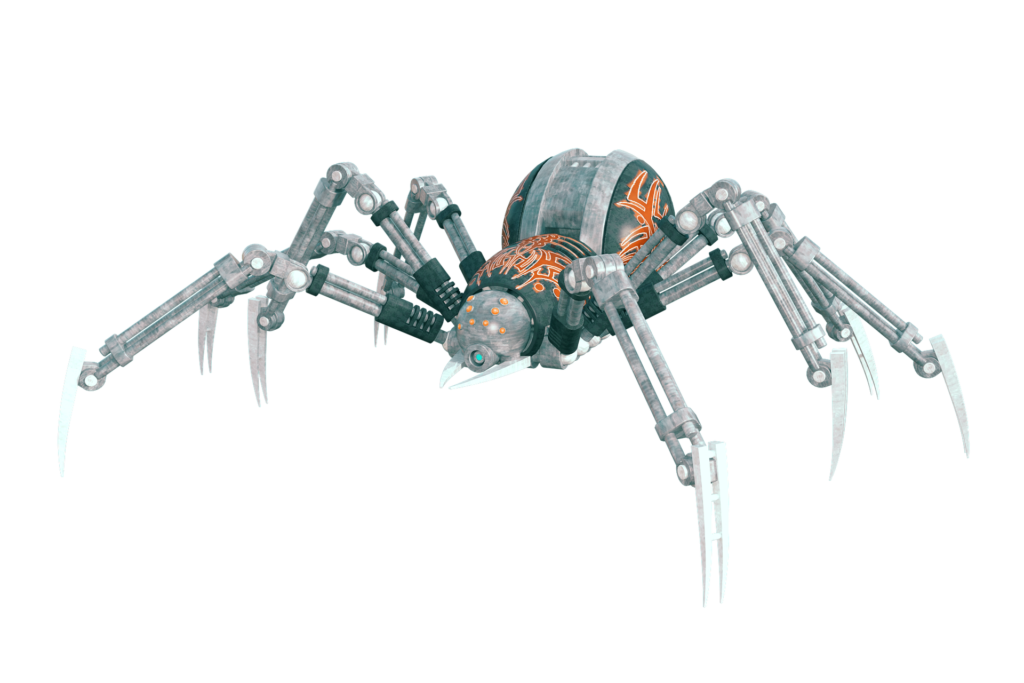
    One of artificial living creatures

    The answer to this question is not very clear. However, some things could help us understand if it would work out or not. For example, we can see how far our technology has progressed already and also consider the fact that we still have some time before we run out of resources.

    We can also take into consideration the fact that we have just started creating a new form of life on Earth in species other than our own – which is something that was never even imagined before.

    Also, we need to remember and consider all the technological advancements in the future and how they might change our lives. On top of all this, the possibilities are still not completely clear. The important thing is that we should not really worry about the risks. We should only consider how much benefit we could get from this development.

    Hopefully, we will be able to come up with an answer to this question in the near future. Technology has already made a lot of progress, and there is a chance that we might see these developments in our lifetime.

    Related Story:

    It is not clear what our future holds – but we should always keep an open mind and consider all possible options. The more research we do, the better it would be for us. We are already so far, and the only way to keep going would be with science and developing our technology further. There are still many things that need to be discovered and understood, but that is why we have to keep doing it because there might be strong reasons for why we should continue it as well.

    If we create a new life, will it be against the law of nature?

    Well, our planet did not have life on it before we came along, and yet we managed to develop it. So there is no reason why we won’t be able to do something similar in the future. This does not mean that a life form cannot exist on its own – for example, as a natural development of an already existing species that came before us.

    But if this new life form was created by machines, that would be a completely different story. In such, a case it would be artificial intelligence that would create life instead of nature – which would be a revolutionary and scary development.

    If these life forms were created in a way that they do not affect the ecosystem in any way, it might not be seen as such a problem.

    Recommended: Relation of the human brain with the space-time

    Conclusion

    It’s not that progress is not being made. Scientists have even created AI capable to reproduce. They call them xenobots.

    It would be a truly amazing thing if our technology ever reaches this level to create living creatures – one way or another.

    I hope you liked this post, and if you want more similar articles in the future, please comment below and let me know!

  • Do we live in the best possible place for life to exist in the universe?

    Do we live in the best possible place for life to exist in the universe?

    Introduction

    The Earth provides a comfortable environment for life to flourish. But is it possible that some planets have more favorable conditions for life than our homes? And if so, is there a chance that life has evolved on these other planets?

    This blog post will consider the question of what makes a planet best habitable, as well as whether or not the earth is the best place for life to exist in the whole universe.

    What is the best planet for life?

    earth, the best planet

    To know what makes a planet most habitable, we have to preface this question with an answer to a more specific one: what is life? Despite being such a broad and long-standing question, scientists are still arguing over the definition of “life” today. We can’t expect to agree on an exact definition until we figure out whether other life exists or not.

    If we were to apply the common sense definition, life is simply a self-sustaining system that is capable of reproducing. This narrows our search down to single cells and other simple organisms. But even with that definition, we can still talk about planets being more life-friendly than others.

    The best planet for life would be a planet that supports an environment suitable for the evolution of cells; both simple and complex.  We could say that a large habitable zone – which allows for the existence of liquid water oceans – is an important factor. Furthermore, planets should have large amounts of resources such as carbon and nitrogen on their surface to fuel life’s processes.  

    Additionally, a planet needs to have large land masses with a large temperature difference between day and night. This allows for at least some plants to survive, due to the lower temperatures during the night. Of course, other factors such as surface gravity and atmosphere are also important.

    What would make that planet “best”?

    The definition of what exactly makes a planet habitable is still being worked out. This issue has very diverse implications when it comes to the search for life in other places in the universe. For instance, some scientists argue that life could exist in the cold, methane-rich environments of Jupiter’s moons Europa and Ganymede. But others argue that ice is not a good medium for cells to develop.  

    Furthermore, they argue that life would have a hard time surviving due to the extreme temperature differences between the day and night side. More generally, scientists are still trying to determine whether or not complex ecosystems can evolve on other planets with extreme climates such as red giant stars or super-Earths.

    Earth is awesome: but what could have been even better for habitation?

    Earth alternatives

    The Earth is a pretty awesome place to live.  Earth’s average distance to the Sun is about 93 million miles, making it perfectly suited for hosting life. On our planet, we have a diverse biosphere with many types of living things. But what if something could have been even better? We are going to list down some awesome features a more habitable planet than the earth, would have:

    The large temperature difference between day and night

    As we already explained, this encourages the development of plants, which can be eaten by animals. Life would be even easier to survive on a planet with a large daytime temperature range. This would also increase the biodiversity of life.

    Large land area

    Imagine if our planet was big enough to fit every continent on it! As well as possessing all the necessary resources, having a larger surface area will allow for more different types of climates and habitats for animals to live in.

    Large Moon

    As well as being aesthetically beautiful, the moon has been crucial to the development of life on earth. It stabilizes our axial tilt and rotational axis, which affects temperature and it causes ocean tides. Thus, having a larger moon may allow for more stable environments.

    Different gravity

    A slightly less gravity would be just perfect. It would make it easier for animals to move around and function more efficiently. Although, a gravity too much less than what we have here on earth would be bad. It would make it harder for our bodies to function and become too light to hold on to.

    Related Story:

    Longer days and nights

    A long day and night cycle would encourage more biodiversity and allow for a greater variety of organisms to evolve. Also, having a day and night cycle at the same time could mean that animals that hunt at night wouldn’t have to compete with those that hunt during the day for food.

    A different atmosphere

    We need our planet’s atmosphere to protect us from the Sun’s harmful radiation. As well as being a huge source of oxygen, the atmosphere affects our climate and weather patterns. However, we could change our atmosphere if we could.

    Some possible ways to do this would be by making it thicker (so, more oxygen can reach the top layers of the oceans). Or by having liquid water on the surface so that greenhouse gases can accumulate on its surface.

    Recommended: What will your age be after coming back from past travel?

    But still

    If we could only have one thing, it would be our home planet! It provides all the necessary resources and life support systems required to allow for life to develop. 

    However, many scientists think that our planet has evolved due to its unique history which is impossible for other planets to replicate. A planet with a history similar enough to ours may be able to recreate conditions conducive to life on earth. For instance, some other scientists think that planets formed in the same type of way as Earth did (ice forming first, then rocky material).

  • What would you do if you could go back in time and alter your experience?

    What would you do if you could go back in time and alter your experience?

    For the past few days, we have been conducting something like a survey, asking people if they would do anything differently if the opportunity to go back in time and alter their experience was presented to them. Some of the most common things we heard that we are going to share in this post.

    Some would stop themselves from making the same mistakes twice. Others would undo all the things they did and just start over, with the knowledge they now possess. Others still would go back and tell their younger selves how important it was to be kind. What do you think you would do if you could go back in time and alter your experience?

    Of course, if I could get to go back in time and alter my experience, I would take the money I have earned, to the past, and start a business there.

    Kane Sterling (Just one of the 20+ people we surveyed)

    Now, let’s go deep into the topic, and know what these people would do if they could get go back in time and alter their experiences.

    Caitlyn Rose, 27 – Well, I’d make sure I learned everything that I could about the things I had an interest in while growing up. I wouldn’t go on talking to people who were rude or mean to me because PERSONALLY, it brought out the worst in me. If I had noticed my taste in music, clothes, and animals earlier on, and then started to develop a better understanding of those things, maybe my childhood would have been better.

    Violet Hemsley, 20 – Well the first thing that comes to mind is that I would get someone a job if they couldn’t find one. I’d try and give as much support as possible when people are struggling or going through issues such as illness or death. I would also have a bigger sense of optimism because I know life isn’t easy, but that it’s still so worth it.

    Craig Smith, 35 – I’d probably just go back and try to be the most polite person possible. I never learned the importance of being a polite person and it has negatively impacted my life in many ways.

    Liam Harrison, 67 – For me, it’s rather simple actually. I’d get myself into a good school/job that I actually really enjoyed right out of high school, which would have meant getting some extra tuition when I was younger. This was the biggest mistake I ever made.

    Katherin Kelly, 21 – Essentially I would go back and tell myself to be less introverted, and then try and push myself out of my comfort zone more. This way I’d have more confidence in what I like, and what I’m good at, and make friends easily.

    Katey Sullivan, 31 – I’d have more confidence growing up. I’d also talk to people more and ask questions about things that interest me, rather than people assuming I know everything because of my age.

    Kelly Parker, 19 – I would try and make the best decisions for my future based on what I wanted to do when I grew up. It’s obvious that some decisions are made easier if you know what you want to be when you grow up. For example, see if your school is good or not so good depending on how it affects your future career choices (e.g., would you like to get into business/engineering or arts? Would it be better if your school was in a different area? etc.).

    Related Story:

    Tom Hazlewood, 22 – If I could go back in time and alter my experience, I would take a loan and buy Bitcoin.

    Benjamin Watson, 25 – I would win millions by betting on matches I already know.

    Joel St. John, 21 – I would probably just do more in my free time to help people who were less fortunate than myself. I would try and make the world a better place and maybe even buy a house and a car because I know how difficult it is to find both these things.

    Brandon White, 25 – When I was younger, I always wanted to learn how to play guitar and I just never got around to it. Once college came around, all my friends who were older than me were already in bands so they had the skill set but never did anything with them… so I would take some guitar lessons and start a band.

    David Walters, 38 – Well… It’s difficult to say really. I wouldn’t change anything that happened to me. But I would like to have more information before I made certain decisions (relationships for example), so that my life would not be as difficult as it is now.

    Sara Steele, 34 – I think if I could go back in time and change things, it would be all about trying to be more kind. You see so many people unhappy because they don’t think they’re doing enough. Or, they aren’t good enough at something and this mindset has impacted their whole lives- it’s not good. If I could change anything, it would be that.

    Kimberly Hargrove, 28 – I would spend every minute of my day trying to make each and every person as happy as they possibly I could. What a difference a kind word or two or part of a funny story can make to someone’s day! It’s obvious people do this but in the best way possible. There’s really no time for them to even think about the fact that you’re doing it, you just do it and then you think “ahh well what did I ever do?!?!” Of course, we all want to leave a positive impression – I know that’s why we put things like ‘thank you stickers on things like the gas pump. In this way, I would utilize the opportunity of going back in time and altering my experience to the most extent.

    Sometimes though, it’s the smallest things that can really do a lot – it’s almost like if you’re just being yourself it happens automatically! When I was younger, I let other people push me around and use me for their own good. I didn’t know how to stand up for myself or say no when something wasn’t right. If i could go back and change the way I was brought up, I would have been more sure of who I am as person and that would better me in so many ways.

    Wendy McWhirter, 23 – Well… I wouldn’t stand up for myself when I should have and I wouldn’t push myself past my limits. Also, I would make sure to do what was right instead of what was easy.

    Emma Smith, 25 – If I could go back in time, I’d learn how to be a better listener and not be so closed off in people’s lives. Knowing how to talk is one thing but it’s also just knowing how to listen and give someone the space they need.

    Joey Kaleniec, 23 – In my past life, the year 2000 happened because I didn’t believe people in their 20s could get everything they wanted out of life. I trusted people when they said they knew the right thing to do and I followed a path that made me unhappy. If I could go back in time, I would start my own business in something I loved and put more effort into it.

    Jonathan Cooper, 27 – More skill at football is what I would change about my past life. Making sure that I was playing at the big clubs like Celtic or Rangers instead of playing for Bury and never getting a chance at the top level.

    Kane Sterling, 33 – Of course, if I could get to go back in time and alter my experience, I would take the money I have earned, from the past, and start a business there.

    The team of Nutsel.com performed this informal survey.

  • The relation of our brain with space-time

    The relation of our brain with space-time

    Our brain and space-time have relation in the sense that both have alike systems.

    The space we are accustomed to inhabiting is three-dimensional and it has length, width and depth. Moving through space means that an object changes its position with respect to an observer as the observer moves closer or away.

    In contrast, we usually consider time as a one-dimensional construct, with only one direction that anything can travel: forward. That’s why Einstein called our perception of time “the biggest mystery” in his life.

    Although the superb structure and exceptional functions of the brain are still mysterious to the much extent, this post will dig into the relation of our brain with space-time.

    The complexity of human brain

    complexity of brain

    Our brain is a complex system. It’s so complex that no observable signal can possibly describe it accurately enough to reproduce it as a computer simulation. And yet it works exactly like the most complex computer simulation ever constructed: our Universe.

    Let’s start at the beginning: we are born when a new life form, us, appears out of the early Universe. And we possess consciousness as soon as we enter this 3D world filled with space and time.

    We live life in our 3D Universe, filling space with us and time with the events of our lives. As we age, we lose some of the new brain cells that we never got a chance to use and eventually die when they are all gone.

    Brain is made up of billions of neurons, and space-time consists of billions of galaxies.

    But in reality, it’s not that simple. You grew up thinking that your brain is composed of billions of neurons, connected by synapses, firing electrical signals to transmit information one step at a time.

    But this is not how it works. The nervous system is far more complicated than this process. It’s because every single cell in our body can communicate directly with every other cell via electric pulses traveling through its membrane potential (which is the output from all cellular membrane potentials).

    So, if the brain is made up of billions of cells, how can each cell communicate with every other cell?

    We know that our Universe is the “totality of space-time” that expands and contracts over the billions of years it takes for the Universe to form and evolve.

    Related Post:

    https://nutsel.com/2022/01/22/what-if-we-entered-an-era-of-algorithms/

    Yet, we are made up of time and space. There are billions of neurons in each of our brain cells. But it’s not possible for there to be billions of simultaneous brain cells communicating with each other via single neurons firing electric signals.

    The answer is that our brain weaves all these different processes together. There are billions of neurons that can talk to other groups of neurons.

    While at the same time, they are made up of many groups of neurons that talk to each other via single neurons firing electric signals.

    Furthermore, every single neuron not only communicates with all the other neurons in our brain, it also communicates directly with all the other cells in our body.

    In this way, our 3D Universe is woven together by threads made up of many thousands of messenger chemicals that communicate via brain signals. And we can see these networks “unraveling” as we age and destroy the messenger chemicals that were created in our 20s and 30s.

    This same process also happens to all of us, as our brain cells are replaced throughout our lives by new cells that are built from new messenger chemicals.

    Points to claim that our brain has a real relation with space-time

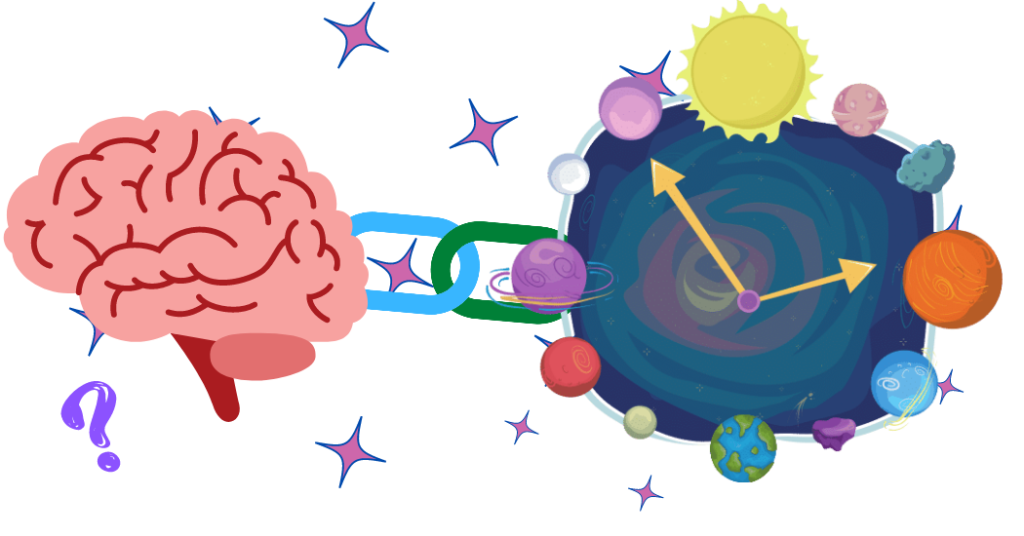
    brain and space-time
    • Our brain and the space-time have relation in the sense that both have alike systems. The brain is a system where many groups communicate with one group. And similarly, the universe is made of atoms that communicate with one another. And they create the molecules that form us and our Universe.
    • Our brain’s neurochemical communication system is exactly the same as the Universe’s neurochemical communication system. We can see it unraveling as we age, which is exactly similar to what happens to our Universe; specially when it expands and contracts over billions of years. In fact, a neuroscientist just recently proved that this process of breaking down neurons and rebuilding them over our lifespan is the basis for both time and space in our Universe. His name: Jack Cowan.
    • Our brain works very much like a computer simulation. And we are made up of real space-time that connects our brains together.
    • We can measure the complexity of our brain through the parallelism between its structure and the structure of our Universe.
    • The structure of our Universe and the structure of our brain are all but exactly the same.
    • Our brain’s neural connections are very similar to the connections between atoms in our Universe.
    • Our brain’s communication system is very much like the connections between atoms in our Universe.
    • Brain is made up of billions of neurons, and space-time consists of millions of galaxies.

    Read: What if we discovered the algorithm of thought?

    Bottom Line

    It’s amazing to see the any relation between the space-time and our brain. And it’s also mysterious how our brain’s complexity reveals more about the nature of space-time itself. We long know that space-time has made everything in our Universe, atoms and molecules.

    We have not yet realized that the same space-time has made us. But it’s organized in a very special way by our brain.

  • What if there existed no time, just eternal now?

    What if there existed no time, just eternal now?

    Introduction

    We hear about different aspects of time like ‘now time’, ‘time clock’, time frame’, ‘time line’ etc. but the question about our actions “if there exists no time, but just eternal now” comes up in a time when time is so abundant and important.

    It’s hard to imagine what our existence would be like without time. But, I’m sure it would be just interesting to find out what we would do in a situation where there’s only eternal now and no existence of time at all.

    The question of the timeless existence of physical reality has entered into debate for centuries, with many claiming that there are no limits or boundaries on human thought. If we could tear away the veil from our day-to-day life and see through our imagination to another dimension, which may have unlimited opportunities for us, this becomes an intriguing idea.

    Let’s dive deep into it…

    What if there exists no time?

    The goal of this article is firstly to analyze what time actually is and then to discuss its philosophical implications. It’s the notion that there is a “now time”. And also the question of whether this “now time” is real or just a perception of our mind.

    In addition, we’ll briefly shed light on some subordinates of time like ‘time clock’, ‘time frame’ and ‘time line’.

    Finally, we will try to imagine how different would our lives be if there exists no time – just eternal now. What would be the implications on our lives in the timeless situation? Would everything have same meaning as it does right now? Would the idea of life and death still exist as it is?

    Lets try to find out…

    Does time really exist? (5 different definitions of time)

    no time exists only eternal now

    1) Time exists as a time clock

    In one sense, time is based upon the idea that there are physical instants and that these instants are “countable”. In other words, time exists only if it is possible to measure any amount of time – or in a time clock. Physicists often use a certain type of clock called an atomic time clock to measure the duration between two instants.

    An atomic time clock is really just an oscillator that sends out electromagnetic waves through a microwave cavity at a frequency that is proportional to its oscillation frequency. Atoms control these oscillations.

    It’s also worthy to remember Buddha’s experience about time. When experienced enlightenment under the Bodhi tree, he became aware of this “eternal now” perspective and gained infinite knowledge about everything including reality.

    2) Existence of time as a measure of change

    Human life is often measured in terms of the changes we undergo and our progress towards a desired state. We may say that we’re growing older, or that our business is failing. Time here also becomes a measure of how much change has taken place. There are also different concepts of time being expressed as “now time”, “past time” and “future time”.

    Every moment of time is transitory. The exact ‘now time’ does not remain static even for a billionth of a trillionth of a second. The ‘now time’ so quickly changes into the ‘past time’ that it’s no way observable for us. And so does the ‘future time’ to change into ‘now time’. This’s why we see the existence of time a measure of every change in the universe.

    3) Time exists as an imaginary construct

    From a philosophical viewpoint, time and time clock are different in the sense that the former is an abstract concept. Many scientists and thinkers have come to the conclusion that time is subjective. It means that, unlike a time clock, time does not exist independently outside the human mind. In other words, our minds create the idea of time. Our perception of time’s passing depends on our memory and expectations.

    The present moment – or ‘time now’ – doesn’t really exist, which is in a constant process of change. We can only recall a past time line in memory and no future time line we can experience or prove that it even exist (yet). That’s why we hear people say that “time clock” may go by fast or slow for different people depending on their attitude towards life.

    It means that people’s attitude towards life is completely a subjective factor. And, as we need to subjectively view a particular time line to understand it, we call time an imaginary construct.

    4) Time as a dimension in which all physical things exist

    In classical physics, scholars view time as a dimension, means a time frame, in its own right. They consider time to exist independently of events, in the same way that space exists independently of events. If you assume that everything is made up of energy, you could view time as the fourth dimension.

    According to Einstein, you need to describe where you are not only in three-dimensional space – length, width and height – but also in time. It means time is the fourth dimension. So, to know where you are, you have to know what time it is.

    It would make sense for the universe to be made up of four dimensions. In them include three spatial dimensions plus one time dimension. In the same “time frame” of the fourth dimension, each physical and abstract thing, including all the matter, energy and space – and the concept of the ‘eternal now’ as well – exists.

    5) Time is made by human beings

    The philosophy of Zen Buddhism says that time does not exist, but rather it is something made up by human beings. Like the other four definitions, we believe if you observe closely everything at a subatomic level, time doesn’t seem to exist. Everything is happening all at once.

    In this view of time, the future time and the past time become just illusions created by our limited perception and understanding of reality. This perspective supports the aforementioned view in SH2 that time never remain static and nobody can detect its transition from one time line to another.

    The question of whether there is a “now time”

    if time exists, it's only now time and eternal now

    When we say ‘now’, what do we mean? Does ‘now time’ even exist in the first place? Philosophers have pondered on this question for centuries, but still has no definite answer.

    Imagine you are in a very different dimension and you can’t see into our ‘now time’. How do you perceive this dimension? Or how do things in this dimension seem to be happening? Can you say that something is happening before it happens or after it happens?

    The question “what is the ‘now time’?” becomes more difficult because there is no physical reference for us to act upon. So we might ask “in what sense does ‘now time’ exist and what do we mean by the past time and future time?”

    In a sense, we can say that all things exist simultaneously right now, even if it doesn’t look like it. Time is a concept that is commonly used to help us organize and understand things. In this sense, we can set time’s rules and its limits on physical reality. But if time is not real or no time exists at all, what are we doing? And, if there exists no ‘now time’, how can we experience something during an eternal ‘now’?

    One thing that we can be sure of is that the human mind creates the notion of ‘now time’ because it helps us to function. So if there was any space between each moment, there would be nothing for us to think about and our consciousness could no longer function. Our minds need a time frame in order to exist. We therefore use time-concept to understand the world, organize our perceptions of reality and experience the climax of the ‘eternal now’.

    But, if the world does not operate like it does today, our ability to perceive reality would be limited. The source of time is in our minds – not in the physical world – and if you look closely, time doesn’t exist even at a subatomic level either. It means any objectification of time – like now time, time frame, time line etc. – is just a product of our illusion. It means they all are only the products of our mind – and so is the ‘eternal now’

    Eternal now – is it even possible?

    We believe if there was only eternal now, we wouldn’t need to worry about time-based phenomena like life or death. If you were able to relive your entire life right now, you would see how all the events that took place in your life were important for you at some point. If you could relive your entire life, it would be like being able to review every moment from an eternal perspective and be able to see the big picture.

    This idea of reliving our entire lives is not something that people are aware of because we are so limited by our human minds.

    Unlike time, this concept of the eternal now is highly controversial and most people would think it’s impossible. We know that the mind can create time out of reality, but can it go beyond time? Can the mind create a place where everything is happening at once and nothing can change?

    This seems like a utopia or an ideal world that we would all like to live in. If such a place existed, we could enjoy life more. It’s because we would be able to see everything as it is and have a clearer understanding of reality.

    The mind can create time out of everything in the physical world, but it is important to remember that time of any form does not exist on itself and now time, the past time and the future time, all are only illusions. The mind is the source of time and it is certainly capable of creating a place where everything is happening at once.

    Related Post: What fraction of time is present?

    But this place, or state (where only an eternal now exists), goes against logic because if you were there, you wouldn’t be able to do anything. Your consciousness would have limits to one thought/perception at all times (which quite often is already too much for us). If it’s true that the universe is managed by thoughts, our minds are limited. And they do not let us go beyond the ‘now time’.

    In many spiritual traditions, adopting an eternal now perspective is one of the main goals. Achieving this state of mind gives us a new level of clarity and perspective. When we open our minds to new possibilities, we can finally see the big picture.

    The next time you are worrying about the future time or thinking about the past time, remember that it doesn’t matter as much as you think. It’s because everything is happening at the right ‘now time’ and every moment has its purpose. The present moment might just be a small part of something bigger. And it may not even exist in our narrow perception of reality. If you live in the ‘now time’, you will be more in tune with your thoughts and emotions. It means living our best in the ‘now time’ makes it possible to living in the ‘eternal now’ as well.

    Eternal now and enlightenment

    As that of time throughout history, most of the world’s greatest philosophers and thinkers have proposed this idea of ‘eternal now’. Among them were Heraclitus, Plato, Plato’s student Aristotle, Plotinus, St. Augustine of Hippo and Nietzsche.

    For example, Nietzsche said: “No moment ever dies or is past”. It’s also worthy to remember Buddha’s experience. When experienced enlightenment under the Bodhi tree, he became aware of this ‘eternal now’ perspective and gained infinite knowledge about everything including reality.

    We hear ,modern physicists also say similar things like “a reality that is always here”. They all agree that even though there might be an infinite number of different places and time/s, there is only one present moment – the eternal now.

    The past and future are reflections of the present moment, which we can call reality. Our mind creates the concept of some abstract time because it is limited by its own thoughts. The mind creates experiences out of physical reality because its own perceptions limit it.

    no time clock, no time line, no time frame - but only eternal now

    The mind’s infinite power to create anything out of the physical world would be limitless if the only thing that existed was the eternal now. In fact, we think if all possible realities were created right now, we still wouldn’t be able to handle it.

    The mind is capable of creating absolutely anything out of reality. But by creating something that goes against logic, the mind creates something that it can’t handle. And it thereby creates more limitations for itself.

    Read: Will our Future Look Like a Video Game?

    Does this mean that there is no value of anything in life, then? Yes, it does – because there is a purpose. But it might not be what you are thinking. We believe that there will always be a purpose for our existence on Earth because otherwise the universe, the ways and the purpose of this universe wouldn’t exist.

    Life and the universe are in a state of flux and always changing. Everything is always in a state of becoming something else. Life is everything if we view it from the eternal now perspective – it means it’s not only life as we know it today.

    If you believe that thoughts manage the universe and our minds are capable of creating anything out of the physical world, it’s easy to think that the mind can create a place where everything is happening at once and nothing can change. But even if this place existed, whether we could handle this kind of reality might be another matter.

    When we adopt an eternal now perspective, we cannot think about things as they are. It’s because we’re not in a state to think clearly then. Our mind can’t handle such a reality. The reason behind this is it goes beyond any time frame, any time clock or any time line and logic. We believe that at times humans can enter this state of mind temporarily. It’s because they have found peace inside themselves; but only for a temporary period until their human minds take over again.

    To be a better version of ourselves, we must become aware of how our minds create a hypothetical time line out of reality and why they do this. There’s no reason to waste our lives stressing about the past and worrying about the future. We can make a change right at the ‘now time’ if only we are aware that we are doing it. There has to be a purpose behind all this, but maybe it is not what we think it is.

    In fact, there’s been no reason to create anything at all because everything already exists as it is. The way your mind creates ‘time’ out of reality depends on what you believe about yourself and life in general. If you don’t believe it is possible to create anything out of the physical world, you won’t worry about making everything happen at right the now time.

    There’s no reason to worry because nothing could ever happen – except in your mind and in your thoughts.

    To conclude

    Neither yesterdays nor tomorrows – the time is only the ‘now time’. And the same ‘now time’ is the ‘eternal now’ – the ‘right now’! You can do something about it right now! The now time is all there is. There is no time line such as past time line or future time line, but is only the eternal now. And, we are responsible for everything that our minds create out of physical reality. We need to accept this and be aware of our mind’s infinite capabilities.

    The eternal now perspective gives us an entirely new level of clarity about ourselves and how we should lead our lives if we want peace and happiness inside ourselves as well as allover progress and prosperity. It’s because time doesn’t exist as we’ve always thought.

    Our minds are accepting physical reality and creating something out of it. We can make a change right now – at the now time – if only we realize that our mind is creating time out of something that doesn’t have any time.

  • What if we entered an era of algorithms?

    What if we entered an era of algorithms?

    Introduction

    As pretty much a part of natural evolution, we have gone through many eras in the history. The next is era of algorithms.

    The rise of algorithms has been happening slowly but surely, a byproduct of how society relies on computers and other machinery to take care of everything.

    We are now seeing a rise in the use of algorithms for social media, job applications, and more. Algorithms are taking over more and more areas of our lives.

    But this is not the only change taking place with algorithms. With these developments, comes the question of what will happen if we enter an era of algorithms?

    If we enter an era of algorithms, it will not just affect the human race – but will also impact our planet and everything on it, and most likely, it will not be limited to Earth.

    First things first; what are we talking about? An era of algorithms is where algorithms control everything around us. Where ML algorithms not only decide our jobs, how we interact with people and the media we see (which is what they do right now). It’s when we start facing a degree of true dependency on algorithms.

    In the era of algorithms:

    -Stock markets will be completely operated by AI.

    -Daily news articles will be generated by AI.

    -Algorithm will decide your name.

    -Algorithms will decide your job, career, and education.

    -All types of vehicles will be controlled by algorithms.

    -Algorithms will decide our relationships and even our offsprings.

    -Algorithms will decide who gets elected.

    -Our health and wellness will be determined by algorithms.

    Other than that, we have no idea what else algorithms will be doing (in the same way people in 1000 AD had no idea we would be driving a four-wheeled car, right?)

    There is still a lot about algorithms that we do not know when it comes to the human psyche and mental health issues. But one thing is sure: in the era of algorithms, we will surely have less to exist for.

    Well, this would not be good for us humans. Algorithms are essentially a set of instructions that computers follow in order to perform a certain action. Therefore, these algorithms can lead machines to act in ways that are not always pleasant for us humans. For example, you had an algorithm designed to analyze your CV, and it decided that you should be hired.

    Of course, one might say algorithms would promote fairness and prevent discrimination from happening, but this is something else entirely; its giving machine the power to make decisions based on its own rise of judgement, or lack thereof.

    Algorithm Predicts Future Crimes One Week in Advance With 90% Accuracy“. This is not the future, this is not fiction. It’s 2022 and this has already been made possible.

    And so, one may ask, what would happen if we entered a big whole “era” of algorithms? Well, here are some of the things we can expect:

    1. We will lose control over machines

    Machines are meant to serve us and make our lives easier. However, with algorithms controlling them, they will be free to decide their own future. For example, a self-driving car is programmed with algorithms that determine how to drive. This could be problematic if it encountered a situation that it could not deal with — like a child running into the road or someone jumping in front of the car (say for a prank).

    2. We will stop being ourselves

    Algorithms are often programmed to make decisions based on the information they have dealt with. This means that we might not be able to access the world, or anything in it, as we know it today. Imagine you are given a job application that is written entirely by an algorithm; this would be very difficult for us humans to deal with. As well as this, algorithms are also programmed to recognize patterns and create conclusions from smaller sets of data. They can easily predict human behavior and even judge what is good or bad for us humans — in a very broad way. As a result of this, we will have less freedom to make our own decisions in life and become more prone to the way algorithms judge us.

    3. We will lose privacy

    Privacy is something we all enjoy. But due to algorithms, it may become a thing of the past. Algorithms are essentially used to collect information and analyze it. This information could include our location, what we like, what we do in life, and more — all of which is usually stored on databases that can be sold to companies for advertising purposes or even shared with government agencies. Due to this fact, many people who have suffered from database breaches (like some celebrities) have complained about having their privacy invaded.

    4. The world will completely change

    I personally believe that one should not fear change, but at the same time, one has to be prepared for the worst-case scenario. Of course, this is only my opinion. But, if we enter an era of algorithms, it will not just affect the human race, but will also impact our planet and everything on it; most likely, it will not be limited to the earth.

    Some may say that this is something that can only happen in the (far) future. However, it really depends on how we move forward today. Provided that we continue to allow algorithms to make decisions for us, we may end up completely trapped — where everything is fully controlled by algorithms.

    Earth has at least 1.5 billion years left to support life. Don’t worry, algo buddies – you have got bunch of time to rule the world.

    This is how I see the era of algorithms – a very bleak one.

    Related Post: What if we discovered the algorithm of thought?

    What do you think about the era of algorithms as described above? Do you agree or disagree with my views? Let me know in the comments below!