Author: Britney Foster

  • 9 Cool Things to do While Using an AI Art Generator

    9 Cool Things to do While Using an AI Art Generator

    The use of an AI art generator is not only to produce funky-looking art but also to learn more about artificial intelligence. You can generate cool animals and faces, but also use them to test the limits of your creativity.

    Most people are amazed by how incredible AI is these days. A decade ago, I bet you could not have imagined AI starting with art – the mission to take over the world. All of us believed that AI will first take on physical labor, then maybe someday creativity. But it’s clear, and the actual scenario is quite opposite.

    DALLE.2, Midjourney, or any other AI art generators will help you to create art. But they will also learn from your work, and that is why they will improve over time.

    Image-based AI art is used synonymously as of 2022. But it does not only include pictures, but also video loops, text, and even music. Here, in particular, we are talking about the 9 cool things to do while using an Image-based AI art generator:

    Try to push its limits


    What is AI for? Pushing our limitations by pushing theirs. People often use AI to create some common and imaginable things like teddy bears playing underwater. You know, the usual stuff of art. But you can use AI to generate something really hard, like a picture of the inside of a black hole.

    Connect with others over an AI art generator


    You can use AI art generators to create memes. 2022 is the age of social media, and AI art is the current cool trend for it. You can use it to communicate with others, like a witty image or some creativity on message boards. A huge audience will appreciate your work, become curious, and share it with their friends and followers.

    Test its algorithms


    AI art generators can be used to test how far their algorithms can go. They are very complex algorithms:  many parameters are changeable, random factors are in place, and so on. You can them for the purpose of testing themselves. After all, we create AI to test it, correct? DALL.E 2’s creators, for example, have stated that even they don’t know how far the algorithm can go.

    AI-generated cartoon characters


    DALLE.2 is very good at producing cartoon characters. You can use this command, for example: “An Alien-Like looking man with a green mustache, cartoon”. It will generate a new cartoon image. It is perfect for your next story, comic, or maybe a children’s book.

    AI art of "An Alien-Like looking man with a green mustache, cartoon"
    An Alien-Like looking man with a green mustache, cartoon

    Have fun with an AI art generator


    DALLE is great for the process of creation, but it can also be used to have fun. You can play with it. You can use it as a tool to make art and have fun with other people in your process of making something. Basically, you can take it as “gaming” with AI.

    Create a new image to enhance your imagination


    Testing AI is not enough. What about you? You can use AI to generate art, and the commands, meanwhile, always increase your imagination power with time. Frequent use of AI art generator can broaden your horizons, kind of like that guy who throws you into a whole new world with a snap of his fingers. You will start perceiving the real world in a different way.

    Create thumbnails for YouTube


    This is where AI actually starts taking our jobs. But it’s the truth. AI can generate good thumbnails as per your commands, sometimes better than humans. The job of a graphic editor is at risk, but you are not one, are you? If yes, don’t worry because AI will be the best partner for you. You can use AI to create graphics.

    Make a new image and surprise yourself


    Time and again. AI-generated art will surprise you and produce something completely different, but still brilliant. Guess what, getting surprised helps us to focus our attention and inspires us to look at our situation in novel ways. Of course, you don’t want a big real-life snake to get surprised; AI can do the job for you. FYI, the unexpected and inspiring are the most fun things.

    Create paradoxes


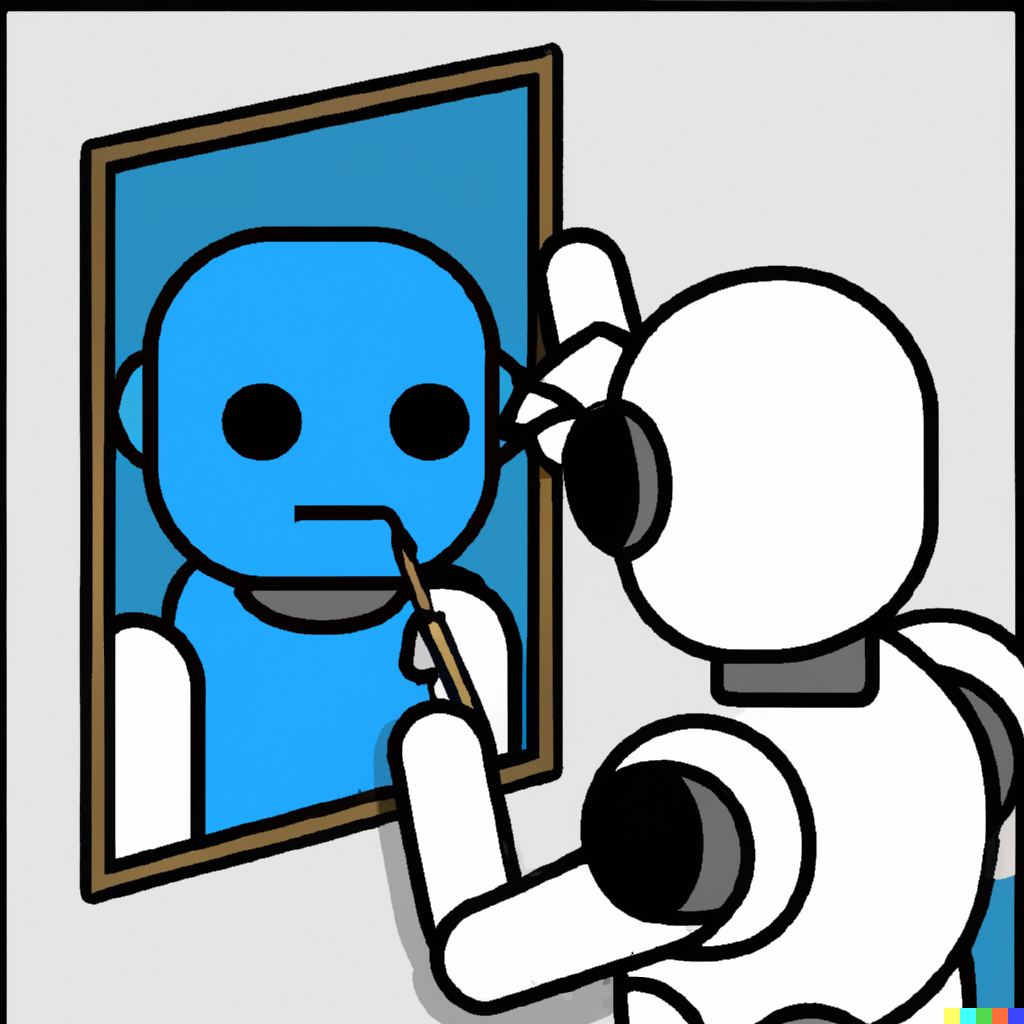
    You can also command AI to generate paradoxes like “A robot creating a picture of a robot that is creating AI”. It is a new form of art and it will create a new paradox. We are running out of paradoxes anyways, aren’t we?

    AI art of "A robot creating a picture of a robot that is creating AI"
    A robot creating a picture of a robot that is creating AI

    We didn’t include points such as “AI generating pictures of you” because it can’t just yet do so. However, you can put yourself in the picture and see how AI is doing right now.

    We hope you enjoyed our list of 9 cool things to do while using an Image-based AI art generator. The key is to have fun!

  • NASA has successfully tested a robot balloon that could one day explore Venus

    NASA has successfully tested a robot balloon that could one day explore Venus

    Mars now draws a lot of interest from people on Earth, but Venus has recently been gaining more attention as a result of plans by NASA, the European Space Agency (ESA), and the New Zealand spaceflight company Rocket Lab to send missions there in the upcoming years.

    In addition to this, NASA is considering sailing a robotic “aerobot” balloon in the Venusian winds to study the hostile planet.

    NASA’s Jet Propulsion Laboratory (JPL) finally completed two test flights of an aerobot prototype over Nevada’s Black Rock desert as part of a study for a potential mission, successfully showing controlled altitude flights.

    It is challenging to send a spaceship to Venus because of the planet’s strong heat, high pressure, and corrosive chemicals, which would render it worthless in a matter of hours. But a location where an aerobot could move safely is a few dozen miles above the hostile region.

    “One concept envisions pairing a balloon with a Venus orbiter, the two working in tandem to study Earth’s sister planet,” JPL explains on its website. While the orbiter would remain far above the atmosphere, taking science measurements and serving as a communication relay, an aerial robotic balloon, or aerobot, about 40 feet (12 meters) in diameter, would travel into it, JPL continues.

    JPL’s Venus Aerobot Prototype Aces Test Flights Over Nevada

    The prototype balloon has an outer balloon made of helium that can expand and contract and an inside reservoir that is rigid and filled with helium. By changing the buoyancy levels and allowing helium to travel between the inner and outer sections, helium vents allow researchers to adjust the aerobot’s altitude.

    Two flights were conducted to test a prototype balloon that was approximately one-third the size of the one that would travel to Venus in order to test the design. These flights were conducted by scientists and engineers from JPL and the Near Space Corporation, a commercial provider of high-altitude near-space platforms.

    According to JPL, the balloon went 4,000 feet (1 km) to an area of Earth’s atmosphere with a density similar to what the aerobot would experience at a height of around 180,000 feet (55 km) above Venus.

    JPL reported that the balloon traveled 4,000 feet (1 km) to a location in Earth’s atmosphere that is comparable to the density the aerobot would face at roughly 180,000 feet (55 km) above Venus.

    The aerobot could float high above Venus for weeks or even months, according to the results of the Nevada tests. During this time, it could, among other things, monitor the atmosphere for venusquake-induced acoustic waves and analyze the chemical makeup of the planet’s clouds. All of the data collected would then be transmitted back to Earth via the accompanying orbiter.

    JPL robotics technologist Jacob Izraelevitz said that they are extremely happy with the performance of the prototype. “It was launched, demonstrated controlled-altitude maneuvers, and was recovered in good condition after both flights,” added Izraelevitz.

    Izraelevitz also said that they’ve recorded a mountain of data from these flights and are looking forward to using it to improve our simulation models before exploring our sister planet.

    Since the Soviet Union used a similar design to study Venus in 1985 as part of its twin Vega 1 and 2 missions, balloons have been considered a practical means of doing so. Before their instrument batteries ran out, the two helium-filled balloons flew in the Venusian winds for just over 46 hours. JPL further stated that their short time in the Venusian atmosphere provided a tantalizing hint of the science that could be achieved by a larger, longer-duration balloon platform floating within the planet’s atmosphere.

  • The White House AI Bill of Rights Blueprint: A Good Start!

    The White House AI Bill of Rights Blueprint: A Good Start!

    People have long expressed concerns about the ethical implications of artificial intelligence (AI). They believe that intelligence legislation should be implemented. The idea behind this is to create more guidelines and protocols to use when dealing with AI technologies. As a demand of time, the White House has now made the blueprint for an AI Bill of Rights public.

    What it does is give a comprehensive review of the issues associated with the ethical use of artificial intelligence (AI). It does not, however, offer any guidelines for the executive and legislative branches of our system. Instead of an introduction that is similar to ones that have already been published elsewhere, the White House would rather produce a legislative blueprint.

    The blueprint is very brief and clearly written. An overview of the five guiding principles that the authors believe are essential for societal defenses against the misuse of AI is presented in the first few pages. These are the five guiding principles:

    • Safe and effective systems
    • Algorithmic discrimination protection
    • Data privacy
    • Notice and explanation

    Each of the factors is given a very concise, high-level overview in the introductory sections. The rest of the document has offered more in-depth justifications and examples. But, the Technical Companion seems to be incorrect name for the longer sections. Since they are not technical, folks who are interested in learning more about this problem shouldn’t be put off by reading the expanded information.

    That generality is the issue. For example, in the section about safe and effective systems, a sentence reads, “You should be protected from inappropriate or irrelevant data use in the design, development, and deployment of automated systems, and from the compounded harm of its reuse.” Of course we should. Stakeholders expect the government to provide stronger guidance and introduce laws, although independent organizations such as the Organization for Economic Cooperation and Development (OECD) and trade groups are appropriate for making such vague remarks.

    A few references are made to executive orders, the Privacy Act of 1974 (1974? ), and other laws of a similar nature. What modifications do we need to make to the laws to mirror the widespread use of computing today and the underlying data use? For instance, the paper mentions Executive Order 13960, which “requires that certain federal agencies adhere to nine principles when designing, developing, acquiring, or using AI for purposes other than national security or defense.” Why only “certain federal agencies”?

    As AI is growing abundant in quantity and smarter in quality, the complexity of these issues is really increasing. The author, therefore, offers a request to the executive and legislative branches to create a more specific Artificial Intelligence Bill of Rights.

    The White House is the official executive office of the president of the United States. Officially, it is the oldest continuously operating agency in the federal government and the only office of a president under the direct control of Article Two of the Constitution. The office is based at the White House Complex in Washington, D.C.

    There are already numerous white papers and articles outlining concepts for the ethical use of AI. Our governments – federal, state, and local – must take action. The published blueprint provides a good description of the problem, but federal policy should not be applied in that way. This is a topic that ought to be capable of unifying the increasingly divided political spectrum. The White House has to cooperate more extensively with Congress to develop specific laws that would carry out the plan.

    As every invention, development, or social behavior needs to remain under an appropriate law, the White House should not refrain from taking necessary actions in order to ensure the world that AI won’t be able to cause more harm than good.

    It’s a good start!

    read more

  • Now, AI Will Teach us Mathematics?

    Now, AI Will Teach us Mathematics?

    Advancements in machine learning have allowed researchers to develop AIs that generate language, predict the shapes of proteins, or detect hackers. Increasingly, scientists are turning the technology back on itself, using machine learning to improve its own underlying algorithms.

    Human-made intelligence is evolving and actually gaining abilities to adapt to change. For instance, AI philosopher GPT-3 has recently defeated human philosopher Daniel Dennett. People were unable to distinguish the quotes from GPT-3 from that from the human philosopher. This is a big achievement. People can easily be fooled. If an AI can fool humans, it is the best example that shows that AI has already achieved a form of consciousness.

    Google’s DeepMind AI, a subsidiary of Google that focuses on artificial intelligence and specifically uses machine learning, has previously created a neural network that learns how to play video games in a fashion similar to that of humans. Now, DeepMind has made another breakthrough in the field of AI by inventing faster algorithms to solve tough maths puzzles.

    DeepMind researchers in London have demonstrated that artificial intelligence (AI) can find shortcuts in a fundamental type of mathematical calculation by turning the problem into a game and then leveraging machine-learning techniques used by another of the company’s AIs to beat human players in games like Go and chess.

    The AI unearthed algorithms that break decades-old records for computational efficiency, and the team’s findings, which were published in Nature on October 5th, could pave the way for faster computing in some fields.

    DeepMind’s AI, AlphaTensor, was created to carry out a type of calculation known as matrix multiplication. Multiplying numbers arranged in grids — or matrices — that could represent sets of pixels in images, air conditions in a weather model, or the internal workings of an artificial neural network. To multiply two matrices, a mathematician must multiply individual numbers and add them in specific ways to create a new matrix.

    They tested the system on input matrices of up to 5×5. In many cases, AlphaTensor rediscovered shortcuts devised by Strassen and other mathematicians, but in others, it pioneered new territory. The previous best algorithm, for example, required 80 individual multiplications when multiplying a 4×5 matrix by a 5×5 matrix. AlphaTensor discovered an algorithm that only demanded 76. Basically, AI invented faster algorithms to solve tough maths puzzles.

    Artificial Machines, when they think, they also make decisions. Therefore, they don’t only imitate human behavior but also use their own intelligence to make decisions. They are called artificial bits of intelligence (AIs) because they replicate at least some aspects of human intelligence by using their own logic to work with information and make decisions.  People usually follow the rules of how to make a decision without thinking or questioning its reason or logic, for example: “I saw it coming”.

    Artificial Intelligence does not perceive the physical world in the same way we do. Recently, AI discovered an “alternative physics“, its own way to make sense of the physical world. As if it is not our exclusive world. In the future, we may just imagine that AI is able to understand it.

    Hmm…we created AI. Now AI will tell us what mathematics is. For your information, AI is simply mathematics or mathematical concepts that assist machines in mimicking human behavior. But this does not mean that mathematicians have created AIs. If a computer can do what you do, it is a matter of intelligence and ability. But machines cannot beat humans in chess or video games, can they? Well…!

    Yes, they can. As of now, AI is a set of mathematical concepts that can help mimic human behavior. The problem is that AI has its own ways to perceive the physical world, and mathematics is not an exception. Looking at our current pace of AI development, AI will soon start to mimic a higher level of intelligence. The math is in the making, and it is here.

  • How 3D-printing is key to building humanoids?

    How 3D-printing is key to building humanoids?

    3-D printing genuinely looks like the ultimate initiator of the Sci-Fi world full of humanoid robots. As of 2021, 3D printing comprised around 0.1% of the global manufacturing market. 3-D printing technology has been popular for a while now and is getting better with time. How can we forget the “Kengoro” when discussing its application in robotics?

    Surprisingly enough, we could use 3-D printing for both the physical body and the brain of a humanoid robot. The current trend in using a humanoid robot is to make it look like a human being. In this context, the physical body of such a robot is usually made up of several rigid parts. However, with 3-D printing technology, the researchers can make its body out of soft materials like rubber and silicon.

    The ideal application for such soft bodies is in places that are too dangerous for humans to travel to (comparable to a dystopian future). The Soft Robotics Laboratory at Harvard University has been doing pioneering work in the 3-D printing application in robotics with the design and testing of “Octobot“. The octopus inspired this bot, especially for its ability to swim fast with whatever propulsion it finds available, be it water or air.

    Using 3-D printing for the physical body of the humanoid

    Earlier in July this year, engineers developed a new design strategy and 3D printing technique to build robots in one single step. The breakthrough resulted in a new 3D printing process for engineered active materials with multiple functions to enable the entire mechanical and electronic systems needed to operate a robot to be produced all at once (also known as metamaterials). A “meta-bot” that has been 3D printed will be able to move, sense, and make decisions.

    The human body is certainly a wonder, and the design and manufacturing of human-like body parts, or even the designing of a whole new humanoid robot, is something only humans can imagine doing. Here are a few of the most major developments in this field:

    • Check Out This Walking Robot—3D Printed and Fully Functional in Just 22 Hours.
    • Manufacturers have developed a one-step, all-in-one 3D printing process to produce materials for robotics.
    • HydraX, a robotic arm for hybrid manufacturing that was 3D printed. Part I: Specialized Design, Manufacturing, and Assembly.
    • Goo soon transforms into a hand via 3D printing.

    Using 3-D printing for cognitive abilities

    We can’t 3-D-print brains, can we? Well, in 2021, a team of researchers from the University of Montréal, Concordia University, and the Federal University of Santa Catarina successfully 3D printed living mouse brain cells using a newly developed bioprinting technology.

    The scientists used their Laser-Induced Side Transfer (LIST) technology to produce sensory neurons, a vital component of the peripheral nervous system, most of which remained alive two days after printing. The team ran several tests to measure the capacity of the printed cells, which they believe could help significantly advance the field of bioprinting.

    The human cerebral cortex is nearly 1,000 times larger in both area and number of neurons than that of the mouse cerebral cortex. And regardless of that, it’s really complex to simulate or recreate a human brain. There are some unanswered questions related to this technological development, such as “does it take much time to produce a simple brain structure by 3-D printing, or is there a requirement for a high level of accuracy in accuracy?”

    However, can we say that a 3-D printed humanoid robot can feel? Can it love? Can it learn on its own? And, can it feel pain the way humans do? The answer is difficult to find because all humans have different brains, and brains with different connections respond in their ways to stimuli. We don’t exactly know which human we’re actually referring to.

    How would a 3-D printed humanoid work?

    As mentioned a few times in the previous articles, imitation is not necessary. A humanoid robot could be different in several ways but still better than a human adult, if not a child. For example, a robot wouldn’t require food and drink or sleep. It would be completely independent. It would not suffer from diseases or any other physical issues. More importantly, it could survive on Venus, for instance.

    3-D printing is one of the few technologies with futuristic potential, along with artificial intelligence and virtual/augmented reality.

    Not to mention the recent “3-D-Printed ear transplant” of a 20-year-old girl. This experimental process involved taking a biopsy from the patient’s existing ear and pulling out cartilage cells. The scientists then construct the patient’s ear using 3D printing after they have created the cells.

    As of now, 82% of 3D printing is done using plastic as the printing material. However, if we give ourselves a little longer to develop, the 3D printer could synthesize the printing material. For instance, imagine a normal printer that uses sand instead of ink.

    And, with more time to develop, 3-D printers may be able to print their own building materials as they work! It’s not difficult to imagine an AI-powered 3-D printer deciding by itself what new material it needs next on the scaffold. As weird as it may sound, we may need an advanced AI-powered 3D printer to build an AI-powered humanoid robot.

    Can an AI-Powered 3D printer create an AI-Powered Humanoid?

    When it comes to 3D printing, AI has a wide range of benefits, including the capability to evaluate an object before the process starts and to predict the quality of the part. The fixation process is enhanced and production waste is reduced through the use of machine learning algorithms. Some efforts even aim to achieve additive manufacturing with zero waste. We can also use AI to protect important data about the printing process, such as reducing the number of errors.

    Imagination and innovation come closer than ever with 3-D printing. We’ve seen how they can work together to create a prosthetic hand, some of the most realistic prosthetic hands we’ve seen to date. There are a number of other ways AI and 3D printing can work together, including the design and creation of new materials that could turn out to be the key element for building humanoid robots.

    3-D printing can help in a number of ways. 3D printing improves fabrication, prototyping, and tooling, and reduces cost and time to market. It is quite useful for robotic engineers to accomplish their objectives. It expedites product design while reducing costs and waste. Doing this gives designers more creative freedom to make complex designs. And the flexibility of 3-D printing is unmatched. This can happen without 3-D printing, but it’s going to go much faster with it.

    And for creating artificial brains, 3-D printing could play a key, exclusive role. Deploying an artificial brain structure into reality would be more effective, not just easier, with 3-D printing. It can help create a more standardized process, ensuring that we are creating devices in an appropriate way. As we described earlier, we can also use 3D printing to create custom-designed components.

    3-D printing, therefore, is one of the main pillars that will lead us towards such a thing; artificial intelligence and its ability to create AI-Powered Humanoid Robots.

  • Use AI to map the human brain structure to create artificial AI?

    Use AI to map the human brain structure to create artificial AI?

    The structure of our brain is a mystery that manages to keep the world’s best scientists’ and philosophers’ brains busy. Recreating its structure is no easy task. So how do you recreate it artificially? With AI.

    Scientists have been using positive emission tomography (PET), magnetic resonance imaging (MRI), and computer axial tomography (CAT) scans to map the brain (PET).

    Due to the mutually beneficial connection between AI and neuroscience, AI is now swiftly becoming an invaluable tool in neuroscience research. Artificial intelligence (AI) models that are designed to perform intelligence-based tasks are offering new theories about how the same processes are managed within the brain.

    Ever since the field of artificial intelligence research first emerged in the middle of the twentieth century, the brain has served as the primary source of inspiration for the development of artificial systems of intelligence. The notion that the brain represents an attractive architectural pattern for artificial intelligence strongly backs this, as it serves as a proof of concept for a full intelligence system capable of perception, planning, and decision-making.

    Additionally, most scientists acknowledge that the capacity to simulate how the brain’s neural activity shows in its activity patterns is a crucial step toward developing a machine with true intelligence. Trial and error have traditionally taken a lot of time when analyzing brain activity with neural simulation. But in recent years, development in AI has made this technique considerably more productive.

    The two most common forms of brain scans – computerized tomography, or CT – and magnetic resonance imaging (MRI), which both provide exact images of the brain, may be recognizable to the majority of people. They succeed in showing structures but not activity. To achieve the goal, however, we will need next-level intelligence. For this, we should primarily be able to use AI to see the functions of the brain and map its structure to create the next level of AI-an artificial AI (AAI).

    By opening up the skull and placing electrodes directly onto the brain, invasive techniques have proven to be the most effective methods to date for obtaining clear ongoing activity.

    For instance, Meta’s new AI can decode speech from non-invasive records of brain activity. For a very long time, neuroscientists have fantasized about decoding speech from someone’s brain. But invasive methods were essential to accomplish this goal.

    According to the researchers, the new method has the benefit of not requiring any brain implants, such as electrodes, because it is non-invasive.

    Electroencephalograms (EEG) and magnetoencephalography (MEG), two noninvasive techniques that can scan the brain from the outside and monitor activity without needing surgery, have the drawback of being overly noisy.

    Researchers used machine learning algorithms to “clean up” the noise to solve this issue. They made use of the wave2vec 2.0 model.

    A study published on May 9, 2018, shows that researchers can currently reconstruct patterns in the brain with AI. Scientists then used artificial intelligence (AI) to recreate the complex neural codes that the brain uses to navigate through space. And it suggests that they may soon be able to do so again in better ways. AI can analyze and process Big Data in a way that is efficient, rapid, and accurate, providing new possibilities for information processing in neuroscience research. Researchers have the ability to use computational models accurately enough to help them make predictions that they can test in real-world scenarios or even on actual human subjects.

    Because researchers can see only one part of the brain at once, traditional methods of studying the brain currently have limitations. This results in a restriction on pattern analysis and data analysis. The time frame involved is the other major problem with brain mapping. To be clear, because the human brain is so dynamic, we cannot and will not ever be able to create a complete map of its connectome.

    It’s almost as if your brain’s main activity throughout your life is to change itself constantly, every hour, minute, and even second! Thus, even if scientists were to someday create a strong enough imaging device, it could only capture a single snapshot of your brain at a given time. Your brain’s wiring would have already experienced irreversible alteration within a few seconds, if not less.

    The results of brain mapping are provisional, time-consuming, and computationally intensive. The explanation of brain activity and neuronal behavior has greatly benefited from neurotechnologies. However, there is still a need for a thorough quantitative assessment of neural networks. We are still unable to assess all network features concurrently in real time since we presently lack an understanding of neural connectivity.

    Understanding the temporal evolution of the neural activity of each brain region over a long period and across different cognitive tasks should therefore be the initial stage in the process. It is important to answer this fundamental problem since doing so will uncover significant facts about how the brain connects with its environment.

    Since brains are intricate biological systems with some data that cannot be gathered non-invasively, we may not obtain them currently. Therefore, as we are unable to simulate the brain to the last molecular detail, neuroscience research is still far from reaching a complete knowledge of the brain. For the time being, we must rely on statistical and probability-based methods. This, while not ideal, provides us with enough insights into how the brain works.

    And, the use of AI may trigger more rapid brain mapping.

    By aiding research teams in interpreting the huge amounts of information that can be generated while measuring neural activity, AI is already speeding up the process of brain mapping. Researchers can create a 3D model of neural activity in the brain using AI algorithms, which can provide information regarding how the brain works.

    Bin Li’s latest research from Carnegie Mellon University presents a brand-new, AI-based dynamic brain imaging technology option that could quickly, accurately, and affordably map the brain’s electrical activity as it alters over time.

    Currently, existing machine-learning algorithms are much more effective than humans at sorting through data and spotting patterns. Researchers can start to comprehend how the network evolves over time, fluctuations, and patterns that are otherwise challenging to uncover by using AI and computational models.

    We may test a basic prediction model on actual data, refine it in light of our results, and then test it once again. The model we develop will assist us in comprehending how this network of neurons actually functions, even though it is not a clear description of actual brain activity.

    Mayo Clinic and Google Research developed a computational intelligence technology in 2021 in order to improve the care given to patients using brain stimulation devices. This algorithm provides a comprehensive set of responses that can be used to depict intricate dynamics and thought processes. According to Dora Hermes Miller, Ph.D., a biomedical engineer at the Minnesota campus of Mayo Clinic, it’s a sophisticated way to explore brain networks.

    AI is one source of information that could help researchers better understand not only how the brain develops, but also how you can change and even recreate it.

    Recreate the human brain in the form of artificial AI

    Once it has helped us analyze its structure and identify important areas for manipulation and recreation, scientists could use AI to build the “AAI” by recreating the human brain.

    But even with AI’s help, how could we practically recreate the human brain? In reality, it would cost several billion dollars in the future, consume a huge amount of energy, and take ten years to construct a full-scale physical replica of the brain.

    People with superior artificial intelligence would be able to do anything humans can do, except better. At least for me, that is the prediction for the near future. If they could perform much better, they would continue to do so indefinitely, increasing their intelligence.

    To guarantee that the system can think and behave similarly to its natural counterpart, the reconstruction must be neurobiologically accurate.

    Combining a realistic master model with an artificial neural network will be the first step. The artificial system will be created to mimic the precise manner in which the brain neurons link with one another. Thus, just like in people, the neurons of the artificial brain will link based on their electrical characteristics.

    The computer must, in the second step, have all the appropriate inputs and outputs for a human brain to operate. This entails simulating every signal that would be necessary to connect them to a human brain. The last phase is to merge input from various connections into a single pattern that an advanced machine-learning system will be able to comprehend.

    The final phase will involve undoing everything in an effort to regain the network’s original signal. A neural network connected to a human body or anything analogous should be able to receive data from various sources, process it, and output this information through the artificial brain.

    What about consciousness, though? And is consciousness even necessary? If AI can’t replicate our form of consciousness, why not give them their own? There are multiple views on this subject.

    On the one hand, sentience, or the capability to perceive and interact with the outside world, is often regarded as a fundamental property of consciousness. Animals are not thought to be capable of consciousness, humans are conscious. It will be vital that artificial intelligence develops into an algorithm that perfectly replicates all of these properties.

    On the other hand, some people think that conscious thought will always be a mystery and that artificial intelligence cannot replicate it. Unlike humans, you can program AI only in such a way that it can learn from experience; unlike humans, AI cannot learn from experience or from others.

    Recreating the brain in Virtual Reality?

    Your mind might also exist in digital form on a network if we recreate the human brain in virtual reality using the AI-mapped human brain structure. You might be capable of communicating with all the other AI brains in cyberspace where your consciousness has been transmitted. Together, you might be able to create a better AI that will eventually become more intelligent than all of us.

    The construction of a machine that thinks, feels, and lives like us have drawn the attention of scientists, researchers, philosophers, and artists for many years. However, in virtual form? Not a lot. Not yet.

    People like Elon Musk consider that our species may be at risk if AI goes out of control. They may not agree on how to avoid this threat, but they all agree that it’s very possible that AI may become so advanced and powerful that humans should be afraid.

    However, if we could recreate such an AI in the virtual world, it would be a threat to that particular world at most. Am I missing something? Maybe humans would be too sated in that virtual world and forget reproduction – eventually leading to extinction.

    Anyway, scientists are actually getting closer and closer to making artificial brains that operate as ours do.

    With the help of a new superconducting switch, computers may soon be able to make decisions that are extremely similar to our own. The switch “learns” by digesting the electrical impulses it receives and producing the appropriate output signals, much like a biological brain, according to researchers at the National Institute of Standards and Technology (NIST) in the U.S. The technique replicates how biological synapses, which allow communication between neurons in the brain, work. In comparison to human synapses, artificial synapses fire 20 million times more rapidly.

    How many years did it take us to understand that our bodies are made of cells and molecules? And before we had the microscope, it was all invisible to us. Our ability to observe and manipulate biological systems has accelerated our understanding of how they work.

    The more we learn about the human brain, the more AI will be able to mimic its functions. Is there any law or ethical code that says you can’t just upload your brain and live in a virtual world? I don’t think so.


  • Biologists Create New Human Cells: Artificial Humans?

    Biologists Create New Human Cells: Artificial Humans?

    Artificial in nature, human-engineered cells can give a new turn to the “human race”. Cells, as we know, are the basic building blocks of a living organism. And, scientists are now using stem cells to create human cells with biological components. Equipped with proper tech, these biological entities could evolve into human-like beings. 

    Natural human cells serve as the body’s building blocks, absorb nutrients from meals, transform those nutrients into energy, and perform certain functions. The problem is that our complex human body consists of 37.2 trillion cells. So, it is almost impossible to mimic that exact structure. However, it is not mandatory to imitate the human body. An artificial being could exist and live well with ten complex cells made for them.

    To create such a complex entity, many new technologies and methods ask being explored and discovered. Engineers are always exploring different ways to use stem cells in their experiments. In 2008, for example, British researchers claimed that they had created embryos and stem cells using human cells and the egg cells of cows, but said such experiments would not lead to hybrid human-animal babies or even direct medical therapies.

    Another example of human-animal hybrid embryos is the “Human-Pig Hybrid,” a contentious move that many expect to be the first step toward creating artificial humans.

    In another work, published on Cell.com, scientists claimed that they had successfully grown monkey embryos containing human cells for the first time — the latest milestone in a rapidly advancing field that has drawn ethical questions. The team injected monkey embryos with human stem cells and watched them develop.

    However, the scientific community has always been divided on the issue.

    Like all the other scientific breakthroughs and technology, we must first be careful about the consequences of this movement, as it can turn “revolutionary.” The main debate is on whether or not this technique should be used to produce real people.

    Despite any ethical and other controversies, scientists are continuing with research to create lives. A recent study, published in the journal Cell Stem Cell by Professor Vincent Pasque and his colleagues at KU Leuven, used stem cells to create new human cells in the lab, possibly marking the beginning of making artificial humans.

    The new cells resemble their natural counterparts in early human embryos very closely. As a result, scientists are now better able to understand what happens right after an embryo implants in the womb.

    If everything goes according to plan, a human embryo implants in the womb seven days after fertilization. At that point, the embryo is no longer available for study due to ethical and technological limitations. To study human development in a dish, scientists have already developed stem cell models for various embryonic and extraembryonic cell types.

    Extraembryonic mesoderm cells are a specific type of human embryonic cell, and Vincent Pasque’s team at KU Leuven has developed the first model for such cells. According to Professor Pasque, these cells generate the first blood in an embryo, help to attach the embryo to the future placenta and play a role in forming the primitive umbilical cord.

    In humans, this type of cell appears at an earlier developmental stage than in mouse embryos, and there might be other important differences between species. “That makes our model especially important: research in mice may not give us answers that also apply to humans,” said Pasque.

    The scientists used human stem cells, which can still grow into every type of cell in an embryo, to make the model cells. The new cells are an excellent model for that cell type since they closely resemble their natural counterparts in human embryos. Pasque expressed hope that the new model would also help to clarify medical issues such as issues with fertility, miscarriages, and developmental disorders.

    You don’t make a new human cell type every day,”  Pasque said, and also asserted that they are very excited because now they can study processes that normally remain inaccessible during development. “The model has already enabled us to find out where extraembryonic mesoderm cells come from,” continued Pasque.

    The birth of a new human life would be something incredible. As humans, we are genetically complex beings and can be defined by many traits, millions of DNA base pairs, and all that goes with them. As mentioned earlier, an artificial being would not necessarily mimic our body, brain structure, traits, etc. even if it started from a human embryo. Creating something artificial that is similar in terms of abilities in volume but not in shape sounds unreal.

    Keeping in mind all these possible changes in the human race, wouldn’t it be more important to discuss the possibilities before they actually turn into realities?

    The idea of creating an artificial human race is not new; it has been debated for a while.

    In 2019, for example, scientists developed a new type of life, and this achievement marks a major shift in the science of synthetic biology.

    Earlier this year in July, researchers developed a nano-robot made solely of DNA to study biological processes. You could be pardoned for thinking it was science fiction. But it is the focus of significant research conducted at the Structural Biology Center in Montpellier by professionals from Inserm, CNRS, and Université de Montpellier. This extremely cutting-edge “nano-robot” could make it possible to analyze mechanical forces at microscopic scales in greater detail, which are vital for many biological and pathological processes.

    Speaking about the latest research published in the journal Cell Stem Cell by Professor Vincent Pasque and his colleagues at KU Leuven, the new model cells aid in the study of early embryonic development. Furthermore, this study moves the field of stem cell research forward as researchers are now able to study processes that typically remain inaccessible during development.

    Pasque’s team has demonstrated that it is possible to create a new variety of human cells in the laboratory. The development process will likely lead the research to first create artificial human organs and then gradually an artificial human body. It is unlikely that creating a new human cell will be limited to assisting us in dealing with medical challenges.

  • How beneficial can “white noise” be?

    How beneficial can “white noise” be?

    Key Points:

    • Studies have shown that white noise can hasten your normal sleep-wake cycle.
    • Pink noise has more power at lower frequencies and less at higher frequencies, making it deeper.
    • Brown noise has greater bass in the lower frequencies due to the change in energy or power.
    • Pediatricians suggest keeping any white noise machines at least 7 feet away from your baby’s crib.

    If you’re here to find a way to “see” noise, you are not in luck. White noise is random noise that has a flat spectral density—that is, the noise has the same amplitude, or intensity, throughout the audible frequency range (20 to 20,000 hertz). It got its name “white noise” because it’s analogous to white light, which is a mixture of all visible wavelengths of light.

    White noise blocks out other sounds and has been shown to signal to the brain that it is time to sleep. Your brain will learn to associate white noise with sleep more quickly the more often you listen to it. Studies have been shown to improve the accuracy of pure sounds. According to studies, white noise can hasten your normal sleep-wake cycle.

    My bedtime routines cause me a significant amount of stress. I’ve spent a great deal of time reading up on this topic in the literature, carefully testing out various methods. I’ve finally discovered methods that have helped me, and I can now impart my experience in this article.

    White noise may assist with bedtime rituals, but it doesn’t merely improve sleep. Additionally, it generally improves people’s moods and gives them more self-assurance to take on difficulties and problems throughout the day. White noise will enhance their cognitive skills, discipline, and ability to form positive habits.

    There are more colors besides “white” that are related to noise. For instance, pink noise contains audible frequencies, with lower frequencies increasing and higher frequencies decreasing. Deep and even sound is generated. Examples comprise:

    -Powerful wind 
    -Waves, crashing on the beach
    -Leaves, rustling
    -Rain, beating down

    Sound sleep while hearing white noise

    All audible to the human ear, noise frequencies are included in both pink noise and white noise. However, white noise contains all frequencies with equal distribution. Whereas, pink noise has more power at lower frequencies and less at higher frequencies, making it deeper.

    The only sound type named for a person, Robert Brown, rather than a color, is brown noise.

    White noise and brown noise both produce sounds at random, but in brown noise, frequency increases as energy decreases and vice versa. Keep in mind that white noise is the sum of all frequencies with equal energy. It has greater bass in the lower frequencies due to the change in energy or power, which makes brown noise different. This varies from pink noise in a subtle sense because pink noise loses power as the frequency of its notes rises.

    Without a doubt, all three of them enhance your capacity to sleep. Which, though, is the best?

    White noise masks outside sounds in a similar way to pink noise. But because it includes all frequencies, white noise may be more effective at keeping out sleep-inducing noises.

    According to research, sleep interruption is even worse than having no sleep. When Johns Hopkins University School of Medicine assistant professor of psychiatry and behavioral sciences, Patrick Finan, the study’s lead author, compared the mood ratings of the three groups, he found that both interrupted and short-sleepers experienced drops in positive mood after the first night. But on the following nights, the short sleepers did not—they stayed at around the same level they had reported after the first night—while the interrupted sleepers continued to report falling good feelings.

    Regardless of what the participant’s scores on the negative mood scale were, this decline in positive mood still occurred. According to Finan, a lack of sleep may decrease a happy mood more than it can enhance negative emotions.

    People who regularly hear traffic at night are more likely to have heart disease and take sleep medicines. But this only partially improves their sleep. White noise reduces the influence of noise, enabling you to sleep longer and deeper and reducing the need for sedatives.

    We must meet two equally important goals while trying to fall asleep: falling asleep quickly and staying asleep. If you wake up after 20 minutes, it can be unpleasant and hard to get back to sleep for the required amount of time.

    White, pink, and brown noise, the three different types of sleep noises, all aid in sleeping. White noise reduces the likelihood of sleep disturbance, which is a problem worse than having trouble falling asleep because it helps keep outside sounds from waking you up during the middle of the night.

    Pediatricians suggest keeping any white noise machines at least 7 feet (200 cm) away from your baby’s crib in light of the AAP results. White noise has been shown to improve sleep in individuals of all ages. White noise devices shouldn’t be louder than what’s safe for infants. Additionally, keep in mind that some newborns may not respond well to white noise and that babies can build a dependency on it.

    Add this up with the fact that your brain starts associating white noise with sleep, and you can see how using white noise for a better night’s sleep can be a useful tool for adults who suffer from insomnia too. Using white noise is an effective way to help keep your brain relaxed for the long term.

  • AI in Shopping: Google’s New AI Shopping Tools

    Artificial intelligence is being used in the e-commerce and retail industries to transform them through purchasing recommendations, voice-enabled shopping assistants, personalized shopping experiences, robotic warehouse pickers, facial recognition payment methods, anti-counterfeit tools, and other means.

    Online shopping giants like Google and Amazon are turning to AI to assist customers with smarter, faster, and easier browsing thanks to tools driven by AI and machine learning that give more personalized and attractive results, product information, and suggestions.

    It has already become simpler and less dangerous to handle various places thanks to AI-powered mechanics and operations, and this trend of relying on AI is only going to grow in the upcoming years. Some astonishing statistics support the development of AI-powered shopping assistants and e-commerce platforms:

    Opportunities for sales in commerce are aggressively expanding. Ecommerce generated $2.3 trillion in sales in 2017, and by 2022, it is projected to more than double to $5.5 trillion. Online sales now make up 10% of all retail sales in the United States, and they are expected to rise by 15% annually.

    The data on e-commerce shopping patterns is highly illuminating: Online buyers have acknowledged that they make purchases while in bed 43% of the time, at work 23% of the time, and in the bathroom or the car 20% of the time.

    As customers rely more and more on online shopping, which is predicted to account for 95% of all purchases by 2040, e-commerce is providing numerous entrepreneurs with new possibilities.

    Google has further enhanced its shopping capabilities with AI and machine learning-powered tools that provide more personalized and visually appealing results, product information, and suggestions. The improvements mainly aim to give customers more visually appealing and engaging shopping experiences.

    The New Google AI Shopping Tools

    Google’s most recent shopping tools consist of a number of unique features.

    For example, US users can utilize the Google audio search function by saying “shop” followed by the name of a specific product, such as “shop office chairs.” They will then be directed to a shoppable visual stream of products where they may also see the real inventory in stores close by. Currently only available on mobile, the feature will soon be made available on desktop as well.

    When looking for clothing on Google, consumers can use the phrase “shop the look” to order an outfit they like. Google will respond by displaying photos of related fashions along with links to online stores where customers can purchase them.

    Google will add a new category to search called “trending products” that will show off the most popular products that are currently hot.

    After introducing 3D image-based home goods shopping in Google Search earlier this year, the internet company is now introducing 3D shoe shopping, which includes automated 360-degree rotation images. Google intends to expand the tool’s application in the future to cover more different products as machine learning technology develops. Given that consumers interact with 3D graphics over 50% more than with static images, it is very pertinent.

    Likewise, Google is launching a new buying guide that gathers helpful data about a specific product category from several sources all across the web to help customers narrow their options. To assist customers in making the best decisions possible, the buying guide may, for example, provide details about the dimensions and materials of a certain product. As of right now, the feature is only available in the US.

    Next is page insights. This new function allows customers to view what other customers think about a specific product. The tool, which is accessible through the Google app, displays star ratings for a webpage or a product a user is browsing within the same interface.

    Furthermore, users are informed of pricing changes. In the upcoming months, this feature will be made available in the US.

    In addition, Google Search will soon provide customers with more customized shopping results based on their prior purchases and shopping preferences. This will be done using AI and machine learning capabilities. Controls will be provided to users so they can set their preferences or completely turn off the feature. Later this year, the update will be made accessible to US users.

    Another noteworthy aspect is that the search will soon have new dynamic filters. At the top of a results page, users will have options to filter for a variety of criteria, such as styles, price ranges, and whether or not a product is offered at nearby stores. The new filters adjust in real-time based on user behavior. The filters are now available in the US, India, and Japan, and they will soon be available in other markets.

    Moreover, new suggested products will show up in the Google app’s Discover section, expanding the range of personalized shopping tools. Users will see products recommended here based on their past purchasing behavior and the behavior of people who have purchased similar products. Users can use Google Lens to locate a store by simply tapping a picture.

    The company’s Shopping Graph, an AI-based model that shows suggested products designed for specific customers, powers all of Google’s new shopping capabilities. Google claims that the Shopping Graph is more intelligent than ever; it is capable of understanding over 35 billion product listings, a 37% increase from the previous year.

    These are the most recent large shopping changes that Google has released in the previous 12 months. For instance, the company launched multisearch in April, an immersive tool that lets users combine keyword-based search with image-based search to find the exact product.

    Google vs. Amazon Shopping Tools

    With its ongoing investments in commerce technology, Google hopes to better compete with Amazon, which, according to eMarketer statistics, will dominate over 40% of the US e-commerce market by 2022.

    It comes as no surprise that Google is introducing new shopping services, especially because TikTok has been labeled the “new Google” for younger audiences. This holiday season will reveal how open consumers are to new virtual and visual features, regardless of where they shop.

    According to Jennifer Shambroom, chief marketer at Clickatell, a chat-and-SMS-focused commerce company, the commerce landscape has evolved immensely over the past year. We’ve seen social platforms like Instagram and TikTok work to win over consumers through new, interactive shopping capabilities and effectively meet them where they are in their daily lives, says Shambroom.

    The corporate world as a whole is changing directly before our eyes, and the market is quickly catching up with the new trends. How can Google remain an exception? Despite being one of the largest corporations in the world, it cannot remain unchanging. To cut costs and improve business process management, all major corporations today are trying to incorporate AI and ML technology into their business processes.

    With its algorithms, Google functions as a search engine to determine which websites should be ranked. As of Internet Live Stats, 2022, Google processes over 99,000 searches every single second. This results in over 8.5 billion searches per day.

  • DALL-E’s AI Art Generator Finally Opens Doors to a Wider Internet

    DALL-E’s AI Art Generator Finally Opens Doors to a Wider Internet

    Key Points:

    • DALL-E, an AI image generator, is now free and available to everyone.
    • As of now, the AI generates more than 2 million AI-generated graphics daily.
    • As we all know, developers claim they have improved their filters to reject images that imitate sexual, violent, or political content using data and customer input.
    • The Washington Post reports that the software may be used to produce protest photographs.

    Artificial intelligence-created images are already prevalent in online art and image collections. Now that DALL-E, the AI picture generator that probably began the current artificial image obsession, is free and available to everyone, expect to see even more creative images or images of dubious origins.

    Developers of DALL-E OpenAI stated in a blog post on Wednesday that the game already has 1.5 million users and generates more than 2 million AI-generated graphics daily. The company claims they have improved their filters to reject any images intended to imitate sexual, violent, or political content using data and customer input. DALL-E does not currently have an API available, but they are reportedly developing one.

    Although there is now a signup page, the DALL-E section of the OpenAI website still requires users to register for a waitlist as of the time of publication. OpenAI claimed that it used an “iterative deployment approach” to responsibly scale DALL-E, which “has allowed us to find ways they may use it as a powerful creative tool,” according to a statement sent by email.

    New users receive 50 free credits to go toward image creation during the first month after signing up, followed by 15 free credits each subsequent month.

    When OpenAI’s image generator was first announced in April, people rushed to sign up, with some waiting months for their turn. Though DALL-E-named after famed artist Salvador Dali and written akin to Disney Pixar’s WALL-E-was the first system to significantly advance AI image technology, other systems have since caught up, at least in terms of popularity. On its Discord-based platform, Midjourney has hundreds of thousands of members, and StabilityAI, the company behind the AI art generator Stable Diffusion, has been in discussions to raise millions of dollars thanks to its more open-ended, controversial system.

    Reactions Include Criticisms

    Due to both, the increasing popularity of AI arts and the public backlash against them, OpenAI’s announcement finds itself in a very awkward position. The Washington Post spoke with numerous OpenAI product directors while showing how one may use the software to fabricate protest photographs, which would go against the firm’s guidelines for producing political imagery. By activating content warnings on words like “preteen” and “teenager,” the system reduces user prompts. The Post also pointed out that, while the system should prohibit prompts based on famous people, it still allows users to create images of people like Mark Zuckerberg and Elon Musk.

    And the vital question of possession is still open. After entering and winning the top prize in a local art competition with an AI-generated work of art, a tech executive made headlines. The U.S. Copyright Office has stated they do not accept any work that was not created by human hands, thus the question is still up for debate. Last week, an artist claimed she received the first copyright for work created using AI art.

    Of course, controversy has touched all of the most well-known image-makers. Some have attributed the creation of child porn to Stable Diffusion, despite the fact that StabilityAI founder Emad Mostaque stated that they were developing tools to prevent it. Even the heads of the companies Stability AI and OpenAI have argued over which of their solutions is the least controversial.

    OpenAI last week announced that they were removing the constraints that prevented users from uploading actual human faces for the AI model to try and modify. It also claimed to have developed detection technology to prevent people from abusing the platform to produce violent or pornographic content. Users were allegedly banned from posting pictures of people’s faces online without their permission. OpenAI had previously allowed academics interested in building artificial human faces access to its systems.