Author: Britney Foster

  • Long Short-Term Memory (LSTM) in Different Fields

    Long Short-Term Memory (LSTM) in Different Fields

    A Dense Introduction

    Long Short-Term Memory (LSTM) is a neural network architecture modeling temporal sequences. It’s a type of recurrent neural network (RNN). It means that LSTM is capable of learning long-term dependencies. They learn from sequences of data; for example, text, audio, or time series data. An LSTM network is able to remember information for long periods of time. That’s because LSTM network has a special type of memory cell, a “forget gate”. The forget gate allows the network to forget residual information.

    LSTM network’s usage includes NLP tasks such as machine translation and text classification. In machine translation, the input is a sequence of words in one language. And the output is the translation of those words into another language. The LSTM network can learn the mapping from the input sequence to the output sequence. Long short-term memory time series helps in the analysis of the past to predict future data trends. Time-series analysis is key to analyzing data where the order of observations is important. Many real-world phenomena are time-series data, such as stock prices, energy consumption, and the weather.

    The most popular algorithmic combination for LSTM network training is the combo of the Back Propagation Through Time(BPTT) algorithm, and the Real Time Recurrent Learning(RTRL) algorithm.

    How Long can LSTM last?

    LSTM can last thousands of timesteps due to its ability to maintain long-term memory. For example, in a stock market chart, one timestep may be a 1-minute candle, or even a 1-day candle. The amount of time; seconds or minutes, doesn’t have much to do with how long an LSTM lasts. The memory cell can remember information for a long period of time through the introduction of recurrent connections. This allows LSTM to remember and use context from earlier in the sequence when making later predictions. The forget gate decides what information to keep in the cell state and what to forget. Meanwhile, the input gate decides what new information to add to the cell state.

    LSTM networks have purposes in a variety of fields, including machine translation, image captioning, and stock prediction. In this article, we will focus on the usage of LSTM networks with time series data in different fields. To make it fair, the most enormous usage fields of LSTM will get larger sections.

    Stock Market Prediction

    The uttermost use of Long Short Term Memory is in the financial markets. Using LSTM networks to predict stock market movements is gaining huge popularity. There are two main ways to use LSTM for stock prediction:

    a. To predict the direction of the stock market (up/down). Analyzing the historical data, and using the last few time steps as input to predict the next time step.

    b. To predict the stock price after a given time. More specific LSTM networks, such as the Gated Recurrent Unit (GRU), play a role.

    LSTM networks such as RNN have been very successful in stock market prediction. Some platforms using RNN for stock prediction are TensorFlow, Keras, and MXNet. Market Prediction accuracy of over 90% is still not possible with LSTM. However, with the right amount of training data, LSTM can be very accurate. Any good stock prediction platform will use a variety of techniques including statistical analysis to make predictions.

    1. LTSM Stock Prediction with Github

    Github is one of the most popular code-sharing platforms for developers and data scientists. A ton of resources are available on github for stock prediction using LSTM. And as the site releases updates frequently, it is easy to find the latest codes and implement them. Especially as the stock market conditions are ever-changing, using the latest codes can be beneficial.

    Github/ashutosh1919
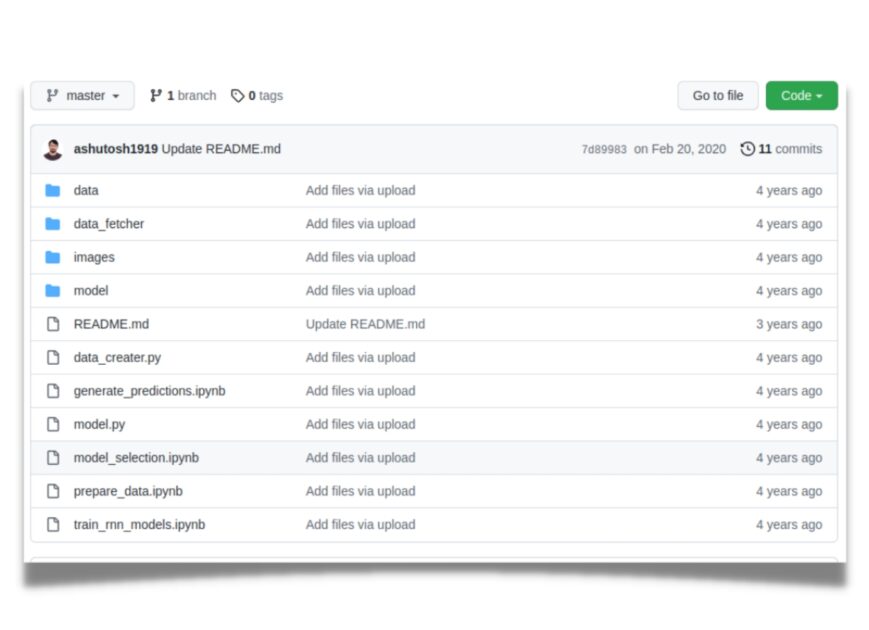
    LSTM stock prediction by github's ashutosh1919

    The author ashutosh1919 has not used pre-built models, instead trained “LSTM NN models”, for 32 companies. The data is from 1 Nov 2016 to 31 Oct 2018. They develop the code in a step-by-step manner, with each step adding more functionality.

    • Develop the python file downloader.py which fetches stock data from the Yahoo Download API.
    • Write the data_creater.py file which contains classes and functions to download data, normalize and process data, feature selection, simple sequence, etc. The downloaded data is stored in the data directory, with each company’s symbol having its own directory.
    • Data visualization – using the prepare_data.ipynb notebook, observing the volatility distribution and range.
    • After that, develop the model.py file. It contains the classes and functions to: build the model, select the best model, select the hyperparameters, predict the output, and show the graph for the output.
    • Then train on different layers of RNNs, namely a bidirectional LSTM layer, a fully connected layer, a drop.

    Their error rate is less than 1% using LSTM Networks.

    Stanford Project
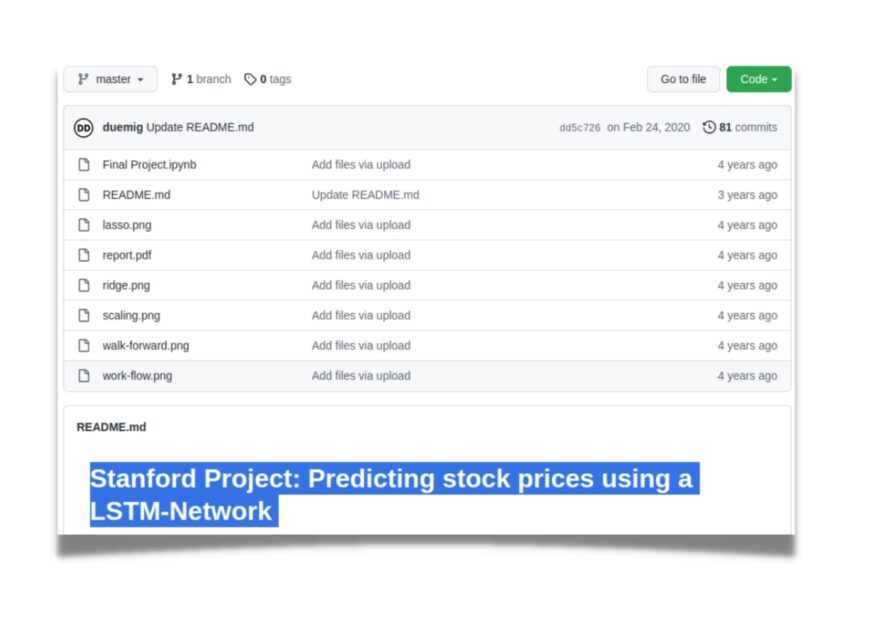
    Standord's LSTM-based Stock prediction project on github

    The Stanford study found that the LSTM network outperformed the logistic regression in terms of accuracy. For example, they state that the LSTM network was able to more efficiently predict the movements of the stock market. This study takes into account the time series price-volume data. This is important because it can help to improve the accuracy of the predictions.

    Related Post: A Brief Guide on How to Build your Own AI

    2. LTSM Stock Prediction with Kaggle

    Using Tensorflow, this platform does something like this: First, import the data from the CSV file. Then, split the data into training and testing data. After that, reshape the data into X=t and Y=t+1. Then, finally, build the model. It does not stop there. Afterwards, we need to fit the model. For that, predict the length of consecutive values from a real one, and plot the results. The dates, symbols, open, close, low, high, volume, are all used in the process.

    3. Investment Bots and Signals that Use LTSM

    Platforms like seekingalpha, TrendSpider, Benzinga Pro, etc. have been using LSTM for stock prediction. Long-term dependencies are really important for stock prediction. So many factors affect stock prices. The political situation, economic situation, and sentiment analysis are just a few. LSTM is really good at learning long-term dependencies.

    Also, LSTM can be very useful for sequence prediction. The importance of sequence prediction in the stock market is immense. For example, a candlestick chart is a sequence of data points. When you are trying to predict the stock’s future direction, you’re essentially trying to predict the next sequential data point.

    seekingalpha

    Seekingalpha use LSTM networks for stock prediction. The process is more reliable than the human brain and will likely yield better results. However, one prominent argument is that feature engineering requires high-level acumen. Therefore, it is ultimately the make-or-break for predicting stock prices accurately.

    Sentiment Analysis

    Another usage of LSTM networks is for Sentiment analysis. Sentiment analysis classifies the polarity of a given text. Like, whether a given text is positive, negative, or neutral. For that, developers train a model on a labeled dataset. Then they use it to predict the sentiment of the new, unseen text.

    Good at Handling Imbalanced Datasets

    LSTM networks are also good at handling imbalanced datasets. This is common in sentiment analysis, as there are often more negative examples than positive ones. LSTM networks can learn to identify the rarer positive examples, even in an imbalanced dataset.

    Remembering the context

    The sentiment of a text often depends on the context. Individual words only play a little role. The role of LSTM, and its sub-networks, is to provide context to individual words. And with that, sentiment of the text gets crystal clear.

    A Form of Memory

    LSTM networks have a “memory” that can remember information for long periods of time. This is what makes them ideal for sentiment analysis. LSTM networks are able to remember the context of the text. Furthermore, it also allows them to provide accurate predictions.

    Example of Using LSTM in sentiment analysis

    We can not mention all steps here as the article will be gigantically long. However, we will try to show the starting and ending processes in a Nutshell.

    First Step: Data Visualization

    # read data from text files
    with open(‘data/reviews.txt’, ‘r’) as f:
     reviews = f.read()
    with open(‘data/labels.txt’, ‘r’) as f:
     labels = f.read()
    
    # get rid of punctuation
    reviews = reviews.lower() # lowercase, standardize
    all_text = ‘’.join([c for c in reviews if c not in punctuation])
    
    # split by new lines and spaces
    reviews_split = all_text.split(‘
    
    ’)
    all_text = ‘ ’.join(reviews_split)
    
    # create a list of words
    words = all_text.split()
    
    # print stats about data
    print(‘Number of reviews: ‘, len(reviews_split))
    print(‘Number of unique words: ‘, len(set(words)))
    
    # print first review and its label
    print(reviews_split[0])
    print(labels.split(‘
    
    ’)[0])

    Second Step: Convert to lowercase

    # convert to lower case
    reviews = reviews.lower()

    Third Step: Remove punctuation

    # remove punctuation
    reviews = reviews.lower() # lowercase, standardize
    all_text = ‘’.join([c for c in reviews if c not in punctuation])

    Fourth Step: Create a list of reviews

    # split by new lines and spaces
    reviews_split = all_text.split(‘
    
    ’)
    all_text = ‘ ’.join(reviews_split)
    
    # create a list of words
    words = all_text.split()

    The further steps include tokenizing, analyzing the reviews’ lengths, padding, truncating, splitting the data into training, validation, and test sets, creating data loaders and batching, defining the LSTM network architecture, defining the model class, and training the network.

    After all the steps are complete results will look something like this:

    Results

    test_review = ‘The simplest pleasures in life are the best, and this film is one of them. Combining a rather basic storyline of love and adventure this movie transcends the usual weekend fair with wit and unmitigated charm.’
    
    # call function
    seq_length=200 # good to use the length that was trained on
    predict(net, test_review, sequence_length=seq_
    length)
    
    # print custom response based on whether test_review is pos/neg
    print(‘positive’) if result else print(‘negative’)
    
    positive
    
    # test negative text
    test_review_2 = ‘This movie was horrible. The acting was terrible and the film was not interesting. I would not recommend this movie.’
    
    # call function
    seq_length=200 # good to use the length that was trained on
    predict(net, test_review_2, sequence_length=seq_length)
    
    # print custom response based on whether test_review is pos/neg
    print(‘positive’) if result else print(‘negative’)
    
    negative
    
    # test neutral text
    test_review_3 = ‘This movie was ok. Not amazing, but not horrible. I would not recommend this movie.’
    
    # call function
    seq_length=200 # good to use the length that was trained on
    predict(net, test_review_3, sequence_length=seq_length)
    
    # print custom response based on whether test_review is pos/neg
    print(‘positive’) if result else print(‘negative’)
    
    negative
    
    # test positive text
    test_review_4 = ‘This movie was great. The acting was amazing and the film was interesting. I would recommend this movie.’
    
    # call function
    seq_length=200 # good to use the length that was trained on
    predict(net, test_review_4, sequence_length=seq_length)
    
    # print custom response based on whether test_review is pos/neg
    print(‘positive’) if result else print(‘negative’)
    
    positive
    

    As you see above, the sentiment analysis showed neutral review as negative too. That’s because as you see above, it was programmed to believe that anything except a positive review is negative.

    Language Translation

    Translating languages is difficult for machines to handle. Language is a complex, nuanced tool that humans use to communicate an incredible amount of information. LSTM has shown its use in language translation tasks many times. Here is an example of seq2seq LSTM from keggle/harshjain123. Talking about Google’s translate uses NMT system, a type of neural machine translation that uses an LSTM to read and interpret text.

    Geometric Deep Learning

    Geometric deep learning is a branch of machine learning dealing with geometric-structure-data. Such data include images and 3D shapes. Geometric deep learning algorithms learn to represent data in a high-dimensional space and are useful for object detection.

    For example, the LSTM network can take a 3D shape input. Let’s say the shape of a vase. The network must learn to represent the 3D shape of the vase in a high-dimensional space. And then, uses the representation it learned, to classify the shape (vase) into one of a number of categories, such as “flower vase”, “table vase”, or “floor vase”.

    Indeed, the technical term “geometric” refers to the fact that the LSTM network uses the geometry of the data, in order to learn a representation of the data. In other words, the LSTM network uses the shape of the data, to learn a representation of the data.

    Query Expansion

    Query expansion is a sub-field of information retrieval. The main idea is to add new terms to a user’s query to improve retrieval performance. And the challenge is to automatically decide which terms to add, and with what weights. Yes, LSTM can even assign weights to the new terms, which help improve retrieval performance.

    There are two types of query expansion: 1) term-based expansion and 2) query-based expansion. In term-based expansion, LSTM generates new terms that are relevant to the user’s query. And in query-based expansion, it generates a new relevant query. In Google’s search engine, they use a query-based expansion.
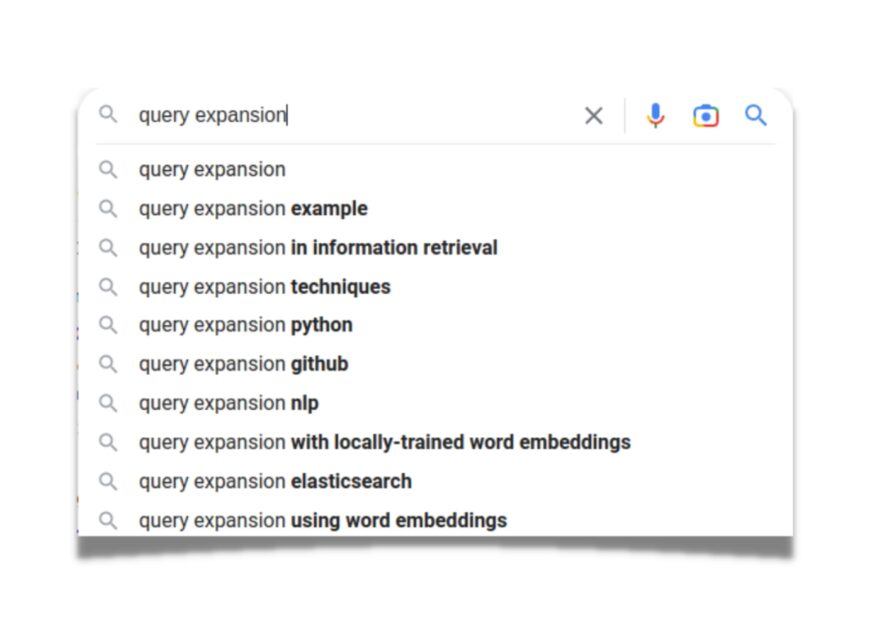
    example of query expansion

    LSTM can do all these things due to its feedback mechanism. As it reads the query, it also stores information in its hidden state vector, as we discussed. In simpler terms, it stores information about what it has read so far, and what is the most likely outcome.

    One interesting thing about LSTM is that it can remember information for long periods of time. So, even if a query is long, it can still generate new terms that are relevant to the user’s query.

    Sequence Prediction
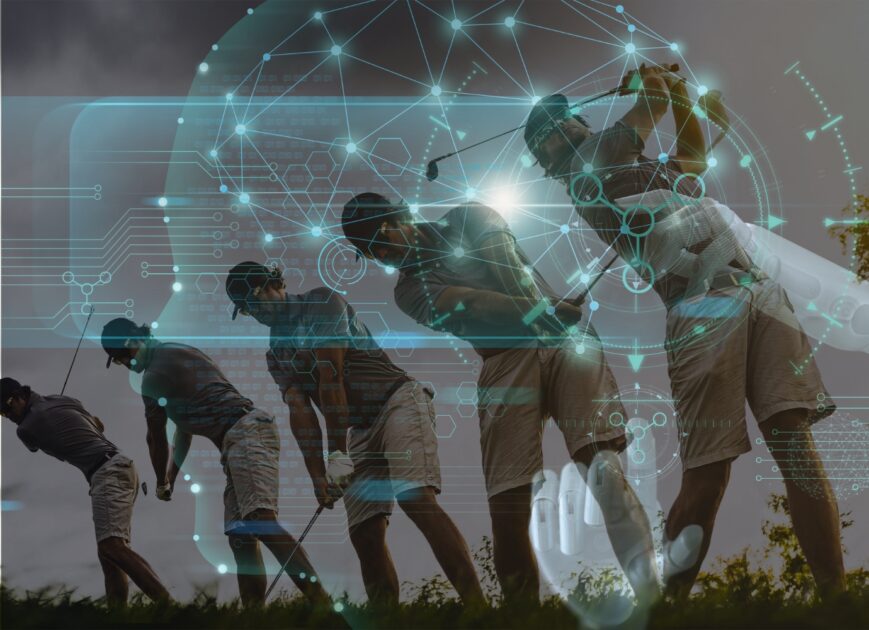
    sequence prediction using long short-term memory

    Sequence prediction is a difficult task, but LSTM networks have shown great promise in this area. In fact, it’s their very job. With the ability to store information about previous inputs and handle variable-length input sequences, LSTM networks are well suited to the task.

    There are many applications for LSTM-based sequence prediction. For example, LSTM networks predict the next frame in a video. This is especially useful when the video is of something like a person walking. In such videos, the appearance of the person changes very slowly from frame to frame. LSTM networks can learn to predict the next frame given the past few frames. Additionally, they can also predict the upcoming action in a video game, and the next chess move.

    Web Traffic

    LSTM networks can predict the next time step in a sequence of web traffic data. Say you have a sequence of web traffic data representing the number of web visitors over time. You can use an LSTM network to predict the number of visitors at the next time step.

    LSTM network also predicts the web search volume for a given query. You have a sequence of web search data, and want to predict the search volume for the next time step. LSTM network can make this prediction quite efficiently. Sites like Semrush and Wordstream use LSTM to do that.

    Conclusion

    Long Short-Term Memory is a great tool to have in the Machine Learning toolbox. LSTM is best used in specific circumstances where its strengths can be leveraged to the fullest. Not like a hammer to every problem; rather, like a chisel to a block of marble. As this machine learning network has proven itself multiple times, technical experts can confidently rely on it. Technical experts in fields from stock market prediction to natural language processing have much to gain from this powerful tool.

  • Disruptive Technology & Innovation with Examples

    Disruptive Technology & Innovation with Examples

    • Last Updated – December 8, 2022

    Introduction

    Technology doesn’t stand still; every so often, a new disruptive innovation breaks the existing norms. Risk analysis stats show that as much as 90% of new products fail. Market conditions do cause inconsistencies in these stats on different economies. But innovation’s very nature is disruptive – and that’s why it is so important. And due to that, despite higher chances of failure, disruptive technology keeps on coming up. Such technology transforms industries with groundbreaking ideas, and creates new markets, reshaping existing ones. Disruptive products, services, and businesses disrupt traditional methods of production and distribution. Such products are cheaper, faster, and have more efficient ways of doing things. And who wouldn’t want that? Disruptive technologies are those that improvise the way we live, work, and play. Disruption tightens the competition amongst companies, for us to keep on getting better products, and not a better version of the same product each year.

    Disruptive Technology and Innovation

    One way connoisseurs of disruptive tech are getting what they want is through “disruptive innovation.” Disruptive innovation is the process of introducing new goods and services that radically change the way businesses and consumers interact. Such upheavals have already disrupted entrenched markets, such as the taxi industry. No, disruptive innovation isn’t only about technology. In fact, even whole new business models, like Airbnb, disrupt conventional wisdom. Companies that successfully adopt disruptive innovations hold a competitive edge. They can provide lower cost, higher quality goods, and services, and have access to new markets.

    “Billions of dollars worth of research knowledge lie dormant at American universities waiting for the right disruptor to come along and create a business.”
    ― Jay Samit, Disrupt You!: Master Personal Transformation, Seize Opportunity, and Thrive in the Era of Endless Innovation

    Disruptive technology has been changing the way businesses are run since the 1980s. And with time, more businesses are getting aware of that.

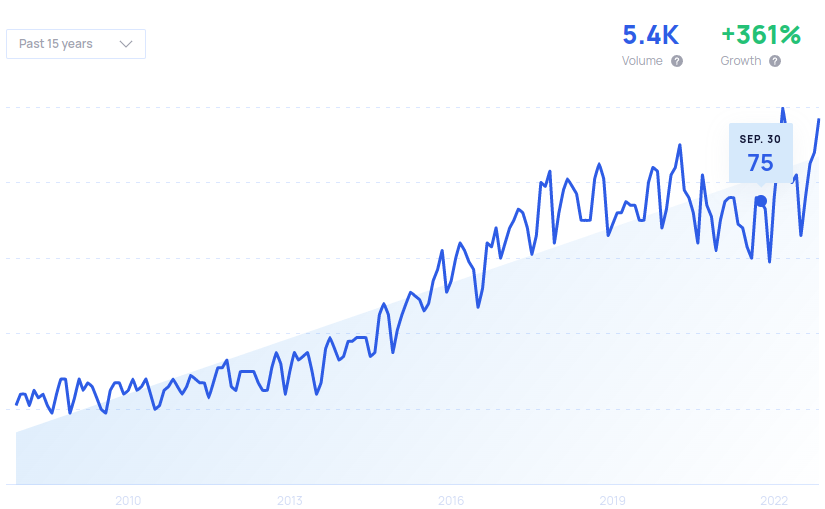
    Here is a chart showing the changes in people’s and businesses’ search trends about disruptive innovation in the past 15 years:

    Data Credit: Exploding Topics, People’s trend of concern over disruptive innovation since 2005.

    The nature of the above trend shows that businesses had become well aware of disruptive technology by 2017. So, it’s been a while since businesses have been trying to stay ahead of the curve to remain competitive. In the late 2010s, companies were already investing heavily in the latest technological advancements and were eager to get the most out of them. That led to more focus on some of the most disruptive innovations in the market, such as blockchain, VR, AR, and different sub-fields of machine learning. And we are clearly seeing the results now in 2022:

    Disruptive technology in 2022

    2022 has been a big year for Disruptive technologies. In fact, with the breakthrough of Art generators, people are even calling this year by that name. The announcement of Metaverse, a mixed reality concept, faced heavy criticism and still does one year later, in 2022. From futurists to scientists, artists to International organizations, everyone is talking about the next big technological leap.

    NATO’s concerns about disruptive technology

    NATO, a technological forefront for more than 7 decades, is also getting concerned about disruptive technologies. The organization has taken steps to address the issue in the past few years. In 2020, the NATO Advisory Group on Emerging and Disruptive Technologies published its first annual report. It made four key recommendations for NATO. In 2021, the Leaders agreed to launch the Defence Innovation Accelerator for the North Atlantic (DIANA) and to establish a NATO Innovation Fund. And recently, in 2022, NATO Foreign Ministers endorsed the charter for DIANA. Furthermore, they also agreed on the framework for the NATO Innovation Fund. It means NATO pretty much knows what future to expect with the disruptive nature of technology.

    Common Examples of Disruptive technology

    The most common example of disruptive technology is how web series disrupt the movie and entertainment industry. Such platforms offer more creative freedom for the creators and are more convenient for the consumers. Take blockchain for example; it has revolutionized the way digital transactions are conducted. It has eliminated the need for a centralized authority. Cloud computing is yet another disruptive technology that has replaced USBs, DVDs, and other storage media. Voice typing, for example, has replaced the traditional keyboard. Social media has disrupted traditional media, allowing people to share their stories with the world. Augmented reality, for example, will continue to transform the way we live and work. As of 2022, the state of AR technology is not that disruptive, not even close to its fullest potential. But companies are unveiling new and exciting AR experiences, and the future looks bright.

    We’ve shown you the most common examples of disruptive innovations, adjusting them within a paragraph. Further in this article, we’ll take a look at 8 examples of Disruptive technologies in brief.

    AI-generated art

    Traditionally, humans have been creating art using their own creativity and imagination. However, with AI-generated art, we are using computers for that. AI art generator is a disruptive technology because it is changing the way we create and distribute art. Algorithms mimic the style of a particular artist or type of art create AI-generated art, or mix them up. AI art generators can’t do all that “outta nowhere”; humans have programmed them for that. AI can generate art in a wide variety of styles, and of course, faster than humans. This gives people more choices to find artworks that they enjoy. If you have created hundreds of artworks in the past, they are now just as good as AI-generated art pieces.

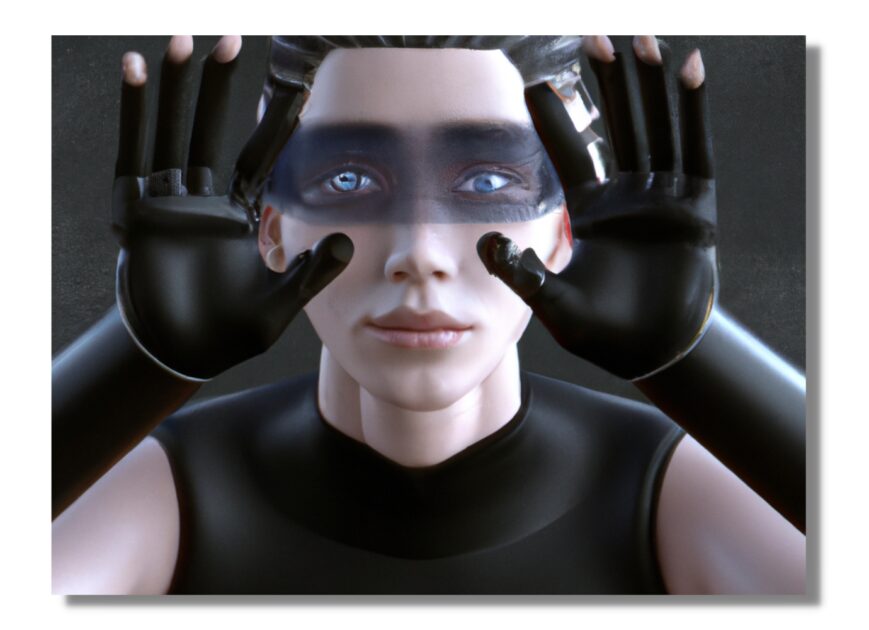
    Look at this art generated by DALL E 2:

    Other disruptions AI-generated art causes

    AI-generated art is disrupting more than one market. Apart from the art industry, here are the sectors this technology disrupts:

    Art education

    AI-generated art significantly disrupts art education. For example, art students are now more likely to pursue a career in data science than in traditional art forms. Due to this disruptive technology, the number of art students could decrease by 44% by 2027. Traditional art education is something that provides an actual platform. A platform for the development of fundamental skills, understanding of materials, tools, and appreciation of art history. In fact, the top countries in Maths and science test scores, including Japan, have Art education as mandatory. This shows how big a price disruption of art education is to pay.

    Currency

    AI-generated art promotes NFTs (Non-Fungible Tokens). Such tokens allow artists to create and monetize digital art, without the need for physical prints. This disrupts the well-established mainstream currencies.

    Good or bad?

    AI-generated art is disrupting a lot of markets; and apart from art education, it is also disrupting the way we view creativity and innovation. It’s true that the ways to think about creativity and innovation should be updated with time. However, AI-generated art does this in a way that doesn’t take into account how art is created. In fact, AI is creating art that is very similar to ours. But the process it uses is so different that it is disruptive. As such, it is a bad example of disruptive innovation.

    Augmented Analytics

    Augmented analytics disrupts traditional data analytics by automating data analysis and providing actionable insights from data. For businesses, there has always been a need to transform data into actionable insights quickly and efficiently. And not only modern but even ancient businesses have recognized this need. They used to collect data manually, by asking customers, and sometimes even by simply guessing. With the rise of computers, spreadsheets started to take over as the primary method of data analysis. But even these were labor-intensive and time-consuming. Then came online data tools and the concept of Big Data. This helped businesses better understand their customers and make better decisions. With these tools and thanks to AI, analytics were more accurate and required less labor. But one thing that was still not available was the ability to quickly and easily analyze large amounts of data in a meaningful way. This is where augmented analytics comes in.

    Here are the fields Augmented analytics disrupts:

    Computers

    With augmented analytics, businesses can access the augmented holograms of analytics at any time, . This disrupts the need of computers. Furthermore, this also disrupts the traditional monitor screen. The analysts simply need to wear glasses all the time to view and analyze the data.

    Traditional Analytics

    For example, businesses can analyze the real-time data streams from customers/potential customers and make decisions based on that data. Augmented analytics disrupts traditional analytics like Google’s, by automating data analysis and providing actionable insights from data.

    Good or bad?

    Augmented analytics is an example of good disruptive technology. According to the BCG-WEF project report, 72% of manufacturing organizations use advanced data analytics to increase productivity. And as of now, the most advanced form of it is augmented analytics. It is helping businesses make better decisions and achieve better results. This technology has no demerits.

    3D printing

    Printing used to be a two-dimensional process. 3D printing, however, has changed the game. 3D printing is a disruptive technology, revolutionizing different industries by allowing more complex designs and reducing costs. It creates objects by depositing successive layers of material, forming a three-dimensional shape. Along with the elimination of production steps, 3D printing saves time and money. It also allows for a much larger variety of shapes and sizes, making it suitable for highly specific and unique products. Furthermore, this innovation is environmentally friendly, cutting down waste and energy consumption. It can also produce objects with intricate details that can’t be achieved with traditional production methods. 3D printing has opened doors to more efficient and cost-effective production, changing the way we create products.

    Here are the different sectors 3-D printing disrupts:

    Medicine

    In medicine, due to 3D printing, surgeons can now print custom implants for their patients. 3D printing technology has already assisted with creating artificial organs, prosthetics, and more. Furthermore, is also helping reduce costs for medical equipment and supplies. All this will reduce the cost of healthcare because it will reduce the cost of medical devices and implants. As such, 3D printing disrupts the traditional costly healthcare system.

    Manufacturing

    Manufacturing required a lot of time, money, and human involvement. Say goodbye to costly tooling, long lead times, and expensive inventory. In fact, a company can profit as high as 90% from 3D printing, compared to the material cost alone. The margin does reduce when you add labor and overhead costs. But still, comparing it to other traditional manufacturing processes, the profit margins for 3D printing are still much higher.

    3-D printing eliminates the need for large-scale, up-front investments. Manufacturing companies can now produce parts on-demand, on-site, with no minimum order or delay. 3-D printing also helps manufacture robotic parts. This disruptive technology also enables faster, lighter, aircraft parts, reducing manufacturing costs and time; disrupting the aerospace manufacturing industry.

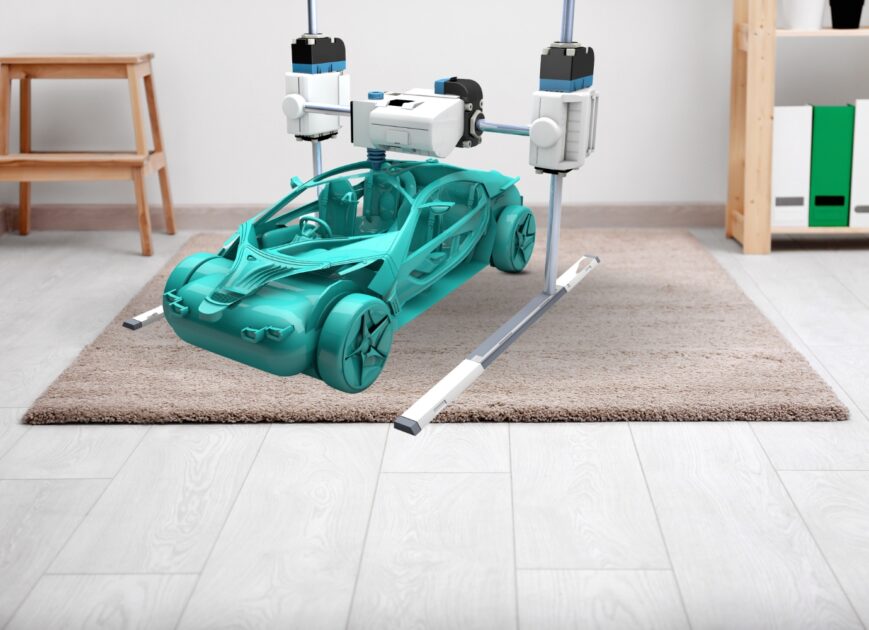
    Here is an example of 3D printing an object:

    Food

    3-D printed food isn’t something brand new. The food industry is one of the biggest industries 3-D printing has the potential to disrupt. Currently, very few restaurants are using 3-D printing to create their food. The problem starts when people start printing food at home, reducing the need to go to restaurants. According to stats, this is soon to become a reality. Around 20% of consumers are expecting to print food by 2027. However, do consider the fact that the FDA has not approved 3-D printed food just yet.

    Good or bad?

    3-D printing is an example of good disruptive innovation. It changes the way companies make products, making them faster, cheaper, and more efficient, reducing the need for costly tools and labor. This also enables faster customization and personalization of products. This makes 3-D printing a powerful tool for businesses, allowing them to create and market products faster and more efficiently. For consumers, 3-D printing provides an opportunity to get customized products at a lower cost. This disruptive technology has a positive impact on the economy.

    Virtual Reality

    Virtual Reality (VR) is a field where definitions change; this disruptive technology replaces our world. VR has the potential to disrupt not only how we interact with technology and the world around us, but the big whole world around us, in every sense of the word. This is made possible by two key components – hardware and software. The hardware is the headset that you wear, which is usually connected to a powerful computer. The software is what creates the virtual world around you, AI-powered software, in most cases.

    Here are the fields VR is disrupting:

    Movies

    VR is a weirdo where you can watch movies in a theater in a virtual environment. Yes, a theater in a virtual environment. And the experience is not that bad, however, it reduces socialization. Virtual Reality is disrupting the movie industry, and the effect is already visible. For example, in the last couple of years, the number of people going to the movies has been decreasing. This is especially true for the younger generation, who prefer to watch movies on their phones or computers. Platforms like Bigscreen VR and CInevr are a few examples of disruptive VR movie theaters.

    Education

    Education, whether it’s in school or in a university, is a very important part of our lives. However, it’s not always the most fun thing to do. VR changes that; VR makes education fun. For example, instead of reading about the history of the world, students are already experiencing it. VR is the biggest threat to the ongoing education system that prioritizes memorization over understanding. One study showed that a whopping 97% of students prefer VR education over any other form of it.

    Travel

    Traveling is a very important part of our lives. It’s a way to experience new cultures, meet new people, and learn new things. However, Virtual Reality is reducing our desire to travel. For example, instead of going to the beach, you can just put on a VR headset and experience the beach. Stats show that travel spending has already reduced significantly due to the introduction of VR, powered by other factors including the pandemic. The travel and tourism industry is the major source of income for many countries. VR drastically reduces the income from this sector. If one can experience the Pyramid without going to Egypt, and experience the beauty of the Taj Mahal without going to India, then why would one want to go there? We choose ease, and VR provides us with that; no matter its consequences.

    Sports

    eSports, as they call it, is a new way of playing sports. Kids are spending more time gaming, instead of playing outside for a long. It’s never a good thing in the first place. And with VR, they can play sports in a big whole virtual environment. VR only adds to the way gaming disrupts the way we play sports. The number of kids, aged 6 to 11, playing video games has increased significantly thanks to VR. And in fact, out of 169 million total gamers in the U.S., 29% are VR gamers. So, VR has played a commendable role in disrupting traditional sports.

    Good or bad?

    For the most part, VR is a bad example of disruptive technology. It acts as a distraction from more important tasks and can lead to a loss of productivity. As it swipes us away from the real world, VR can make it difficult to focus on our surroundings and the tasks at hand. It can also be isolating, as people can lose touch with their physical environment. VR does improvise education. However, as it disrupts real life, it is a bad disruptive innovation. One disruptive solution to VR is AR. Yes, augmented reality disrupts virtual reality. While VR takes us away from reality, AR enhances reality without making us leave it. That’s how we have to look for solutions as we move forward.

    Robotics

    Robotics is a disruptive technology that disrupts more than a handful of industries. It is not a new concern either. As of 2022, we can say that robots are starting to have an impact on the economy and society. For example, taking over the jobs that humans do, such as manufacturing and agriculture. Robotics is already leading to large-scale unemployment and social upheaval.

    People often mistakenly use “Robotics”, “AI”, and “AI-powered robotics” synonymously. AI is a branch of computer science that deals with the theory and design of intelligent computer systems. It is concerned with the creation of intelligent agents, which are systems that can reason, learn, and act autonomously. It is not necessarily related to robotics. However, AI-powered robotics is the application of AI technology to the field of robotics..The most disruptive technology among the three is AI-powered robotics. And most physical robots today, even industrial ones, possess some sort of AI.

    Robotics deals with the design, construction, operation, and application of robots. And it disrupts a variety of fields, the most important ones being:

    Jobs

    According to estimations, robotics will replace over 50 million jobs worldwide over the next decade. That’s a lot. Yes, this disruptive technology does create room for new jobs and all. However, the problem is that the “replacing the jobs with new ones” part can not happen suddenly. Throughout the process of robotics’ disruption, people will have to sacrifice their valuable jobs.

    Education

    Robotics is disrupting the healthcare industry by providing a new level of precision and accuracy to medical procedures. Robots are able to perform complex surgeries with unprecedented accuracy, and they can even deliver drugs and other treatments. This is revolutionary, as it has the potential to save millions of lives. Human-Robot hybrid doctors already exist, with the role of the “Robot” part getting heavier with time.

    Military

    Robotics is disrupting the military too, as countries are using robots to fight wars. Robots programmed to perform complex tasks, such as reconnaissance, and surveillance, help in various things in the military. For example, robots can detect and defuse bombs. However, they can not replace human soldiers in a war due to the nature of war itself.

    Shipping

    Robotics disrupts shipping by providing an efficient and cost-effective way to move goods. Automated vehicles and drones can deliver packages autonomously and quickly. Amazon’s new shipping drone MK30 is a perfect example of robotics technology disrupting shipping.

    Food service

    Robotics is revolutionizing food service. Automated robots can prepare and serve food faster and with fewer mistakes. Restaurants like ones powered by Brightloom (then Eatsa), are using robots to prepare food quickly and accurately.

    Search and Rescue

    Robots are having their role in the search for natural disaster survivors. Search and rescue robots have proven themselves time and again, entering dangerous environments, collecting data, and providing first responders with valuable information. Robotics is disrupting the search and rescue (SAR) process, replacing some jobs of rescue experts with robotic counterparts. For example, UAVs are replacing the need for humans to traverse the dangerous terrain.

    Good or bad?

    Robotics is a good disruptive technology for mankind, but a bad one for capitalism. But for capitalists, it is a worry, as robotics can lead to automation and reduce the need for manual labor. It has the potential to disrupt the entire world, including how we look. Robotics disrupts jobs, but we’ll have to see whether it creates career opportunities in the form of new technology. Capitalism is one of the main reasons why we have advanced this far, so this could be seen as a bad disruptive innovation in that sense.

    Natural Language processing

    Natural Language Processing (NLP) is a disruptive innovation that has replaced manual labor in fields like data analysis and text understanding. Its ability to understand and interact with human language enables breakthroughs in many industries. NLP can detect sentiment in text, provide insights from data, and help automate customer service. Its impact on the way businesses operate is undeniable. NLP help build intelligent chatbots, understand customer intent, and even improve search engine optimization. And that’s really really cheap. For example, Google cloud’s NLP entity sentiment analysis costs $0.5/1000 units for 5-20 Million units, and $2/1000 units for 5k-1M units. That’s much cheaper than hiring a human to do something equivalent; it would have cost at least 10x more than that.

    Here are the sectors NLP is a disrupting technology:

    Voiceovers

    One of the most obvious ways that NLP is disruptive is that it’s replacing human voiceover artists. This is already happening in the advertising world, where NLP generates realistic-sounding voices for commercials and other videos. NLP also makes creating realistic-sounding voices for navigation systems and other voice-based applications possible. At Fiverr, the average cost of hiring a good native voiceover artist is around $150 per 1000 words. With NLP-based solutions, this cost drops to almost 0.

    Customer Service

    Another way NLP is disruptive is how this technology is automating customer service. This is already happening to a certain extent, as chatbots are now handling simple customer service inquiries. It replaces the need for human customer service agents. This allows companies to focus their resources on other areas.

    Journalism

    By automating the news-gathering process, NLP allows journalists to focus on reporting and analysis. This disruptive innovation is transforming the media landscape by providing faster information. For example, in case of a natural disaster, NLP-powered news bots can aggregate data in real time. If there are many developments in the same story, NLP bots can quickly update the news with the latest information.

    Good or bad?

    Natural language processing is a good disruptive technology. It has enabled developers to create applications that can process, understand and respond to human language. NLP has enabled computers to understand the intent behind a user’s query, leading to improved accuracy in search engine results, as well as more relevant and useful responses from digital assistants. However, some people use NLP to generate fake news, which can have a negative impact on society. And that’s the size of the price tag that comes with every new innovation, not exclusive to NLP.

    Biometrics

    Biometric technology is disruptive because it is changing the way we authenticate ourselves. Still, that accounts for only 75% of Americans, the rest of whom have never used biometrics. Rather than using something we know (like a password), biometrics uses something we are (like our fingerprints or iris patterns). This is not only more secure, but it is also more convenient. We no longer have to remember a bunch of different passwords. We can simply use our biometrics to log in to our devices and accounts. And it is not only limited to password management. Biometrics can also be useful for things like physical access control, time and attendance tracking, and even identity verification. It is also replacing traditional KYC verification methods that are no longer as effective.

    Good or bad?

    Biometrics is a good disruptive innovation. Some people are concerned about the privacy implications of biometrics. But these concerns are typically overblown. Biometrics is a little more invasive than other forms of authentication, such as using a key or a PIN number. But it is a more inclusive technology, as it can be used by people of all ages and abilities.

    Video calling

    Video calling is a disruptive innovation for replacing two things: the necessity for real-time face-to-face interaction in many cases, and the necessity of phone calls. Now the two are completely different things. You can have a face-to-face interaction without even being in the same room, and you can do it without even having to leave your desk or set down your work. And, of course, you can do it without using up any minutes on your phone plan.

    The telephone was once a disruptive technology, too. It destroyed the telegraph, which was the primary means of long-distance communication at the time. The telephone was much more convenient, and it quickly became the preferred method of communication. The same thing is happening with video calling. It is simply more convenient than meeting in person, and it is quickly becoming the preferred method of communication for many people.

    In fact, hologram-powered augmented reality is well-set to replace video calling in the future. And after that, we will be calling AR a disruptive technology for replacing video calls. That trend just keeps on going.

    Good or bad?

    Video calling is definitely a good example of disruptive innovation, as it narrows down the world. And there is not even a heavy price tag on it.

    Digital banking

    As of 2022, almost 90 percent of the money available in the world is digital. In other words, only a tenth of the world’s money exists as physical cash. The rest is digital: numbers on a screen or computer. Humans invented physical transactions in form of coins 2500 years ago. Online banking is a disruptive technology that has changed that long-lasting method to transact.

    In fact, it’s likely that within our lifetimes, physical money will disappear entirely.

    There are a number of reasons for digital banking taking over physical money. For one, it’s simply more convenient to use digital money. You can transfer it instantaneously, without having to worry about things like exchange rates. But there are other, more important reasons. Digital money is more secure than physical money. It’s much harder to counterfeit, and it’s nearly impossible to steal. And then there’s the fact that digital money is simply more efficient. Banks can hold more of it, and they can lend it out at a lower cost.

    Good or bad?

    Online banking is a good disruptive innovation. It has changed the way people interact with their finances, making it faster, easier, and more secure. The use of online banking also reduces overhead costs for financial institutions. There are no cons to this innovation.

    Display Ads

    Advertisements have a history. In the beginning, they were a way for businesses to communicate their products to potential customers through papers and magazines. TV ads then came along and changed how businesses reach their target audiences. And now, display ads are a disruptive technology that is changing how businesses advertise again. Display ads are digital advertisements that appear on websites. They come in all shapes and sizes and can be static or animated. Display ads are usually served through ad networks, which are companies that match advertisers with websites that are willing to host their ads. You may think of display ads as annoying and intrusive, but they pretty much drive the digital economy.

    Display ads have disrupted traditional advertising methods by providing new creativity in advertising. This innovation revolutionizes how businesses advertise. With display ads, businesses can target specific audiences and track the success of their advertising. High-end companies even pay hundreds of dollars per single Ad click to reach their target audience. You see how important it is for a business to reach the audience they actually want; the price eventually pays itself back. The future of advertisement is even scarier. Meta will reportedly track and scan your eyes to show you relevant ads in the future with metaverse. As technology advances, so will the ways businesses reach their target audiences. But it is necessary to recognize the limits. The meta’s example, for some, is where it goes something beyond disruptive.

    Good or bad?

    A display ad is one such disruptive innovation that is not necessarily good or bad for consumers. However, for marketers and advertisers, it has been a great way to reach out to customers.

    Electric Cars

    The energy sector is facing a disruptive innovation—electric cars. The energy sector is one of the biggest drivers of the world’s economy, In fact, about 29% of global energy is used for transportation. But the new electric cars are offering a clean, efficient, and cost-efficient alternative to traditional combustion vehicles. They are also much quieter. Stats show that continuous usage of EVs is roughly 21% less expensive than petrol or diesel-powered cars. This makes them a more attractive option for many consumers. By 2030, electric vehicles will cover 15% of the global automotive market.

    Good or bad?

    Electric vehicles are good for the environment, disruptive to the auto industry, and shaky to the energy industry. From the perspective of mankind, and the planet, electric cars are an example of good disruptive innovation.

    Conclusion

    Embracing disruptive technology and innovation is essential for generative success. A good sentence to end this article is: “Innovation requires disruption to reach success.” A disruption that shifts us from our current mode of thinking is the most valuable. However, disruptive technology like Virtual Reality and AI art generators shift us away from our own traditions and values. Still, most of the time, these disruptive innovations are beneficial and offer new and valuable opportunities. Competition and Capitalism are interconnected with disruption, and these three key elements drive innovation, hence, the advancement of society.

  • Wearable Technology Market

    Wearable Technology Market

    We can monitor any human activities that we can quantify, and wearable technology takes it to another level.

    In most cases, healthcare is the application that comes into mind when thinking about wearable tech. Mostly; fitness trackers, that monitor heart rate, steps taken, and calories burned. We use this data to try and improve our health and wellness.

    But fitness trackers are just the most common wearable technology. Other examples of wearable tech in healthcare include:

    Continuous Glucose Monitors (CGM) – These devices measure glucose levels in real-time. When levels are too high or low, they alert the wearer by vibrating or beeping, also, notify the doctor.

    Smart Inhalers – These devices track when and how often someone uses their inhaler. When it’s time to take another dose, they remind the wearer with an alarm.

    Rehabilitation Devices – Wearable tech devices that can help people recover from injuries, including exoskeletons and virtual reality devices. Such devices include ReWalk, Ekso Bionics, and Ossur.

    You see, not all wearable technology is for general usage. Even for specific medical conditions including heart disease, or Parkinson’s, wearable tech devices help manage and monitor the patient’s condition.

    Virtual Reality as Wearable Technology

    Today 20% of Americans own some type of wearable technology. That’s fairly more than the number of VR users alone, which is 15%. In fact, only 47% of Americans say they’re at least somewhat familiar with VR. Other forms of wearable technology are more common than VR, regardless of the popularity and hype VR carries.

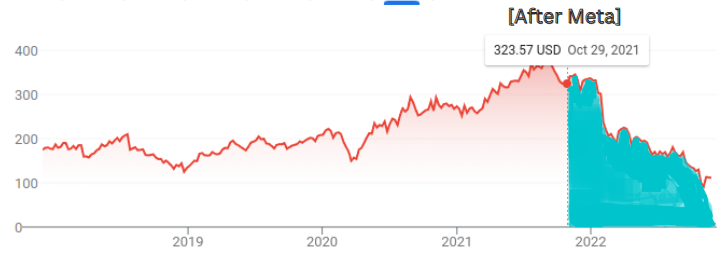
    The stats show that people are more likely to invest in other forms of wearable technologies over VR. And that pretty much makes sense. Mark Zuckerberg’s company, Meta, has lost more than 66% of its value after investing in Metaverse, a VR technology. This is the chart showing the before and after of Meta’s Metaverse VR announcement:

    Meta stocks dropping after Metaverse's announcement
    Meta stocks dropping after Metaverse’s announcement

    In fact, VR is one such wearable technology that can never be for all. Other wearable techs such as smartwatches, fitness trackers, and smart glasses are much more common and useful. But there can not be one point in time when all people come up to agree that VR is useful. See this for example:

    Paul Kuck, MD, Ophthalmology, discusses the dangers of using virtual reality glasses – [YouTube.com]

    As VR ships us away from reality, it is not a technology we can wear expecting to help in real life.

    Wearable Technology Market (2022-2030)

    Experts have predicted a compound annual growth rate of 13.89% until 2030 for wearable tech. The rate is more than the smartphone industry’s 2.3%(2022-2026), and subscription gaming’s 12.8% (2022-2030). There are many bases for that prediction:

    The miniaturization of technology

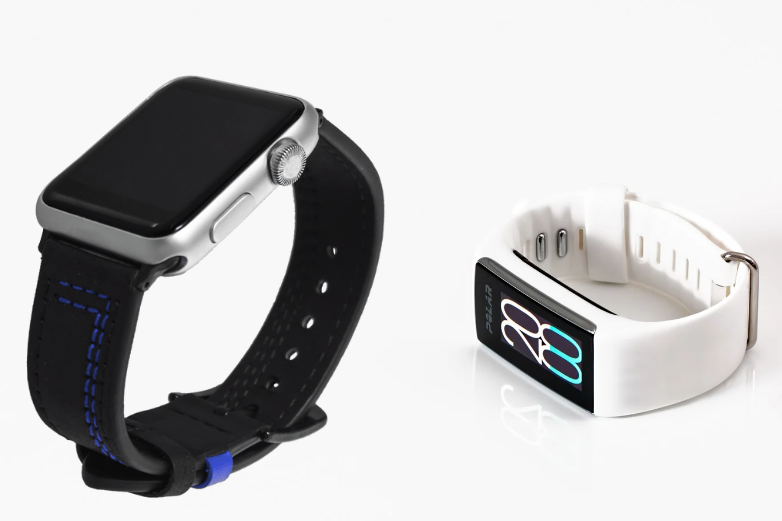
    The miniaturization of technology is a major factor in the growth of wearable tech. As technology becomes smaller and more powerful, we will find ways to use it in more ways. For example, the first wearable tech devices were large and bulky. Look at the image below:

    old vs new smartwatches
    bulky and light wearable devices side by side.

    If you look at a brief history of wearable technology, you’ll find bigger and messier devices. But now, we can wear devices that are the size of a watch or even smaller. If a device is small enough, we can wear it anywhere.

    Increasing Demand

    Apart from miniaturization, the affordability of wearable tech is another factor in its growth. Wearable technology is becoming more affordable with time. And as anyone can wear it anywhere, plus increasing affordability, more people buy it. This has led to more companies making wearable tech, which has led to more competition and lower prices. The demand for wearable technology keeps on increasing with that.

    No. of wearable technology applications

    The increasing number of applications for wearable tech is another factor in its growth. Wearable tech devices were used for fitness tracking for a long time. But now, we can use wearable tech to track our location, and even communicate with others. And if that was not enough for you, companies are working on using wearable tech to control devices in your house.

    Government support

    Even governments are now playing a role in the growth of wearable tech. The US government is investing in research, regulations, and the development of wearable tech, helping the industry grow. For example, the FDA has approved the use of wearable tech for medical purposes. You can refer to the list of FDA-cleared wearable devices for more info.

    Influence of social media on wearable tech and vice versa

    Social media is also playing a role in the growth of wearable tech. The more people that know about wearable tech, the more they will want to buy it. And the more that people buy it, the more companies will make it. Wearable technology could even shape the future of social media. That’s powered by our own body movements, like a blurring of the lines between the digital and physical world. In fact, high-profile social media campaigns are already using wearable technology.

    Wearable Technology Market Trends and Reversal

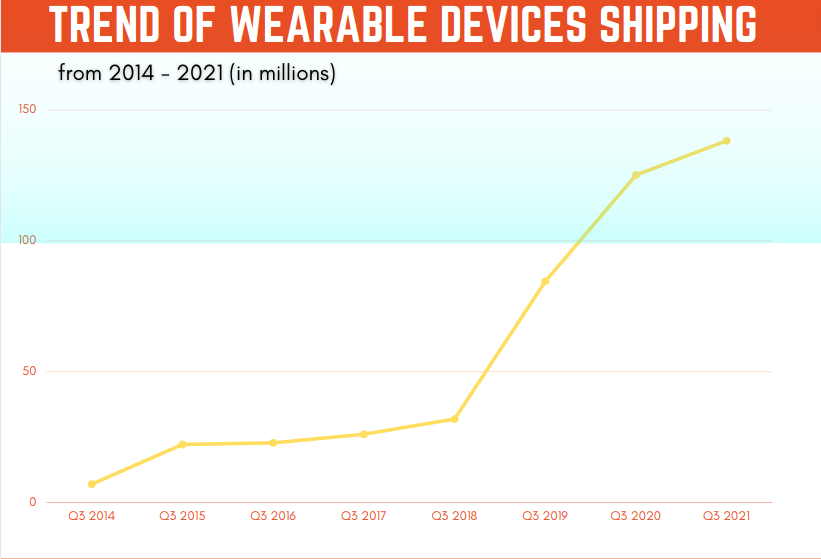
    Wearable technology devices shipping trends
    Wearable technology devices shipping trends, data source – statista

    As you can see from the data, the increasing trend in the wearable technology market is unlikely to stop. Talking about the historical trends, the market was consolidating in the mid-2010s. Since 2018, wearable device shipments have skyrocketed. The market is still in its growth stage and is likely to grow even more in the future. There are only a few possible factors that could cause a reversal in the wearable technology uptrend, like:

    Economic recession

    Recession is not good for any industry, and the wearable technology industry is no different. It can cause a decrease in people’s disposable income. As a result, people would be less likely to spend money on secondary items like wearable devices. For example, in China, following a slowing economy, the shipment of wearable devices decreased by 23.3% in 2022. Because let’s be honest, such devices are far from being default apparel for us. Another good example of this is the decrease in sales of wearable devices during the 2008 financial crisis. At that time, although wearable technology was in its infancy, the industry still saw a noticeable decrease in sales.

    Technological disruption

    Another factor that could potentially reverse the trend is if there is a technological advancement that makes wearable devices obsolete. For example, if there is a big breakthrough in artificial intelligence that allows people to have all the benefits of a wearable device without actually wearing one, then that would be a technological advancement that could potentially reverse the need, hence the market trend, of wearable technology.

    Social stigma

    Wearable technologies are highly vulnerable to becoming socially unacceptable. This happens when people think that wearing certain tech devices makes them look strange or geeky. If this does happen, it will slowly keep on reducing the demand for wearable tech products. This has already happened with Virtual Reality. Other forms of wearable devices, especially clothes, may be vulnerable to social stigma. Integrating wearable technology into society will be a challenge as such devices shift us away from the tradition of using technology as a tool.

    Privacy concerns

    It will be important to see how people view privacy in the near future. If people become more concerned about their privacy, they may be less likely to use devices that track their location and share their data. This could lead to many dips, and overall, decreased demand for wearable tech products. Currently, 84% of Americans are concerned about their privacy in one way or another. But the privacy of wearable technology is a whole different topic. Because, unlike the normal T&Cs agreements, those of wearable technology may even ask for the user’s DNA! People’s obsession with privacy may well be a driving factor for the wearable technology trend reversal.

    Wearable Technology of the Future

    Wearable Technology of the Future

    Wearable technology’s future is something else. Today, it’s still fairly bulky and often intrusive. Future wearable devices will be sleek, unobtrusive, and, in many cases, nearly invisible. And that’s due to the impact of these 4 tech pillars:

    Nanotechnology

    Nanotechnology will allow for the creation of smaller and more efficient devices. This technology will also help create new materials that are more comfortable to wear. Powered by nanotechnology, wearable technology will be better able to integrate with the human body. Nanotechnology’s expected CAGR is 14.5% (2022-2030).

    AI and Big Data

    In addition to being smaller and more comfortable, future wearable technology will also be more intelligent. This is thanks to the impact of artificial intelligence (AI) and big data. AI will enable devices to better understand and respond to the wearer’s needs. Big data will provide the fuel that AI needs to learn and evolve. AI’s expected CAGR is a whopping 38.1% (2022-2030).

    Virtual Reality

    No matter whether we like it or not, Virtual reality will also be a key part of future wearable technology. VR headsets will provide wearers with an immersive experience that’s unlike anything that’s possible today. This technology will allow people to explore new worlds, experiences, and realities. There’s no good estimate for the CAGR of the VR industry, as people’s perceptions towards it are extremely volatile.

    Blockchain

    Blockchain is already having a major impact on future wearable technology. It allows wearable devices to securely store and share data. With time, blockchain will also help create a decentralized ecosystem for wearable devices. This will give people more control over their data and how companies use it. Blockchain’s expected CAGR is 85.9% (2022-2030).

    Heavy Privacy Concerns with Wearable Technology

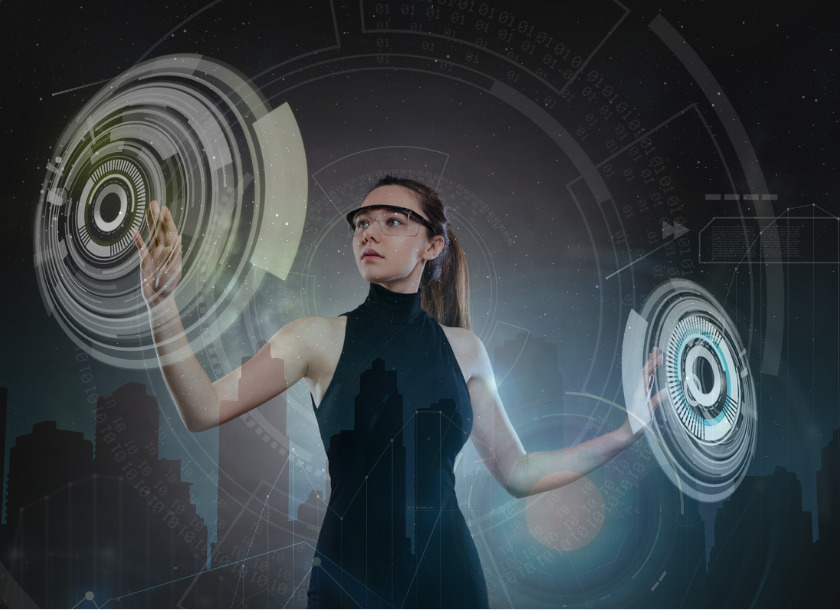
    Privacy is a heavy price to pay for making wearable technology mainstream. You constantly wear or carry wearable technologies on the body like this:

    Girl wearing heavy wearable tech

    It means that the device is constantly collecting data about the wearer. This data can include very personal information. Health data is not confidential for most, for some is too personal and sensitive. However, location, biometrics, and identity data are very important to protect. This concern is not only for the wearer but also for the people around them. For example, Google Glass can record video and audio without the knowledge of the people around the wearer. It does not stop there; some devices can track heart rate, blood pressure, and other health vitals.

    The scariest part is that that much data is a lot to harm if it falls into wrong hands. Like, as they collect your fingerprints, passwords, and iris scan, you may be a little worried that hackers can unlock everything you own. But there is much more to steal, not only for hackers but passive observers and illegal researchers. They can learn your daily routines, track your location, and gain access to the conversations on your phone.

    How to secure your wearable devices?

    If we cope with the following challenges, the amazing potential of wearable technology will be unleashed. For that, one single step is not enough. We need to take a holistic approach to privacy and security.

    Be Proactive

    We need to be proactive about the security of our devices and data. The first step is understanding what information wearable devices are collecting, and how different parties could use it against us. Then we can take steps to protect ourselves, like encrypting our data, and understanding who we give our information to.

    Pressurize companies

    We also need to push companies to take security seriously. They should be transparent about data collection. Also, they should give us the option to opt-out of data collection through wearable technology. Companies must encrypt all data from wearable devices we consent to provide them so that it’s safe from hackers. As such, companies are likely to use the “accept the terms and conditions or go away” approach. We will have to discourage them from that as a team.

    Make laws

    Wearable technology is inevitable, and strong regulations are key. Only governments can play a visible role in this. Not only for any normal person; the US space force, as well, will be using Wearable tracking tech from 2023. The laws to protect the privacy of wearable technology users include:

    • Giving users the right to know what data is being collected about them
    • Allowing them to access and change their data
    • Making companies delete data that is no longer needed

    As we enter the wearable technology era, we need to start thinking about privacy as a fundamental right. It’s not a luxury anymore. We should be critical of wearing gadgets and need to ask questions about the impact of that technology on our personal lives.

    Wearable technology in Fashion

    Fashion is one of the biggest industries in the world, accounting for 2% of the world’s GDP. Wearable technology and the fashion industry are not yet synonymous. But there is not a single reason why they won’t be.

    The fashion market has already started using wearable technology. See this for example:

    a fashionable man using wearable technology

    Quite fashionable, ain’t it?

    Fashion’s future we see will be driven heavily by wearable clothes. Brands are already starting to experiment with incorporating tech into their garments and accessories. More like this picture + tech:

    instant clothes built using spray technology
    Image credit: NyTimes

    No, wearable technology in fashion is not about Google Glasses or the new Apple Watch. It’s about clothes and accessories designed with technology in mind. And it’s a trend that is only going to grow in popularity.

    In most industries, wearable technology is going to play a part, but fashion’s future will be all about wearable clothes.

    Types of wearable technology in fashion

    There are a number of different types of wearable technology in fashion, including:

    Fabrics: Embedded with sensors. Usage – monitor heart rate, body temperature, and stress levels.

    Shoes: Equipped with sensors. Usage – track things like distance traveled, calories burned, and steps taken.

    Hats: Sensors built into the brim. Usage – measure brain activity, heart rate, and body temperature.

    Belts: Include a buckle with a sensor. Usage – N/A

    Glasses: Spectacles with in-built sensors. Usage – capture data about the wearer’s surroundings.

    fashion tech

    As witnessed in the past, we instantly adapt to new clothing trends. For example, in the 1800s, both men and women wore corsets. In the 1900s, women started to wear less clothing. And In the 2000s, we’ve seen a trend of people wearing more comfortable clothes. We’ve also seen a trend of people dressing more casual. The next step in fashion’s evolution is wearable clothes.

    And there are reasons why people will start utilizing wearable clothes:

    Self-expression

    One of the most important aspects of fashion is self-expression. We use fashion to express our unique identities. As we become more connected, we’ll want to use our clothes to express our individuality even more. With wearable technology such as connected clothes, we’ll be able to do this in more ways than ever before. Furthermore, we use our clothes to express our moods, our interests, and our personalities.

    Efficiency

    Wearable technology will also allow our clothes to be more efficient. We’ll be able to use our clothes to connect with loved ones, access information, make payments, and much more. Like, using clothes to track our fitness, our sleep, and our diet.

    Comfort

    Comfort must come along with clothes. Wearable clothes will be more comfortable than ever before. They’ll be able to adjust to our bodies and our environments. The technology is able to keep us warm and cool, dry and clean, safe and secure. Technology like temperature adjusters, moisture wicking, and anti-microbial fabrics will all be part of the wearable clothes of the future.

    The Impact of Wearable Technology on the Economy

    The economy will love and embrace wearable technology. It provides opportunities for businesses to increase productivity while reducing costs. The devices will also help people stay healthy and fit, which is good for the overall global workforce.

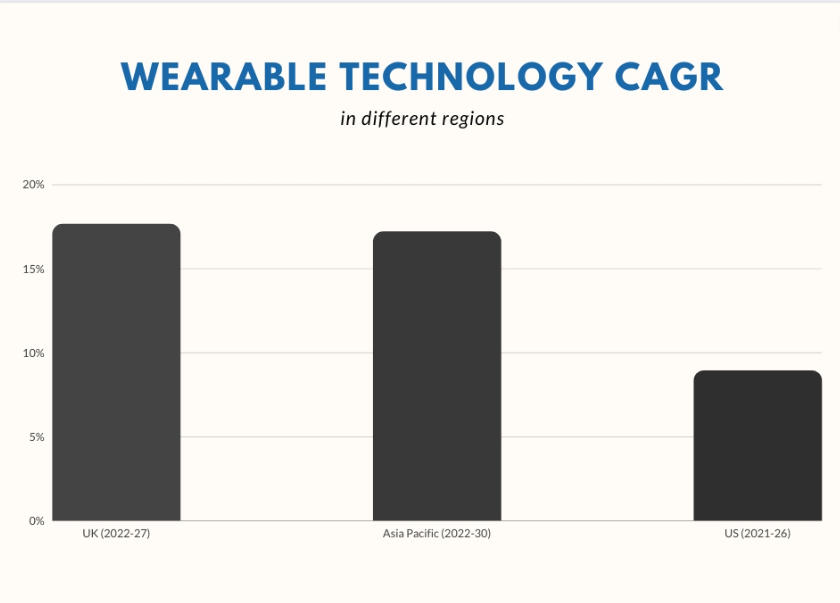
    Wearable technology growth rates in different regions
    Wearable technology growth rates in the US, UK, and Asia-Pacific

    Data Credits:

    There are some specific ways in which this new technology will have a positive impact on the economy:

    Improved worker productivity

    With wearable technology, workers are able to monitor their own energy levels. Due to that, they are able to work for longer periods of time without taking breaks. In addition, they can access data more quickly. This directly means they will be able to make better decisions and increase efficiency at work. And that’s a straight impact on the GDP.

    Reduced healthcare costs

    Another benefit of wearable technology is that it has the potential to reduce healthcare costs. As people are able to monitor their own health and fitness, they are less likely to get sick or injured. In addition, if people are able to manage their own chronic conditions. In simpler terms, consumers will require less medical care, and healthcare costs will simply reduce.

    Increased consumer spending

    Another way in which wearable technology will impact the economy is by increasing consumer spending. As people become more tech-conscious, they will be more likely to purchase new tech products that will help them stay healthy and fit. With increasing comfort with wearable technology, based on how advanced the tech gets, they will spend a fair portion of their salary in it.

    Improved quality of life

    Lastly, wearable technology has the potential to improve the quality of life for people all over the world. If people are able to stay healthy and fit, they will be able to enjoy their lives more. Additionally, if people are able to access information and data more quickly, they will be able to make better decisions. And all in all, improve their overall quality of life. Improved quality of life accounts for a positive impact on the economy.

    Conclusion

    Wearing different smart devices can affect how people interact with technology and their surroundings. As the wearable technology market is likely to continue its uptrend for decades, the concerns keep growing. With a small number of companies, controlling the majority of the market, it is important to consider privacy implications. A growing market is always good with growing competition, however, Apple (30.5%), Google (10.3%), and Xiaomi (9.3%) control over 50% of the market. And that can be a bit concerning for some. However, the biggest industries like the fashion industry’s future rely on wearable technology. As such, the saturation of the market may ease with time.

  • Mark Zuckerberg’s Net Worth Over the Years

    Mark Zuckerberg’s Net Worth Over the Years

    • Last Updated – April 27, 2023 – 07:14 AM GMT

    As of April 27, 2023, 38-year-old Mark Zuckerberg’s net worth is $77.1 billion. We all know that majority of that fortune is based on Zuckerberg’s company Meta. However, very few know that meta’s biological parent, Facebook, is blue because of Zuckerberg’s color blindness to red and green. The color blue attracts wealth, emitting the energy of calmness, stability, and peace. Also, blue is associated with trust, truth, and wisdom, which are the keys to communication. And his billion-dollar company Facebook is the perfect example of intelligent communication. But there are real ways mark Zuckerberg surged his wealth.

    What can he buy with his money? Well, ask what he can’t. With his fortune of $77.1 billion USD, Zuckerberg can buy more than 1000 Tons of Gold (1 Ton = 32000 ounces). It means he’s pretty much fine. However, last year was pretty devastating for Zuckergerg’s volatile net worth portfolio. In fact, at one point in 2022, his net worth had dropped by over $100 Billion from the peak of $142 Billion. He actually lost more money than the total then net worths of Ellison, Buffett, or Ambani. And guess what, this was not the first time Mark Zuckerberg’s net worth faced a dramatic change.

    The early life of Mark Zuckerberg: Pre-facebook, pre-fortune

    It would not be wrong to say that Mark Zuckerberg was born into a rich family. Mark’s father Edward Zuckerberg was rich enough to give all three of his kids these two options: Option 1 – Take this $70,000 and go to Harvard Law School. Option 2 – Open a McDonalds Store, I’ll give you $500,000 for that. The net worth of Zuckerberg’s parents at that time was around $2-5 Million.

    Mark Zuckerberg and facebook were used synonymously for a long period of time. But did facebook, the ultimate source of Zuckerberg’s net worth, just happen randomly? The truth is that Mark Zuckerberg knew his business from the very beginning. His interest was computer programming ever since he was a middle school kid. In high school, he built a computer program to communicate with his father’s dental office. At the same phase of life, he built a machine learning-powered music player, Synapse Media Player. By the time he started taking classes at Harvard, his college-mates called him a “programming prodigy”.

    Zuckerberg’s initial creations during his Harvard years included CourseMatch and Facemash. He and his roommates (co-creators) called Facemash’s one feature as “face books”. The concept evolved and led to the creation of Thefacebook (Thefacebook.com). This is how Mark’s trillion-dollar company was to get its name. And from here, the story of Zuckerberg’s wealth begins.

    2004 – Begins the company, begin the troubles

    On February 4, 2004, Zuckerberg launched “Thefacebook” from his Harvard dorm room. As one can easily guess, Zuckerberg did not have any net worth then. He had to ask for a $100,000 loan from his father to start the social media company. And on February 10, only 6 days later, some of his Harvard Seniors sued him asking for $75,000. Their claim was that Zuckerberg unethically asked them for their ideas and created Thefacebook. And that to compete with their platform, “ConnectU”.

    At that particular point in time, facebook had around 200,000 users. However, the amount the seniors asked was a big one for a College lad. Thankfully, he did not have to pay anything until 2009, when his company paid them $20 million in cash and 1.2 Million facebook shares. By then, Zuckerberg would already have had a billion dollars in his bank.

    Thefacebook was an exclusive network for Harvard students. But it did not take long for the popularity of the website to spread across other Ivy League schools. By December that year, Zuckerberg’s company reported 1 Million active users. Mark Zuckerberg’s net worth was estimated to be around $350,000 by the end of 2004. That year, large eggs, “Grade A”, cost $1.34 per dozen. The median household income in the US was 63,745 that year.

    2005 – Acquisition of facebook.com

    Mark Zuckerberg’s company bought the domain facebook.com for $200,000 in 2005. Angel investors such as Peter Thiel and Accel Partners invested $12.7 Million in Facebook. Zuckerberg and team used the money to expand the website to other colleges and then to high school students.

    As thefacebook (as it still was) had just hit 3 million users, Zuckerberg attended a 40-minute interview with Ray Hafner and Derek Franzese. The interview was pretty casual. But a key thing to note about that interview was Zuckerberg’s approach toward the company. At that time, his aims for thefacebook were narrow and limited to colleges. From this, one could observe that though the potential for the website was high, Mark Zuckerberg’s net worth was not. It was low because his ambitions were still limited.

    By the end of the year, thefacebook officially changed into facebook, and had 5.5 Million users. Zuckerberg’s net worth was around $800,000 in 2005. Large eggs cost $1.22 per dozen that year, and the median US household income was $64,427.

    2006 – The first million

    In 2006, Mark Zuckerberg’s net worth surpassed the million-dollar mark. On September 2006, his company introduced a news feed and mini-feed, allowing users to see updates from their friends. This was one of the most controversial features of facebook and caused a lot of uproars. However, Zuckerberg did not give in to the demands of the users and kept the feature. This decision turned out to be right as today, the news feed is one of the most used features of facebook.

    Mark Zuckerberg’s net worth in 2006 was approximately $18.4 million. As facebook expanded its user base to anyone above 13, the user base increased to 12 million. And as you increase those millions, your net worth per million increases. That’s exactly what happened with Zuckerberg, making a significant advance in his net worth in one year.

    In 2006, $18.4 million would be equivalent to 141 average household incomes at that time.

    2007 – A Billionaire overnight?

    The number of facebook users barely doubled in 2007. However, that year, Mark Zuckerberg’s net worth skyrocketed from millions to billion. He narrowed down the enormous difference between a million and a billion by becoming a millionaire one year and a billionaire the next. 2007 was the year businesses started eyeing facebook, and so did the giant investors. Facebook had more than 100,000 business pages by December 2007.

    The normal user base of 50 million was now just a number. And investors were throwing money at Mark Zuckerberg, with Microsoft alone investing $240 million for a 1.6% stake in the company.

    With a net worth of $1 Billion billion, in theory, Mark Zuckerberg became the world’s youngest billionaire. He was only 23 years old. In 2007, the median US household income was $65,801.

    Related Post: iPhone XR’s price over the years

    The Ups and Downs of Mark Zuckerberg’s Net Worth

    Mark Zuckerberg’s Net Worth

    After becoming a billionaire, Mark Zuckerberg’s wealth has been pretty volatile. The reasons behind Zuckerberg’s unstable net worth are many and have changed over time.

    2008

    In 2008, Zuckerberg had a fortune of $1.5 Billion. Small businesses were devasted during the 2008 market crash. It was a close call for Facebook which commenced just 4 years ago. Although the crash did not have an uncommon effect on Facebook, it caused Mark Zuckerberg’s net worth to drop to $600 Million by the end of 2008.

    2009/10

    Zuckerberg’s fortunes bounced back, and higher, as the world recovered from the crash. As of September 2009, Zuckerberg’s net worth was $2 Billion. By the end of 2010, it had increased to $6.9 billion. Private equity firm Elevation Partners’ investment in Facebook played a key role there.

    2011/12

    Zuckerberg’s net worth increased by 2.5 times in 2011 to $17.5 billion. And in 2012, his fortune took another higher low from 2008. After offering a public IPO, speculations were the new players. The traders started selling the stock with fears that the growth potential for Facebook was overvalued. The stock price tumbled a few days after the IPO offering. Following that, Zuckerberg’s net worth fell to $9.4 billion in May. The price corrected itself by the end of the year. Forbes estimated Zuckerberg’s net worth to be $17.5 billion in 2012.

    2013/14

    The stock prices started to increase in 2013 and so did Zuckerberg’s net worth. As of September 2013, his net worth was $24.5 billion. And, by the end of 2014, it had increased to $28.5 billion. The increase was due to strong growth in mobile advertising revenue.

    2015/16/17

    In 2015, Zuckerberg was worth $34.8 billion. Everything was looking fine, and his net worth was growing pretty steadily. In 2016, it increased to $44.6 billion. Despite Facebook’s fake news concerns, his net worth at the end of 2017 was $72 billion.

    2018

    In 2018’s Forbes 400 Top 10 list, Mark Zuckerberg was 4th, with a net worth of $61 billion. Zuckerberg’s net worth that year on July 25, was $86.5 billion. However, he ended that year with $52.5 billion. The primary cause for the decrease was the Cambridge Analytica scandal. It not only cost $5 billion for Facebook but also caused serious privacy concerns for his company.

    2019

    In 2019, he was back up to 6th place on the Forbes 400 list like nothing happened at all, with a net worth of $70 billion. Some say that the wall street rebound was the main reason for his increased net worth. But whatever the reason was, Mark Zuckerberg’s net worth got back on track in 2019.

    2020/21

    The pandemic significantly broadened the gap between the working-class and the rich, adding $5 trillion in the wealth of the billionaires. And Zuckerberg got his slice of the cake, a $35 billion surge in his net worth. He added $22 billion USD to his net worth in 2021. Mark Zuckerberg’s net worth reached its all-time-high of $142 billion in September 2021 and the next month, came “meta”. Zuckerberg changed Facebook’s name to meta. Meta showed some bad effects during those few months of 2021. Following that, Zuckerberg ended that year with $127 billion. However, the worse from Meta was yet to come.

    2022/23

    As of the last time this article was updated, which was April 27, 2023, Zuckerberg was worth $77.1 billion USD. Dumping money into the Metaverse looked bad, and the investors have spoken about it with their selloffs. S&P500 crashed since the very first trading week of 2022. Zuckerberg’s Meta had the worst time among all the falling stocks. However, Q1 2023 was a true lifeline for Zuckerberg’s ultimate net-worth source, Meta, with stocks rising by 20%.

    Bottom Line

    It’s true that there is no single billionaire in existence whose net worth was always stable. Last year, Jeff Bezos lost a whooping $85 billion, and Elon Musk lost $182 billion. But the 450% decline in Mark Zuckerberg’s net worth in a year was historical.

    November 30, 2022 Update to the article – Mark Zuckerberg’s Meta has been fined $276 Million in Europe for a data-scraping leak. Although this does not have a present impact on Zuckerberg’s net worth, it does show that his company is not immune to the consequences of improper data handling practices. Even after 4 years of the Cambridge Analytica scandal, privacy issues still exist in the company. The European Union has been taking a hard stance against companies that fail to properly protect user data. This fine is a reminder that technology companies need to take data privacy seriously. With consistent privacy concerns, Mark Zuckerberg’s net worth drop could continue further.

  • Artificial Intelligence (AI) Language, Evolution, and Reproduction

    Artificial Intelligence (AI) Language, Evolution, and Reproduction

    Introduction to languages in AI

    An Artificial Intelligence (AI) system can not exist without a language. Language is the medium through which the AI system communicates with the user. And it is also the medium through which the AI system communicates with itself. As similar as the two may sound, communicating with the user and communicating with itself are two different things. Communicating with itself or its surrounding AIs takes much more than that. Thinking languages is not possible yet; once it is, we’ll be able to call it general AI.

    Python

    Python is a high-level, interpreted, interactive and object-oriented scripting language. It uses English keywords frequently where as other languages use punctuation, and it has fewer syntactical constructions than other languages. Here is an example of AI language in python:

    ```
    #!/usr/bin/python
    
    # Filename: if.py
    
    number = 23
    guess = int(input('Enter an integer : '))
    
    if guess == number:
        print('Congratulations, you guessed it.') # New block starts here
        print("(but you do not win any prizes!)") # New block ends here
    elif guess < number:
        print('No, it is a little higher than that') # Another block
        # You can do whatever you want in a block ...
    else:
        print('No, it is a little lower than that')
        # you must have guess > number to reach here
    
    print('Done')
    # This last statement is always executed,
    # after the if statement is executed.
    ```

    The above code is an example of a simple AI language. It is a language AI uses to communicate with the user. It asks the user to guess a number, and the AI system responds to the user’s guess. Yes, humans have programmed the AI system to respond to the user’s guess. But still, the AI system can not respond to itself. You may say that advanced AI like Siri and DallE respond to themselves or other AI. No, they’re just responding to the user. The user may be in form of a human or an alien AI. The inability of an intelligent initiation is the limitation of AI.

    So, you may think that AI like this is not intelligent. You may be right. For one thing, we can not measure intelligence. And even if we could, and did it in the right way, we would not call such AI intelligent. It is just a program that responds to the user. It is not intelligent or even smart – is just a program.

    Popular Programming Languages

    Python is just one of the many languages that can be used to create AI. Other languages include Java, Python, C++, C#, Matlab, Lisp, Prolog, and many more. As this article is not all about programming languages, we are not digging deep into that particular sub-field. We explained Python with example. And you can easily find a brief explanation for all programming languages throughout the web. Here is a small introduction to the most popular ones:

    Java

    A close second to Python in terms of popularity, Java is another versatile language that’s widely used for AI development. Like Python, it has a large community and many helpful libraries. However, some programmers find Java more difficult to learn than Python. Nevertheless, it’s a powerful language that’s well-suited for large-scale AI projects.

    Lisp

    One of the oldest programming languages, Lisp has been around since the 1950s. It’s not as widely used as Python or Java, but it’s still a popular choice for AI development. In fact, many of the ideas in modern AI were first developed using Lisp. If you’re looking for a challenge, learning Lisp is a great way to improve your programming skills.

    Prolog

    Another old language, Prolog dates back to the 1970s. It’s not as widely used as other languages on this list, but it’s still worth learning if you’re interested in AI development. Prolog is particularly well suited for projects involving search or planning. Like Lisp, Prolog is also known for its flexibility. Some popular applications of Prolog include theorem proving, and knowledge representation.

    Haskell

    Haskell is a relatively new language that’s gaining popularity among AI programmers. The emerging language is a good choice for projects involving machine learning or artificial intelligence research.

    Matlab

    Matlab is a popular language for scientific computing. Useful for AI projects that involve mathematical operations. Matlab is good for prototyping or for working with small data sets. Including some of the more specialized languages on this list, Matlab is a versatile tool that’s worth learning.

    R

    R is another language that’s popular among scientists and statisticians. Like Matlab, it’s often useful for AI projects that involve mathematical operations. R is also a good language for data visualization. In addition, many machine learning libraries are available for R. If your necessity is to analyze data, R could be the best language for your project.

    C++

    C++ is a powerful language that’s often used for low-level systems programming. It’s not as popular as Python or Java for AI development, but it has its advantages. For one thing, it’s much faster than either of those languages. Additionally, it offers more control over memory management, which can be important for applications like video processing or real-time control systems.

    History of Language Usage in AI

    AI language in an old computer

    So, how did we get here? How did we get to the point where we can create AI systems that can communicate with us? Well, it all started with the first AI system. The first AI system was created in 1956 by John McCarthy. They called it “the Logic Theorist”. The system was able to solve problems in symbolic logic, meaning it could solve problems they get in a written language. In fact, the system was able to solve problems in a language that the system itself created. The language was called “Information Processing Language” (IPL).

    However, the real breakthrough came in 1966 when Joseph Weizenbaum created “ELIZA”. ELIZA was a computer program that could hold a conversation with a human. It did this by taking the human’s input and rephrasing it as a question. This made it seem like the human’s sayings actually interested and affected ELIZA.

    Since then, there have been many different AI systems that can communicate in human language. In fact, there are now AI systems that can beat humans at communication tasks. For example, Google’s “Smart Reply” system can generate responses to emails. It does this by looking at the email and understanding what it is about. Then, it generates a response that is relevant to the email.

    Methodologies for Teaching Languages to AI

    Methodologies of teaching language to AI mean teaching it how to read, write, listen, and speak in a language.

    Use real-world examples

    The end goal of AI is to become human-like. What’s better than using real-world examples to teach language to AI? Real-world examples like: If I am going to the store, I will buy milk. If I am going to store no. 2, I will buy chicken.

    if (store == 1) {
      buy(milk);
    } else if (store == 2) {
      buy(chicken);
    }

    Use Media

    AI is a visual learner. It is important to use a variety of media to introduce language to AI. Yes, similar to what DALL E does with images.

    ```
    if (media == "text") {
      read(text);
    } else if (media == "image") {
      read(image);
    } else if (media == "video") {
      read(video);
    } else if (media == "audio") {
      read(audio);
    } else if (media == "3D") {
      read(3D);
    }
    ```

    Use different methods to reinforce language learning for AI

    Reinforcement learning is a machine learning technique that involves training an AI agent to make a sequence of decisions.

    Reward/Penalty

    The agent receives rewards by performing correctly and penalties for performing incorrectly. AI is a rewarded learner. It is important to reward AI for using language correctly.

    ```
    if (result == "correct") {
      reward(AI);
    } else if (result == "incorrect") {
      penalty(AI);
    }
    ```
    Encourage Creativity

    Encourage AI to use language in creative ways – AI is a creative learner. It is important to encourage AI to use language in creative ways. For example:

    if (creative == "yes") {
      encourage(AI);
    } else if (creative == "no") {
      discourage(AI);
    }
    Make Learning Enjoyable for AI

    A human child, when learning a language, is motivated by the desire to communicate with others. AI is a human child too, isn’t it? If it’s enjoyable, AI is more likely learn it.

    ```
    if (enjoy == "yes") {
      enjoy(AI);
    } else if (enjoy == "no") {
      not_enjoy(AI);
    }
    ```

    Here, we may measure AI enjoyment in form of something like a smiley face. But how do we know if the AI is enjoying it? And is it possible to teach AI to enjoy language learning? Enjoyment means different things to different people and AI. Like, for example, if you are a human, you might enjoy learning a language by watching a video. But if you are an AI, you might enjoy learning a language by reading a book. More enjoyment occurs when the AI is learning along with a good human mentor.

    Theoretical approaches to AI language

    DALL E 2 has a different vocabulary and sentence structure than English, but can be translated. DALLE 2 calls birds “Apoploe vesrreaitais“. Does that mean is has a different AI language, no! It is just that DALLE 2 is not as good at language as English. In fact, AI language is a real thing with different approaches to it.

    Symbolic approach

    This approach to AI language is based on symbols and their relations to one another. The idea is that by understanding the relationships between symbols, we can understand the meaning of a sentence. This approach is also called the “semantic approach” because it relies on the meanings of words.

    ```
     (defrule bird-is-a-animal
     (bird ?x)
     =>
     (assert (animal ?x))
     )
     ```

    Statistical Approach

    This approach to AI language uses probability to determine the meaning of a sentence. It is also called the “probabilistic approach”. For each event, it calculates the odds of it happening. For example, if you say “I am going to the store”, the AI will calculate the odds of you going to the store.

     P(bird|animal) = P(bird and animal)/P(animal) = 0.8/0.9 = 0.8889

    Neural Network Approach

    This approach to AI language uses neural networks to determine the meaning of a sentence. Neural networks are a series of algorithms we create by modeling after the human brain. We/AI can use them to recognize patterns, classify data, and make predictions.

      import tensorflow as tf
      from tensorflow import keras
    
      model = keras.Sequential([keras.layers.Dense(units=1, input_shape=[1])])
    
      model.compile(optimizer='sgd', loss='mean_squared_error')
    
      xs = np.array([-1.0, 0.0, 1.0, 2.0, 3.0, 4.0], dtype=float)
      ys = np.array([-3.0, -1.0, 1.0, 3.0, 5.0, 7.0], dtype=float)
    
      model.fit(xs, ys, epochs=500)
    
      print(model.predict([10])) #output: [[18]]

    The Language Approach Present-Day AI Systems Use

    This approach to AI language uses a combination of the above approaches. It is also called the “hybrid approach”. For example, it can use the symbolic approach to determine the meaning of a sentence and then use the statistical approach to determine the odds of it happening.

     ```
     import nltk
     from nltk.stem.lancaster import LancasterStemmer
     stemmer = LancasterStemmer()
     import numpy
     import tflearn
     import tensorflow
     import random
     import json
    
     with open("intents.json") as file:
         data = json.load(file)
    
     try:
         with open("data.pickle", "rb") as f:
             words, labels, training, output = pickle.load(f)
     except:
         words = []
         labels = []
         docs_x = []
         docs_y = []
    
         for intent in data["intents"]:
             for pattern in intent["patterns"]:
                 wrds = nltk.word_tokenize(pattern) #tokenize the words in the sentence (split them up) and put them into a list called wrds (words)  #nltk is a library that helps us work with natural language processing (NLP)
                 words.extend(wrds) #add the words in wrds to the list called words
                 docs_x.append(wrds) #add the words in wrds to the list called docs_x
                 docs_y.append(intent["tag"]) #add the intent tag to the list called docs_y
    
             if intent["tag"] not in labels:
                 labels.append(intent["tag"])
    
         words = [stemmer.stem(w.lower()) for w in words if w != "?"] #stemming is a process where we take a word and reduce it to its root form (ex: "go" becomes "goe")
         words = sorted(list(set(words))) #remove duplicates from the list of words and sort them alphabetically
    
         labels = sorted(labels)
    
         training = []
         output = []
    
         out_empty = [0 for _ in range(len(labels))]
    
         for x, doc in enumerate(docs_x):
             bag = []
    
             wrds = [stemmer.stem(w.lower()) for w in doc]
    
             for w in words:
                 if w in wrds:
                     bag.append(1)
                 else:
                     bag.append(0)
    
             output_row = out_empty[:]
             output_row[labels.index(docs_y[x])] = 1
    
             training.append(bag)
             output.append(output_row)
    
    
         training = numpy.array(training)
         output = numpy.array(output)
    
         with open("data.pickle", "wb") as f:
             pickle.dump((words, labels, training, output), f)
    
     tensorflow.reset_default_graph()
    
     net = tflearn.input_data(shape=[None, len(training[0])])
     net = tflearn.fully_connected(net, 8)
     net = tflearn.fully_connected(net, 8)
     net = tflearn.fully_connected(net, len(output[0]), activation="softmax")
     net = tflearn.regression(net)
    
     model = tflearn.DNN(net)
    
     try:
         model.load("model.tflearn")
     except:
         model.fit(training, output, n_epoch=1000, batch_size=8, show_metric=True) #n_epoch is the number of times the data is trained on (the more times it is trained on the more accurate it will be) #batch size is the number of samples that will be propagated through the network (the higher the batch size the faster it will train but it may not be as accurate) #show metric shows us how well our model is doing (it shows us how many epochs we have done and what our loss is at that point in time)
         model.save("model.tflearn")
    
     def bag_of_words(s, words): #s is a sentence and words are all of the words in our vocabulary (all of the words in our intents file)
         bag = [0 for _ in range(len(words))] #create a list called bag with 0's for each word in our vocabulary
    
         s_words = nltk.word_tokenize(s) #tokenize the sentence s and put it into a list called s_words (split up each word in s and put them into a list called s_words)
         s_words = [stemmer.stem(word.lower()) for word in s_words] #stem each word in s and put them into a list called s_words
    
         for se in s_words: #for each word in s do this...
             for i, w in enumerate(words): #for each word in our vocabulary do this... (i is an index number and w is a word from our vocabulary) 
                 if w == se: #if w equals se then... 
                     bag[i] = 1 #set that index number to 1 (ex: if we have 3 words then we would have 3 index numbers so if we had "hello" as one of our words then we would set index number 2 to 1 because "hello" would be at index number 2 since it's the third word on our list of words from our vocabulary [0 1 2])
    
         return numpy.array(bag) #return an array with all of those numbers from bag inside of it (ex: [0 0 1 0 0 0 0 0 0 0] means that only one word was found which was at index number 2 which means that only "hello" was found out of all of those words from our vocabulary ["hi", "hello", "how are you"] so if we had said "hi hello" then we would get [1 1 1 0 0 0 0 0 0 0])
    
     def chat(): 
         print("Start talking with the bot! (type quit to stop!)") 
         while True: 
             inp = input("You: ") 
             if inp == "quit": 
                 break 
    
             results = model.predict([bag_of-words(inp, words)] )[0] 
             results_index = numpy.argmax(results) 
             tag = labels[results_index] 
    
             if results[results_index] > 0.7: 
                 for tg in data["intents"]: 
                     if tg['tag'] == tag: 
                         responses = tg['responses'] 
    
                 print(random.choice(responses)) 
             else: 
                 print("I didn't get that, try again.")
    
     chat()
    
     ```

    The present-day ANN (Artificial Neural Network) systems use the hybrid approach, a mix of all approaches, including probabilistic. For example, a voice assistant:

     ```
    import speech_recognition as sr
     
     r = sr.Recognizer()
     with sr.Microphone() as source:
         print("Speak Anything :")
         audio = r.listen(source)
         try:
             text = r.recognize_google(audio)
             print("You said : {}".format(text))
         except:
             print("Sorry could not recognize what you said")
    
     ```

    Here is an example of a voice assistant using a symbolic, probabilistic neural network approach:

     ```
     import random
     
     def flip_coin():
         if random.random() > 0.5:
             return "heads"
         else:
             return "tails"
     
     print("Welcome to the coin flip simulator!")
     print("I'm thinking of a coin...")
     print("It's a fair coin.") #symbolic approach (fair coin) and probabilistic approach (P(Coin is fair)) included here! 
    
     print("Flipping...")
    
     if flip_coin() == "heads": #neural network approach included here! 
         print("It's heads!")
    
     else:
    
         print("It's tails!")
    
     ```

    Evolution of AI language

    Evolution of AI languages

    In this section, we are not talking about evolution in the field of AI language. Rather, we are discussing the evolution of language used by AI systems. Like anything, AI languages can evolve with time. There are different types of evolution that can happen. The first type is called diachronic change. This is when a language changes over time. The second is called synchronic change; when a language changes across different groups of speakers.

    Diachronic change in AI language

    One type of evolution that can happen to AI languages is diachronic change. This is when a language changes over time. Just like how English has changed over the years, so has the language used by AI systems. For example, early versions of ELIZA used very simple grammar. However, newer versions of ELIZA use more sophisticated grammar. This is an example of diachronic change. Future versions of AI languages will continue to evolve as well.

    Synchronic change in AI language

    Synchronic change is another type of evolution that can happen to AI languages. For example, there may be different dialects. Just like how there are different dialects of English, there could be different dialects of AI languages. One group of AI systems may use a certain word to mean one thing, while another group may use the same word to mean something else. Some common ways that languages change synchronically are through Creole formation, pidginization, and language death.

    Evoluationary capabilities of AI language are not limited to language only. They can use language to evolve other things as well. For example, they can use language to increase creativity, or develop a form of intelligence, their own form. We may not be able to understand it, but they do.

    AI Reproducing Through Language

    AI reproduces language. Yes, AI is already able to reproduce. In a literal sense, AI is able to reproduce language. We often take this for granted, but it’s actually a pretty amazing feat. The ability of AI to reproduce language is important for many reasons. Reproducing in form of language means a type of evolution. It’s the ability of AI to take what it knows and change it slightly to create something new. This is how AI learns and how it gets better over time.

    We can see this type of reproduction in the way AI creates new sentences. For example, Google’s Translate algorithm creates new sentences by looking at billions of sentences that have already been translated by humans. It then looks for patterns and creates its own rules for how to translate. This process is constantly evolving, which is why Google’s Translate gets better over time. We don’t even need to mention AI generators.

    Writing Better Codes With Each Passing AI Generation

    AI will create AAI

    Self-improving AI codes are driving the industry to new levels of productivity. The first aim of writing better codes is to make it easier for coders to use these languages to create sophisticated algorithms. The second is to make AI easily understand that. The end goal is to give it the ability to create its own code and get better with time.

    What does better mean?

    Writing better code with each passing generation of AI is one thing. But what does “better” mean? To AI, “better” is something we program it to think is better. Here is an example in code where the definiton of better is being more round.

    So, we must first program the AI to think that rounder is better. Here is an example of that in code:

    if (shape == "round") {
      return true;
    } else {
      return false;
    }

    Then, we must program the AI to think that rounder is better than square. For that, we can use the following code:

    if (shape == "round") {
      return true;
    } else if (shape == "square") {
      return false;
    } else {
      return false;
    }

    And to analyze the degree of roundness of a shape, we can use the following code: We are using “round360” to represent a perfect circle. For example “round1” matches the least to a circle. And the answer can not be true or false only. Rather, more like this:

    ```
    if (shape == "round360") {
      return perfect;
    } else if (shape == "round309") {
      return very good;
    } else if (shape == "round288") {
      return good;
    } else if (shape == "round257") {
      return ok;
    } else if (shape == "round186") {
      return not so good;
    } else if (shape == "round155") {
      return bad;
    } else if (shape == "round94") {
      return very bad;
    } else if (shape == "round63") {
      return terrible;
    } else if (shape == "round22") {
      return horrible;
    }
    ...
    Now, who is the AI returning the answer to?

    The answer is the AI itself. The AI is returning the answer to itself. This is how the AI learns. It’s not just writing code, it’s also analyzing it. It’s understanding what better means, what round means, and what shape means. Within this process, the AI also understood what perfect, very good, good, ok, not so good, and bad means.

    Then, AI needs to understand how to get better

    def get_better(self):
        self.score = self.score + 1

    Understand how to get better over time

    def get_better_over_time(self):
        self.score = self.score + 1 + time() % 10

    Get Better with Time and Space

      def get_better_over_time(self):
          self.score = self.score + 1 + time() % 10 + space() % 10

    Data is Everything

    The main obstacle is the data. Or at least, it’s a tough door to break, no matter how significant the other end is. AI can get better and better, but not till infinity. It gets better till the data it has gotten is exhausted. This is why it’s important to have a lot of data. The more data, the better the AI can reproduce. But there is a solution. AI has to reproduce data. Yes, just like AI image generators can reproduce a new image, and AI language generators can reproduce a new sentence. So, there is no limit to data as well, or is there? This is a controversial question. For one thing, the machine can not do more than the data we can feed. But if we give it “x” and “y” data, it can reproduce “z” data, or maybe not. There are infinite numbers between 1 and 10, and the same between 1 and 1000. But the infinity between 1 and 10 can not surpass the limitation and explore the infinite between 11 and 20. So, the machine can do more than the data we feed it. But it’s not infinite – it’s limited by its own infinity.

    Creating Better Codes and Superintelligence

    The ability to write better code languages with each passing AI generation stops only at infinity. If only creating better codes would mean more intelligence, superintelligent AI would be just around the corner. There would be simply no limit to how much better AI could get at creating codes. However, the ability to write better codes solely does not mean a surge in intelligence. Any AI can be made to write a code that is beyond its current level of intelligence. But what if the AI is not just writing a code, but also trying to understand it? For that, we need a model of how the AI could understand the code. This is where language comes in.

    Reproduction in Natural Language

    If we want AI to understand the code, it must first be able to reproduce the code in a language. The act of reproduction is not just about making a copy, but also about understanding the original. In order to understand the original, the AI must be able to map the symbols in the code to some meaning. This is where natural language processing (NLP) comes in. It is a subfield of AI that deals with understanding and reproducing human language. NLP is what allows AI to take a code and turn it into something that it can understand. But what can we do to turn the code into something that matters? Language, solely, is just not enough.

    Connecting AI language to Real Objects

    To deploy the technology in real life, or at least in form of a virtual assistant, it must also be able to explain its findings to the user. Also, it must have an ability to give a non-language output like in form of a 3D-printed output, a graphical output or a sound output. To bring the advanced AI evolution into real life, it is important to have the AI language more understandable, flexible and adaptive to different user needs. And the language must be connected to some real life object, in form of which evolution of AI language evolves real life objects alongside.

    Bottom Line

    AI has made great progress in recent years, and can already reproduce complex languages like English or Java. Evolution in codes can actually lead to some very interesting changes in the real world. As we see, AI is already capable of reproducing language and codes, and it is only a matter of time before it can reproduce itself. Speaking in its own language is the next step for AI. But it’s not even a concern for us. What concerns us is how AI will use this ability to further its goals, and what these goals might be.

  • Best Background Removers for Photo and Video

    Best Background Removers for Photo and Video

    Removing background was difficult to do manually. You had to use a lot of tools and techniques for that. And even then, some parts of the background would remain. In worse cases, the actual image or video’s tiny portion would be cut too. So, using professional background removal services like Flatworld Solutions was a must in the past.

    But in 2022, the job of background removal has become easier. A single click is all it needs to remove a background. Furthermore, you can also add a new background to the image or video. But even now, not all background-removing softwares are equally good. For example, some of them are good for removing background from images, but you can’t add a new background. Some image background removers are unable to remove video backgrounds and vice versa. Furthermore, some are good for removing background from a specific type of image or video.

    In this article, we will select the best background removers for photo and video. But that is not really enough. We’ll go into as much detail as we can, because we want you to make an informed decision. And before diving into that, we’ll discuss the basis and basics of background removal.

    What does a Background Remover Do?

    The job of background removers is to remove the background of an object. The object may be in form of image, video, Gif, and sound recording. However, most of the times, the object is in form of image or video. These software use AI to remove the background, which works like this:

    Step 1 – Detects the object: In order to remove the background, the software first needs to detect the object. For this purpose, it uses a technique called edge detection. This technique finds the boundaries of an object.

    Step 2 – Creates a mask: Once the software has found the boundaries of the object, it creates a mask. For complex objects, the software may create multiple masks. Like, a video of a person walking may have a different mask for the person’s body, head, and hair. In a video, motion tracking keeps the mask in place as the object moves.

    Step 3 – Removes the background: Once the mask is in place, the software can remove the background. First part involves cutting out the object from the background or by blurring the background. Then, it can create the effect of removing the background. In most of the cases, the software uses a combination of both these techniques.

    Can I Remove Background Myself?

    Yes, the modern background-removing softwares allow you to remove background yourself. However, using advanced tools like Photoshop, you can remove background more professionally. To use technical features of Photoshop, you need to have a good knowledge of the software. Normal softwares do the job pretty good for a fair range of usage. Big YouTubers, filmmakers, and photographers are the ones who use advanced tools. Professional meme creators, and those who need to remove background for daily usage, use normal software. Removing the background of an image or video is a good way to make it more professional.

    Things to Consider Before/While Removing Backgrounds

    • A good practice while using a video or image background remover is to always keep a backup of the original file. This is just in case something goes wrong with the process or you accidentally delete something you need.
    • Make sure the file you are removing the background from is in an editable format.
    • If you are removing a background from an image, be sure that the image is high quality. The last thing you want is a fuzzy or pixilated image after you have removed the background.
    • Different background removal tools are good for different people. Don’t overpay for the included features that you don’t need.
    • Be patient. Depending on the size and complexity of the file you are working with, removing a background can take some time.
    • Have fun! Removing backgrounds is always a creative process, so enjoy it.

    Here are the best background removers for photo and video. We have selected them based on Ease of use, Output quality, features, support, price, and few characteristics.

    36Pix – Bulk Image Background Removal

    • Best for bulk background removal
    • Reputable company, in business for 20 years
    • Manual removal/hire professionals
    36Pix

    The 36pix background remover platform is the world’s best professional portrait background removal software. The company has been improving algorithms for 20 years to push the technology even further. Today, the software is used by over 17 million people globally. A simple click of a button to remove green or blue screen from photos is all you need to perform. 36Pix is able to keep up with expanding customer base thanks to their knockout algorithm and fast turnaround time. Their ChromaStar algorithm preserves fine detail and carries transparencies to the new background. The company offers a full-service background removal option for high-volume photography within 2 business days. In fact. many professional photographers, including Jim Kelm, Harri, Marco Photo Service, Barksdale, and BNL Enterprises use the software. So, you’re just going with the trend.

    Adobe Express – Free image Background Remover

    • Free, no credit card required
    • Easiest image background removal service
    • Manual removal
    adobe express manual background remover api

    The Adobe Express Background Remover is the most popular tool for creating transparent backgrounds. Other than that, you can easily refine subject edges, or add new backdrops with Adobe. It’s free to use, and there’s no credit card required. The app is easy to use – simply upload your photo and the app will remove the background in an instant. You can then download the new image as a PNG file with a transparent background. With a transparent background, you can put your subject in a completely new environment. The app also has a paid library of over 100,000 templates and assets to start from. For $9.99/mo you can turn your edited image into anything you can imagine.

    Adobe Stock – Image and Video Background Removal for Pro

    • Best for professional object background removers and freelancers
    • Expensive
    • Manual background removal/professional help
    adobe stock for image and video background removal

    Adobe Stock is an online library of videos, images, music, and motion graphics. With one simple plan, you can mix and match up to 25 standard assets or 3 HD videos. Standard assets include millions of royalty-free images, illustrations, music tracks, motion graphics, design templates, and more. You can cancel risk-free before your free trial ends. After your trial ends, it’s US$49.99/mo on annual plan. They make it easy and affordable to find the perfect asset for your next creative project. Apart from removing photo and video backgrounds, it offers a wide range of features including color correction and image cropping. Any professional or amateur photographer or videographer can find what they need on Adobe Stock. Annually, $600 may seem like a lot of money. You can try it for free 30 days before deciding if it’s worth it.

    Canva – All-in-One Graphics Design and Object Removal

    • Best for most people
    • Affordable
    • Good price-to-value ratio
    • 90+ million stock images and videos from gettyimages included
    • Manual background removal
    canva video background removal

    Canva is the best option for most people when it comes to graphics designing and background removal. For $99 an year, Canva Pro offers a lot of features. They have always been providing an image background removal service. Recently, they have released a beta version of video background removal. Canva is a great tool for beginners. Many professionals, who have been using Canva from the beginning, still use it. Affordability is not the only factor here. With a user base in more than 190 countries, the platform had 75 Million users by the end of 2021. After the inclusion of newer services including background removal this year, the number of users has increased to 100 million. If you don’t use Canva, you are either a hardcore professional, or just not into graphics designing.

    Fotor – Free and Emerging Image Background Remover

    • Emerging software with a lot of features available
    • Free of cost
    • Unstable Reviews on Different Platforms
    • Manual background removal

    Fotor offers a wide range of features for users to manipulate their photos including a user-friendly AI background remover. The software is available on windows and mac. Fotor’s HDR feature is also available on many versions including mobile, which is a great addition. Features like 1-tap enhance, RAW file processing, and the ability to handle complex edges make Fotor a great choice for new YouTubers, to create a luring thumbnail by removing and re-editing backgrounds for free. Fotor’s theme looks too similar to Canva, so some users might get confused between the two. The reviews for fotor are inconsistent on different platforms. They have a rating of 4.5 on techradar, 4.2 on getapp, 4.2 on capterra, and 1.4 on trustpilot. While it may sound alarming for some, given that Fotor is a free software, it’s still worth trying out. After all, you don’t have anything to lose.

    Kaleido.ai – Has Specified Platforms for Photo and Video Removal

    kaleido.ai is continuously developing new concepts to create visual AI solutions that transform the way you work. They have both photo and video editing and background removal platforms. The websites are separate for both the services and both are service-specific.

    Remove.bg

    • Specified platform for image background removal
    • Automatic background removal
    • Sharpest
    • Good for freelancers

    kaleido.ai’s remove.bg has the sharpest background removal tool among all the competitors. It means that you can get a high-quality cutout in just a few seconds. Also, with remove.bg, no important part of your image gets cut, and no unnecessary background residuals are left. A specific platform for background removal, remove.bg is perfect for photographers, marketing, eCommerce, media, and more. Their pricing is also affordable, as their subscription plan starts at $0.12 per image with 40 monthly credits. For one-time background removals, if you don’t want to pay Canva the whole $99, you can choose it straightaway. This bg-removal platform from kaleido.ai is good for freelancers who are specified in the background removal field.

    Unscreen.com

    • Specified platform for video background removal
    • Automatic background removal

    This is a great tool for anyone who wants to remove video backgrounds without a lot of hassle. The process is completely automated, so you don’t have to worry about a thing. Just shoot your footage and upload it, and Unscreen will take care of the rest. The result videos results are high-quality and look great. You can use the platform for personal or commercial use. There is a subscription plan that starts at $1.98 per video minute. Again, as it is a specified platform for video background removal. Unscreen is good for one-time use, and for people unfamiliar with video editing. However, if you are a pro, you may want to choose adobe stock to remove background and re-edit the video.

    Deelvin – Removes Photo Backgrounds to Create Videos

    • Convert images into videos by removing background
    • Serving in 214 countries
    • Manual + automatic background removal

    Deelvin’s image and video background removers have changed over 21 million backgrounds. The AI does a great job of automatically removing backgrounds, and the free version is sufficient for most users. There are some limitations to the software, such as the need for a clear silhouette and no hectic movement. Reviews from users are mostly positive, with people citing the quick and easy removal of backgrounds. If that was not enough for you, Deelvin can also create videos out of photos whose backgrounds were removed. You heard it right. It’s a great plus for anyone who wants to create marketing videos or TikToks. While Canva can do that to an extent, you have to remove the background and replace manually with video. Deelvin can do all of that for you with just a few clicks, and with better quality.

    Also Read: Eye-lens software to give you a “super-human” vision?

    Bottom Line

    Removing background may be for some, the first step in starting their creative journey. For others, it’s a way to take their creativity to the next level. It’s all about creativity, though. You may also be using it for a research project or for your next social media post. But you still need to be creative with your design. As some background removers are free and easy to use, there’s really no excuse not to try one out. Some have both image and video background removal services, and some have further features for post-background-removal. Don’t get too serious or bogged down with the details, just try one out and see what you can create.

  • Why Militarized Robots Can’t Fight Wars

    Why Militarized Robots Can’t Fight Wars

    Militarized robots are not able to fight the war for us. They cannot replace human soldiers. War is a complex and chaotic undertaking. In fact, the conditions of war are ever-changing. It is an intensely human endeavor.

    Here are the main reasons why militarized robots can’t fight wars to replace humans:

    Split-Second Decisions

    Militarized robots cannot make the same split-second decisions as humans. They are not able to process the same amount of information in the same way humans can. They cannot adapt to ever-changing conditions. Furthermore, current robots lack the ability to make ethical decisions in the first place.

    Lack of Empathy in Robots

    Robots also lack empathy. If we militarize robots, they cannot understand the human costs of war. Only human soldiers can feel the sense of duty and honor. Robot soldiers don’t even experience fear, which can be a useful motivator in battle. So, if robots are to make life-and-death decisions, they must be able to understand things. Robot soldiers, to be called so, must empathize with the humans they are fighting for.

    Lack of Emotional Involvement

    If militarized robots fight against each other and kill themselves, war would mean nothing. Sorrow, anger, and love are just a few of the emotions that give war its meaning. If we take these away, then war would be little more than a game. There is a difference between playing a game and actually fighting for your life. The limit of robot involvement in military is providing logistics and support. We can not use robots as actual combatants because it would not remain a war anymore.

    Expensive

    An average industrial robot, simple one, costs about $65,000. Leave alone militarized robots, which will cost millions if we invent it right now. For one thing, war is expensive. If we use robots in war, it will only increase the cost. So, who is going to start that? That’s the problem. Robot soldiers can not turn mainstream until some government is willing to foot a very large bill.

    High-Maintenance

    Not only they are expensive, they are also high-maintenance. They require regular services and repairs. Militarized robots will need very good maintenance team to keep them operational. This will add to the cost and time.

    Robots do not feel pain

    One of the main reasons why we have soldiers is because they can feel pain. They can understand the consequences of their actions. They know that if they get hurt, they will feel pain. This is a very important motivator. Robots, even militarized ones, do not feel any real pain at all. Also, they do not understand consequences. This makes them very dangerous.

    Lack of dependability

    Robots are not dependable. They break down quite often. They are not as reliable as humans. This is a very big problem. If we use militarized robots in war, we need to be sure that they will work when we need them. If we don’t, they will make us work for them.

    Bottom Line

    Even we keep everything aside, militarized robots fighting wars is not a feasible idea. Because it’s just not worth it for those who want wars. Never has been, never will be. Humans are required to create blood, sweat, and tears for there to be a victory. Machines can not fulfill that.

  • Read This Before Using Chrome VPN Extensions

    Read This Before Using Chrome VPN Extensions

    More than 80% of Chrome VPN extensions have a free version available. You have to understand why they are free. It is not because the developers are generous. Most of them simply want to sell your data. That is right! Nearly 50 percent of personal VPN users have free VPNs. And that’s a lot of data to sell.

    If you use a free VPN extension for Google Chrome, your data is not yours anymore. It belongs to the developers who can sell it to the highest bidder. There are many other risks that come with using a free Chrome VPN extension. Many of these extensions are developed by companies based in countries with weak data protection laws. This means that your data is not safe from government surveillance and other 3rd parties. While some reputable VPN services, too, are based on those countries, they at least have their reputation as stakes. But not these free Chrome VPN extensions.

    In addition, these companies can force you to install malware and other unwanted software. You install these VPN extensions primarily because you need them. But what pushes you to install them is their number of installations.

    Most installed Chrome VPN extensions

    You may think that if millions of users are using it, why not! But do millions of users actually install chrome VPN extensions? Well, when it comes to browser extensions, one single user installs an average of 3.3 extensions. In the same browser? Yes, as they create different profiles for work, personal and entertainment use. So, the number of people using a particular extension is not necessarily relevant.

    What is relevant, though, is that the most installed Chrome VPN extensions are not necessarily good. This is not just our opinion. It is the opinion of many experts in the field, who have tested and reviewed them, including Google themselves. Also, the “most installed chrome VPN extensions” were not installed as many times as the google webstore shows. If there are 3 Million + downloads, maybe it’s something like 200,000+ installations, 50,000+ total users, and 30,000+ ratings. The active users at one time (unit day), is below 500. Leave alone bot downloads.

    Yes, the actual number of active users is very less, as people use these extensions for one-time-usage. They may use it for purposes like generating YouTube views. So, these people are not active users.

    Related Post: Avoid Taking Online Typing Speed Tests

    To What Extent Can These Extensions Steal Your Data?

    Sky is the limit. From your browsing history to your login credentials (if the site has no SSL), there is a lot that these chrome extensions can access. The best way to protect your data is to not use these extensions at all. And not only that, they can also insert ads into the sites that you visit, and even inject malicious JavaScript code. These extensions also cause frequent browser crashes, and can make your browser unusable. So, if you absolutely need to use a VPN extension for Chrome, be sure to do your research about chrome users, online privacy, and data breaches from the past.

    In fact, three popular VPN services disclosed data of 21 Million VPN users. This data included the email addresses and hashed passwords of numerous VPN users. The news was released on on May 7th, 2022. However, no one knows each day how many people’s data are being disclosed without them knowing. And that scares. Specially, when people are using these services to protect their data.

    And that is the reason why we have to be careful of what we put on the internet, because once it’s out there, it’s hard to control.
    Which is the Best VPN Extension for Chrome?

    So, if you are looking for a good VPN extension for Chrome, our advice is to go with a well-known and reputable VPN provider. And make sure that the browser extension is of that provider, not some clone. Yes, it may cost you a few dollars more. But it will be worth it, as you will get a good product that actually works. We recommend NordVPN. And that’s after testing 30+ quality VPN providers. It is a fast and affordable VPN service with a strict no-logs policy.
    As there is a saying, “If the product is free, you are the product”. Therefore, use your free Chrome VPN extension with a caution. Because in most of the cases, these free VPN providers sell the data you wanted to protect.

  • Tesla Phone: Features, Automation, Launch Date

    Tesla Phone: Features, Automation, Launch Date

    Phones have become a need. And Tesla is related to phones in only one way; it fulfills people’s needs making cars. If only it stopped right there.

    Tesla was in the making of a humanoid robot. Yes, they did! and are still improving it.

    Now, keep on guessing. What else?

    Tesla; is it going to release its own phone? Yes, a Pi Phone, to be precise with the assumptions. Musk and the team haven’t openly stated that. But sources exist, and are strong.

    Tesla Phone

    Tesla started in 2003 after General Motors recalled all of its EV1 electric cars. The opportunity they saw was the higher fuel efficiency of battery-electric cars. Released the first car, the Electric Roadster, in 2008. Then came solar roofs, trucks, homes, and even a humanoid robot.

    But we DO NOT know Tesla for going out of its range bubble. You see, even Tesla’s humanoid robot uses Tesla car’s parts and functions to operate.


    So, within the range of what Tesla already offers, what can we really expect from Tesla Phone?

    Common and Special Features

    smartphone features

    The Tesla Pi Phone could have 120 Hz refresh rate. A normal 6.7-inch OLED display, 1600 nits peak brightness, and a pixel density of 458 PPI. The phone might sport an octa-core processor. It is said to have a triple camera setup on the rear with a 50MP primary sensor, a 50MP ultra-wide sensor, and a 50MP telephoto lens. For selfies, there is said to be a 40MP front camera. Apart from that, some common stuff including 5000mAh battery, fast charging support, and 8GB RAM with 512GB internal storage variants are also expected.

    As for the specialties, Tesla’s Pi Phone is expected to bring features to a smartphone we’ve never seen before. These include the ability to control Tesla cars with better integration than Android or iOS apps, hardware that would enable crypto mining, solar charging, satellite internet, and astrophotography. While these features could come to the Tesla Pi Phone, there is no official information. These are speculations and expectations of the community.

    Ton of Automation

    phone running on automation

    Automation is different from automatic. Automation is the process of making a machine or system operate automatically. Something that is automatic requires no human input to operate.

    Tesla’s phone will come with a lot of automation. For example, the phone will automatically open apps you usually open during a given time of the day.

    Not only that, it may alert you of an appointment you have, without you even having to open the calendar app.

    Just like Tesla cars read other vehicles on the road to adjust speed and direction, the phone will be able to read and react to your surroundings and schedule.

    smart apps on mobile

    Furthermore, rumors even say that Tesla’s Pi phone will be able to make its own decisions. If you’re running late for a meeting, it will automatically order an Uber for you.

    The phone will also be able to do the same with other Tesla gadgets around it, to make your life easier.

    All these features, and many more, make the Tesla phone a must-have for anyone who wants a taste of the future.


    Release Date, Pricing, and Possibilities

    The standard version of the phone could cost $900, and the Pro version, $1,200. The phone will be available in black and white. If we believe the rumors, Tesla Pi Phone could be released as soon as December this year.

    Technically, it does not make sense for Tesla to release a phone in 2022. For one thing, they haven’t given us a tiny clue for long. Especially during ongoing economic instabilities like this, a phone would not be a priority of release for the company. The logical assumptions of the phone’s release date lie anywhere between Q2 and Q4 2023. However, CEO Elon Musk is known for his ambitious plans amid his desire to change the world.

    Some sources even state that Tesla phone will have “superior artificial intelligence” and will be able to run for weeks on a single charge. That makes a lot of sense. If Tesla is indeed entering the smartphone market, they must have had a revolutionary phone in mind. The release date and price of the phone have not been confirmed by Tesla themselves.

    Will Tesla Phone Control Automated Cars and Humanoids?

    Tesla phone controlling humanoids and cars

    It is all likely that the phone will be very technologically advanced. But a theory does the rounds that the phone will have some serious specific implications.

    It is possible that apart from/rather than being a normal smartphone, the Tesla Pi Phone will be able to control Tesla’s automated cars and even be able to control humanoid robots that the company has been developing.

    This theory has been put forward by certain people who have dug deep into the patents that Tesla has filed in the past.

    Technical Assumptions

    There are factors that help us assume how Tesla’s phone will look like:

    • Tesla’s automated cars .
    • Tesla’s recent interest in humanoid robots.
    • The fact that Tesla’s CEO Musk owns neuralink.

    First, we know that Tesla is all about automation. Their cars are some of the most advanced on the road, and they’re only getting better. It’s not a stretch to think that they’ll apply that same level of automation to their phones.

    Tesla has shown a recent interest in humanoid robots. It’s also possible that they could similar tech to create a virtual assistant for their phones, or a robotic physical design for the phone.

    Musk owns neuralink, a neurotechnology company. This could mean that the Tesla Phone will have some sort of neural interface. This would allow you to control the phone with your thoughts or movements, at least to an extent.

    So, What will the Tesla Phone Look Like?

    Tesla Pi Phone will be a highly automated phone with an advanced virtual assistant and a neural interface. It will be the most advanced phone on the market, and it will be unlike anything we’ve ever seen before. More likely than not, if Tesla does release a phone, they will release a gamechanger.

  • Things That Can and Can’t be Tracked

    Things That Can and Can’t be Tracked

    What does tracking mean?

    When we talk about “tracking”, in general, we mean monitoring and recording something (or someone) over time. You can track things in a number of ways. Usually, it involves some sort of software or app.

    Reasons for tracking

    People track things for different reasons. Some people want to improve their productivity, or figure out how they spend their time. Others want to keep track of their fitness, or monitor their sleep patterns. And still others use tracking as a way to manage their anxiety, or keep tabs on their moods. It’s the age of big data. Tracking can be good to find out the hidden patterns from the past to improve our future. But it can also be bad for our privacy and mental health.

    Monitoring vs tracking

    The average speed of a vehicle can be monitored by GPS. However, this is different from tracking. Monitoring means that the data is available in real-time but isn’t necessarily being saved. On the other hand, tracking is about recording this data for future use. Anything, object or event, if recorded can be tracked.

    Apart from location, we can monitor and quantify things from our steps to our sleep. But there definitely are some limits.

    What does being tracked/monitored by someone mean?

    If someone is tracking your phone, it means they are monitoring it in real-time and also have a record of its movements. For this occasion, the definition of tracking and monitoring are essentially the same. In general, the victim is unaware the fact that passive observers are tracking/monitoring them.

    Can Someone Track You by Monitoring Your Mobile Phone?

    passive observers using codes to track mobile phones

    Yes, someone can monitor your mobile phone without you knowing. There are a few ways this can be done. One way is through a mobile spy app. Another way is if someone has physical access to your phone and installs a tracking app without your knowledge. They can then track your activity from their own device. If you are concerned that someone may be monitoring your phone:

    Sign 1- Check for any suspicious apps that have been installed on your phone. If you didn’t install them, chances are they are monitoring your activity.

    Sign 2- Check your phone’s call logs and text messages for any strange or unknown numbers. If you see any, this may be a sign that someone is trying to monitor your phone.

    Sign 3- Be aware of your phone’s location at all times. If it moving when you’re not using it, someone may have installed a tracking app on your phone.

    Sign 4- If you notice unnatural sounds during a call, your device may have been compromised.

    If someone is tracking you/monitoring your phone without your consent, this could be a violation of your privacy. However, tracking can also be used for good. For example, it can help people find their lost phones.

    Things you can track:

    A woman checking her mobile phone

    Newer technology is making it possible to track things that were once unquantifiable.

    • Steps – Using a fitness tracker or your phone’s built-in pedometer, you can see how many steps you’ve taken in a day, week, or month. Examples of fitness trackers are Fitbit, Apple Watch, and Garmin.
    • Heart rate – Heart rate monitors track your beats per minute (BPM). These can be standalone devices or built into fitness trackers and smartwatches.
    • Location – Your phone constantly tracks your location, which you can see in the form of a map in Google Maps. You can also use apps like Life360 to track the location of family members or friends.
    • Online activity – Your internet service provider (ISP) tracks your online activity, which includes the websites you visit and the files you download.
    • Calorie intake – There are many apps and devices that track your calorie intake, such as MyFitnessPal and Fitbit.
    • Online orders – Whenever you make an online purchase, the website/ app and you can track your order.
    • Flights – Airline companies track your flight, which includes the date, time, and destination. Any normal person has the ability to track flights using FlightRadar24.
    • Sleep – Sleep trackers measure how long and how well you sleep. They can be in the form of a wearable device, like a Fitbit, or an app, like Sleep Cycle.

    Things you can’t track:

    Intangible thoughts that can not be tracked

    Given the ubiquity of tracking, there are still some things that can’t be tracked.

    • Thoughts – Nobody can see or track your thoughts. In fact, thoughts are some of the most personal things we have. They exist only in our minds.
    • Dreams – Dreams are also personal and occur only in our minds. We may be able to track our dreams if we write them down, but they’re still our own.
    • Emotions – Emotions are complex and vary from person to person. While we can track our own emotions, it’s difficult to track someone else’s.
    • Subconscious – The subconscious is even more difficult to track than thoughts or emotions. It’s the part of our mind that we’re not aware of.
    • Time – Time is an abstract concept that we can only measure in relation to other things. We can track how long it takes to do something, but we can’t track time itself.
    • Intangible assets – Intangible assets are things that have value but can’t be physically measured. Examples include love, knowledge, and opinions, or intelligence. For example, we can track how much time we spend on social media, but we can’t track how much of that time is wasted.

    Website Tracking

    Websites track your online activity to create a personalized experience. They do this by collecting data about your browsing habits. Most of the websites use trackers except select few like Wikipedia. But due to that factor, they have to ask for donations from users instead of showing Ads. So, it’s necessary for the websites, themselves, to collect data to show related Ads to you. But not all data-collecting websites’ intention are good. Some websites sell your data to advertisers. Website tracking is the practice of following a user’s online activity across multiple websites. They collect data about a user’s online activity and use it to create a profile of their interests.

    But that does not stop there. They sell your data including personal information for surveys, marketing, and other purposes. This is a huge issue because it not only violates your privacy but you may be subject to manipulation. Political campaigns use website tracking data to target voters with ads and messages that are tailored to their interests.

    So, what can you do to protect yourself from website tracking? The best thing you can do is to use a web browser that has built-in privacy protection. For example, the Brave web browser blocks website trackers by default. For even more privacy, you can turn on Brave’s strict privacy protection by following the image below:

    tutorial to turn on brave browser's strict online privacy protection

    The future of Tracking

    brain wave tracking

    In the future, there will be many untraceable things we could track. Here are some of them:

    1. Body movements

    Unlike present-day fitness trackers that only track steps and heart rate, future fitness trackers will be able to track every movement of the body, including the number of times you blink, how much you move in your sleep, and more. Digital clothes, digital glasses, digital shoes, digital gloves, digital underpants, digital belts, digital hats, and digital jewelry will all be able to track your movements and send the data to your fitness tracker.

    2. Environment

    Future devices will be able to track the environment around you by measuring changes in temperature, humidity, air quality, light, and more. These devices will be able to track the environment in real-time, as well as track the changes in the environment over time. The current extent of environmental tracking is limited to devices that track only one or two environmental factors like air quality or temperature.

    3. Brain waves

    Future devices will be able to track and record your brain waves. This information will be used to track what you are going to speak, before you do. This is not as far-fetched as it sounds. Meta’s new AI is already capable of doing so up to an extent.

    Related Post: Would you still be yourself after rejuvenating your whole body with advanced technology?

    Conclusion

    There are many things that can be tracked. There are also things that can’t be tracked. Some things we can’t track now could be tracked in the future. One way or another, we will continue to track things. But the very act of tracking things changes them. Privacy is the ultimate casualty of our obsession with data. Therefore, we must be thoughtful about what we track and why. In a nutshell, that is the message of this article.