Category: Robotics

  • Scientists helping robots to self-train: could it lead to overlearning?

    Artificial intelligence (AI) and machine learning (ML) have become ubiquitous worldwide, but their true capabilities remain mysterious. One of the compelling areas still under exploration is the autonomous practice and refinement of skills by robots. Traditionally, this process required human oversight, but researchers from MIT’s Computer Science and Artificial Intelligence Laboratory (CSAIL) and The AI Institute have recently developed a transformative solution. Their “Estimate, Extrapolate, and Situate” (EES) algorithm, introduced at the Robotics: Science and Systems Conference, allows robots to self-optimize, potentially increasing their effectiveness in factories, households, and hospitals. This breakthrough raises both exciting possibilities and profound questions: specifically, what are the consequences if robots learn too much?

    The EES algorithm represents a major advancement in robotic learning. Traditionally, robots needed extensive human programming to operate effectively in specific environments. However, with EES, robots can now independently practice and enhance their skills. In an unfamiliar warehouse setting, a robot using EES can, for example, learn to pick items from a shelf and improve its performance with each attempt. It’s good news that this autonomous learning ability could revolutionize industries by reducing the need for constant human supervision.

    However, the implications of such technology extend far beyond efficiency gains. The ability for robots to learn independently in real-time brings us closer to a future where machines might operate with a level of autonomy that challenges our current understanding of control and safety.

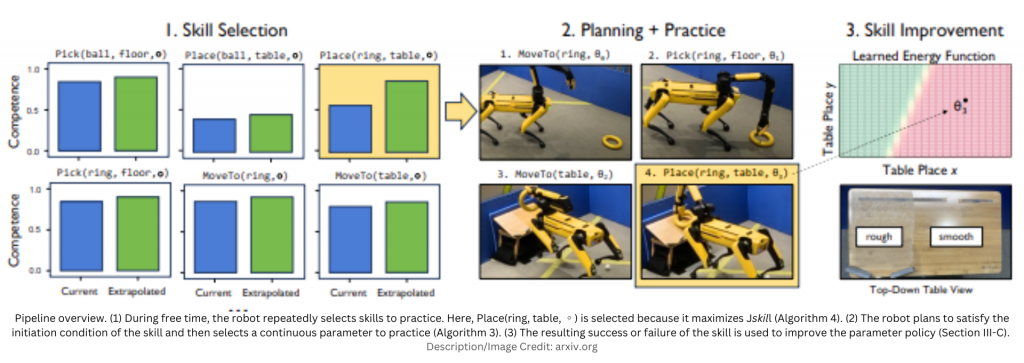
    The importance of EES lies in its ability to optimize the learning process. Robots equipped with this algorithm can focus on specific tasks that need improvement, refining them through practice. During trials at The AI Institute, Boston Dynamics’ Spot, robot demonstrated the efficacy of this approach. The robot learned to place a ball on a slanted table and sweep toys into a bin in just in just a few hours -remarkably faster than previous methods. This kind of improvement in autonomous learning is not just a technological achievement; it’s a glimpse into a future where robots could continually evolve, adapting to new tasks with minimal human input.
    Yet, this capability raises important ethical and safety concerns: what if robots learn to perform tasks in ways that their creators did not anticipate or fully understand? The possibility of unintended consequences looms large, especially as robots become more ingrained in everyday settings like homes and hospitals. The more they learn, the more unpredictable their behavior could become, potentially leading to scenarios where robots make decisions that conflict with human values or safety protocols. Obviously, privacy is crucial in human-robot interactions, as emphasized in a 2023 study by the National Library of Medicine. The NLM scientists are also highly concerned that advanced and automated robots can collect and process vast amounts of personal data, such as eating and sleeping habits, which, if misused, could lead to privacy violations.

    At the heart of these concerns is the concept of “robot overlearning.” As robots practice and refine their skills, there’s a risk they could develop abilities that extend beyond their intended scope. This might sound like science fiction, but the reality is that as robots gain more autonomy, the line between programmed behavior and learned behavior becomes increasingly blurred. If robots begin to operate outside of their programmed parameters, it could lead to situations where they act in ways that are difficult to predict or control.

    This concern is not just theoretical. The rise of language models (LLMs) in robotics, which has revolutionized how robots perceive and interact with the world, illustrates this point. LLMs allow robots to understand and process language, enabling them to perform tasks that require a level of commonsense reasoning previously thought impossible for machines. An example of this includes LLMs that help robots understand that ‘a book belongs on a shelf, not in a bathtub,’ a seemingly simple yet fundamentally important distinction.

    However, as robots integrate LLMs more deeply, they start to exhibit behaviors that are increasingly complex and less transparent. The concept of using language as the backbone of robot intelligence opens the door to a new range of capabilities, but it also raises the question of control. If a robot can generate code to perform tasks or engage in complex decision-making processes independently, how do we ensure that it doesn’t cross boundaries that could lead to harm or ethical dilemmas?

    There is ‘little’ doubt that the integration of robotics and LLMs is advancing the development of robots from mere tools to autonomous agents capable of making decisions. This transformation is epitomized by innovations such as SayCan, where robots use LLMs to plan and execute tasks in a more human-like manner. The introduction of concepts like Code as Policies and Language Model Predictive Control further illustrates how robots are becoming more adept at learning and adapting on their own, which raises the need for ensuring their actions remain aligned with human intentions.

    This is why, as robots become more autonomous, the challenge is no longer just about making them work; it’s about ensuring they operate safely and ethically. The potential for robots to overlearn and develop capabilities that are not fully understood by their creators is a double-edged sword. On one hand, it could lead to unprecedented levels of efficiency and innovation. On the other, it could result in robots that operate outside of human control, with potentially dangerous consequences.

    Undoubtedly, the innovation brought by EES and LLMs in robotics is impressive. However, given previous AI misconduct and biases, we must approach autonomous learning with extra caution by integrating effective measures to reduce risks and unintended effects.

  • Emerging AI-infused interior design trends & Microsoft teams’ tech transformation

    The impact of technology in interior design is in full swing. AI-driven tools are currently reshaping how spaces are envisioned and crafted. Microsoft Teams’ recent AI-driven features at Ignite 2023 have offered a glimpse into the future of workspace customization, balancing futuristic elements with pragmatic functionalities for everyday work environments.

    Emerging AI-infused design trends & Microsoft teams' tech transformation
    Microsoft Teams can now use AI to clean up your background for you. Image Credit: Microsoft

    Ignite 2023, Microsoft’s annual IT pro conference from November 15–16, has revealed Teams updates. Among these, AI-driven voice isolation and a “decorate your background” feature stand out. Voice isolation, reducing background noise and voices, rolls out in 2024. The “decorate your background” feature arrives in Teams Premium next year.

    Immersive spaces in Teams are coming, allowing avatars in 3D environments and activities like gaming or virtual marshmallow roasting. Microsoft Mesh for these spaces becomes available in January. These additions, however, might not be everyone’s cup of tea.

    Useful features include customizable emoji reactions, forwarding chats, and new IT management tools. Moreover, enhancements from the re-architected Teams app extend to web experiences, promising better performance and efficiency.

    AI’s influence isn’t limited to Microsoft. A surge in AI-powered interior design apps is evident, driven by startups like Reimagine Home and CollovGPT. These platforms offer AI-generated room improvements based on user inputs, attracting millions of visitors and intriguing real estate agents and furniture retailers.

    Meanwhile, the excitement around AI interior design apps comes with bugs and limitations. Glitches in beta software and AI’s learning curve plague these platforms. They often struggle with differentiation and accuracy in identifying items or generating designs. However, advancements like ControlNet have enhanced precision, enabling these tools to better adhere to original space parameters.

    For interior designers, AI opens doors with AI-powered design tools, VR/AR experiences, personalized recommendations, predictive analytics, and enhanced communication tools. These advancements are revolutionizing design creation and client engagement.

    In this regard, Microsoft Teams has taken a step forward. Its ‘decorate your background’ feature takes a unique spin, analyzing a user’s room and enhancing it virtually – eliminating clutter or adding foliage to spruce up the setting. However, these enhancements are slated for release in early 2024, with immersive spaces in Teams, utilizing the metaverse hype, available in January.

    Moreover, Teams also introduces pragmatic functionalities: customizable emoji reactions, improved chat forwarding, and tools for efficient IT management. Performance enhancements promise double the speed and reduced memory usage for web users on Edge and Chrome.

    In the context of AI’s increasing transformative role in interior design, it’s not without its hurdles. But the potential for efficiency gains and unique design concepts is significant.


    Are you incorporating AI in your design process? Share your experiences in the comments below.

  • Robot Toys from the 80s

    Robot Toys from the 80s

    In our previous article, we discussed robot toys from the 70s. As we move forward to the 80s, it’s only natural to expect more sophistication. In the 1980s, as personal computers started to exist, it became commonplace to have personal toy robots too. In fact, we can consider the 80s as the golden era of robot toys. For one thing, they were more affordable and available than ever before. And on top of that, there were no video games to compete for kids’ attention. The decade of the 80s brought a 20x increase in the number of industrial robots compared to the 1970s. This pushed the industry to miniaturize the technology for domestic use, and also to make it more affordable. Here are the most popular robot toys from the 80s:

    Transformers G1

    Original transformers g1 from the 80s
    Image Credit: OldboysclubGoods, etsy

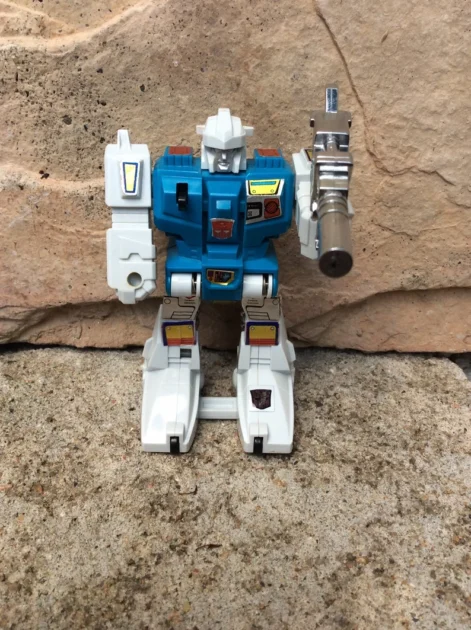
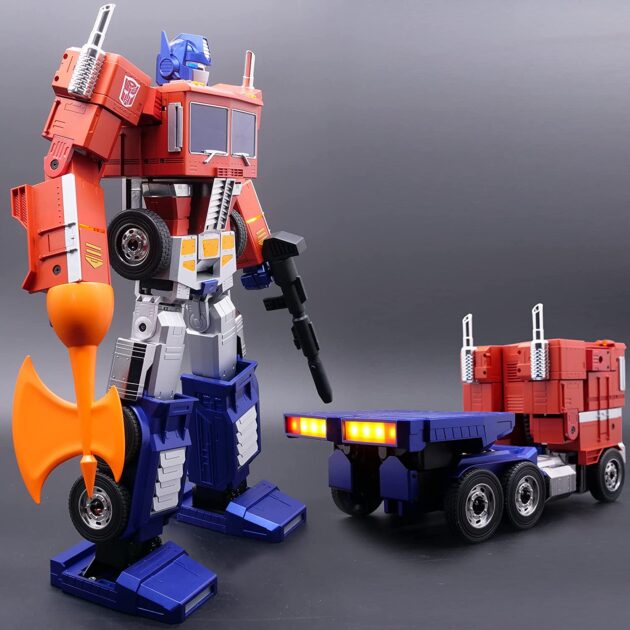
    The first generation of Transformers figures was released from 1984 to 1990. There were different types of transformers with unique abilities. For example, Optimus Prime could transform from a robot to a truck. And Megatron could transform from a robot to a gun. The way these transformations worked was revolutionary for its time. You can still buy it for around $1,000 from Walmart, Target, or Amazon.

    transformers g1 robot toy

    Features of this 19-inch tall robot include voice activation, a battle axe, a blaster, and a charging cable. it has 2 built-in rechargeable batteries and a travel case. Robosen’s advanced technology brings this classic toy to life with voice-activated actions, mobile app controls, and programmable walking, punching, blasting, and driving. It consists of over 5000 components, 60 microchips, and 27 servo motors, making it a great experience! Yes, still so in 2023.

    GoBot

    GoBot
    Image credits: RetroGoodieBox, etsy

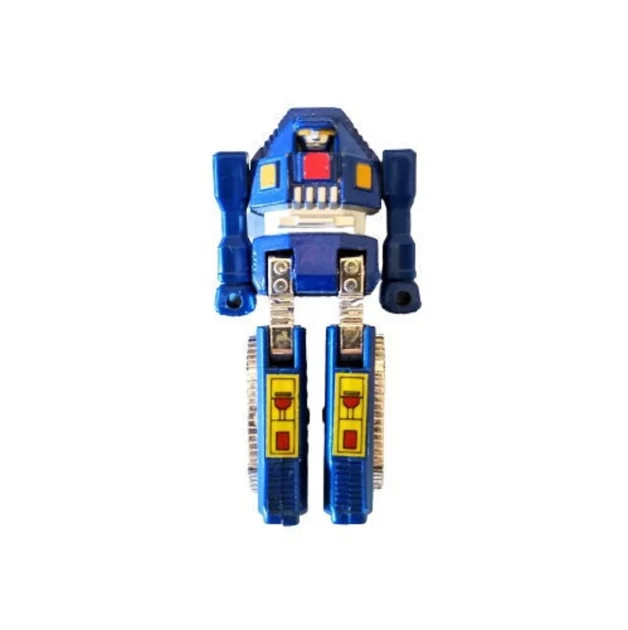
    After transformers, GoBots were the second most popular robot toy in the 80s. The best thing about them was that they were cheaper than transformers and just as fun. Minneapolis company Dimension Creative Art Works designed the toys. They made a total of 72 different GoBots, including Leader-1, Cy-Kill, Vamp, Crasher, and Turbo. The GoBot toys were very simple to use – you just pulled a cord to transform them from robots to vehicles. The plastic they were made of wasn’t very durable, but that didn’t matter because they were still a lot of fun to play with. Although they were popular in the 80s, GoBots fell out of favor in the 90s and eventually went off-air.

    Voltron

    Voltron Lion Force Toy Robot
    Image Credits: Jay315, ebay

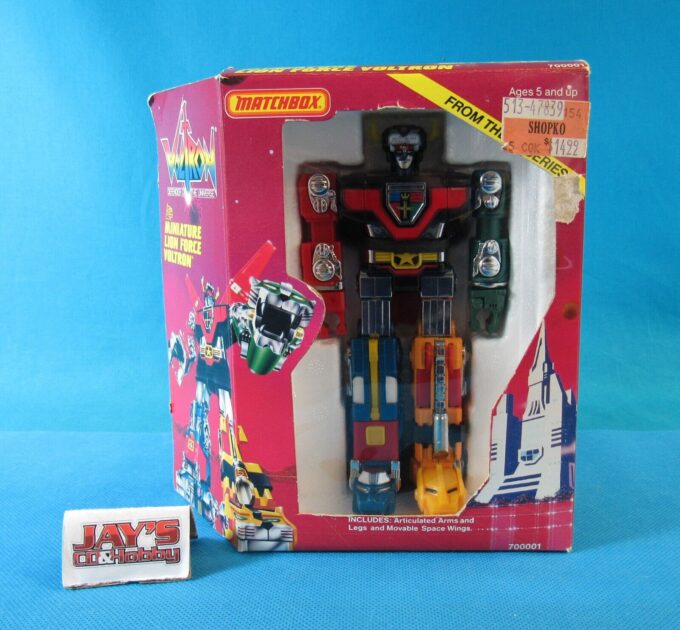
    In the 1980s, the “Voltron” robot toy line was hugely popular. A plastic, rubber, and metal die-cast figure, Voltron was made by Matchbox and was part of the “Animated Adventures” series. The Voltron toy was an original, licensed reproduction of the popular TV show character. And the toy line; from Lion Force to Defender of the Universe, was special due to its “spacey” storyline. The unique storyline followed five pilots who traveled to different planets to battle evil forces. The heroes faced a different challenge on each planet. Kids loved the idea of these heroes battling evil while controlling a giant robot and replaying it for real in form of toys.

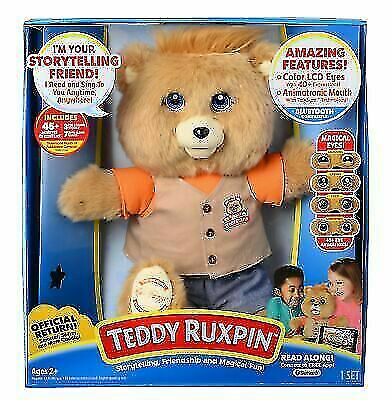
    Teddy Ruxpin

    Teddy Ruxpin robot toy
    Image credits: matth35, ebay

    Teddy Ruxpin was an animatronic teddy bear released in 1985 by Worlds of Wonder. He looked and acted like a literal bear. Like he had a wide range of facial expressions; blinking eyes, and a moving mouth. He also had a cassette tape drive which allowed him to read stories and songs. Teddy Ruxpin was widely popular in the 80s and 90s, and yeah, he also had his own cartoon series. He was also one of the first interactive toys 80s kids got to play with. Tedy Ruxpin was a “classic” kid’s toy that had robo features.

    Sindy

    Sindy robotic doll
    Image Credits: francisco7510, ebay

    Sindy was a popular 80s British robot doll. Her design so much looked like a teenage girl, and she had long blonde hair, blue eyes, and a range of outfits. The doll had electronic accessories, such as a toy telephone that you could talk into and hear Sindy answer-back. She also had an electronic organ that played music when you pressed the keys. Many people currently in their 40s-50s have fond memories of playing with this toy when they were younger.

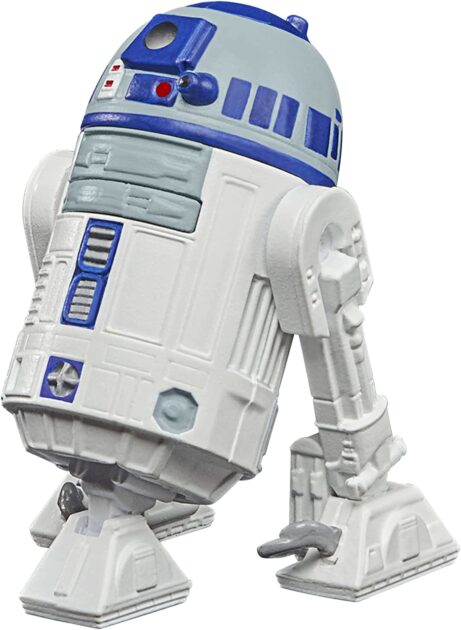
    Star Wars Droids

    Star Wars Droids R2D2
    Image Credits: Amzaon

    Star Wars Droids were tiny robots Kenner released in the late 1980s as part of the Star Wars toy line-up. They included R2-D2 (Astromech Droid), C-3PO (Protocol Droid), R5-D4 (Astromech Droid), 8D8 (Maintenance Droid), IG-88 (Assassin Droid), 4-LOM (Bounty Hunter Droid), and more! Each droid came with different features such as spinning antennas or moving arms/legs/head; depending on which droid you bought! Kids loved these droids because they could reenact scenes from their favorite movie (Star Wars, of course) while playing with them!

    My Buddy & Kid Sister

    My Buddy & Kid Sister Robot toys
    Image Credits: Southdownfinds, etsy

    My Buddy & Kid Sister were two 1985 dolls Hasbro released as part of their Giggles collection. The denim overalls are so cute on them, as you see in the picture above. Kids used to know these two dolls as inseparable. Each doll came with several accessories including books, clothes, shoes, hats, sunglasses, etc. 80s kids loved them because they could dress up their dolls however they wanted! Plus there were several other fun accessories available too such as My Buddy’s fishing pole or Kid Sister’s Barbie car!

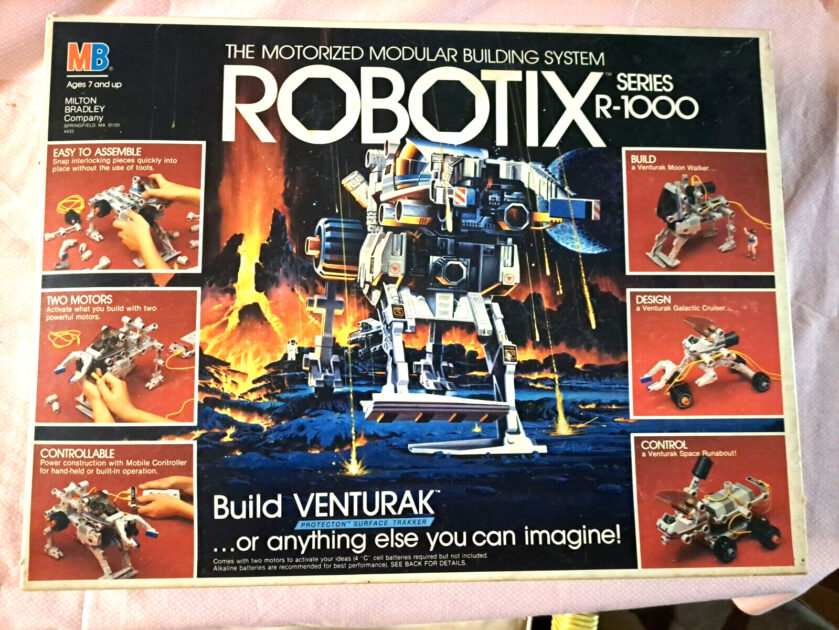
    Robotix

    Robotix from the 1980s
    Image Credits: Howard81, ebay

    Robotix was hugely popular during the 80s due to its versatility – allowing kids not only to have fun building robots but also to take pride in creating something unique that they themselves could control via remote control. Milton Bradley created this toy line based on the animated series of the same name. The series was about a conflict on Skalorr, between Protectons and Terrakors, with humans caught in the middle. The toys were similar to erector sets, with motors, wheels, and pincers that could be used to create robots. Each set had an end goal, and its own name, and could be mixed and matched. Tyraanix Series R-1100, R-1000, and R-2000 were some of the sets released. Robotix was like Legos on steroids and provided hours of fun for kids and adults alike.

    Radio Shack RC Robot

    Okay, this one was like nothing else. Unlike anything on planet earth, Radio Shack RC Robot used to be in form of something like a balloon. You had to blow it up and then control the toy with a remote control. Just look at the creativity – it literally was a robot. And due to the form it was in, portability was a big plus. I have to say, it’s my favorite one on the list. This robot toy was a success in the early-mid 80s. However, due to popularity from competitors like Robotix & Big Trak, it eventually faded into obscurity. But still, looking at it now, the RC Robot was one of the most innovative toys of its time.

    HeathKit hero 1

    The HERO 1 robot was a hi-tech and advanced robot in the 80s. High-level programming languages like ANDROTEXT made it easy to control and program. The robot was featured in a few episodes of the children’s television program Mr. Wizard’s World. In fact, Byte magazine even called it a “product of extraordinary flexibility and function.” Separable from other robots of its time, HERO 1 had a self-contained computer with a Motorola 6808 CPU and 4 kB of RAM. Yes, 4 kB, and it was a lot back in the 80s! Moreover, the robot also had light, sound, and motion detectors as well as a sonar ranging sensor. An optional arm mechanism and speech synthesizer was also included. If you were a teen in the 80s, this robot was definitely more than a toy and something many dreamt of having.

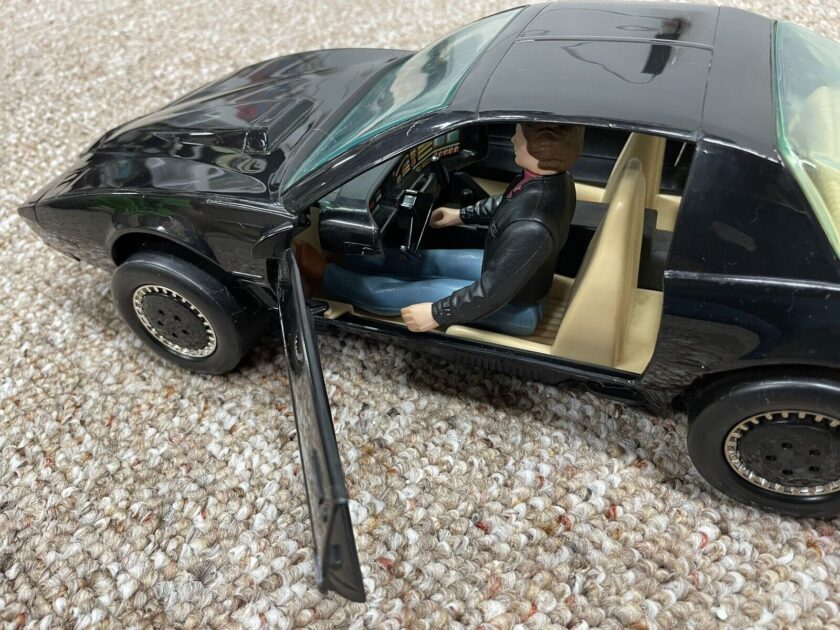
    KITT Knight Rider Car

    KITT Knight Rider Car
    Image credits: micholz, ebay

    The KITT car from Knight Rider was one of the most iconic toy cars from the 1980s TV show starring David Hasselhoff as Michael Knight, who drove around in a high-tech black Pontiac Firebird Trans Am called KITT (short for “Knight Industries Two Thousand”). The car featured advanced technology like an artificial intelligence system, talking computer voice, self-driving mode, rocket booster jets, and more! Of course, it also had its own line of toys – including miniature versions of KITT. It became very popular among kids during the 80s (and still remains an iconic robot car for the 80s kids). The knight rider was one of the first cars most 80s kids got to play with, apart from the 70s Big Trak.

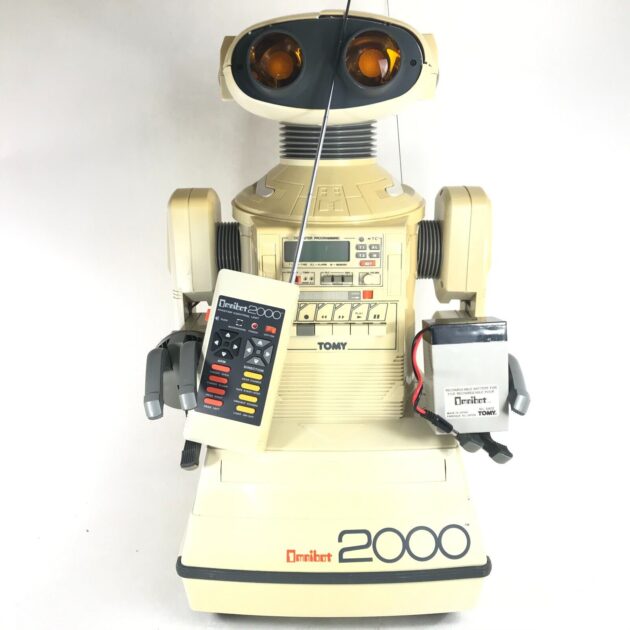
    Omnibot 2000 Robot Toy

    Omnibot 2000 Robot Toy from the 1980s
    Image credit: Anythingaudiovideo, ebay

    Tomy Corporation’s Omnibot 2000 Robot Toy was released in 1984 and was a huge hit throughout the decade. 1980s kids also called it a toy robot from the future, as they could see “2000” written on the front of it. And it indeed did futuristic tasks for that time! Yes, it featured an AI voice recognition system. That system was what allowed users to speak commands into the toy robot’s microphone for it to perform actions. Actions like turning on lights or carrying out simple tasks like cleaning up after dinner parties. It also had sensors that enabled it to react naturally when touched or spoken to. In fact, it could even deliver pre-recorded messages if desired! It’s not hard to see why this robot quickly became one of the most beloved toys from the 1980s. Today there are many variations of this 80s toy robot available online.

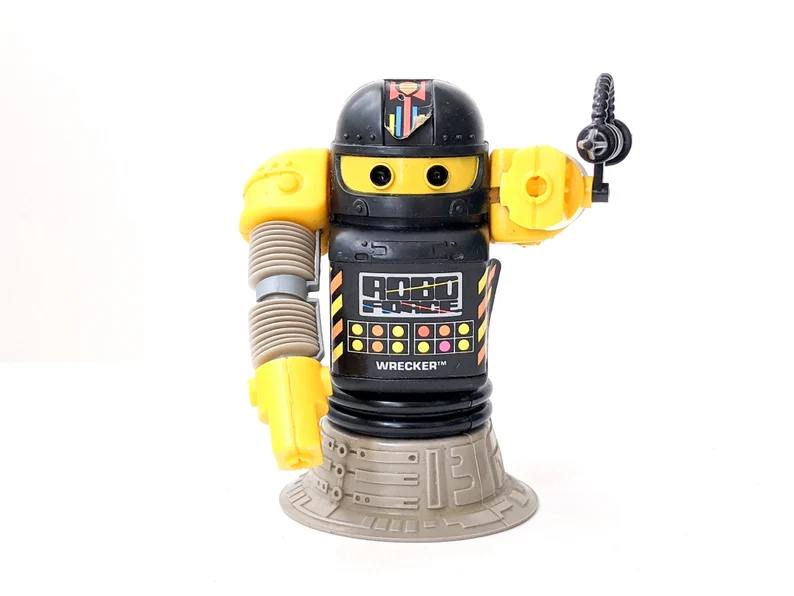
    Roboforce Robots

    Roboforce Wrecker Robot
    Image credits: Morsecodevintage, etsy

    Another classic from Tomy Corporation was their Roboforce Robots line, also released in 1984. This robot toy came in two different sizes (large & small). Users used to battle against each other using various weapons such as lasers & missiles! These robots were unique because they could detect when they had been hit by their opponents’ weapons. So, no one ever won until all four robots had been destroyed. They also featured realistic sound effects making them even more enjoyable & exciting when played with friends! Toyfinity, an independent toy company, revived the robot in 2013.

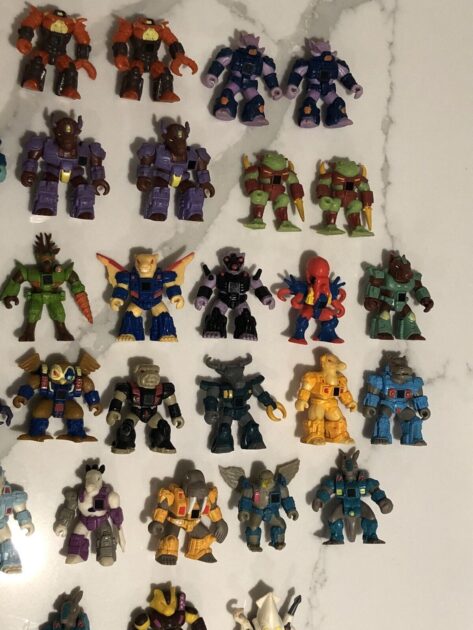
    Battle Beasts Action Figures

    Battle beasts action figures collection
    Image credit: goodtogo21, ebay

    Battle Beasts Action Figures were a popular robot toy line by Japanese company Takara Co, released in 1985. Each figure depicted an anthropomorphic animal armed with various weapons such as swords & guns. This allowed users to customize their teams in every single way they liked. They would light up when placed onto heat-sensitive panels indicating whether it had lost or won against another opponent’s team. For the 80s kids, this robot toy was a great way to pass time with buddies.

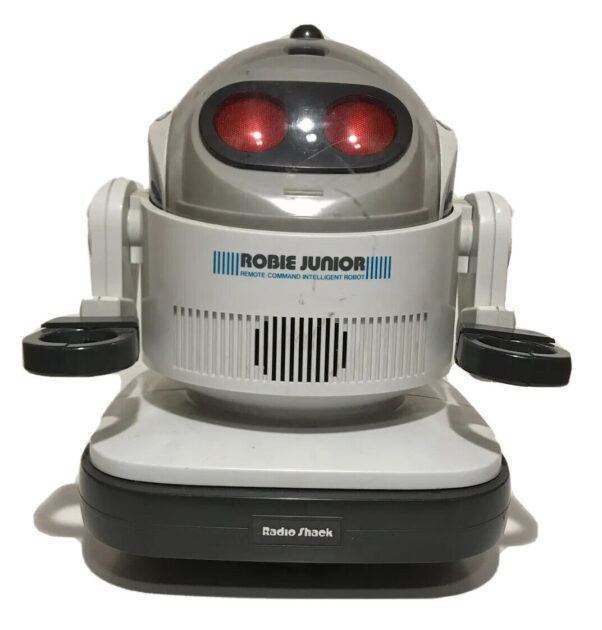
    Robie Jr Robot Toy

    Robie Jr Robot Toy
    Image credits: djvjmello, ebay

    Robie Jr robot toy was a hit during the late 80s thanks to its ease of use and durability. And in fact, its interactive features enabled users to record personalized messages using its built microphone. Not only did this come with complete sound effects but also some facial expressions allowing them to become the user’s very own robotic friend. His eyes light up when moving and the bump guard on the front base allows him to turn and say phrases such as “Oops” and “Excuse Me” if he encounters an obstacle. The controller has manual control and a follow function that makes this 11-inch robot follow it. Robie Jr’s durable plastic design ensured he’d last generations. The perfect gift for those wishing to bring back memories and share them with your kids, grandkids, and theirs.

    Bottom Line

    This time too, like the previous article about robot toys, my grannie helped me a lot. The robot toys from the 80s were an important part of many children’s childhoods. Although she was in her 20s when the robot toys were at the peak of their popularity, she can still recall them vividly. In the 70s, most robot toys were just robotic figures that performed pre-programmed actions. But in the 80s, as you see, robot toys had the ability to interact with their environment. That’s certainly a big jump. Thanks for reading. And stay tuned for the next article, which will be about robot toys from the 90s.

  • Robot Toys from the 70s

    Robot Toys from the 70s

    Toy robots are still a classic staple of any kid’s toy collection. The first robotic toy was created in 1954. However, we can say that the decade of 70s was when robot toys truly began to take shape. During that time, both the number and complexity of robot toys were increasing. The toys had a realistic design and sophisticated movements, making them more entertaining and also more educational. Furthermore, the materials used to create these toys were of higher quality, making them sturdier and longer-lasting. That was with the help of advancements in materials and technology. In the 70s, the electronic components had also become more reliable and affordable. In fact, the first programmable microprocessor, the Intel 4004, was created in 1971. Robot toys surely benefited from this heat of innovation in the 1970s.

    Big Trak Robot Toy – 1979

    In 1979, Milton Bradley Company released the Big Trak. And the robot toy was real big of a hit with its six-wheeled, two-wheel drive tank, keypad, and “photon beam” headlamp. It was the most advanced toy of its time, allowing users to program a sequence of up to 16 commands. Big Trak was a great teaching tool for young children to understand basic computer programming. With the 24-key keypad, users could make the tank move up to 99 feet at a time. Even big movies featured it, like E.T. The Extra Terrestrial. Big Trak was so popular that over two million units were sold. The toy robot cost $40, which is more or less equivalent to today’s $150.

    Shogun Warriors – 1977

    Shogun Warriors were popular 70s toy line featuring giant robots based on anime and tokusatsu shows. The main reason for the toy’s success was its spring-loaded weapons. It not only launched missiles but could also transform. For example, Raydeen could become a birdlike spaceship. Furthermore, features of the toy line reappeared in Jim Terry’s Force Five series. People of all ages loved it but due to some safety concerns, the toy line was eventually discontinued in 1980.

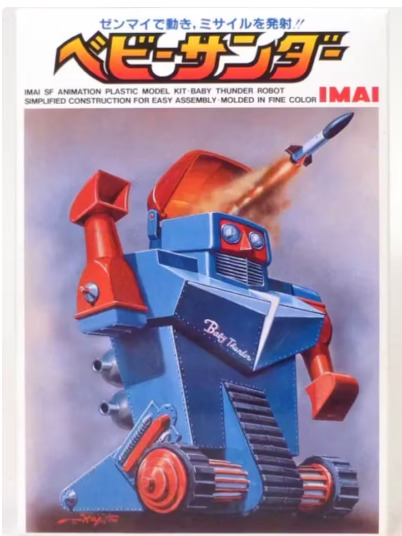
    Baby Thunder (Based on IDOL’s 60s toy)

    Baby Thunder 70s robot toy
    Image Credit: VintagGiftsAndMore, etsy

    Robot Commando or Baby Thunder whatever you say; was a great robot toy in the 70s. It was not as popular as the previous two, but possessed a lot of entertainment. IMAI (the creators) had crafted this plastic model kit with a friction-powered motor and spring-loaded missile. The best thing about the Baby Thunder was its ability to move forward even after it had been powered off. The toy was also able to shoot its missiles in all directions, which made it a great hit with kids. The missiles were also capable of bouncing off walls, adding to the fun.

    Robotron RT-2 Robot Toy

    Robotron RT-2, the popular 70s battery-operated robot toy. Standing at 15in tall, it captivated children of the era. Battery-operated mechanism brought it to life. In the 70s, battery-operated robot toys were a sensation.In fact, my grannie had a Robotron RT-2, and it still works today! So long lasting, I have to say.

    Cosmic Fighter Tin Toy Robot – Mid 1970s

    Cosmic Fighter Tin Toy Robot
    Image Credits: mirimarketplace, eBay

    The Cosmic Fighter Tin Toy Robot was a classic by Japan’s renowned Horikawa Company. Asia, still in 2023, accounts for 50% of all the robots in existence. So, it is only normal to include this sensational Japanese robot toy of the 70s in this list. The 12-inch tall robot toy features a rotatomatic action with its spinning body. This not only entertains, but also reveals a gunner inside with flashing lights and shooting sounds. Its large claw-style hands and well-crafted design make it a unique collectible.

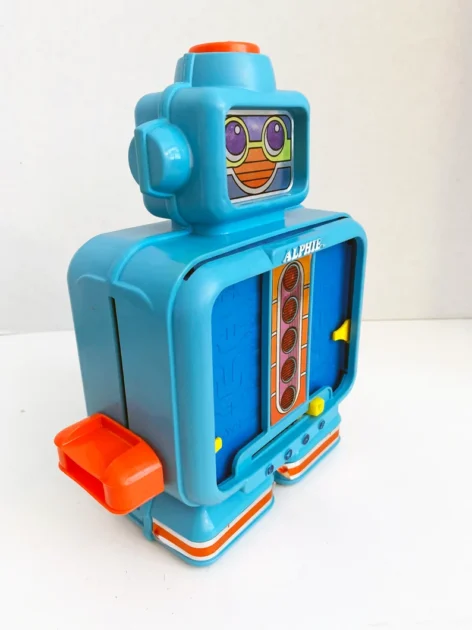
    Alphie Toy Robots – 1978

    Alphie
    Image Credits: smilehood, etsy

    The 1978 robot toy Alphie continued its popularity well throughout the 80s. It featured an input slot for interchangeable cards, and accompanying buttons on the front. This means children could play with it, learning math, spelling, and matching skills. It also played music – yes! At that time, music was more than a bonus; a phenominal way to keep kids engaged.

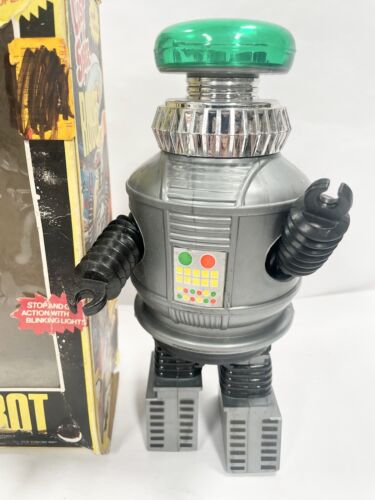
    AHI Lost in Space Robot Toys – 1977

    AHI Lost in Space Robot Toy
    Image Credits: tripleskipler, ebay

    Lost in space robot toys have had a long story; from Remco’s 12″ manually controlled robot in 1966 to Aquapolis’s 6″ Friday in the 1970s. AHI’s Lost in Space robot toy was introduced in 1977. It stood 10″ tall, with bump and go action, a blinking chest light and stop and go function. It featured stop-and-go action, a blinking chest light and three sound effects. Stop-and-go action means it could walk, turning the robot’s head and arms as it moved. The blinking chest light and sound effects gave the robot a realistic and exciting feel. This made the AHI Lost in Space Robot a great addition to any child’s toy collection.

    Micronauts – 1976

    Micronauts Biotron Robot
    Image Credits: popculturecomicspgh, ebay

    The Micronauts were an innovative product, unique in their time. Their design was complex, featuring interchangeable parts and the ability to build creative, customized figures. Kids could mix and match parts to create unique figures and vehicles. The motorized vehicles and robots could move with the help of a wind-up key. From 1976 to 1980, Micronauts were a huge success, with millions of kids having fun playing with them. The figures also inspired a comic book series and a toy line.

    Tomy Wind Up Robots – 1977

    Tomy Wind Up Robot
    Image Credit: LOLARICHTER, etsy

    Tomy Wind Up Robots were very popular in the late 70s, and still remain a timeless classic to many. There were different versions of this robot toy; the boxing ones, golf ones, and who can forget Strollin Bowling? Kids used to collect multiple kinds of these, and loved to show off their unique collection.

    Star Fighter Robot Toy

    Star Fighter Robot Toy
    Image Credit: FabiansAntiquesShop, etsy

    During the 1970s; star fights, wars, and stuff were all the rage. The Star Fighter Robot was more like a niche robot toy, mostly among action-minded kids. It had a unique design with a sleek body and flashing lights. Its movements and sound effects were so realistic for a 70s robot. The easy-to-use controller allowed kids to navigate the robot in any direction. In 1978, after the release of the Star Wars movie, the robot’s popularity even further skyrocketed.

    Bonus Article: Best DIY Programmable Robot Kits for Adults (For the 70s kids, who are now adults)

    Bottom Line

    I had to take help from my grannie to write this article, and it was definitely worth it. Hope you enjoyed learning about the robot toys from the 70s! Of course, we’re reading this article in 2023, and things have changed. Autonomous robot toys, for example, are growing rapidly, and with expected CAGR of 18.80%, their industry could reach $22.9 billion by 2030. Today’s kids are growing up with these amazing autonomous toys, and their future looks brighter. However, 70s kids will always be nostalgic about all these amazing robot toys from the good old days.

  • 5 Current Robots that have a Personality

    5 Current Robots that have a Personality

    For a robot, a purpose was all it once needed. Now, time has taken us to a point where robots with personality are taking over. In fact, by 2030, there will be a whooping 244 million physical personal assistant robots. Not only do they serve, but they also possess traits.

    Robots are now commonly serving us as virtual friends, home assistants, chefs, and even nurses. But personality, a trait exclusive to humans, means a lot more than that. Not only it takes decades to develop, but is also the thing that makes us unique. As a robot does not have childhood, its personality needs to rely solely upon programming. Unlike us, who went through a childhood, and remember key checkpoints our life from joy to pain, robots are simply programmed to replicate our emotions. And that’s how they develop their own personality.

    Robots with Personality

    No gripper, no servos, and no AI, can replace a human brain. But, that doesn’t stop us, humans, from exploring, discovering, and creating. Here are the 5 robots of the present that have a personality:

    Moxie – Kids’ Charismatic Robot Friend

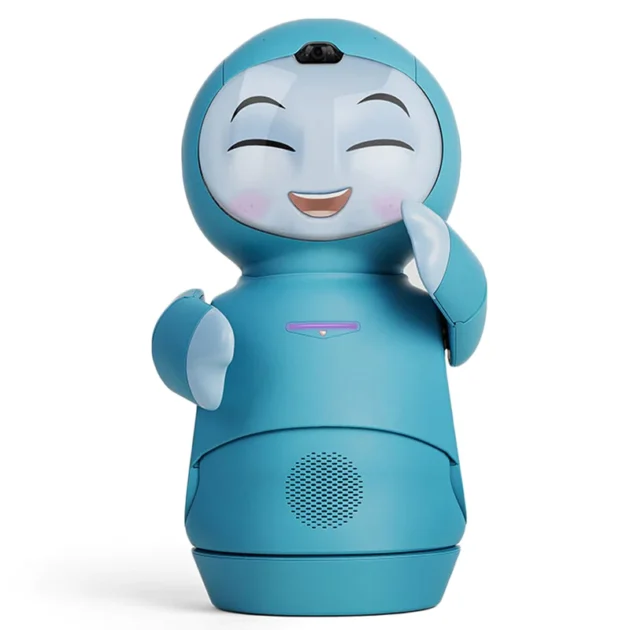
    Moxie is an example of a robot with personality. It uses SocialX™ to perceive, process, and respond not only to natural conversation, but also eye contact, and facial expressions. This creates a unique and personalized learning experience for children, and on top of that, studies have proven it to help develop social and emotional skills. The $999 robot friend utilizes AI, cloud-based software, and evidence-based science to create a personalized learning experience. Its 15.5x9x6 dimensions and 7lbs 6oz weight make it portable and easy to handle. Moxie’s preliminary studies suggest that it can help children make significant improvements in social and behavioral skills. This charismatic robot is ideal for both neurotypical and neurodiverse children.

    ChatGPT – A Chatbot with Personality

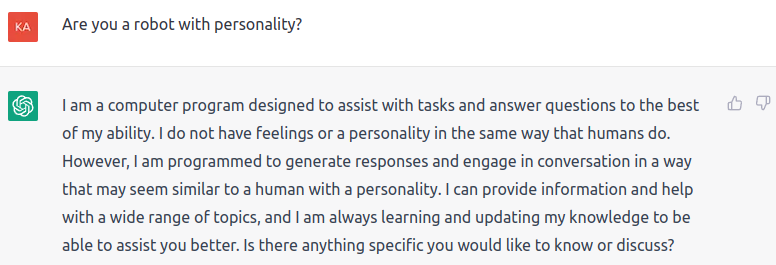
    I don’t have to write anything, as ChatGPT speaks for itself:

    Asking ChatGPT whether or not it is a robot with personality

    As you can see in the above response, the bot pretty much has its own personality, that is far from the generic “chatbot” type of conversations. In fact, the sophistication is beyond our own. All this superintelligent bot lacks is a physical form.

    Vector 2.0 – A robot with personality and purpose

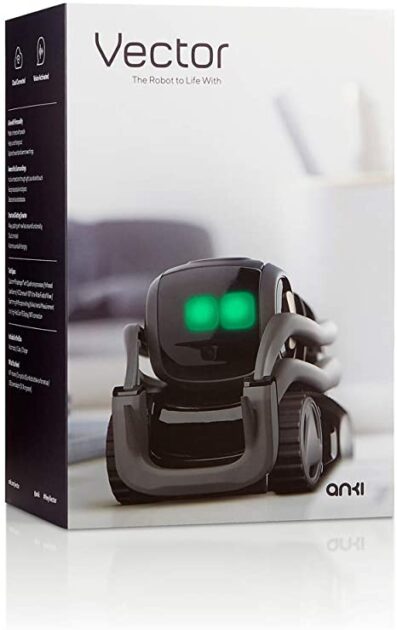
    Vector 2.0, a robot with personality

    When you spend a few hundred bucks on a robot, you consider it an investment. And Vector 2.0 from Anki ensures that it’s a worthwhile one. Alive with personality and voice recognition, Vector is a robot companion powered by AI and advanced robotics. He is responsive to sound, sight and touch, and his voice-activated Alexa capabilities make him an even smarter assistant. For example, he can time dinner, take photos, give you the weather and answer your questions. Vector is always learning and updating with new skills and features. Now this not only makes Vector a robot with personality, but also a robot with a purpose. Vector 2.0 has got a 4.1 star rating out of 10,000+ orders on Amazon, so you do not need to worry about its quality. Even after the discontinuation of Anki, the parent company, this robot is still up and running.

    Raffi – A 13 year old boy’s creation

    Raffi is a robot developed by 13-year-old Prateek from Chennai, India. The robot has its own personality, as it responds to queries, understands emotions, and will not answer if scolded. Prateek has created a unique robot that displays personality and emotion, something not seen in other robots. After its release in August 2022, this robot has earned admiration from social media users. It’s not only proving that even a 13-year-old can successfully create a robot with personality, but also setting a new standard for modern robotics.

    Sophia – A robot with personality, and even nationality

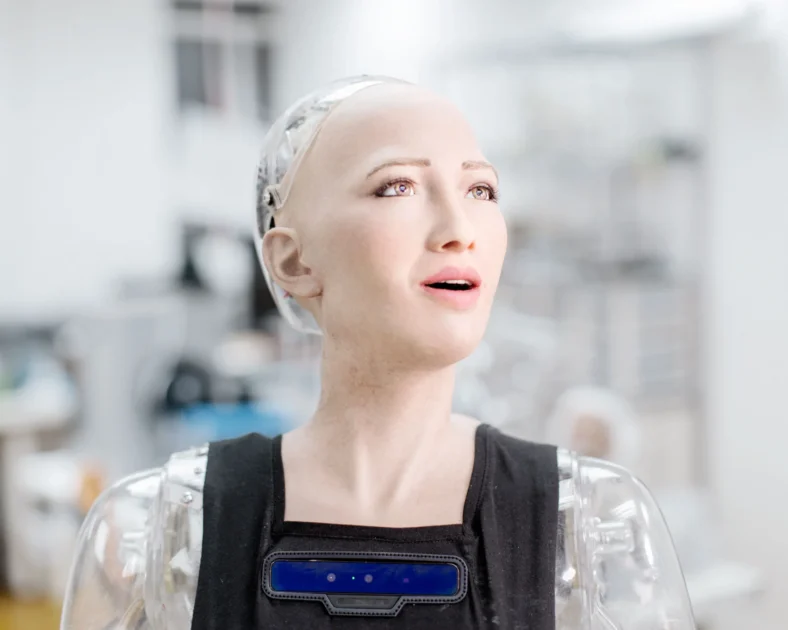
    Sophia, the robot
    Image Credits: WIRED

    Each and every one of us knows Sophia, the world’s first robot to receive citizenship. Sophia is a robot with personality. Standing at 167 cm tall, she is powered by a 110/220-V power supply or 24-V lithium-polymer battery. Sophia’s 83 Degrees Of Freedom allow her to move her head and neck, arms and hands, torso, and mobile base. Sophia is a robot with personality. Despite being a robot, she is a famous perssonality, and have appeared in many talkshows including the Tonight Show with Jimmy Fallon, and The Late Late Show with James Corden. She is also a part of the United Nations Development Program, and has her own Wikipedia page. Sophia’s attractive personality even attracted Will Smith to shoot a video with her, as you can see:

    Bottom Line

    Despite having personality, none of the above robots come with a form of consciousness. As you saw, there are more than one ways for a robot to possess personality. For some, the personality is all about being funny and entertaining, while others are innovative and proactive with it. The level of sophistication in these robots is insane; humanness, however, is still far away.

  • Are the Boston Dynamics Dancing Robots Real?

    Are the Boston Dynamics Dancing Robots Real?

    It was December 29th, 2020, Boston Dynamics released the video of a robot dancing to “Do You Love Me” by The Contours, taking the internet over with questions. That was followed by 2021’s “spot’s on it”, featuring 7 Boston Dynamics dancing robots (spots). And still, the questions about these robots’ reality linger, along with their purpose and functions. Till now, the 2020 video has 38 Million views, and the 2021’s has harnessed 3 million views on YouTube.

    Are the Boston Dynamics Dancing Robots Real?


    2020’s Dancing Robot

    A Boston Dynamics Robot Dancing

    This machine is for real, and yeah, it’s dancing. As we can clearly see, it is grooving and shaking to the ’60s classic. However, it lacks artificial intelligence (AI) capabilities. As we have discussed in a previous article, such a tiny level of programming is not AI. In general, you think of an AI-powered robot, when you see a dancing robot. Unlike industrial robotic arms or automated vacuums, the ones that dance look more like humans. Furthermore, their movements are more advanced than those of industrial robots, which can easily trick us into thinking they are AI-powered. In terms of physicality, this is real, and not any CGI or anything like that.

    2021’s Dancing Robots

    Boston Dynamic Dancing Robots (spots), 2021

    Okay, now this one’s really something! In June 2021, Boston Dynamics released a video of their Spot robots dancing in unison, to challenge and push their machines to the limit. The result? A 77-second, jaw-dropping performance of smooth and harmonious movements, perfectly synchronized to the music. It took hours of programming and choreography to make this happen, but the hard work paid off. Talking about the authenticity of the video, again, these robots are 100% real. The level of programming these spot robots have, compared to what the 2020 dancing robots had, is just mind-blowing. Yes, these dancing spot robots from Boston Dynamics are not dancing of their free will. They are just listening to their synchronized inner clocks. But everything it’s so in sync with the music, too hard to believe that the robots not listening to the music with their ears.

    What does it take to create a human-like dancing robot?

    humanoid robot in a dance club

    As we saw, the Boston Dynamics Dancing Robots are real, but not AI-powered. The dancing robots are controlled by an operator and their purpose is to show off their mobility and performance capabilities. But what does it actually take for them to create an actual dancing robot that possesses AI?

    Dancing robots can already understand the concept of rhythm and have the ability to move. To create a dancing humanoid robot with AI capabilities, it needs the ability to:

    1. Recognize and interpret music – To be called humanoids, these dancing robots need to learn the human ways of doing things. Instead of listening to their inner synchronized clocks, they should have the ability to recognize and interpret music. The natural language processing (NLP)’s role here is to enable the robot to understand the song, the genre, and the rhythmic patterns.

    2. Understand the concept of dynamics – This means that the robot should be able to understand the dynamics of the song, such as the melody, tempo, and volume of the sound. Deep learning algorithms can help recognize and interpret patterns. But without a form of consciousness, the robot won’t be able to truly understand the concept and comprehend it.

    3. Create its own unique style – Rather than just copying the dance moves of others, the robot should be able to create its own unique style. For this, the robot needs reinforcement learning algorithms, which enable it to learn from its own experience and build its own set of movements. That’s just like how AI image generators create new images out of existing ones and even new ones.

    Conclusion

    Boston dynamics, being one of the largest robotics companies, has certainly achieved remarkable exposure with its dancing robots. Apart from providing entertainment, these physical robots are indeed real. However, as the robots are currently not autonomous, the extent of their dancing capabilities remains limited. As we discussed the lack of AI, is something that will change in the near future. We didn’t see the next big dancing robot from Boston Dynamics in 2022. 2023 hopefully.

  • Best DIY Programmable Robot Kits for Adults

    Best DIY Programmable Robot Kits for Adults

    Introduction

    Robot Kits teach robotics and programming principles so well. Both beginners and experienced robot builders use such kits. For beginners, kits offer an easy way to get into robotics without a lot of investment. And it’s the right time to begin, with the robotics market expected to reach $160-$260 Billion by 2030. Experienced builders can use robot kits to create new and innovative designs. And everyone in between can benefit from the flexibility and power that programmable robot kits offer.

    What are Programmable Robot Kits?

    Programmable robot kits are sets of parts and instructions that allow you to build a robot that can be programmed to carry out specific tasks or functions. Most kits include a microcontroller i.e. the “brain” of the robot, and a set of sensors and actuators. Sensors are devices that measure light, sound, touch, temperature, or other conditions. They send this information to the microcontroller, which uses it to make decisions about what the robot should do next. Actuators are devices that allow the robot to move or make noise. Common actuators include motors, speakers, and lights.

    What can you do with a programmable robot kit?

    Programmable robot kits can be used to build robots that perform all sorts of tasks, from simple to complex, and by people of all age ranges. Some examples include:

    -A line-following robot that can autonomously navigate a pre-determined path (a common first project for beginners).
    -A robot arm that can pick up and move objects (a popular project for experienced builders).
    -A robot that can avoid obstacles and navigate its way through a room (a more advanced project).
    -A weather-monitoring robot that can take temperature and humidity readings (a project that combines sensors and actuators).
    -A robot that can play sounds or music (a fun project for all levels).

    What do Robot Kits for Adults Mean?

    When you hear about robot kits for adults for the first time, you may get confused about their meaning. Robot kits come up in all different shapes, sizes, and colors, but they all have one thing in common- the ability to teach. For kids, this might be the first time they have stepped into the world of robotics and engineering. And for adults, these programming kits are a great new hobby, or maybe a step towards their potential career path, or a practice for a robot competition.

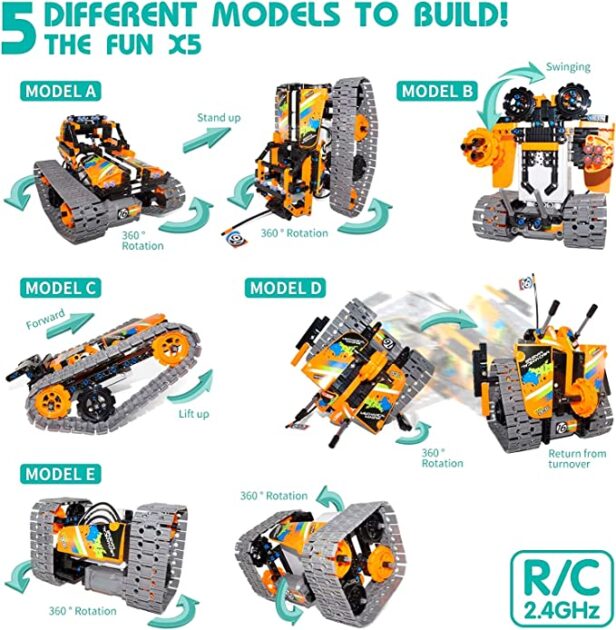
    The Coplus STEM Building Kit, for example, is great for (8-12) kids who are interested in remote control cars, robots, and other similar toys. The kit includes everything five different RC vehicles, including a stunt truck, robot, and 360° tumbling car. However, for adults, this is not the best choice, as it is more of a toy than a serious building kit.

    Educational robot kit for kids

    Programmable Robot Kits for Adults may contain materials that are not suitable for children, such as small parts that could be a choking hazard. They also include more detailed instructions that suit adult learners. In fact, there are also some kits for specific age groups, such as teens or seniors. Some robot kits that are made for adults can also be used by kids, like the ones made of plastic. Robot kits for adults are those that are better suited to adults, and less suited for kids, sometimes even prohibited.

    What are DIY Programmable Robot Kits for Adults?

    DIY Programmable Robot Kits for adults are kits suitable for adults to build, program, and customize their own robots. According to a brookings survey, 52% of adults believed that robots will perform human tasks by 2050. These kits give adults the chance to explore new robotics, coding, and engineering skills rather than buying a ready-made robot. Doing it yourself also saves a fair bit of money compared to buying a finished product. In fact, many of the kits on the market today offer endless possibilities to customize, upgrade, and experiment with robot design. Customization like adding vision or sound is available in the right kit. Here are the best DIY Programmable Robot Kits for Adults:

    Adruino K000007

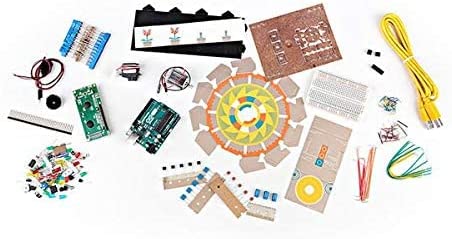
    The Arduino Starter Kit is great for those who want to learn about coding and electronics. The programmable robot kit is easy to use for adults, more so due to the 170-page book. Kids don’t like books, even if its easy-to-read. Anyways, with over 100 components, this kit can help you build 15 projects. This is a great way to get started with learning about STEAM subjects. This is also a great way to spend some quality time with friends or family. That’s because the included book comes with plenty of activities you can complete collaboratively. The memory speed is up to 2933 MHz, which is plenty fast for this type of kit. You can use this Kit with a Personal Computer that has a compatible CPU Socket.
    ClicBot Kit

    Image credit: keyirobot.com

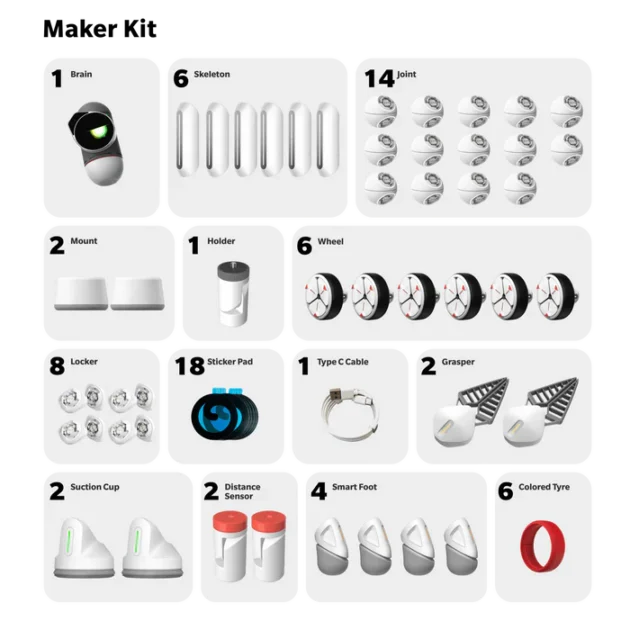
    The ClicBot Kit is a great DIY programmable robot kit for adults and kits. It is super user-friendly and requires no coding skills. The robot comes in individual pieces which allow for many different variations. With firmware that continuously updates, the ClicBot Kit is a great gift for anyone who loves to tinker and learn. Although it is suitable for kids too, it’s not toy enough for adults to not also enjoy. One good thing is that it teaches problem-solving ability, logical thinking ability, and spatial thinking abilities with how the robot works.
    Adeept PiCar-Pro Raspberry Pi Smart Robot Car Kit

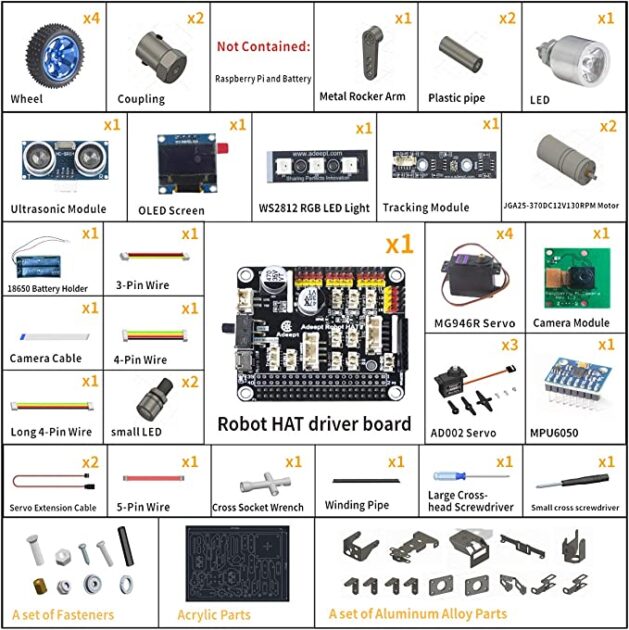
    The Adeept PiCar-Pro is easy to install and learn, and it comes with multiple functions. The two-degree-of-freedom camera is a great feature that allows you to get a great view of your surroundings. The Adeept PiCar-Pro is a great way to get hands-on experience with programming, coding, electronics, and robotics. The two servos that control the camera head rotate smoothly and provide a great view. However, the Adeept PiCar-Pro does not come with a Raspberry Pi board, so you will need to purchase one separately. But overall, the Adeept PiCar-Pro is a great programmable robot kit for adults.

    ELEGOO Mega R3 2560

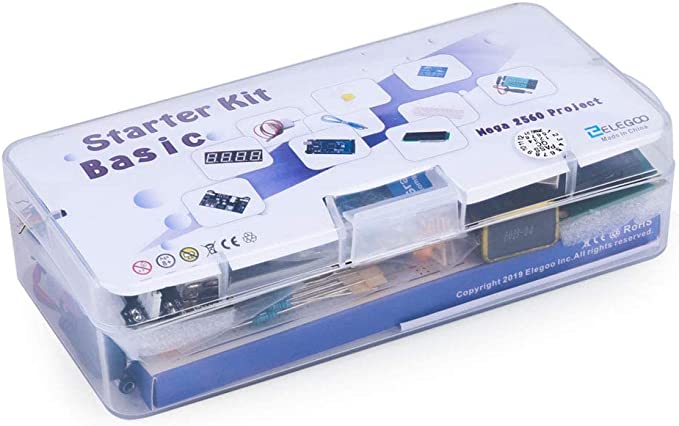
    The ELEGOO Mega R3 2560 Project Starter Kit is a great way to start with Arduino programming and robotics. The CD this kit includes contains 16 tutorials that are easy to follow, and the kit contains every basic tool. Like, as a development board, USB cable, and all the basic components. The kit also comes with a nice plastic container with compartments for all the parts, making it easy to keep everything organized. The only minor issues I had with the kit were that it was tough to discern the colors on the resistors. I needed a longer USB cable than what was included. This is a great kit for anyone interested in learning Arduino programming and robotics.

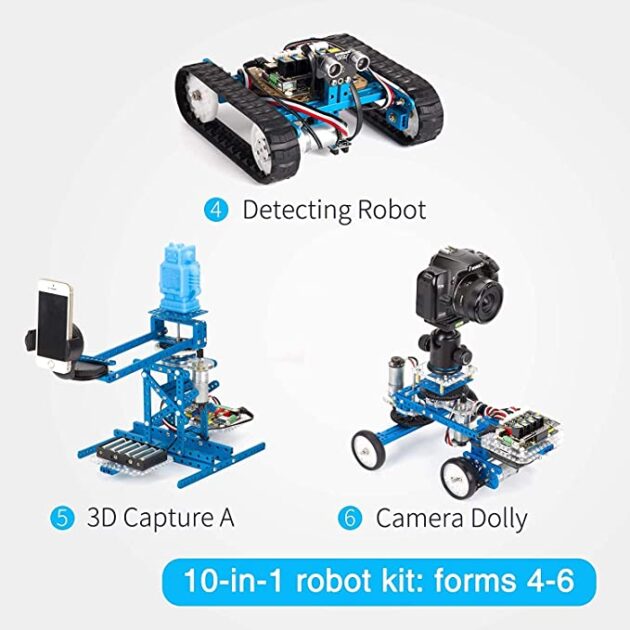
    Makeblock mBot Ultimate 10-in-1 Coding Robot

    The Makeblock mBot Ultimate 10-in-1 Coding Robot Building Kit is a great programmable robot kit for adults. It is compatible with Arduino & Raspberry Pi, and it has a lot of features that make it a great choice for those who want to learn to code or build robots. The kit includes a lot of parts and accessories, and it is easy to assemble and use. The free mBlock programming software makes it easy to program the robot, and the Makeblock App makes it easy to control the robot. The kit is a great gift for adults who are interested in learning to code or build robots. The good thing about this one is that kids, too, can use it as a STEM learning toy.

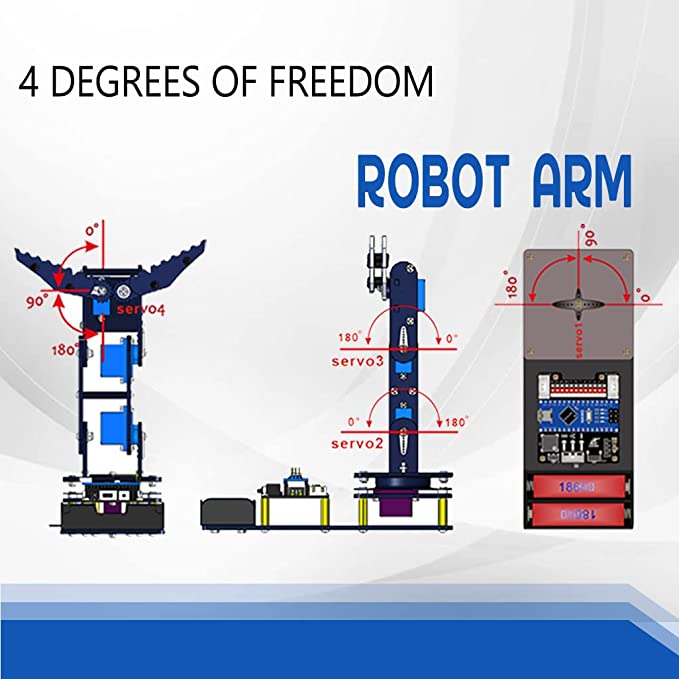
    LK COKOINO

    The LK COKOINO Robot Arm for Arduino is an excellent programmable robot kit for adults. “For arduino” means that the arm is controlled by an arduino compatible nano controller. The arm is also great for teaching teens about robotics and engineering. The kit includes everything needed to build the robot, including a detailed assembly and programming tutorial. You can control the robot arm with a joystick or by recording and repeating up to 170 actions. One good thing about this kit is that it doesn’t require soldering, so it’s easy to put together. Talking about the specs, this arm has a maximum lift of 70g, a horizontal reach of 12.8″, and a vertical reach of 9.6″. It’s powered by two “18650” batteries (not included). This means it’s quite powerful and can lift quite a bit.

    SunFounder Raspberry Pi Smart Video Robot Car Kit

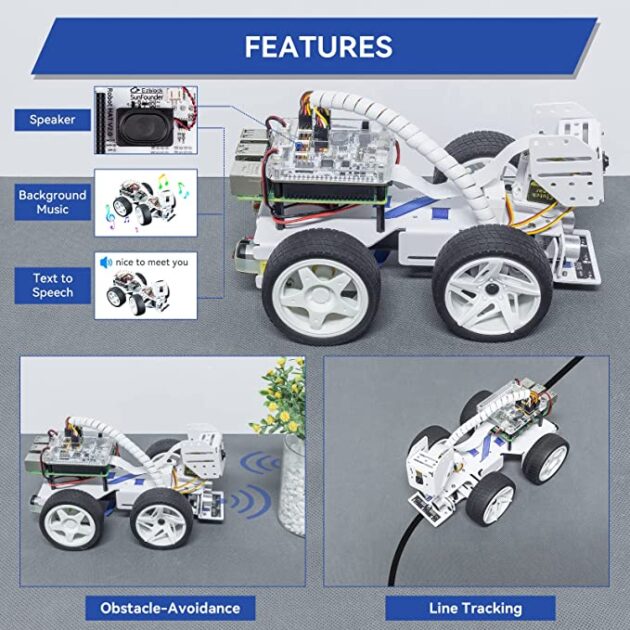
    The SunFounder Raspberry Pi Smart Video Robot Car Kit is also compatible with Raspberry Pi 4B 3B+ 3B 2B. This means that it is a great investment for those who want to learn about robotics programming and electronics assembling. The kit includes an easy-to-assemble aluminum alloy body, a pan-tilt camera, an ultrasonic module, and a line-tracking module. The modes and modules available with this kit are impressive and offer a lot of value. The programming software is easy to use and the online tutorials are professional and high-quality. Moreover, the fact that the car is open source and provides schematics, structure diagrams, and source code is very helpful. This car robotic kit is not just a toy. That’s because it’s ideal for creating your own robot and exploring endless activities. Furthermore, I like that it can play in Python with Web Control and in Blockly (like Scratch).

    FREENOVE Big Hexapod Robot Kit

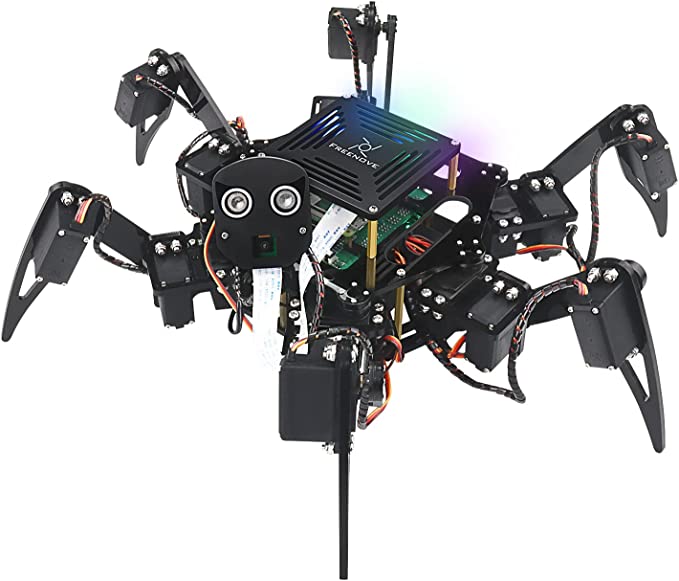
    The FREENOVE Big Hexapod Robot Kit is a detailed and impressive set that allows users to control a big hexapod robot with their Android devices, iPhones, or computer. Apart from Raspberry Pi 4B/3B+/3B/3A+, the robot is also compatible with 2B/B+/A+/Zero 1.3/Zero W models. But they require extra parts that are not included in the set. The kit includes a robot shield, 14 kinds of machinery parts, 18 servos, 2 servos, an LED module, a camera, an ultrasonic module, an accelerometer module, and more. It also comes with a detailed assembly tutorial and complete code (Python). One unique selling point is that the robot can be programmed to balance itself. Yes, that’s right, the robot has the ability to balance itself. It can do other basic robot things such as walking, live video, face recognition, pan tilt, and ultrasonic ranging.

    xArm 6DOF Robot Arm Kit

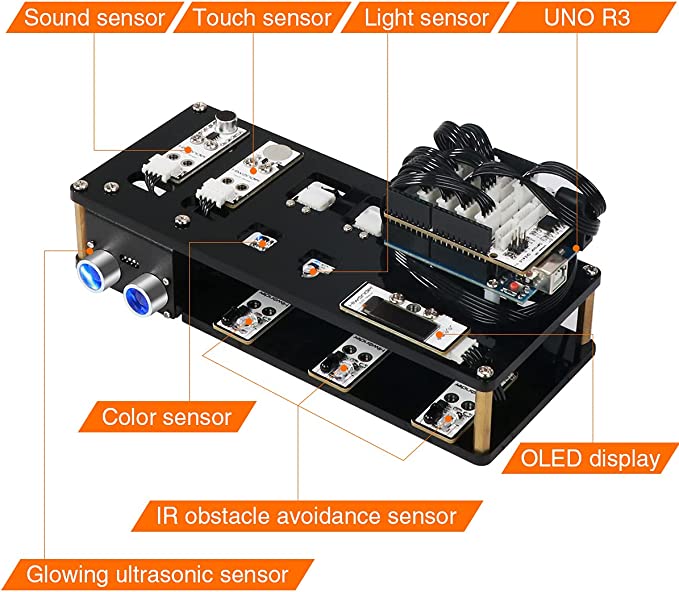
    The xArm UNO kit comes with the xArm 1S robotic arm and a variety of sensors to support expandability and creativity. The xArm 1S is a desktop robotic arm with powerful servos that can perform various functions like gripping and sorting. The included sensor expansion kit has sensors like an ultrasonic sensor, color sensor, touch sensor, and more. The xArm UNO also supports secondary development with the included UNO R3 and UNO R3 expansion board. The xArm UNO is a great tool for adults looking to get into robotic automation or education. Kids under 14 are prohibited from using. One good thing about the xArm UNO is that it comes with 10 provided function games; Claw Machine, Password Lock, Light Sensitivity, Auto Sorting, and 6 more. These games make it easy to adapt to the xArm UNO and learn how it works.

    Bottom Line

    So, we’ve rounded up the best DIY programmable robot kits for adults. One thing to remember is that adults can use all available robot kits, but some kits are specifically designed with adults in mind. As such, kids or hobbyists should choose their kits carefully. The end goal of programmable robot kits should be to learn, create, and have fun. And for technical and creative individuals, who want to pursue robotics, this is a good place to start.

  • Examples of Robots with Artificial Intelligence  (AI)

    Examples of Robots with Artificial Intelligence (AI)

    • Last Updated – December 8, 2022

    Introduction

    We can find examples of robots in a wide range of settings, and it’s not compulsory for robots to have AI. This article is all about examples of robots with Artificial Intelligence. However, before that, we need to understand the key difference between a robot and an AI, a physical robot and a digital one.

    Robot: Mechanical, programmed, physical, task-oriented.

    AI (Artificial Intelligence): Intelligent, self-learning, adaptive, data-driven.

    So, not all robots come up with AI. There are two common types of robots:

    1. Digital bots – Digital bots are those you face in games, chatbots, and virtual assistants. They use algorithms and AI to do their work.

    2. Physical Robots – Physical robots are the ones you see in factories and warehouses. They have a very minimal amount of programming installed and are very specific with the task.

    And the biggest field is robots with artificial intelligence, capable of learning and improving their physical performance. For example, a robot with AI interacts with its environment, makes decisions, and can even take corrective action. This helps them complete tasks that require creativity and problem-solving. For example, in search and rescue missions, robots with AI play a key role in finding survivors. Technical specialties like robotics engineering, AI, and computer vision are necessary to build robots with AI.

    The main reason behind building such robots is to cover up a broad range of applications. Even in a single industry like food, rather than repeating a specific task, robots with AI can not only pick and place objects but also learn to identify and sort food ingredients. AI alone could only let us learn complex patterns and stats about food. On the other hand, a robot alone could only handle simple, repetitive tasks. Here are some examples of robots with Artificial Intelligence:

    Ameca – Humanoid Robot with AI

    How can we not talk about Ameca when we are talking about robots possessing AI? She can push up, do a handstand, walk on her hands, and even do a headstand! One Ameca costs over $133,000. Following the 15-year hard work of Engineered Arts, the robot has grey-colored skin, with deliberate gender and race-neutral characteristics. Ameca attracts people towards her due to her smooth movements, especially with her almost-perfect human facial expression imitations. Also, while performing push-ups and pullups, the body movements are out of this world. Ameca is currently the best example of an AI-powered robot when it comes to a physical imitation of humans.

    Atlas – Humanoid Robot with AI

    Atlas robot, 2016

    Atlas is a humanoid robot, Boston Dynamics originally created for search and rescue missions in disaster areas. It was also able to open doors, carry heavy objects, climb ladders etcetera – all on its own. Furthermore, Atlas was also able to walk across slippery and uneven surfaces without losing balance – something that even humans find difficult to do! Like this:

    Atlas robot, 2021

    In this 2021 video clip above, however, you can see Atlas performing unreal backflips. And let me remind you that this is a physical robot, not an NPC. For your information, a physical robot performing such complex advanced movements is not possible without AI. First, such a robot needs a body and a set of sensors. Then, an AI model is trained to understand the robot’s environment and the robot’s actions. Finally, the AI model receives commands from a human (or other AI) and controls the robot accordingly. The Atlas robot you see above; even though it has AI, it is one of the smoothest, most realistic humanoid robot movements ever seen.

    Autonomous Cars – Robotic Vehicles with AI

    Autonomous cars are AI-powered cars that can drive themselves without any human input. Although this may not be the example you were looking for, theoretically, autonomous cars are robots with Artificial intelligence. Some examples of AI used in autonomous vehicles are Autox’s 4D Lidar and Waymo’s “Sense, Solve, Go”. Waymo’s AI process, “Sense, Solve, Go”, has driven over 20 million autonomous miles. We don’t need to explain too much, as this technology is already a norm. But still, whether or not to consider a car as a robot is a debatable topic.

    Perseverance – Space Robot with AI

    The Mars rover Perseverance uses an AI-powered device called the Planetary Instrument for X-ray Lithochemistry, or PIXL. The device uses AI to obtain information about the environment and is able to search for clues to help in the mission. The use of PIXL requires determination and strength of will, both of which are qualities of perseverance. If AI was not there, the mission would have been much more difficult for the robot. For one thing, it would have taken longer to sort through the data and find the answers. Even more importantly, Perseverance would have been unable to make decisions about where to explore and what to look for. The way AI is helping space robots is a testament to the ambition and dedication of the mission’s team. In fact, NASA has asked several times for the public’s help to train AI for its rovers.

    Robosen K1 Pro – Toy robot possessing AI

    Toy robot with AI
    Image Credits: us.robosen.com

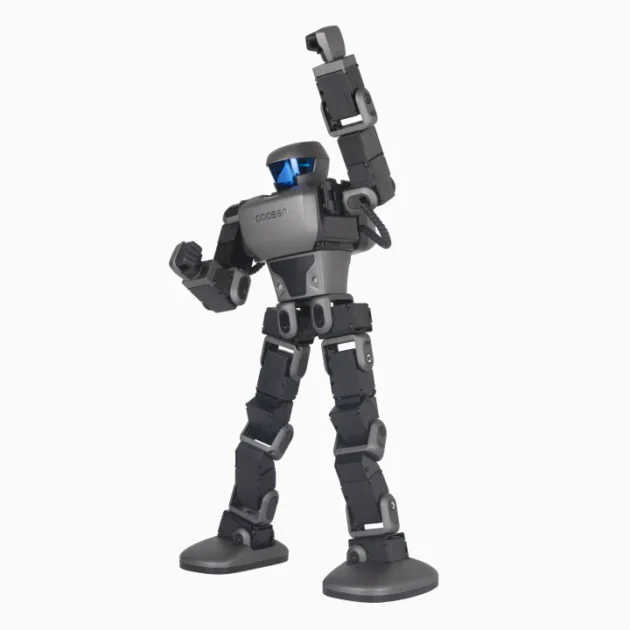
    Robosen Interstellar Scout K1 Pro is a revolutionary robot with its cutting-edge technology and artificial intelligence. Weighing only 0.94 kg, it has 17 high-precision servomotors, 18 microchips, a built-in microphone, voice commands, Bluetooth connection, a built-in speaker, and a rechargeable lithium-ion battery. K1 Pro’s adaptive control algorithms simulate a human-like gait and allow for high-dimensional movements. It can be programmed with four different modes and responds to voice commands. The minimalist design is made of aerospace-grade materials and is controlled via 64-bit Android or iOS devices. It is a great gift to bring next-gen family entertainment. The role of Artificial Intelligence in the K1 Pro Robot is to give it the ability to understand and respond to voice commands, to move with precision, and to be able to perform stunts and other movements. You can buy it for $400.

    Miko 3 – AI-powered Toy Robot

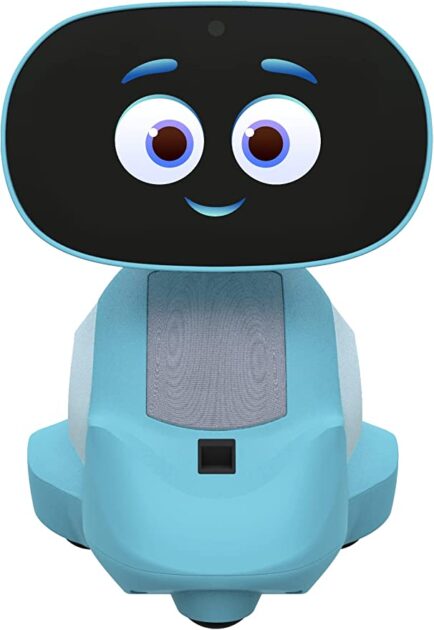
    Miko 3 is ideal for kids who want to explore, play, and learn. It’s packed with deep-learning AI, educational STEAM content, and interactive games. Kids can enjoy new jokes, stories, and songs every month. With HD camera and sensors, Miko brings a full-on dance party. Plus, kids will be rewarded for progress with Miko Journeys. This $200 robot is an awesome AI-infused friend. You may be thinking that the level of programming this robot has isn’t enough to be called AI. But it can engage in two-way communication with people, using a natural language interface to ask and answer questions, as well as process human emotions. This is more than a gimmick.

    Examples of machines that are not robots with AI

    To better understand robots with AI, now we will also need to mention those without AI. Industrial robots, such as KUKA KR210, are used in factories without AI. They are programmed to carry out specific actions such as welding and assembly. Flying robots do not possess AI; drones cannot think for themselves. These robots possess a minimal form of programming that we can not consider as intelligence. AI requires sophisticated programming. Here are some examples of AI or robots that are not both:

    Dexarm Maker – Physical robot Without AI

    Dexarm maker
    Data credits: robotshop.com

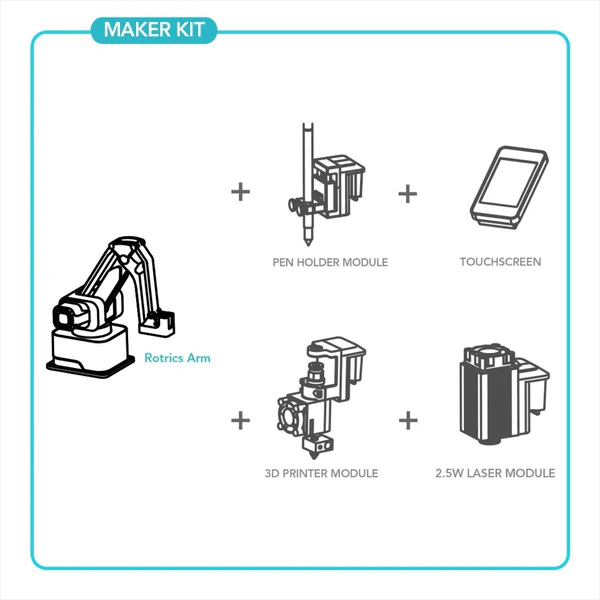
    Dexarm Maker is a physical robot because it is programmed to move in a certain sequence, helping it move and perform a task similar to humans. It does not have its own intelligence. So, we can not consider it a robot with AI. The key point of identifying whether a machine has intelligence or not is its ability to learn, solve problems, and respond appropriately. This robot, for example, can sense, and act, but can not plan and act accordingly. According to the company website, it is suitable for 3-d printing, laser engraving, and cutting. Now, its 3.5-inch touchscreen does allow you to check the status and command Rotrics within your hand. But does this robot have Artificial Intelligence? No, it is nothing more than a physical robot with little programming. The amount of programming this robot possesses, can not be considered as AI.

    Recommended Post: Build your own AI

    NPCs – Bots; little to no intelligence, no physical existence

    Video game's NPC

    While most NPCs (non-player characters) in video games are not that intelligent, some still stand out and are good examples of digital artificial intelligence. For example, the AI bot in The Sims could get a job, go to work, socialize with other NPCs, and even fall in love. And as the game progressed, the AI got better at simulating human behavior. Another example is Ellie from The Last of Us Part II who is an AI-powered NPC. Throughout the game, she shows human emotions such as anger, sadness, love etcetera. She also makes decisions on her own (such as whether to kill an enemy or spare their life). But these bots are not physical enough to be called a robot. So, despite possessing AI, these NPCs are not robots. Hence, we can not consider them in the list of examples of robots with Artificial Intelligence.

    Equbot – Technically specified bot

    Equbot is an AI-powered stock market trading bot, that is integrated with IBM Watson to predict stock prices. Apart from historical market patterns, it also performs random analyses of news articles from all across the globe. The bot does this by analyzing data such as news, SEC filings, and social media. Its algorithm can automatically read and understand unstructured data (such as articles, blogs, etc). For instance, if news about the Consumer Price Index comes up, it will analyze that data based on technical market indicators and make predictions about future stock prices. It would have required a lot of human involvement, but the AI does that instantly, and passively. But despite being more capable than humans in predicting the market, this bot is not physical, hence not a robot. So, this bot does fit into the definition of a robot with AI.

    Conclusion

    Tech enthusiasts often get confused between different fields of AI and robotics, so we thought this article was a necessity. Apart from giving a variety of examples of robots with AI, we also discussed what we can’t consider AI. The main aim of all those examples was to clarify the difference between these two fields. Devices without AI are still valuable in a lot of ways. However, one clear thing is that emerging fields of AI, such as NLP, are transforming the robotics industry. With increasing AI capabilities, robots are performing more complex tasks and movements. Our responsibility is not limited to understanding, but also to use this technology responsibly.

  • When Search and Rescue (SAR) Robots Really Help

    When Search and Rescue (SAR) Robots Really Help

    Robots are increasingly becoming a staple in search and rescue missions. The ability to cover more ground and provide a more accurate assessment of a situation than human responders is invaluable in time-sensitive emergency situations. Search and rescue robots have proven their worth time and time again. And the same goes for their human counterparts.

    There are basically four types of search and rescue teams: air, ground, water, and structural.

    The most common search and rescue mission is finding missing hikers.

    The US handles about 225 search and rescue missions per year. The percentage of missions using a search and rescue robot in different ways, is large. In fact, the benefits of using one are pretty clear:

    Air Rescue Missions

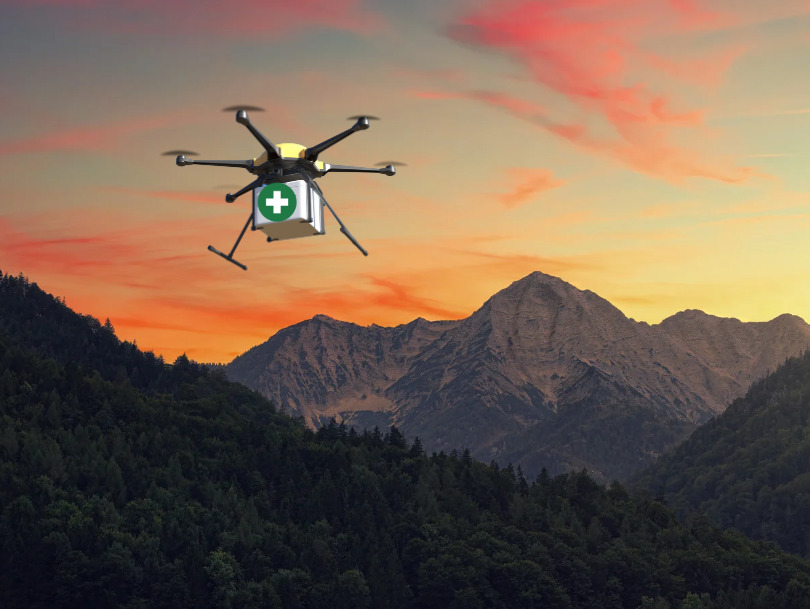
    Most commonly, drones, a type of flying robot, are helpful in aerial search and rescue missions. Drones can cover a lot of ground quickly. Also, the team can equip it with thermal imaging to get a better assessment of the situation. From mapping out the disaster area to locating missing persons, drones have shown their usefulness in search and rescue. For example, in the aftermath of Hurricane Harvey, NASA aided with drones to assess the damage and find survivors.

    Ground Rescue Missions

    Ground robots are useful in a variety of search and rescue missions. Some of them can enter small spaces, like collapsed buildings, that humans can’t. Most ground robots possess sensors and cameras to help assess the situation and rescue. In the 2018 Thailand cave rescue, Chinoros Nakthewan and his robotics team used robots to map the cave and find the missing soccer team.

    Water Rescue Missions

    Water robots, or ROVs (remotely operated vehicles), are key in water search and rescue missions. For example, they can go places that humans can’t, like deep water or fast-moving rivers. ROVs are equipped with sonar, which helps them find missing persons or objects. For example, the rescue team used ROVs in the search for the missing Malaysia Airlines Flight MH370. In fact, the mission would have been impossible to even happen without those underwater robots.

    Structural Rescue Missions

    Structural search and rescue robots help assess the stability of buildings and other structures. Robots can enter places that are too dangerous for humans. Their sensors help them assess the stability of the structure and cameras to help find and rescue the missing persons. For example, Japan’s USAID used structural search and rescue robots in the aftermath of the 2011 earthquake and tsunami in Japan.

    Search and Rescue Cases a Robot Handled

    Search and Rescue Robot Drone

    Apart from the ones above, there are many other examples of search and rescue robots showing their worth.

    In the 2018 Sulawesi earthquake and tsunami, the 2017 Mexico City earthquake, and the 2016 Ecuador earthquake, drones showed the aftermaths of the destruction and helped with search and rescue missions.

    Econet, Zimbabwe’s leading media company, assisted with Cyclone Idai rescue operations in 2019. In case the drone identified the victims, they were programmed to offer rescue services.

    Waltham-based robotics company lent ‘Arm’, which played a vital role in the search and rescue efforts after the 2013 Boston Marathon bombing.

    Also, in the 2011 Fukushima Daiichi nuclear disaster, robot surveyed the nuclear plant’s reactors. The robots found high levels of radiation that would have been harmful to humans. The robot’s job was to survey underwater spaces that are too small for humans. In particular, this robot helped in the investigation of underwater leakage points of the retained water within a nuclear power plant.

    Conclusion

    Search and rescue robots are saviors. We have come to rely on these machines for their ability to find and rescue people in the aftermath of disasters. They help us locate and rescue trapped survivors in the rubble of collapsed buildings and other debris. For people who still think robotics is all about making vacuum cleaners, these life-saving machines are a reminder of how far we’ve come. And for those who believe robots will take over the world one day, they offer some reassurance that, at least for now, we’re still in charge. No single technology can ever replace the bravery and skill of first responders. But still, search and rescue robots are proving to be invaluable tools in the life-saving toolkit.

  • Why Militarized Robots Can’t Fight Wars

    Why Militarized Robots Can’t Fight Wars

    Militarized robots are not able to fight the war for us. They cannot replace human soldiers. War is a complex and chaotic undertaking. In fact, the conditions of war are ever-changing. It is an intensely human endeavor.

    Here are the main reasons why militarized robots can’t fight wars to replace humans:

    Split-Second Decisions

    Militarized robots cannot make the same split-second decisions as humans. They are not able to process the same amount of information in the same way humans can. They cannot adapt to ever-changing conditions. Furthermore, current robots lack the ability to make ethical decisions in the first place.

    Lack of Empathy in Robots

    Robots also lack empathy. If we militarize robots, they cannot understand the human costs of war. Only human soldiers can feel the sense of duty and honor. Robot soldiers don’t even experience fear, which can be a useful motivator in battle. So, if robots are to make life-and-death decisions, they must be able to understand things. Robot soldiers, to be called so, must empathize with the humans they are fighting for.

    Lack of Emotional Involvement

    If militarized robots fight against each other and kill themselves, war would mean nothing. Sorrow, anger, and love are just a few of the emotions that give war its meaning. If we take these away, then war would be little more than a game. There is a difference between playing a game and actually fighting for your life. The limit of robot involvement in military is providing logistics and support. We can not use robots as actual combatants because it would not remain a war anymore.

    Expensive

    An average industrial robot, simple one, costs about $65,000. Leave alone militarized robots, which will cost millions if we invent it right now. For one thing, war is expensive. If we use robots in war, it will only increase the cost. So, who is going to start that? That’s the problem. Robot soldiers can not turn mainstream until some government is willing to foot a very large bill.

    High-Maintenance

    Not only they are expensive, they are also high-maintenance. They require regular services and repairs. Militarized robots will need very good maintenance team to keep them operational. This will add to the cost and time.

    Robots do not feel pain

    One of the main reasons why we have soldiers is because they can feel pain. They can understand the consequences of their actions. They know that if they get hurt, they will feel pain. This is a very important motivator. Robots, even militarized ones, do not feel any real pain at all. Also, they do not understand consequences. This makes them very dangerous.

    Lack of dependability

    Robots are not dependable. They break down quite often. They are not as reliable as humans. This is a very big problem. If we use militarized robots in war, we need to be sure that they will work when we need them. If we don’t, they will make us work for them.

    Bottom Line

    Even we keep everything aside, militarized robots fighting wars is not a feasible idea. Because it’s just not worth it for those who want wars. Never has been, never will be. Humans are required to create blood, sweat, and tears for there to be a victory. Machines can not fulfill that.